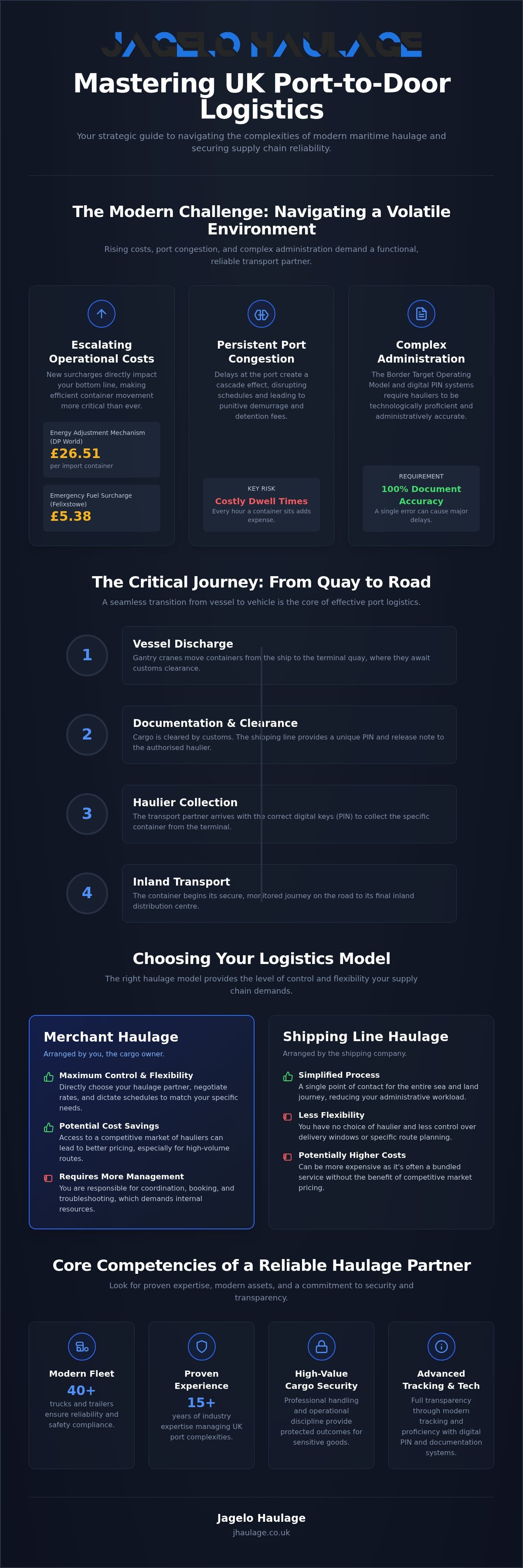
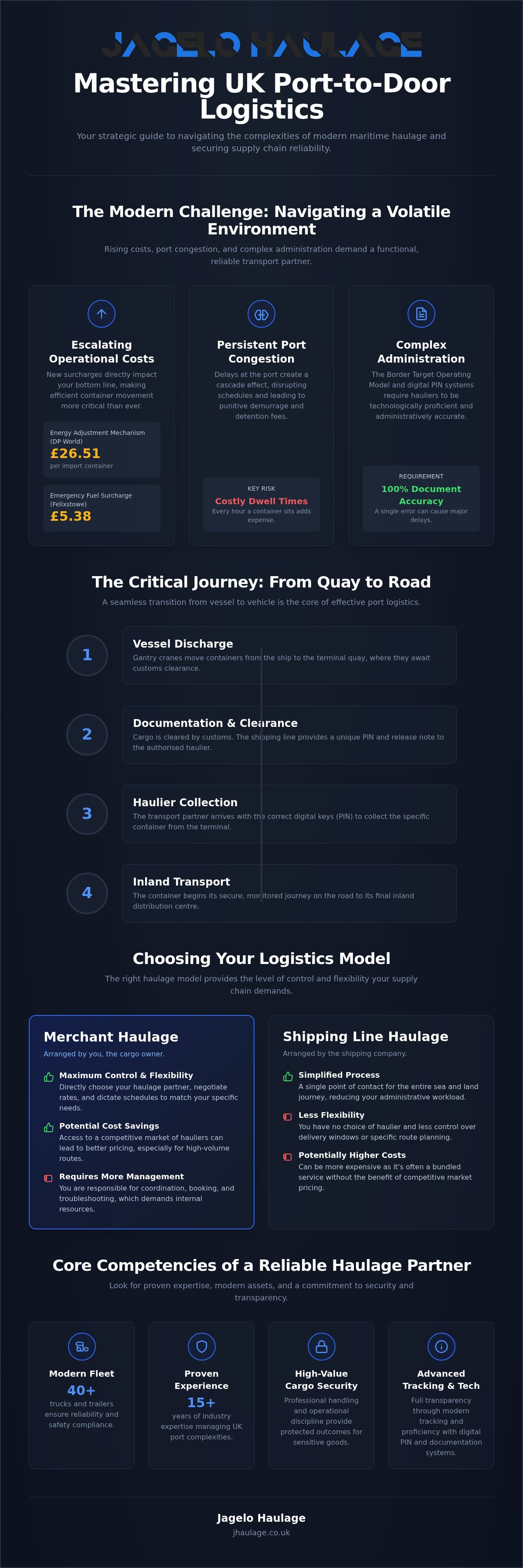
Professional road haulage is the essential linchpin of the maritime supply chain. Without a disciplined fleet, even the most efficient global shipping routes fail at the final mile. You likely understand that managing UK port logistics services has become increasingly difficult as 2026 brings new operational hurdles. From 1 May 2026, the Energy Adjustment Mechanism at DP World London Gateway increased to £26.51 per import container, whilst the Emergency Fuel Surcharge at Felixstowe rose to £5.38. These rising costs, combined with persistent port congestion and the administrative weight of the Border Target Operating Model, create a volatile environment for supply chain managers.
You need a transport partner that prioritises functional reliability over empty promises. This strategic guide provides the expert insights required to master port-to-door transport and secure fixed-cost reliability for your cargo. We'll examine how to navigate the complexities of merchant haulage and how professional handling ensures your high-value goods remain secure throughout the inland journey.
Key Takeaways
- Understand how disciplined UK port logistics services act as a strategic bridge between maritime hubs and inland distribution centres.
- Master the documentation requirements, such as PINs and release notes, that facilitate the efficient movement of containers from the port to the haulage vehicle.
- Determine whether merchant haulage or shipping line haulage provides the necessary level of operational control for your specific supply chain requirements.
- Discover how proactive communication and advanced planning can reduce the impact of port congestion and administrative delays.
- Identify the core competencies of a reliable haulage partner, focusing on fleet modernisation and proven expertise in managing high-value cargo transport.
The Critical Role of Port Logistics Services in the UK Supply Chain
Port logistics constitutes the integrated movement of goods from maritime hubs to inland distribution centres. It's a fundamental component of national infrastructure that ensures the continuous flow of essential goods and industrial components across the country. Efficient UK port logistics services act as the primary bridge between international shipping lanes and the domestic road network. When this transition is seamless, businesses maintain their production schedules. When it fails, the entire supply chain experiences a cascade of delays and escalating costs.
In 2026, the financial stakes of port operations are higher than ever. Port dwell times, the period a container sits on the quay, directly influence your profitability. Professional haulage providers help operators avoid punitive demurrage and detention fees through disciplined collection schedules. With the Energy Adjustment Mechanism at DP World London Gateway reaching £26.51 per import laden container, and the Emergency Fuel Surcharge at Felixstowe at £5.38, every hour a container remains stationary adds to the bottom line. A haulier who understands these specific fee structures and terminal protocols saves a business significant capital by ensuring containers move exactly when they're released.
Understanding Port-Centric Logistics
The industry is witnessing a distinct shift towards port-centric models. This strategy involves positioning processing and distribution facilities in immediate proximity to maritime hubs like the UK's largest container port. By reducing the distance between the quay and the warehouse, companies significantly lower their total road miles. This approach improves carbon efficiency and provides a buffer against the unpredictability of long-distance inland transport. Specialised haulage remains the vital link in these networks, providing the short-haul agility needed to keep port-centric hubs stocked while maintaining strict operational security.
The Evolution of Container Transport in the UK
Containerisation has standardised global trade, but it's also placed immense pressure on HGV capacity. Modern logistics services in 2026 must prioritise security and operational discipline to handle this volume effectively. High-value cargo requires protected outcomes, which only a professionally managed fleet can provide. Fleet modernisation is no longer optional; it's a requirement for meeting strict environmental and safety standards across the UK's road network.
- Standardised documentation and digital PIN systems have replaced manual processes, requiring hauliers to be technologically proficient.
- Increased trade regulation, such as the 51% reduction in tariff-free quotas for certain steel categories, demands higher levels of administrative accuracy from transport partners.
- Modern fleets must be equipped with advanced tracking to provide the transparency that nationwide operators now expect.
Jagelo Haulage leverages 15 years of industry experience to manage these complexities. We operate a modern fleet of over 40 trucks and trailers to ensure reliability and safety for every delivery. Our approach transforms container transport from a simple physical task into a strategic outcome for your business. You can find more information about our specialised transport solutions at jhaulage.co.uk.
Navigating Port Operations: From Vessel Discharge to Inland Transport
The physical movement of a container from a vessel to a haulage vehicle is a high-stakes operation. According to UK ports industry statistics, the sector handles hundreds of millions of tonnes of cargo annually, requiring absolute precision at the terminal interface. Once a vessel berths, gantry cranes discharge units to the terminal quay. The container then waits for customs clearance and the presentation of specific documentation before it can be released to a haulier. This transition is the most sensitive stage of UK port logistics services, as any delay here creates immediate friction in the wider network.
Security protocols at UK terminals are stringent. A haulier can't collect a unit without a valid release note and a unique PIN provided by the shipping line. These digital keys ensure that cargo is handed over to the correct authorised transport partner. Accuracy in this documentation is vital. Even a single digit error in a PIN results in a turned-away vehicle, leading to wasted fuel and missed delivery windows. Professional hauliers verify these details long before the truck reaches the port gate to ensure a seamless exchange.
VBS and Slot Management: The Pulse of the Port
UK terminals use Vehicle Booking Systems (VBS) to regulate the flow of HGVs and prevent terminal gridlock. Haulage companies must secure specific time slots to enter the port and collect or drop off containers. Managing these windows requires constant vigilance. If a driver misses a slot due to motorway congestion or administrative delays, the haulier must rebook. This often results in additional charges and significant supply chain disruption. A disciplined logistics partner proactively monitors these operational windows to ensure punctuality. This level of coordination is a hallmark of professional logistics for shipping containers.
Handling Specialised Cargo and Container Types
Transporting standard 20ft and 40ft units is the baseline of the industry. However, many shipments require specialised equipment. High-cube containers offer extra vertical capacity but require trailers that maintain a safe overall vehicle height. Refrigerated containers (reefers) need temperature monitoring and, in some cases, power sources during transit. Heavy-load container haulage also demands specific trailer configurations to ensure weight distribution complies with UK road regulations. Jagelo Haulage maintains a modern fleet of over 40 vehicles equipped to handle these diverse requirements with functional reliability. If your operations require a consistent transport partner, you can request a professional haulage quote to secure your 2026 supply chain.
Punctuality at the port gate is the foundation of the 'last mile'. By synchronising VBS slots with driver hours and terminal availability, a haulier ensures that the maritime journey ends with a precise inland delivery. This disciplined approach minimises the risk of port congestion impacting your final destination arrival times.
Merchant vs Shipping Line Haulage: Selecting the Optimal Logistics Model
Choosing the correct haulage model is a critical decision that dictates the level of control a business maintains over its UK port logistics services. The industry divides these operations into two distinct categories: Merchant Haulage and Shipping Line Haulage. Each model offers specific advantages depending on the volume of cargo and the complexity of the inland route. Understanding these differences allows supply chain managers to align their transport strategy with their broader operational objectives.
Merchant Haulage occurs when the cargo owner or their freight forwarder takes responsibility for the inland journey. In this model, the merchant selects an independent transport partner to collect the container from the terminal. Conversely, Shipping Line Haulage involves the ocean carrier managing the delivery to the final destination. Whilst the latter provides a simplified administrative process, it often lacks the agility required for complex or time-sensitive supply chains. Many nationwide operators now prioritise merchant haulage because it offers superior operational control and transparency.
The Benefits of Merchant Haulage for Forwarders
Merchant haulage allows for direct communication with the haulage provider. This direct link provides real-time updates and more flexible scheduling compared to carrier-managed services. By negotiating rates directly with independent contractors, businesses often find significant potential for cost savings. This model also allows for a more detailed merchant haulage vs shipping line comparison, ensuring that every pound spent contributes to a more efficient supply chain. We act as a disciplined partner for merchants who require reliable, professional handling of their containers.
When to Rely on Shipping Line Haulage
Shipping Line Haulage offers a 'hands-off' approach that suits businesses with lower volumes or less complex logistics needs. It simplifies the billing process by consolidating ocean and inland freight into a single invoice. However, this convenience comes with limitations. The shipping line dictates the collection schedule and the choice of haulier, which can lead to delays during periods of port congestion. Whilst Shipping Line Haulage offers a higher degree of administrative convenience, it frequently requires the sacrifice of operational control and delivery precision.
Jagelo Haulage provides specialised support for both models, leveraging 15 years of industry experience to navigate the specific requirements of each. We understand that whether you choose merchant or shipping line haulage, the priority remains the same: the safe and punctual delivery of your cargo. Our modern fleet of over 40 trucks ensures that we have the capacity to support your chosen logistics model with steadfast professionalism and functional reliability.
Strategic Efficiency: Minimising Delays in Port-to-Door Logistics
Strategic efficiency in UK port logistics services requires more than just physical assets; it demands a disciplined approach to information management. In 2026, persistent port congestion remains a primary challenge, often exacerbated by global vessel rerouting and the physical checks required under the Border Target Operating Model (BTOM). These external factors make documentation accuracy and proactive communication essential. Even a minor error in customs paperwork or a late PIN transmission can lead to missed VBS slots and cascading delays. You can't afford to leave these details to chance when the stability of your supply chain is at stake.
Effective logistics providers maintain constant contact with terminal operators and clients to anticipate these hurdles. When a vessel arrival pattern changes due to Red Sea security rerouting, the haulier must adjust collection schedules immediately. Real-time visibility amongst all stakeholders ensures that if a customs hold occurs, the transport plan is modified before a vehicle is dispatched. This saves the customer unnecessary aborted-run costs and keeps the fleet moving. Managing peak periods and seasonal fluctuations requires this same level of foresight, ensuring that capacity is secured before demand spikes.
Avoiding Demurrage and Detention Charges
Poor logistics planning leads to punitive financial penalties that erode profit margins. It's vital to distinguish between demurrage and detention fees to manage costs effectively. Demurrage is charged by the shipping line for containers that remain inside the port terminal beyond the agreed 'free time'. Detention fees apply when the container is outside the port but hasn't been returned to the empty depot within the required window. Both represent a failure in the timing of the inland journey.
Efficient haulage scheduling ensures containers move quickly from the quay to the delivery point and back to the port. With the Emergency Fuel Surcharge at Felixstowe at £5.38 and infrastructure charges at Teesport at £2.25 per unit in 2026, businesses cannot afford the additional burden of storage fees. We prioritise the rapid turnaround of equipment to keep your supply chain lean. This disciplined approach ensures that containers are returned within their free-time windows, protecting your bottom line from avoidable expenses.
Technology in Modern Haulage Operations
The integration of technology is a core component of a modern container transport fleet. Telematics systems allow us to monitor vehicle behaviour and optimise routes in real-time, ensuring that drivers avoid known congestion hotspots. This data-driven approach improves safety and provides customers with accurate arrival estimates. It transforms the delivery process from a blind spot into a transparent, managed operation.
Administrative efficiency is similarly enhanced through Electronic Proof of Delivery (ePOD). By digitising the delivery confirmation, we eliminate the delays associated with manual paperwork and provide immediate transparency for your records. This disciplined use of technology ensures that your cargo is not just moved, but is managed as a strategic asset. To secure your 2026 transport requirements and avoid costly port delays, you can book professional container haulage services today.
Securing Your Supply Chain with Professional Port Logistics Partners
Selecting a transport provider is the final strategic step in stabilising your 2026 supply chain. A partner for UK port logistics services must offer more than just vehicle capacity; they must provide operational resilience. You should look for a provider with a significant fleet size and established port access. A modern, well-maintained fleet of over 40 vehicles ensures that your cargo isn't delayed by mechanical failure or equipment shortages. This scale allows a haulier to absorb the shocks of port congestion and vessel rerouting without compromising your delivery schedule.
Experience is the most reliable predictor of performance during port disruptions. 15 years of industry experience translates to a deep understanding of terminal protocols and administrative requirements. A seasoned professional knows how to navigate the specific challenges of 2026, such as the increased trade regulations or the rising energy adjustment mechanisms at major hubs. They treat every container delivery as a strategic outcome rather than a simple physical task. This mindset ensures that the safety and efficiency of your operations remain the primary focus throughout the inland journey.
The Jagelo Haulage Commitment to Professionalism
Jagelo Haulage focuses on steadfast reliability and disciplined operational management. We don't rely on hyperbolic marketing language; we rely on results. Our responsive customer support assists operators nationwide in navigating the complexities of modern ports. We understand the high stakes of your supply chain and provide the security of a professionally managed fleet. This commitment to the fundamentals of haulage creates a partnership built on quiet confidence and functional security. We prioritise the protection of your cargo and the punctuality of your deliveries above all else.
Getting Started with Nationwide Container Haulage
Requesting a quote is the first step toward securing a dependable transport partner. Your quote should accurately reflect your specific port-to-door requirements, including container types, weight considerations, and delivery windows. Our onboarding process for new merchant haulage or shipping line partners is methodical and structured. We move from the broad service category to the specific logistical benefit to ensure a seamless transition into our transport network. This logical, step-by-step flow mirrors the reliability of our physical operations. Contact Jagelo Haulage for reliable UK port logistics services to begin optimising your supply chain today.
A disciplined logistics partner is the cornerstone of a successful maritime strategy. By choosing a provider that understands the nuances of the UK port network, you secure a protected outcome for your goods. Our 15 years of expertise and modern fleet of 40+ trucks are ready to support your business as a strategic partner in an increasingly complex global market.
Securing the Future of Your Port-to-Door Supply Chain
Operational success in 2026 requires a transport strategy that anticipates rising fees and persistent terminal congestion. You've seen how the choice between merchant and shipping line haulage dictates your level of control, and how documentation accuracy prevents costly delays. Reliable UK port logistics services act as a strategic buffer against the volatility of global shipping routes and new trade regulations. Protecting your cargo and your profit margins depends on the discipline of your haulage partner.
Jagelo Haulage offers the security of a modern fleet of over 40 trucks and trailers combined with over 15 years of port logistics experience. We provide specialist merchant haulage support that transforms container transport into a predictable, high-performance outcome for your business. Our team is ready to assist nationwide operators in navigating the complexities of the modern supply chain with steadfast professionalism. Request a professional container haulage quote from Jagelo Haulage to secure your distribution network. We look forward to supporting your operational goals.
Frequently Asked Questions
What are the primary port logistics services available in the UK?
The core services include container haulage, merchant haulage, and shipping line haulage. These operations facilitate the movement of goods from major maritime hubs to inland distribution centres. Professional UK port logistics services integrate terminal protocols with road transport to ensure a seamless transition for every unit. Providers often specialise in specific niches, such as heavy-load transport or refrigerated container deliveries, to meet diverse supply chain requirements.
How does merchant haulage differ from shipping line haulage?
Merchant haulage allows the cargo owner or forwarder to appoint an independent transport partner for the inland journey. This model provides greater operational control and direct communication with the haulier. Shipping line haulage is managed entirely by the ocean carrier. Whilst this offers administrative simplicity, it limits your ability to influence collection times or select a specific haulage specialist for high-value cargo.
What documentation is required for container collection from a UK port?
Drivers must present a valid release note and a unique PIN provided by the shipping line to gain terminal access. These digital credentials verify that the cargo is authorised for collection by the specific transport partner. Additionally, the haulier must have a confirmed Vehicle Booking System (VBS) slot. Without these precise documents, terminal security will refuse entry to the vehicle, causing immediate delays.
How can businesses reduce their container transport costs in 2026?
Minimising demurrage and detention fees is the most effective way to lower total transport expenses. This requires disciplined scheduling to ensure containers are returned to the depot within the agreed free-time windows. Businesses should also consider port-centric logistics to reduce total road miles. Negotiating directly with independent haulage specialists often reveals more competitive rates than consolidated carrier-managed services.
What happens if a haulage vehicle misses its port collection slot?
Missing a VBS slot typically results in the vehicle being turned away from the terminal gate. The haulier must then rebook a new window, which often incurs additional administrative charges and wasted fuel costs. These delays can disrupt the entire delivery schedule and potentially lead to storage fees if the container remains on the quay past its release date. Punctuality is therefore a non-negotiable requirement for port collections.
Can a haulage company handle same-day delivery from the port?
Same-day delivery is possible if the container is cleared and released early in the morning and a VBS slot is secured. However, success depends on driver hours and the distance to the final destination. Reliable providers prioritise punctual collections to maximise the chance of same-day arrival. You should always check vehicle availability and terminal dwell times before planning urgent inland transport for your goods.
What is the difference between demurrage and detention fees?
Demurrage fees apply to containers that stay inside the port terminal longer than the permitted free time. Detention fees are charged when a container is kept outside the port for too long before being returned to the empty depot. Both charges are designed to encourage the rapid turnaround of shipping equipment. Professional haulage partners use telematics to track these windows and avoid these unnecessary financial penalties.
How do I choose a reliable logistics partner for UK ports?
Select a provider with a modern fleet of at least 40 vehicles and extensive industry experience. A partner with 15 years of expertise understands the nuances of terminal operations and can solve problems quickly during disruptions. Ensure they offer specialised UK port logistics services and provide responsive customer support. Reliability is demonstrated through punctuality and the ability to provide protected outcomes for your cargo.