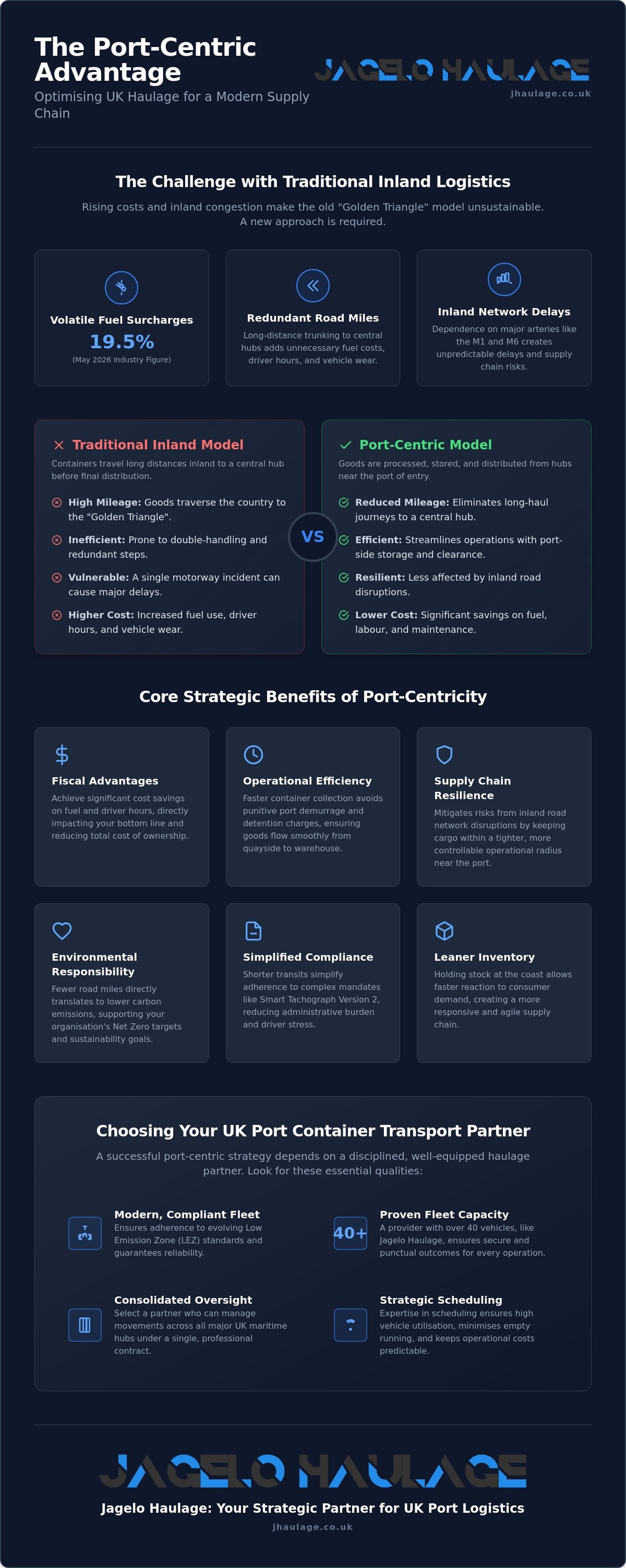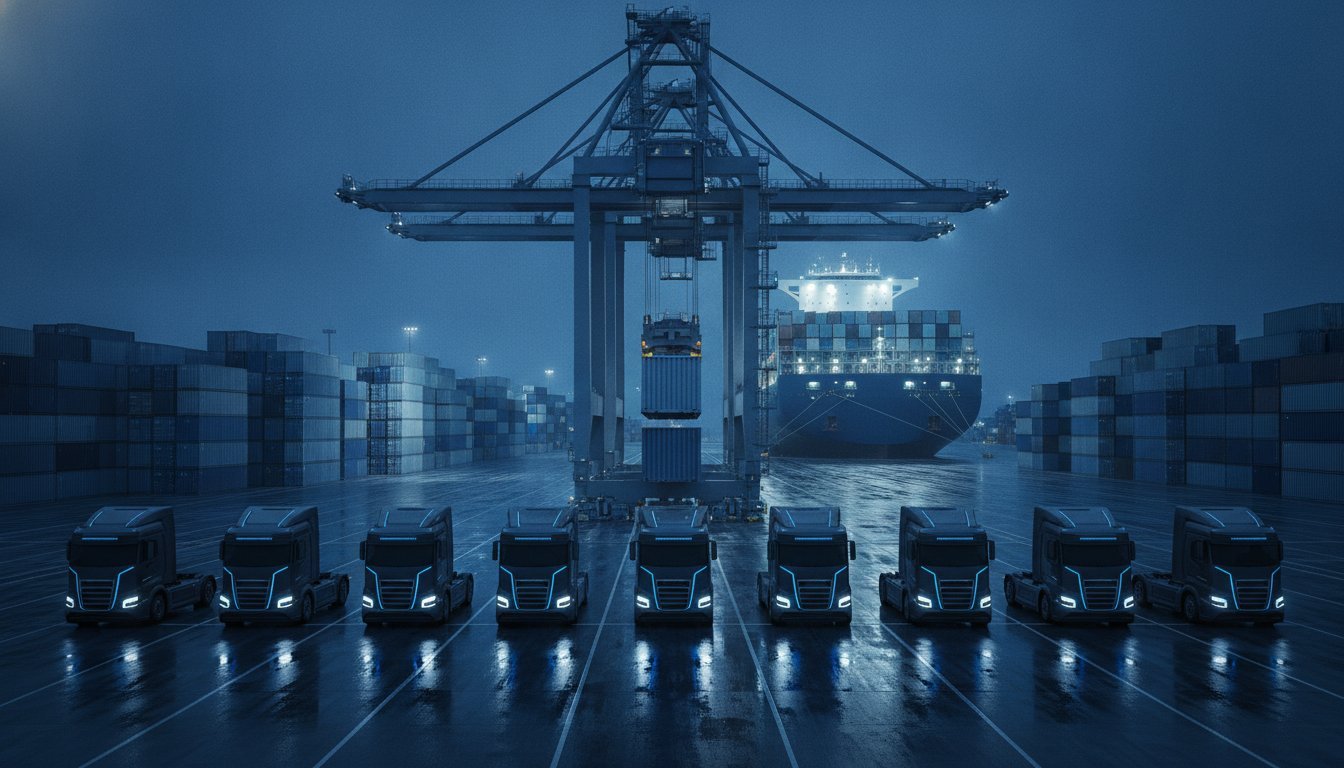
A port-side warehouse is merely a bottleneck if it is not supported by a disciplined, modern haulage fleet. You likely recognise that rising operational costs and volatile fuel surcharges, which reached 19.5% in May 2026, are making traditional supply chain models increasingly unsustainable. Between new energy adjustment mechanisms at leading port facilities and emergency fuel surcharges across key UK ports, the financial pressure on your margins is constant and requires a more methodical approach to logistics.
This guide demonstrates how transitioning to a port-centric model can streamline your operations, reduce unnecessary road miles, and lower your total cost of ownership across the United Kingdom. Jagelo Haulage provides the disciplined expertise required to secure faster lead times and more reliable collection schedules through professional UK port container transport. We will examine the strategic advantages of merchant haulage and how a modern, well managed fleet provides the stability your supply chain requires to meet Net Zero targets and evolving consumer expectations.
Key Takeaways
- Evaluate the transition from traditional inland "Golden Triangle" distribution to coastal hubs to eliminate unnecessary mileage and reduce operational vehicle wear.
- Compare the strategic advantages of merchant haulage against shipping line haulage to gain greater flexibility for complex or time-sensitive delivery schedules.
- Assess the essential requirements for UK port container transport partners, specifically regarding fleet modernism and adherence to evolving low emission zone (LEZ) standards.
- Consolidate supply chain oversight by selecting a disciplined partner capable of managing container movements across all major maritime hubs through a single, professionally managed contract.
- Optimise your logistics framework by leveraging a provider with a proven fleet of over 40 vehicles to ensure secure and punctual outcomes for every port-side operation.
What are UK Port-Centric Logistics Services?
Port-centric logistics is a strategic model where goods are processed, stored, and distributed from hubs situated at or near the maritime port of entry. This approach represents a fundamental shift from the traditional UK distribution model. For decades, the "Golden Triangle" in the Midlands served as the primary destination for almost all imported cargo. However, rising fuel surcharges and increasing road congestion have made this inland-first strategy less efficient. Forward-thinking businesses are now opting for coastal hubs to reduce the distance between the quayside and the warehouse.
The United Kingdom's geography provides a unique competitive advantage for this model. With major maritime hubs distributed across the coastline, companies can select a port of entry closest to their final customer base. Jagelo Haulage acts as the critical link in this chain, connecting quayside operations to the national infrastructure. This ensures that UK port container transport serves as a strategic asset rather than a logistical hurdle. A disciplined haulage partner ensures that containers move promptly from the berth to the storage facility, maintaining the flow of goods even during peak congestion periods.
This level of logistical precision is essential for specialist suppliers like Romford Fencing Ltd, who must coordinate the movement of heavy goods from port-side facilities to ensure their stock remains ready for both trade and public demand.
The Core Components of a Port-Centric Model
Successful port-centricity relies on several primary elements that work in unison to protect the supply chain:
- Port-side storage: Providing a "buffer" to manage stock levels without immediate inland transport.
- Integrated customs clearance: Speeding up container release to reduce expensive port dwell times and demurrage.
- Strategic haulage scheduling: Ensuring high vehicle utilisation and minimising empty running.
This methodical approach to intermodal freight transport keeps operational costs predictable. Professional operators use advanced systems to coordinate these movements, ensuring every mile driven adds value to the supply chain. By keeping the goods close to the port, you maintain greater control over the initial leg of the journey and reduce the risk of delays caused by inland motorway incidents.
How Port-Centricity Differs from Traditional Inland Logistics
The traditional model often involves double-handling goods between different transport modes and regional hubs. Port-centricity eliminates these redundant steps. It reduces the reliance on long-distance trunking to central distribution centres in the Midlands, which directly lowers fuel consumption and driver hours. It's a more responsive system. By holding stock at the coast, businesses can react faster to fluctuating consumer demand. They don't have to wait for containers to traverse the national motorway network before they can begin the final delivery phase. This results in a leaner UK port container transport operation that prioritises speed and cost transparency over outdated inland traditions.
The Strategic Benefits of Port-Centricity for UK Businesses
Implementing a port-centric strategy provides immediate fiscal and operational advantages. By shortening the transit distance, businesses achieve significant cost savings on fuel and driver hours. This is especially relevant given the industry-standard fuel surcharge of 19.5% recorded in May 2026. Reducing the mileage between the quay and the warehouse also limits vehicle wear and tear. Shortening transits also simplifies compliance with the Smart Tachograph Version 2 mandates introduced in 2026, as drivers spend less time on high-stress long-distance routes. The strategy is particularly effective for 40ft units, which typically cost 10-20% more to transport than 20ft containers on the same route. This ensures that UK port container transport remains a cost-effective component of your broader logistics framework.
Proximity to the port enhances supply chain resilience against inland road network disruptions. Motorway congestion on major arteries like the M1 or M6 often causes unpredictable delays for containers travelling from the coast to the Midlands. Coastal hubs mitigate this risk by keeping the cargo within a tighter operational radius. Additionally, faster container collection helps operators avoid punitive port demurrage and detention charges. Agile collection schedules ensure that containers are moved before they exceed their "free time" at the terminal. You can view UK port freight traffic forecasts to understand how increasing volumes may impact future port congestion and terminal turnaround times.
Environmental Impact and Net Zero Goals
Reducing road miles directly supports corporate ESG targets and green logistics initiatives. Using a modern, Euro 6 compliant fleet for logistics for shipping containers ensures that the remaining miles are as efficient as possible. By eliminating the standard 100-mile transit to the Midlands, port-centric logistics can reduce carbon emissions by approximately 20% per container moved. This disciplined approach to carbon reduction is becoming a mandatory requirement for many corporate contracts in 2026. Transitioning to high-specification vehicles further protects your brand's environmental standing whilst delivering functional results.
Operational Speed and Consumer Satisfaction
Shortening the "quay-to-customer" timeframe is essential for meeting modern e-commerce expectations. Cargo arriving at major maritime hubs can be processed and delivered with same-day capabilities when the distribution hub is localised. This agility reduces the risk of stockouts and ensures that high-priority goods reach the consumer without the delays associated with long-distance trunking. Maintaining a responsive UK port container transport operation allows you to offer more competitive lead times. These efficiencies are particularly valuable when managing seasonal peaks or urgent restocks. If you require a more efficient route for your cargo, you may request a professional haulage assessment to identify potential savings.
Merchant Haulage vs. Shipping Line Haulage: Making the Strategic Choice
Deciding between merchant and shipping line haulage is a fundamental strategic choice that dictates the level of control you maintain over your supply chain. Shipping lines typically offer carrier haulage, where they manage the entire journey from the port of origin to the final destination. Whilst this simplifies administration, it often results in a lack of transparency regarding specific vehicle arrival times and driver details. In contrast, merchant haulage allows you to appoint an independent contractor to manage your UK port container transport directly. This shift towards merchant control is increasingly common as businesses look to avoid the rigid scheduling and variable service levels often associated with carrier-led operations.
The cost implications of this choice are significant in 2026. With the DP World London Gateway energy adjustment mechanism reaching £26.51 per import laden container and Teesport introducing an infrastructure charge of £2.25, transparency in billing is vital. Merchant haulage providers offer clear, itemised costs that allow transport managers to see exactly where their budget is spent. This level of oversight is particularly valuable when navigating the high volumes documented in recent UK port freight statistics, where even minor delays can quickly escalate into significant demurrage fees if not managed with professional discipline.
The Case for Merchant Haulage
Merchant haulage provides direct communication with the operator, which is essential for proactive problem-solving and real-time updates. When you work with a dedicated partner, you gain access to precise delivery windows tailored to your specific warehouse or site requirements. You also have the freedom to select a partner with a specialised container transport fleet that meets modern safety and environmental standards. For a detailed breakdown of these operational differences, you can review our guide on Merchant Haulage vs Shipping Line Haulage: A Strategic Comparison. This model ensures that your haulage is a bespoke service rather than a generic booking.
When to Utilise Shipping Line Haulage
Shipping line haulage remains a functional option for low-volume shippers or those with infrequent import requirements. It offers a bundled pricing structure that covers both the maritime and land-based legs of the journey, reducing the need for multiple contracts. However, this convenience often comes at the expense of responsiveness. During periods of peak port congestion, shipping lines may prioritise their own operational logistics over specific customer delivery windows. This can lead to increased dwell times and less reliability in container collection. For businesses managing complex or time-sensitive schedules, the lack of bespoke oversight in carrier haulage often creates unnecessary risk. A professionally managed UK port container transport strategy requires the flexibility and accountability that only an independent merchant haulage partner can provide.
Selecting a Partner for UK Port Container Transport
A strategic partnership for container haulage requires more than just available capacity. It demands a disciplined operator with a fleet that meets the rigorous regulatory standards of 2026. Fleet modernism is no longer optional; it is a functional necessity for maintaining access to low emission zones (LEZ) and ensuring compliance with the Smart Tachograph Version 2 mandates. Selecting a provider with high-specification, Euro 6 compliant vehicles protects your supply chain from the delays and fines associated with non-compliant equipment. Reliability is rooted in a rigorous maintenance protocol that ensures high uptime for every UK port container transport operation, regardless of the volume or distance involved.
Operational reach is equally critical. Your chosen partner must demonstrate the ability to serve all major UK maritime hubs, including Felixstowe, Southampton, London Gateway, and Teesport, under a single, professionally managed contract. This national capability simplifies your administration and provides a consistent standard of service across your entire logistics network. When evaluating a provider, seek a track record of at least 15 years in specialised port logistics. This level of experience suggests a deep understanding of terminal protocols and the ability to manage the security requirements of high-value cargo. Professional management includes robust insurance coverage and a commitment to protecting every unit from the quay to the final delivery point.
For businesses moving high-value goods and personnel, maintaining efficiency across all modes of transport is essential; learn more about FlyEliteJets to see how private aviation can streamline your executive travel.
Efficiency at maritime hubs is equally important for those travelling for business or leisure; for example, you can discover East Coast Parking for secure parking solutions that provide the same peace of mind required for industrial cargo operations at major terminals.
Evaluating Fleet Capability and Technology
Modern haulage operations rely on real-time data to ensure shipment visibility. GPS tracking allows transport managers to monitor container movements with precision, providing the transparency required for complex supply chains. A capable partner should offer a fleet of over 40 vehicles, providing the capacity for specialised loads such as heavy container haulage and urgent same-day deliveries. To ensure these time-critical requirements are met with expert care, you may visit SpeedLink Transport Limited to explore their specialist courier solutions. These technical assets ensure that the provider can scale their response to meet your specific operational demands. Consistent service delivery is only possible when a fleet is managed with the discipline to follow strict safety and maintenance schedules.
Customer Support and Communication Standards
Direct access to a responsive, UK-based customer support team is far more valuable than an automated call centre. Clear communication is the foundation of a reliable logistics partnership. You need proactive notifications regarding port delays, traffic incidents, or revised arrival times to manage your own warehouse operations effectively. For a deeper understanding of these requirements, you can read our guide on how to choose a reliable container haulage company. A partner that prioritises transparent communication ensures that you are never left guessing about the status of your cargo. If you are ready to secure a disciplined transport solution, you can request a professional haulage quote today.
Jagelo Haulage: Your Strategic Partner for UK Port Logistics
Jagelo Haulage delivers a disciplined approach to nationwide logistics, serving as a master of the fundamentals in a volatile market. We bring over 15 years of industry experience to every operation, ensuring that your cargo is handled with professional precision. Our team understands that port-centric storage is only effective if the final leg of the journey is executed without delay. By choosing a partner with a proven track record, you secure a UK port container transport solution that prioritises the safety and security of your goods above all else. We provide the operational reach required to serve all primary maritime hubs, ensuring your supply chain remains resilient and responsive.
Our role as a strategic partner extends beyond simple haulage. We act as a functional extension of your own operations, providing the stability needed to navigate the complexities of modern UK trade. Whether you require merchant haulage for greater flexibility or shipping line haulage for simplified administration, our team applies the same level of corporate discipline to every unit. This commitment to excellence ensures that your containers move promptly from the quayside to their final destination, minimising the risk of punitive port charges and maintaining your reputation for reliability. If you also manage shipments to international destinations, you can click here to access a global delivery platform serving over 220 countries.
Reliability and Fleet Excellence
Our commitment to a modern fleet of over 40 vehicles directly reduces the risk of mechanical failure and operational delays. We maintain our trucks and trailers to the highest standards, ensuring they are fully compliant with 2026 regulations and low emission zone requirements. Every container we handle is protected by comprehensive insurance and a professionally managed transport protocol. This strategic positioning allows us to serve national logistics requirements whilst maintaining a grounded, no-nonsense approach to service delivery. We focus on results rather than self-promotion, providing the stability your supply chain needs to thrive.
Get Started with Jagelo Haulage
Streamlining your port-to-door logistics is a matter of selecting a single, reliable point of contact for all your transport needs. Our operational reach extends to every major UK port, providing a consistent standard of excellence regardless of the point of entry. You can request a tailored port haulage quote to align your transport costs with your 2026 budget requirements. Experience the confidence that comes with a partner dedicated to functional reliability and operational efficiency. We handle the complexities of UK port container transport so you can focus on your core business objectives.
Securing Your Supply Chain for 2026
Transitioning to a port-centric model is a strategic necessity to mitigate the rising costs of fuel and port-side energy adjustments. By selecting merchant haulage, you reclaim control over delivery windows and ensure that your UK port container transport is managed with the discipline required for modern commerce. This approach reduces unnecessary road miles and directly supports your corporate environmental targets whilst protecting your operational margins. It ensures your logistics framework remains resilient against inland network congestion.
Jagelo Haulage provides the functional reliability needed to execute these strategies successfully. With over 15 years of industry experience and a modern fleet of more than 40 trucks, we deliver a professionally managed service across all major maritime hubs. Our nationwide operational reach ensures your cargo moves safely and promptly from any UK port to its final destination. We invite you to optimise your UK port logistics with Jagelo Haulage today. We look forward to supporting your long-term operational success.
Frequently Asked Questions
What is the main difference between port-centric and traditional logistics?
Port-centric logistics positions distribution centres at the coastal point of entry rather than in central inland locations like the Midlands. Traditional models rely on long-distance trunking to the "Golden Triangle" before final delivery. By holding stock at the port, you eliminate the initial long-haul leg. This reduces double-handling and allows for more responsive UK port container transport to the final customer.
How does port-centric logistics reduce carbon emissions?
Port-centricity reduces carbon emissions by significantly lowering the total vehicle miles travelled within the supply chain. Shorter transit routes between the quay and the warehouse require less fuel and produce fewer tailpipe emissions. Using a modern, Euro 6 compliant fleet further enhances these environmental benefits. This approach helps businesses meet their Net Zero targets by removing redundant long-distance road journeys.
Is port-centric logistics suitable for small to medium-sized businesses?
This strategy is highly effective for small to medium-sized businesses looking to increase their supply chain agility. SMBs often face higher relative costs from fuel surcharges and port delays. By localising distribution near the coast, smaller operators can manage inventory more precisely and respond faster to customer orders. It provides a level of operational flexibility that is often difficult to achieve with traditional inland models, allowing them to more effectively manage stock for platforms like angliamarket.com.
Which UK ports are best suited for a port-centric strategy?
Major maritime hubs such as Felixstowe, Southampton, London Gateway, and Teesport are ideally suited for port-centric strategies. These locations offer extensive quayside infrastructure and nearby industrial land for buffer storage. Selecting a port closest to your primary consumer base ensures that UK port container transport is as efficient as possible. This geographical alignment is a core component of a disciplined logistics plan.
Can I use merchant haulage with a port-centric logistics provider?
Merchant haulage is the primary method for executing a port-centric strategy effectively. It allows you to appoint an independent contractor to manage container movements with greater transparency than carrier-led options. You gain direct control over scheduling and arrival times, which is essential when coordinating with port-side warehouses. This model ensures that your haulage partner is accountable directly to your specific operational requirements.
What are the cost implications of switching to a port-centric model?
Switching to a port-centric model typically lowers total transport costs by reducing the mileage driven. Whilst you may incur port-side storage fees, these are often offset by significant savings on fuel, driver hours, and vehicle maintenance. Shorter transits also help avoid expensive port demurrage charges through more agile container collection. It's a methodical way to protect your margins against volatile industry surcharges.
How does port-centricity help with port congestion?
Port-centricity helps bypass terminal congestion by allowing for rapid container collection into nearby storage facilities. Instead of waiting for a long-distance delivery window, containers can be moved to a local hub as soon as they're cleared. This reduces the time cargo spends at the terminal and prevents the accumulation of dwell-time penalties. It ensures a steady flow of goods even during peak operational periods.
What should I look for in a port-centric haulage partner?
You should prioritise a partner with a modern, professionally managed fleet and at least 15 years of industry experience. Ensure the contractor has the operational reach to serve all major UK ports and is fully compliant with low emission zone standards. A disciplined partner provides real-time tracking and clear communication. These technical capabilities are vital for maintaining a secure and efficient supply chain.