The role of haulage in supply chain efficiency

Haulage is defined as the physical movement of goods by road between supply chain nodes, and it is the primary mechanism by which raw materials, components, and finished products reach their destinations. In the UK, GB-registered HGVs lifted 1.53 billion tonnes in 2025, with an average haul length of 105 km per journey. The role of haulage in supply chain operations extends far beyond simple transport: it determines delivery windows, cost structures, network connectivity, and the resilience of the entire logistics system. Understanding how haulage performance translates into supply chain outcomes is not optional for logistics professionals. It is the foundation of every procurement, planning, and operational decision you make.
How does haulage impact supply chain efficiency?
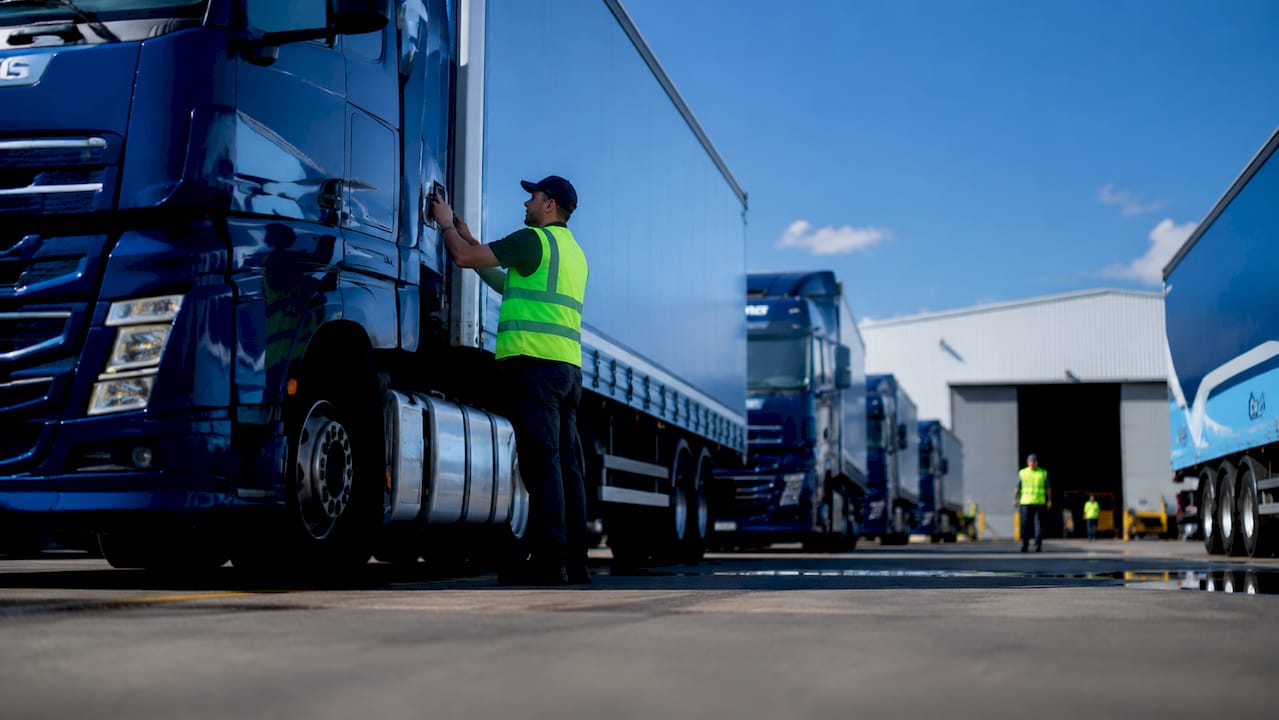
Supply chain efficiency is directly constrained by how well haulage operations are planned and executed. The most quantifiable measure of haulage inefficiency is empty running, which occurs when a vehicle travels without a payload. 31% of HGV kilometres in the UK are travelled empty, representing a structural cost burden that inflates per-unit transport costs and increases fleet wear without generating revenue. This is not simply a procurement problem. Empty running requires lane-level tracking and integrated routing to resolve, meaning that changing contracts alone will not eliminate it.
Route planning quality is the second major efficiency lever. Precision route planning incorporating vehicle and load constraints can reduce fuel waste by up to 10%, cutting both costs and emissions simultaneously. For hauliers operating on margins as thin as 1.58%, this is the difference between a profitable quarter and a loss. Reactive or low-fidelity routing creates an “efficiency debt” that compounds over time, eroding both haulage cost control and supply chain reliability.
Key operational factors that determine haulage efficiency include:
- Empty running percentage by lane and schedule, tracked at fleet level rather than aggregate
- Out-of-route mileage, which accumulates when drivers deviate from optimised paths due to poor mapping or outdated vehicle profiles
- Fuel consumption per tonne-kilometre, which reflects both route quality and driver behaviour
- Vehicle utilisation rate, measuring the proportion of available capacity actually loaded on each run
- Dwell time at collection and delivery points, which directly affects daily cycle completion and fleet productivity
Pro Tip: Monitor empty kilometres by individual lane rather than fleet average. A fleet average of 31% can mask specific lanes running at 50% or higher empty, which are the ones destroying your margin.
What is the importance of haulage reliability for supply chain resilience?
Haulage reliability is the degree to which scheduled collections and deliveries are completed within agreed time windows, and it is the single most visible measure of supply chain performance to your customers. A missed delivery window at a distribution centre does not stay contained. It triggers a cascade: replenishment orders are delayed, production schedules are disrupted, and demurrage charges accumulate at ports and warehouses. The haulage impact on logistics extends well beyond the individual shipment.
The most demanding test of haulage reliability is disruption management. Research on emergency truck dispatch frameworks demonstrates that ALNS algorithms achieve near-optimal scheduling during freight interruptions, outperforming genetic algorithms in both speed and solution quality. This matters because operational lag in haulage decision-making is the critical variable during disruptions. Frameworks with preset constraints enable routing decisions in seconds, preventing cascading supply delays that would otherwise take hours to resolve manually.
A structured approach to haulage resilience involves four sequential steps:
- Define time-window criticality for each delivery lane, distinguishing between hard windows (production line feeds, port cut-offs) and soft windows (retail replenishment).
- Pre-configure dispatch rules for common disruption scenarios, including vehicle breakdown, port congestion, and driver unavailability, so that rescheduling is semi-automated rather than manual.
- Integrate real-time traffic and port status data into the transport management system (TMS) to trigger proactive rerouting before delays become confirmed.
- Measure recovery time from disruption to confirmed rescheduling as a KPI, targeting sub-30-minute resolution for critical lanes.
“In emergency supply chain disruptions, speed of optimisation matters more than perfect optimality. ALNS algorithms provide rapid, high-quality haulage dispatch plans that outperform slower, theoretically optimal methods when time is the binding constraint.”
Haulage companies that invest in expedite trucking strategies and pre-built contingency frameworks consistently outperform those relying on ad hoc responses when disruptions occur.
How does haulage support supply chain network design?
The role of a haulage company in supply chain network design is to provide the physical connections between nodes that no other transport mode can replicate with equivalent flexibility. Fixed-route modes such as rail and maritime shipping offer cost advantages at scale, but they cannot adapt in real time to changing collection points, variable load sizes, or last-minute routing changes. Road haulage fills this gap as the connective tissue between ports, inland depots, manufacturing sites, and final delivery points.
Road logistics in Southern Africa demonstrates this function at scale, connecting mines, agricultural producers, depots, and cross-border corridors where no fixed-route alternative exists. The lesson for UK supply chain managers is that haulage’s value is not just in moving goods. It is in maintaining connectivity when conditions change, whether that means rerouting around port congestion at Felixstowe, adjusting for a closed motorway junction, or accommodating a same-day collection request from a supplier.
The table below compares road haulage against rail freight across the dimensions most relevant to supply chain network design:
| Dimension | Road haulage | Rail freight |
|---|---|---|
| Route flexibility | Door-to-door, any origin/destination | Fixed terminal-to-terminal only |
| Minimum viable load | Single pallet to full trailer | Full wagon or intermodal unit |
| Real-time rerouting | Possible within minutes | Requires advance scheduling |
| Port interface | Direct container collection and delivery | Requires drayage at both ends |
| Cost at low volumes | Competitive | Uneconomical |
| Disruption recovery | High, via alternative routing | Low, constrained by track availability |
DfT scoping research confirms that road freight infrastructure improvements produce wider supply chain efficiency benefits, but these benefits are segment-specific. A haulage improvement that transforms performance for a fast-moving consumer goods (FMCG) operator may have negligible impact for a bulk minerals shipper. This is why network design decisions must be evaluated with a segment-specific hypothesis rather than universal assumptions. For container haulage specifically, the port logistics interface between vessel discharge and inland delivery is where road haulage is irreplaceable.
What are the cost drivers and optimisation levers in haulage operations?
Haulage cost is determined by a small number of high-impact variables, and understanding each one gives supply chain managers the leverage to negotiate more effectively and plan more accurately. The dominant cost drivers are fuel, driver wages, tolls, vehicle depreciation, and empty running. Of these, empty running is the most controllable through operational decisions rather than market forces.
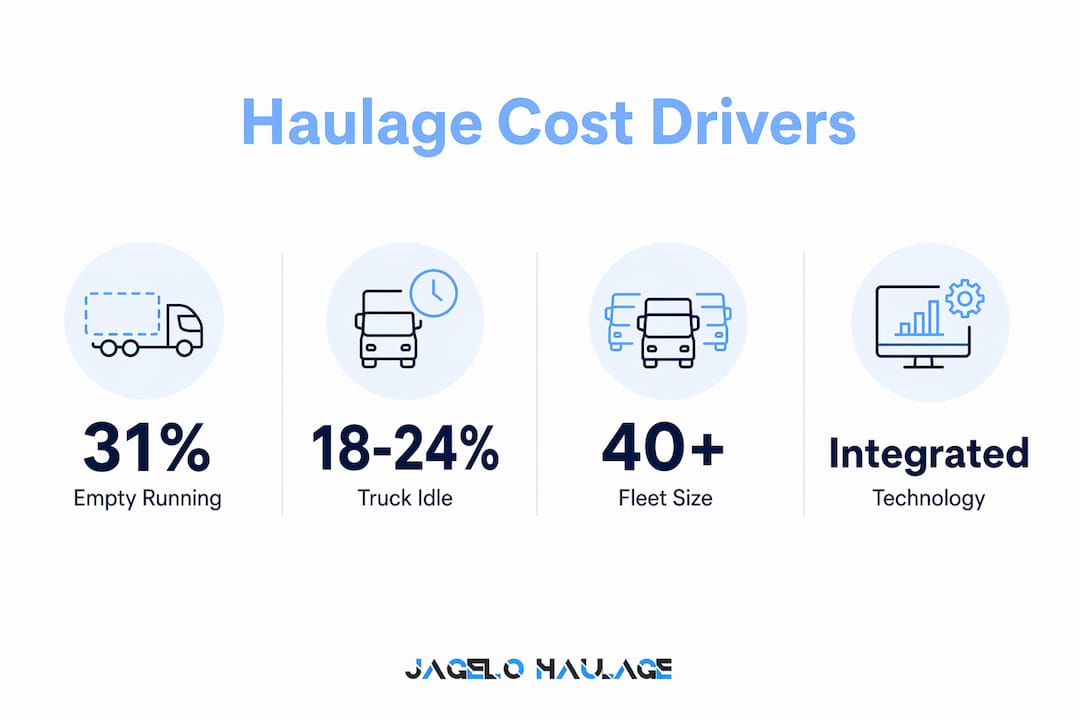
European data shows that trucks run empty 18 to 24% of total kilometres, and reducing this by 6 to 11 percentage points on a 25-truck fleet recovers €38 to €65 per truck per day in margin. Across a full operating year, that represents a material improvement to profitability without any change in rates or volumes. European tolls add 12 to 18% to cost per kilometre on affected routes, making toll audit and route selection a genuine cost lever rather than a back-office administration task.
The following comparison illustrates the margin impact of applying optimisation levers versus maintaining the status quo on a representative 25-truck fleet:
| Optimisation lever | Status quo cost impact | Optimised cost impact |
|---|---|---|
| Empty running (18% baseline) | Full fuel and wage cost on empty legs | 6-11pp reduction recovers €38-65/truck/day |
| Toll management | Unaudited toll charges at full rate | Route selection and audit reduce toll exposure by up to 18% |
| Fuel management with driver coaching | Average consumption, no behavioural feedback | Up to 10% fuel reduction via precision routing |
| TMS and telematics integration | Fragmented data, manual reconciliation | Consolidated visibility accelerates margin recovery |
Consolidating operational systems such as a TMS, telematics platform, fuel card data, and electronic proof of delivery (ePOD) into a single decision-making environment is the most impactful structural change a haulage operation can make. Fragmented systems mean that dispatch, routing, and cost data exist in silos, preventing the real-time decisions that reduce waste. For supply chain managers evaluating haulage partners, the presence of integrated technology platforms is a reliable proxy for operational discipline. The cost-effective container haulage guide from Jhaulage provides a detailed breakdown of how these levers apply specifically to container movements between UK ports and inland destinations.
Pro Tip: When auditing a haulage partner’s performance, request lane-level empty running data rather than fleet averages. A partner unable to provide this data does not have the visibility to manage it.
Key takeaways
Haulage is the physical and operational backbone of supply chain performance, and its efficiency, reliability, and cost structure directly determine whether your supply chain meets its service and margin targets.
| Point | Details |
|---|---|
| Empty running is the primary efficiency loss | 31% of UK HGV kilometres are empty; lane-level tracking is required to address it. |
| Disruption speed matters more than perfection | ALNS frameworks enable near-optimal rescheduling in seconds, preventing cascading delays. |
| Road haulage provides irreplaceable flexibility | No fixed-route mode matches road haulage for real-time rerouting and door-to-door connectivity. |
| System consolidation drives margin recovery | Integrating TMS, telematics, and ePOD removes the data fragmentation that prevents cost control. |
| Segment-specific evaluation is mandatory | Haulage improvements produce different outcomes by freight type; universal assumptions mislead planning. |
Why integrated planning separates good haulage from great supply chains
After working closely with container haulage operations across UK ports including Felixstowe, Tilbury, Southampton, and Liverpool, the pattern I see most consistently is this: supply chain managers who treat haulage as a commodity procurement exercise consistently underperform those who treat it as an operational partnership requiring shared data and joint planning.
The empty running figure of 31% in UK domestic road freight is not a market failure. It is a planning failure. Most of those empty kilometres exist because dispatch decisions are made without visibility of return load opportunities, and because lane-level performance data is never reviewed. The fix is not a new contract. It is a new data discipline.
What I find genuinely underappreciated is the role of pre-configured disruption frameworks. Most operations I encounter have no documented rescheduling protocol for common disruption scenarios. When a port gate closes unexpectedly or a vehicle breaks down on the M25, the response is improvised. That improvisation costs time, and time in haulage costs money and service credibility. Building even a basic decision tree for the three or four most common disruption types transforms response quality immediately.
Looking ahead to the remainder of 2026, AI-assisted routing and dynamic load matching are moving from pilot projects to operational deployment at larger fleets. Supply chain managers who build the data infrastructure now, specifically integrated TMS and telematics, will be positioned to adopt these tools without a disruptive transition. Those who do not will find the efficiency gap between themselves and better-planned competitors widening further. The fleet management practices that define high-performing haulage operations in 2026 are already available. The question is whether you are applying them.
— Vytautas
How Jhaulage supports efficient container haulage in the UK
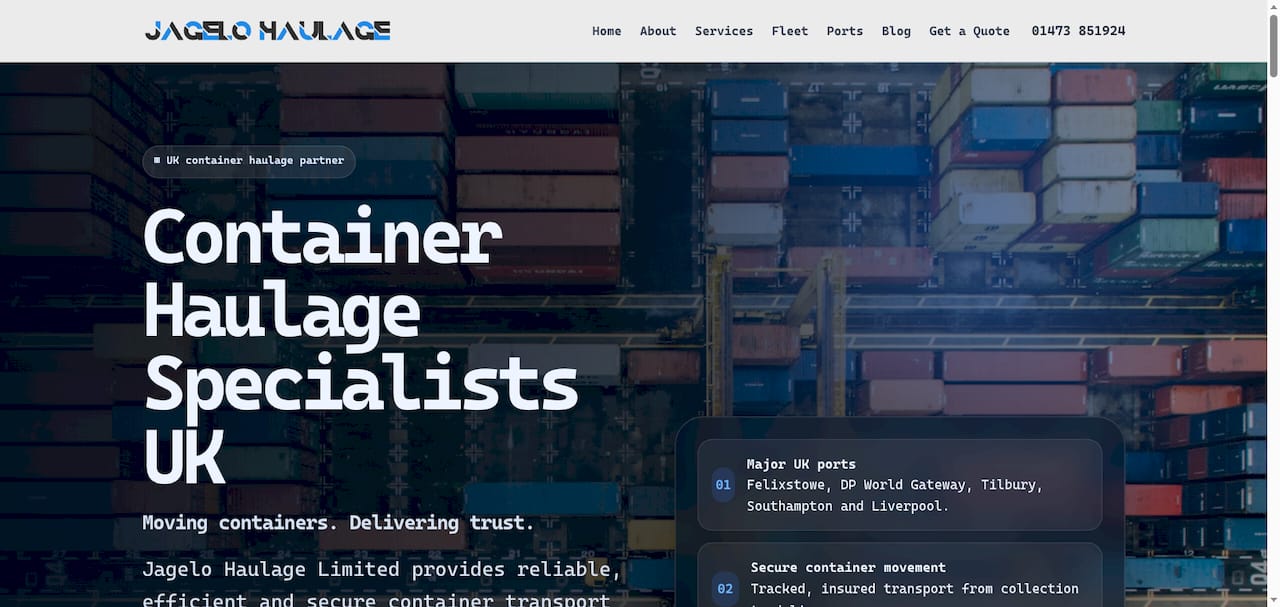
Jhaulage (Jagelo Haulage Limited) operates a fleet of over 40 GPS-tracked trucks and trailers providing specialist container haulage services across the UK’s major ports, including Felixstowe, Tilbury, Southampton, and Liverpool. Every movement is supported by real-time tracking, 24/7 operational support, and scheduling discipline designed to protect your delivery windows and reduce demurrage exposure. Whether you require full container load movements, same-day port collections, or port-to-door delivery on a regular lane, Jhaulage provides the reliability and visibility that supply chain managers require from a haulage partner. Contact Jhaulage to discuss how dedicated container haulage can strengthen your supply chain performance.
FAQ
What is the role of haulage in supply chain management?
Haulage provides the physical movement of goods between supply chain nodes, connecting ports, depots, manufacturing sites, and delivery points. It directly determines delivery reliability, transport cost, and the network flexibility available to supply chain planners.
Why does empty running matter for supply chain costs?
Empty running means a vehicle travels without payload, generating fuel, wage, and depreciation costs with no revenue offset. In the UK, 31% of HGV kilometres are empty, making it the single largest controllable cost inefficiency in road freight operations.
How does haulage affect supply chain resilience during disruptions?
Haulage operations with pre-configured dispatch frameworks and real-time routing data recover from disruptions significantly faster than those relying on manual rescheduling. ALNS-based optimisation tools can produce near-optimal dispatch plans in seconds, preventing cascading delays across the supply chain.
What technology should a haulage partner have to support supply chain efficiency?
A capable haulage partner should operate an integrated TMS, vehicle telematics, fuel management data, and ePOD in a consolidated platform. Fragmented systems prevent the real-time decision-making that controls empty running, toll costs, and delivery window adherence.
How does road haulage differ from rail freight in supply chain network design?
Road haulage offers door-to-door flexibility, real-time rerouting, and viability at low volumes, whereas rail freight is constrained to fixed terminals and requires advance scheduling. For container movements between UK ports and inland destinations, road haulage remains the only mode capable of direct, responsive delivery.
Recommended
- How haulage supports business growth in 2026 | Jagelo Haulage
- Haulage for Shipping Lines: A Comprehensive Guide to UK Port Logistics | Jagelo Haulage
- UK haulage sustainability practices: a logistics manager’s guide | Jagelo Haulage
- The Professional Guide to Cost-Effective Container Haulage in 2026 | Jagelo Haulage