The profitability of your supply chain in 2026 depends entirely on the efficiency of the final leg. While maritime transit is often predictable, inland container transport UK remains a sector where hidden haulage costs and port congestion can quickly erode margins. You're likely aware that a delay at a terminal like Southampton or Tilbury doesn't just stall a trailer. It disrupts your entire operational schedule.
This guide outlines professional strategies to master the movement of freight from major UK ports to your facility. Jagelo Haulage provides a clear framework for achieving a seamless transition through disciplined logistics and advanced security protocols. You'll learn how to utilise merchant haulage for greater control, navigate new 2026 regulations like the Smart Tachograph Version 2, and implement real-time tracking for full cargo visibility. By prioritising functional reliability and technical expertise, you can secure a cost-effective logistics model that protects your cargo and your bottom line.
Key Takeaways
- Understand why inland container transport UK is the strategic bridge of the supply chain and how it determines overall delivery punctuality.
- Evaluate the operational benefits of merchant haulage versus shipping line haulage to determine which model provides the necessary flexibility for your specific freight requirements.
- Identify critical 2026 compliance requirements, such as Smart Tachograph Version 2, to ensure your logistics partners meet current legal and safety standards.
- Learn how to manage haulage variables, including port wait times and fuel surcharges, to maintain a cost-effective and predictable transport budget.
- Recognise the operational advantages of utilising a tracked and insured fleet with established expertise at major hubs like Felixstowe, Southampton, and Tilbury.
What is Inland Container Transport and Why is it Critical for UK Logistics?
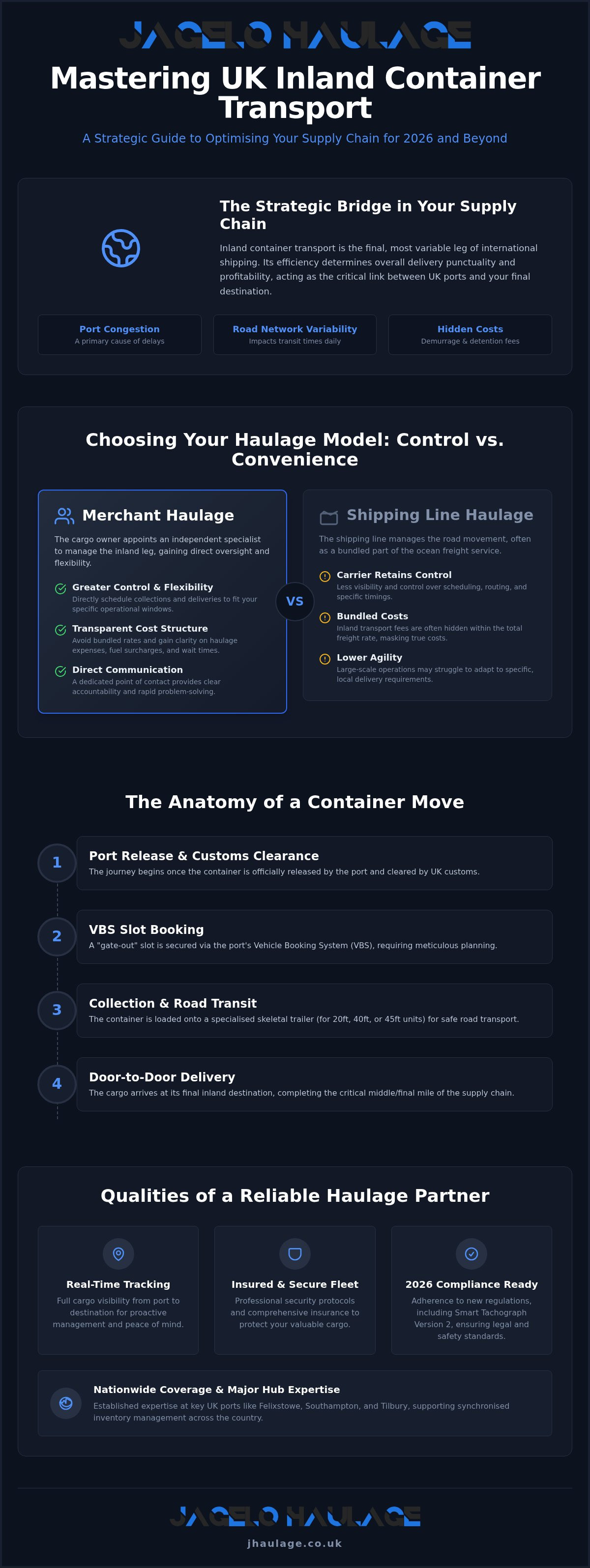
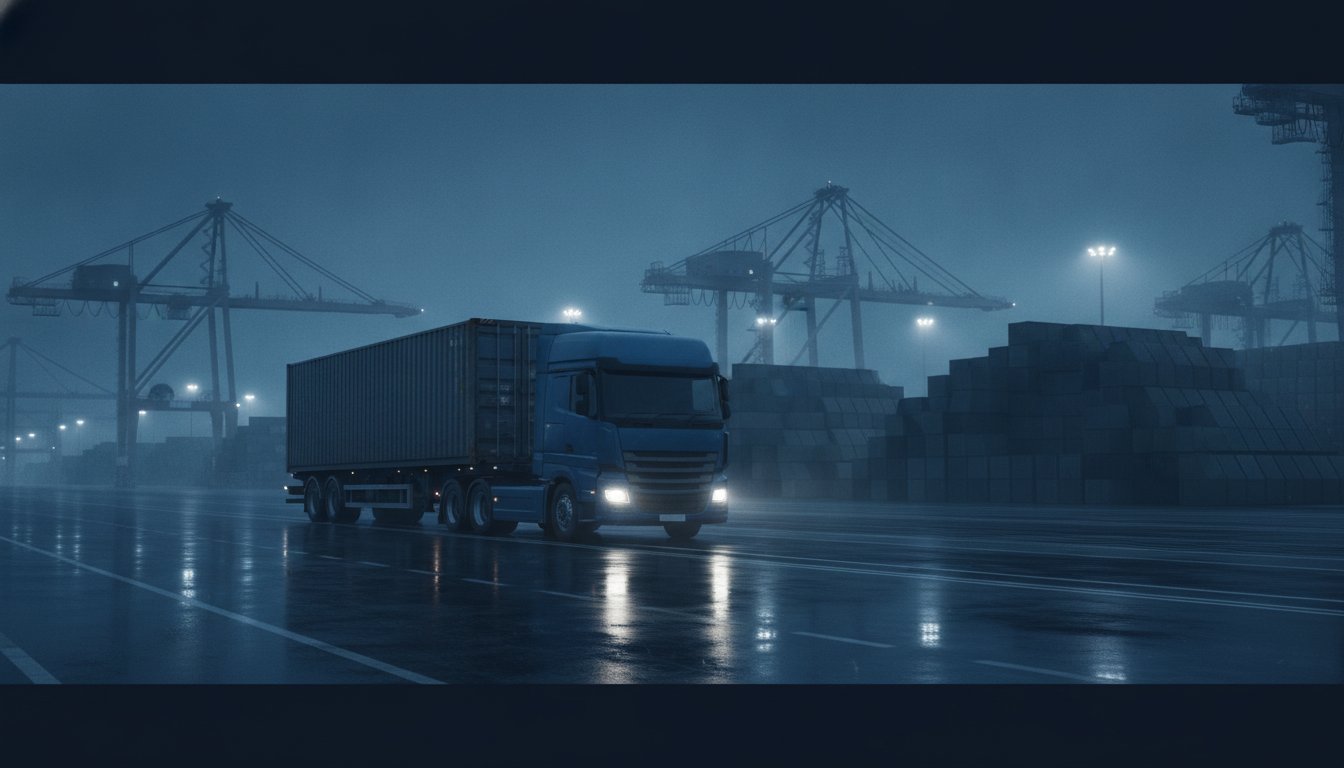
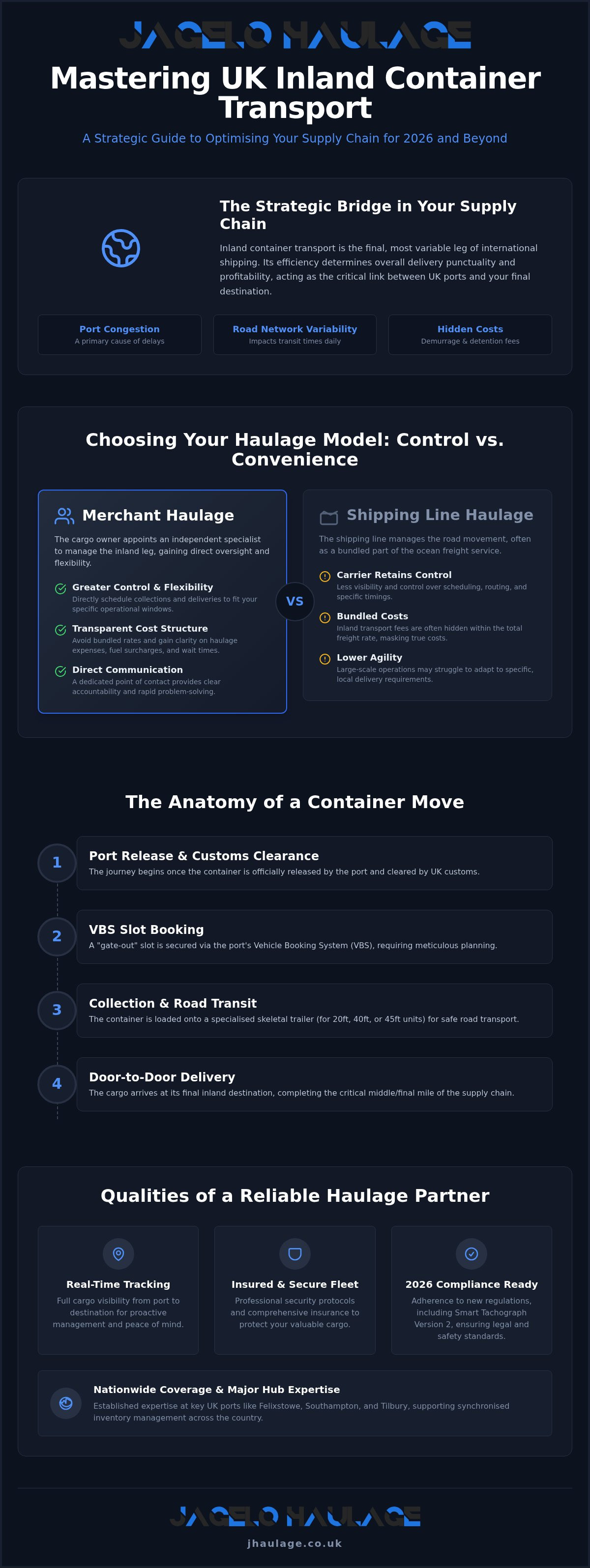
Inland container transport UK refers to the road-based movement of standard ISO containers from major maritime hubs to their final inland destinations. This process serves as the essential bridge between international shipping lanes and domestic distribution centres. It functions as the critical middle or final mile of the supply chain, where punctuality directly impacts the availability of goods for the end consumer. Maintaining cargo integrity throughout this transition requires a disciplined approach to vehicle handling and load security. Jagelo Haulage applies its industry expertise to ensure this transition is handled with professional discipline and functional reliability.
The inland leg is the most variable part of the international shipping process. Factors such as port congestion, road network availability, and terminal processing times can fluctuate daily. Consequently, professional inland container haulage is not merely a transport service; it is a strategic outcome that ensures supply chain continuity.
The Anatomy of a Container Move
The journey begins immediately after the container receives port release and clears customs. The haulier must then navigate complex UK port booking systems, such as the Vehicle Booking System (VBS), to secure a "gate-out" slot. Success in this phase depends on meticulous planning and adherence to strict terminal protocols. Once on the road, operators utilise specialised skeletal trailers designed to secure 20ft, 40ft, and 45ft containers safely. These trailers are the industry standard for maintaining stability and protecting the cargo during transit. Whilst some shipments may involve UK intermodal rail freight for long-distance trunking, road haulage provides the necessary flexibility for precise door-to-door delivery.
Economic Impact on the UK Supply Chain
Reliable haulage is a primary driver of cost control within the logistics sector. Inefficient transport often results in demurrage and detention charges. These fees are levied when containers remain at the port or with the customer beyond the agreed free-time period. By ensuring punctual collection and return, businesses avoid these hidden costs. Beyond cost savings, consistent inland transport allows for tighter inventory management. Companies with multiple distribution centres rely on nationwide coverage to synchronise their stock levels across the country. This level of operational reach supports a lean supply chain and reduces the need for excessive safety stock. A disciplined logistics partner understands that every hour of delay translates to lost revenue. The strategic integration of haulage into the broader business model is vital for maintaining a competitive edge in 2026.
Merchant Haulage vs Shipping Line Haulage: Choosing the Right Model
Selecting the appropriate delivery model for inland container transport UK is a critical decision for operational managers. The two primary methods are Shipping Line Haulage, also known as Carrier Haulage, and Merchant Haulage. In the Carrier Haulage model, the shipping line retains control of the container's road movement, often bundling the cost into the ocean freight rate. This is frequently perceived as the standard or default option. Conversely, Merchant Haulage allows the cargo owner to appoint an independent specialist to manage the inland leg. This distinction is significant because it shifts the balance of control from the carrier to the cargo owner.
The primary differences between these models lie in responsiveness and cost transparency. Shipping lines often manage vast volumes and don't always have the agility to address specific, local delivery windows. Merchant haulage offers a more transparent cost structure, as clients deal directly with the provider. According to recent UK freight and logistics statistics, road transport remains the dominant mode for moving goods, making the choice of haulier a central component of supply chain efficiency. Jagelo Haulage provides this level of operational transparency, offering a dedicated point of contact that provides accountability often absent in larger carrier structures.
Benefits of the Merchant Haulage Model
The Merchant Haulage model provides increased flexibility for scheduling collections and deliveries. By appointing an independent specialist in inland container transport UK, businesses gain direct communication with the transport office. This ensures that updates are delivered in real time, bypassing the delays often associated with shipping line agents. This model also mitigates the risk of line-dictated surcharges that can inflate costs unexpectedly. For a deeper analysis, readers can consult our guide on Merchant Haulage vs Shipping Line Haulage: A Strategic Comparison.
When to Opt for Professional Specialist Haulage
Certain operational scenarios require the precision of a specialist. Time-sensitive cargo, such as components for just-in-time manufacturing, demands scheduled delivery windows that carrier haulage might not guarantee. Managing complex inland requirements across multiple UK ports requires a partner with national reach and established expertise. This is particularly relevant when specialised equipment is needed for hazardous goods or specific container configurations. Professional operators view every move as a strategic outcome rather than a mere task. You can request a professional haulage consultation to evaluate which model best supports your distribution strategy.
Evaluating Fleet Capability and Security Standards
A professional haulage fleet in the current UK market is defined by its ability to integrate heavy-duty hardware with sophisticated data management systems. This integration ensures compliance with 2026 regulatory requirements, such as the mandatory Smart Tachograph Version 2 for international transport and stricter Direct Vision Standards (DVS). According to Road Haulage Association industry data, the efficiency of the road freight sector is a cornerstone of the national economy. Jagelo Haulage maintains this standard by operating a fleet of over 40 modern trucks and trailers, ensuring that inland container transport UK remains reliable and functionally secure.
Maintaining a modern fleet is essential for meeting environmental standards and avoiding penalties in expanding Clean Air Zones. Beyond hardware, "fully insured" status is a non-negotiable requirement for high-value containerised cargo. This protection provides the necessary financial security for cargo owners, ensuring that every strategic outcome is backed by comprehensive risk management. Professional operators prioritise these standards to deliver a service that is both compliant and dependable.
The Role of Technology in Modern Haulage
Real-time visibility is a fundamental requirement for modern logistics. GPS tracking and advanced telematics allow clients to monitor their cargo's progress from the terminal gate to the final delivery point. This transparency reduces anxiety and allows warehouse managers to plan their labour and docking schedules with precision. Electronic Proof of Delivery (ePOD) systems further improve administrative efficiency by providing immediate arrival confirmations. Additionally, route optimisation software identifies the most efficient paths to ensure on-time arrivals whilst reducing fuel consumption and supporting 2026 CO2 emissions frameworks. For a detailed analysis of these technologies, read our guide on The Modern Container Transport Fleet: A Strategic Guide.
Safety and Compliance Protocols
Security is maintained through strict adherence to professional standards and physical safeguards. Every driver must hold a valid Certificate of Professional Competence (CPC), which serves as a pillar of service quality. Securing various ISO standards, including 20ft, 40ft, and 45ft containers, requires specialised skeletal trailers and personnel who understand weight distribution and lashing protocols. This expertise is critical when handling specialised cargo, such as refrigerated units or heavy loads that fall under the Special Types General Order (STGO). By following these protocols strictly, hauliers ensure that cargo integrity is never compromised during the inland journey.
Optimising Your Inland Transport Strategy for Cost and Speed
Efficient inland container transport UK requires a disciplined approach to cost management and route planning. Haulage rates are influenced by several volatile factors, including fluctuating fuel prices and port-specific energy charges. For example, the industry-standard fuel surcharge reached 19.5% in May 2026, reflecting the ongoing volatility in diesel costs. Port wait times also contribute significantly to the overall expense. When vehicles are delayed at terminals or warehouses beyond the standard free time, additional fees are often applied. Selecting a partner with broad coverage across major hubs like Felixstowe, Southampton, and Tilbury is essential to reduce empty miles and ensure a more sustainable operation.
Strategic planning involves a balance between scheduled deliveries and emergency spot bookings. Scheduled transport allows for better resource allocation and often results in more favourable rates. Conversely, spot bookings provide a necessary safety net for urgent or delayed freight but typically carry a premium. To maintain operational stability, businesses should aim for a high percentage of scheduled moves whilst retaining the capacity for rapid response when required. You can request a tailored haulage quote to align your transport strategy with your 2026 budgetary requirements.
Reducing Hidden Logistics Costs
Hidden costs often arise from a lack of communication between the port, the haulier, and the final destination. Efficient data sharing ensures that vehicles are dispatched only when cargo is ready, which helps to avoid unnecessary port storage fees. Implementing "Port Centric" logistics, where distribution centres are located in close proximity to the port of entry, can also significantly reduce the inland transit distance. For a comprehensive breakdown of these variables, see our guide on Understanding Container Transport Costs: A Comprehensive UK Buying Guide.
Scheduling and Planning for 2026
Urgent shipments require a haulage partner capable of providing same-day delivery options. Coordinating closely with warehouse teams is vital to ensure that trucks are loaded or unloaded quickly, as businesses that don't prioritise turnaround times often face vehicle waiting charges. By using data from previous shipments, operators can identify patterns in port congestion and optimise future delivery windows to avoid peak traffic periods. This methodical approach to scheduling transforms inland transport from a variable expense into a predictable strategic asset.
Partnering with Jagelo Haulage for Nationwide Container Solutions
Jagelo Haulage positions itself as the disciplined and professional choice for operators requiring nationwide container solutions. With more than 15 years of industry experience, the brand understands the specific complexities of the UK supply chain. Operating a modern fleet of over 40 trucks and trailers, the company ensures that inland container transport UK is executed with quiet confidence and functional reliability. This operational reach extends from major maritime hubs like Felixstowe, Southampton, and Tilbury to distribution centres across the country. Every statement of capability is backed by a proven track record of competence and a commitment to the safety of every load.
Professional logistics requires a partner that prioritises performance over self-promotion. Jagelo Haulage delivers protected outcomes by adhering to strict safety protocols and maintaining a high standard of vehicle security. The brand understands that the inland leg is the most variable part of the journey. By applying technical expertise and a methodical approach to route planning, the company transforms this variability into a stable strategic asset for its clients.
A Professional Haulage Partner
A professional haulage partner must do more than move freight; they must integrate seamlessly with existing logistics teams. Jagelo Haulage functions as a strategic partner that understands the high stakes of port-to-door continuity. By following strict operational protocols, the brand ensures that every container move is a protected strategic outcome. A primary benefit of this partnership is the 24/7 emergency support available for time-critical shipments. This level of responsiveness is essential for managing the variables of the inland leg, such as terminal delays or urgent inventory requirements. The fleet is kept in peak condition through rigorous maintenance schedules, ensuring maximum uptime and adherence to 2026 environmental standards. This methodical approach to fleet management reflects a corporate culture that values performance and results.
Get Started with a Professional Quote
Securing a reliable logistics model begins with a transparent and professional engagement process. Jagelo Haulage provides a straightforward method for requesting a tailored quote for inland container transport UK, ensuring that cargo owners receive accurate costings without delay. The customer support team is highly disciplined and responsive, reflecting the brand’s no-nonsense approach to business communication. Every move is fully tracked and insured, providing the security required for high-value containerised goods. By choosing a partner that prioritises functional reliability and technical expertise, you can ensure that your supply chain remains resilient against the challenges of the modern market. You can request a professional container haulage quote today to establish a stable and secure transport framework for your business.
Securing Your Supply Chain for 2026 and Beyond
Mastering inland container transport UK requires more than just moving freight; it demands a strategic choice between haulage models and a commitment to 2026 compliance standards. Merchant haulage offers the transparency and flexibility needed to avoid hidden port fees and scheduling delays. By prioritising a modern fleet equipped with GPS tracking and adhering to the latest safety protocols, you protect your cargo and your operational margins. The transition from port arrival to final delivery is a strategic outcome that determines your supply chain’s overall success.
Jagelo Haulage brings 15+ years of port logistics experience and a modern fleet of over 40 trucks to every move. We provide the functional reliability and real-time visibility your business requires for consistent performance. Our disciplined approach ensures your containers are handled with the highest level of professional competence from all major UK terminals. You can request a bespoke quote for your inland container transport to begin optimising your logistics today. We look forward to securing your cargo's journey.
Frequently Asked Questions
What is the difference between merchant haulage and shipping line haulage?
Merchant haulage allows the cargo owner to appoint an independent specialist, whereas shipping line haulage is controlled by the carrier. Choosing merchant haulage provides greater transparency and flexibility in scheduling. This model allows for direct communication with the transport office, which reduces the administrative delays often associated with carrier-managed moves. It remains a strategic choice for businesses requiring more control over their inland container transport UK.
Which UK ports do you collect containers from?
Jagelo Haulage provides comprehensive coverage from all major maritime hubs across the United Kingdom. We regularly collect containers from Felixstowe, DP World London Gateway, Tilbury, Southampton, and Liverpool. Our national reach ensures that we can handle your freight regardless of the port of entry. This wide coverage simplifies your logistics chain by centralising your inland container transport UK requirements with a single professional partner with 15 years of experience.
Can you handle refrigerated or specialised container transport?
We specialise in the movement of standard ISO containers and have the technical capability to manage specialised loads. Our fleet is equipped to handle various cargo types, including temperature-controlled units and heavy loads that require specific equipment. Every move is performed under strict safety protocols to ensure cargo integrity. Clients requiring specialised transport should discuss their requirements with our team to ensure all compliance and equipment standards are met.
How do you ensure the security of the cargo during inland transport?
Security is maintained through a combination of advanced technology and strict operational protocols. Every vehicle in our fleet is fitted with GPS tracking, allowing for constant monitoring of the cargo’s location. Our drivers are trained in professional competence (CPC) and follow rigorous lashing and weight distribution standards. Additionally, all transport processes are fully insured, providing a layer of financial protection that is essential for high-value containerised goods moving through the road network.
Do you offer same-day container delivery for urgent shipments?
Yes, we provide same-day container delivery services to support time-critical logistics requirements. We understand that port delays or urgent stock needs require a responsive transport partner. Our fleet of over 40 trucks is positioned to react quickly to urgent bookings, ensuring that your freight moves from the terminal gate to your facility without unnecessary delay. This service is part of our commitment to providing functional reliability for professional operators nationwide.
What container sizes are your trailers equipped to carry?
Our modern fleet of skeletal trailers is specifically designed to carry all standard ISO container sizes. This includes 20ft, 40ft, and 45ft units. These trailers provide the necessary stability and security for road transit, ensuring that containers are locked safely in place. Whether you are moving standard dry vans or high-cube containers, our equipment meets the required safety standards to protect your cargo throughout the entire inland journey.
How are inland container haulage rates calculated?
Haulage rates are determined by several factors, including the distance from the port to the delivery point and the current fuel surcharge. Port-specific energy adjustment mechanisms and infrastructure charges also influence the final cost. We calculate rates based on providing a transparent and cost-effective solution for our clients. By choosing an experienced partner, you benefit from accurate pricing that accounts for these variables whilst avoiding the hidden costs found in less disciplined operations.
Do you provide real-time tracking for inland container moves?
We provide full visibility for all inland container moves through our integrated GPS tracking systems. This technology allows clients to monitor the real-time progress of their containers from the moment they gate-out at the port. Providing this level of transparency is a core part of our service, as it allows warehouse managers to plan their operations with precision. This data-driven approach reduces supply chain anxiety and ensures that every strategic outcome is documented.