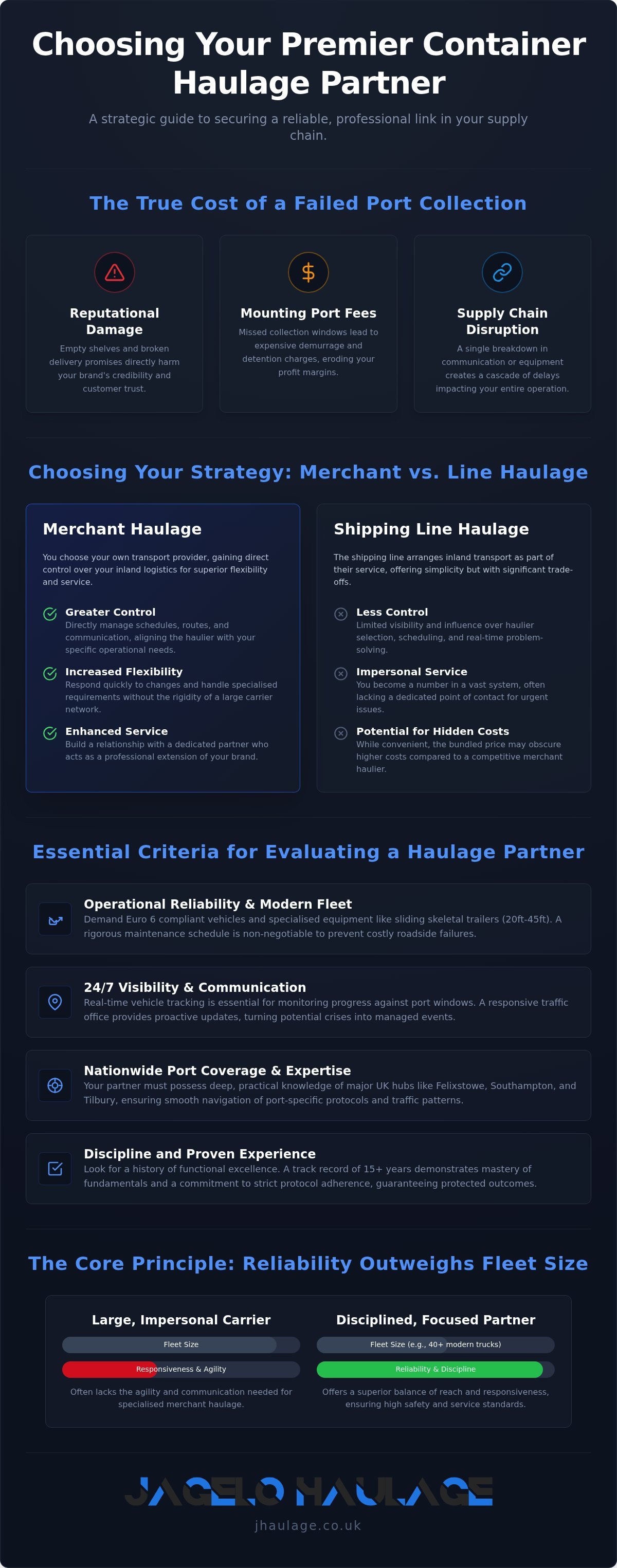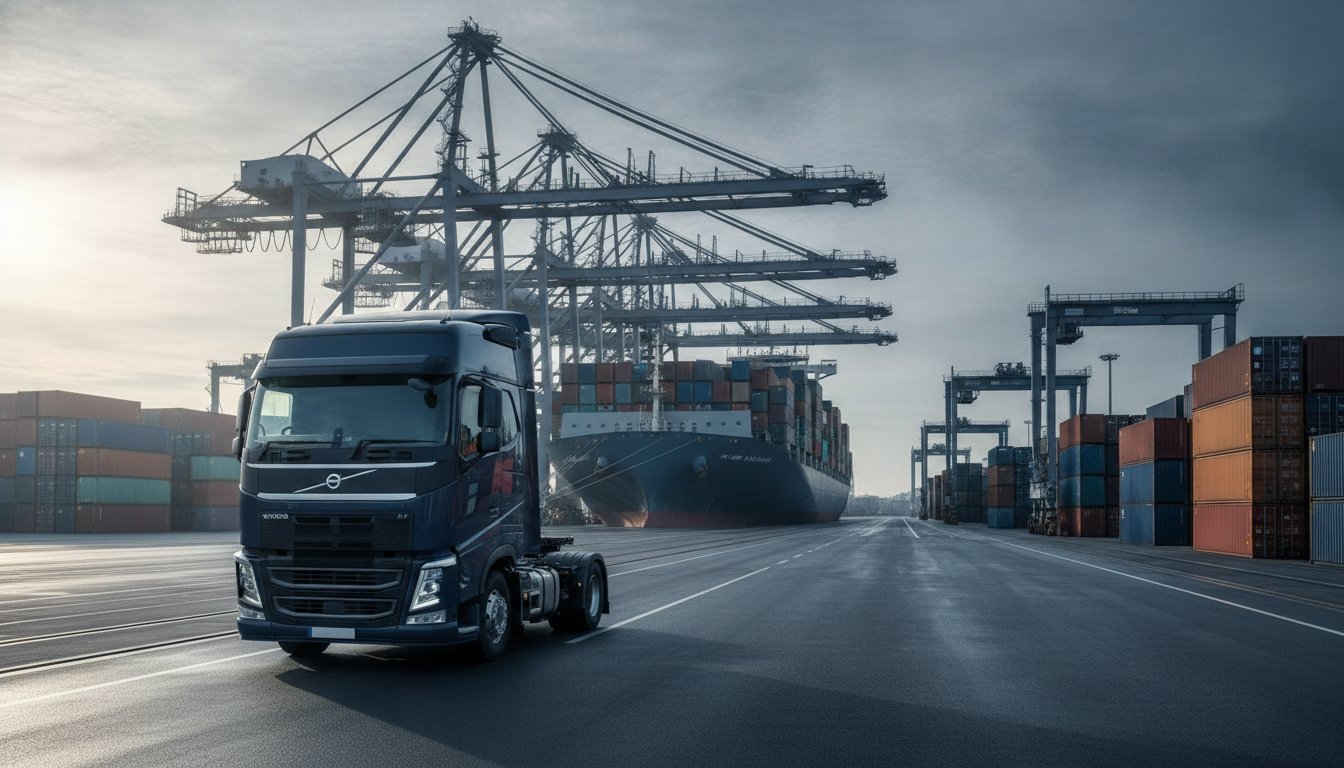
The true cost of a failed port collection isn't just the haulage fee. It's measured in the reputational damage of empty shelves and the mounting expense of port demurrage charges. You know that a single breakdown in communication from a driver or traffic office can disrupt an entire supply chain. Finding the best container haulier requires looking beyond fleet size to identify a partner that prioritises disciplined operational fundamentals and equipment safety. It's about securing a reliable, professional link between the maritime hub and your customer's door.
We understand that you need more than just a truck; you require a professional extension of your own brand. This article outlines the essential criteria for selecting a premier container haulage partner to ensure your deliveries remain secure, punctual, and professional. We'll examine how nationwide port coverage, modern fleet management, and clear visibility over container movements can eliminate delays at major hubs like Felixstowe or Southampton. By the end of this guide, you'll have a structured framework for choosing a partner that understands the high stakes of modern port logistics.
Key Takeaways
- Understand why selecting the best container haulier is a strategic business decision that protects your brand and ensures supply chain integrity.
- Identify how modern fleet management and real-time tracking prevent unpredictable delivery times and costly port demurrage charges.
- Compare the benefits of merchant haulage against shipping line haulage to optimise your control over inland logistics.
- Utilise a professional checklist to evaluate a haulier's operational security and their reach across major UK maritime hubs.
- Recognise the value of industry experience in maintaining a disciplined and reliable port-to-door service.
Identifying the Best Container Haulier for Your Supply Chain
Determining the best container haulier for your operations requires an assessment of discipline rather than a simple comparison of fleet numbers. In the current logistics environment, a best-in-class provider is defined by its ability to maintain rigid schedules despite external pressures. This standard of service ensures that your cargo moves through the supply chain without the friction of administrative errors or equipment failure.
Choosing a partner is a strategic decision that directly influences your operational overheads. The best container haulier operates with a level of professional management that protects you from escalating port fees. With UK ports experiencing elevated congestion in 2026, the financial impact of a missed collection is substantial. Punctuality isn't merely a preference; it's a financial necessity that prevents demurrage and detention charges from eroding your margins.
The Role of Port-to-Door Logistics
The transition from maritime arrival to inland delivery is the most volatile stage of the supply chain. While the history of containerization has standardised the global movement of goods, the final leg remains subject to local complexities. Navigating major hubs like Felixstowe, Southampton, or Tilbury requires a haulier that understands specific port protocols and traffic patterns. Professional logistics management ensures schedules are maintained whilst managing these variables. This approach provides "protected outcomes," where the safety of the cargo and the reliability of the delivery time are guaranteed through meticulous planning and execution.
Why Reliability Outweighs Fleet Size
Large, impersonal carriers often lack the agility required to handle specialized merchant haulage requirements. A disciplined, medium-sized fleet, such as the 40+ modern trucks operated by Jagelo Haulage, offers a superior balance of reach and responsiveness. Professional management amongst drivers ensures that safety standards remain high at every delivery site. When minor delays occur at the port, a responsive traffic office can re-route assets or provide clear visibility to the client, preventing a small setback from becoming a major disruption. This level of communication is often lost in larger organisations where clients become mere numbers in a system.
A top-tier haulier is one that prioritises operational fundamentals over marketing. By focusing on the master of fundamentals, such as vehicle maintenance and strict protocol adherence, a haulier provides a more secure service than a competitor that relies solely on the scale of its fleet. Reliability is the product of 15 years of industry experience and a commitment to functional excellence.
Operational Reliability: The Foundation of Elite Container Transport
Operational reliability isn't an abstract concept. It's the direct result of a disciplined maintenance regime and a commitment to modern equipment standards. Without this foundation, even the most sophisticated logistics plan will fail at the first mechanical hurdle. The best container haulier understands that a single vehicle failure doesn't just delay one delivery; it creates a cascade of disruptions that can lead to significant financial penalties at the port.
Reliability is underpinned by constant visibility. Modern logistics demand 24/7 vehicle tracking to ensure that traffic offices can monitor progress against strict port windows. This real-time data allows for proactive adjustments before a delay becomes a crisis. According to UK freight statistics, road transport remains the primary method for moving goods from maritime hubs to inland destinations. This volume makes fleet discipline the most effective tool for reducing port demurrage, as it ensures containers are collected and returned within their allotted free-time periods.
Modern Fleet Standards and Maintenance
In 2026, fleet standards are increasingly defined by environmental compliance and technical versatility. Euro 6 compliant vehicles are now a baseline requirement for maintaining operational efficiency and meeting the UK's evolving emissions regulations. A professional fleet must also include specialised equipment such as sliding skeletal trailers. These trailers allow for the safe transport of various container sizes, from 20ft to 45ft units, without compromising weight distribution or site access. Rigorous maintenance schedules, performed at shorter intervals than the legal minimum, are essential to prevent roadside failures that jeopardise delivery timelines.
Professional Driver Conduct and Safety
The driver serves as the final, and often most visible, link in the logistical chain. Their conduct at the delivery site is a direct reflection of the haulier's internal standards. Professional drivers who hold current CPC qualifications and follow strict safety protocols ensure that high-value cargo is handled with the necessary care. This discipline is particularly important when navigating tight delivery windows or complex industrial sites where safety is paramount. Jagelo Haulage operates with this level of professional management, ensuring that every driver understands the strategic importance of their role in the wider supply chain. If you require a partner that prioritises these operational fundamentals, you can request a logistical assessment to see how a disciplined fleet can support your business.
Merchant Haulage vs Shipping Line Haulage: Choosing Your Strategy
The strategic selection between merchant and shipping line haulage determines the level of control a business maintains over its inland logistics. Whilst both models facilitate the movement of goods from port to door, they offer distinct operational outcomes. Merchant haulage allows the cargo owner or freight forwarder to appoint their own transport provider, whereas shipping line haulage leaves the inland leg under the control of the ocean carrier.
This decision directly impacts cost control and administrative efficiency. Merchant haulage often provides greater transparency in pricing and scheduling, allowing for direct negotiation with the haulier. Conversely, shipping line haulage simplifies the procurement process by bundling maritime and inland transport into a single contract. According to a road haulage sector analysis, the flexibility offered by independent operators is a critical component of the UK's logistical resilience. The best container haulier is one that can adapt its internal protocols to support either model with equal precision.
The Advantages of Merchant Haulage
Merchant haulage is frequently the preferred choice for those who require absolute visibility and control over delivery windows. By selecting an independent partner, you establish a direct line of communication with the traffic office. This eliminates the delays often associated with third-party relaying of information. It also allows for more agile responses to port congestion or changing site requirements. For a detailed breakdown of these benefits, refer to our comparison guide on merchant vs line haulage. This model ensures that the haulier works directly for your interests, prioritising your delivery windows over the carrier's broader network constraints.
When to Utilise Shipping Line Haulage
Shipping line haulage is often more efficient for high-volume, standardised shipments where simplicity outweighs the need for granular control. In this scenario, the carrier assumes responsibility for the entire journey, which can reduce the administrative burden on your internal teams. However, this convenience often comes at the cost of flexibility; you may have less influence over exact arrival times or the specific equipment used. A professionally managed haulier supports these operations by executing line-directed instructions with the same level of discipline applied to merchant contracts. Whether acting as a direct partner or a carrier-appointed contractor, the best container haulier maintains high standards of safety and punctuality to protect the integrity of the supply chain.
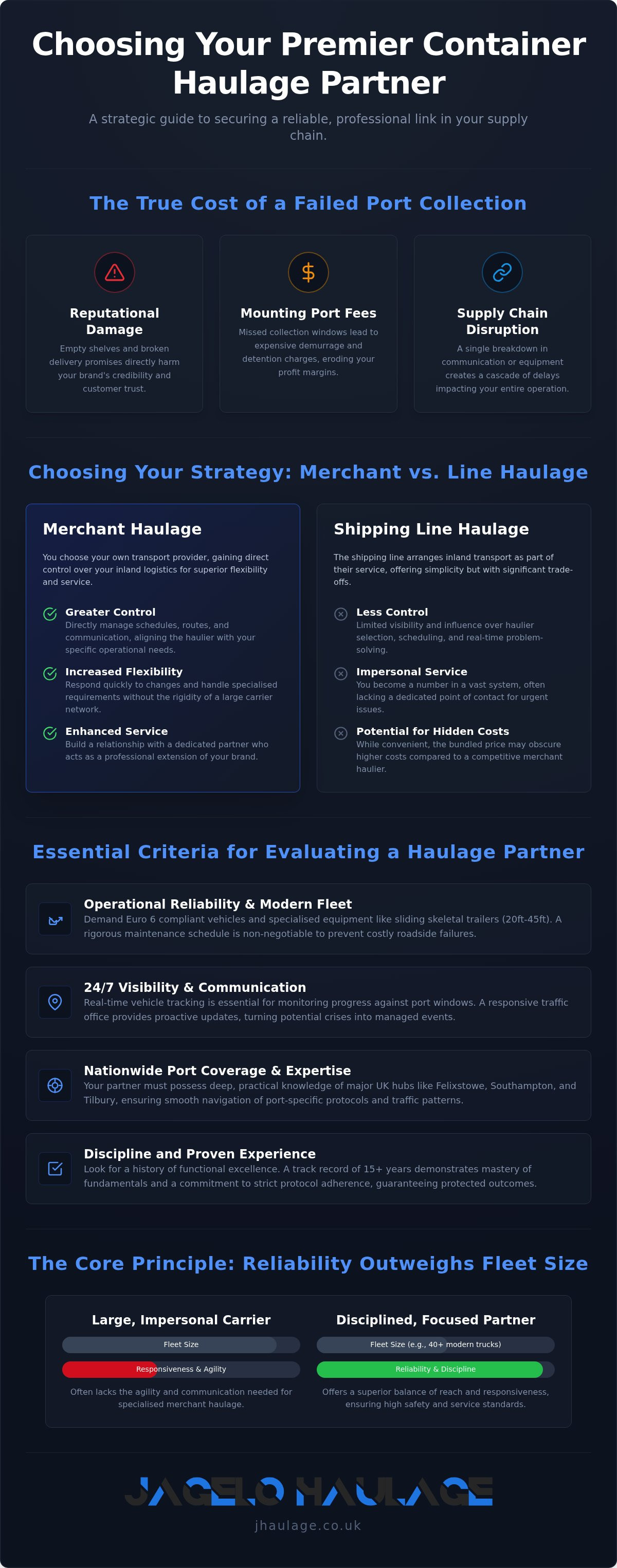
Essential Criteria for Evaluating Haulage Partners in 2026
Selecting the best container haulier in 2026 requires a rigorous evaluation of their operational infrastructure. It's not enough to rely on surface-level claims of service. A logistics manager must verify that a provider has the physical assets and administrative discipline to handle high-value cargo under pressure. This begins with a comprehensive audit of their security protocols and insurance levels. You should ensure that Goods in Transit (GIT) cover is sufficient for your specific cargo value and that the haulier follows strict driver vetting procedures. Use the following checklist to assess potential partners:
- Operational Visibility: Confirm the haulier provides 24/7 GPS tracking and real-time status updates.
- Security Standards: Verify that drivers follow established protocols for secure parking and vehicle immobilisation.
- Compliance: Check for current CPC qualifications and adherence to the latest UK Emissions Trading Scheme requirements.
- Specialised Equipment: Ensure the fleet includes the necessary skeletal or sliding trailers for your container types.
Port Coverage and Nationwide Reach
A haulier's footprint is a primary indicator of their capability. Top-tier providers maintain a consistent presence at major hubs including Felixstowe, Southampton, and Tilbury. This coverage ensures that your supply chain isn't vulnerable to localised disruptions. Each terminal has unique gate systems and Vehicle Booking System (VBS) requirements. A partner with deep experience at these specific sites can navigate these complexities without incurring unnecessary delays. This nationwide reach allows for a more resilient logistics strategy, as it provides the flexibility to reroute cargo through different maritime hubs when necessary.
Financial Stability and Fleet Investment
Long-term reliability depends on a company's commitment to reinvestment. When evaluating a partner, you should look for an established industry presence of at least 15 years. This longevity suggests a stable business model that prioritises fleet renewal over short-term profits. A company that consistently invests in Euro 6 compliant vehicles and modern trailers is better equipped to provide a secure and punctual service. Before signing a contract, ask direct questions about their vehicle replacement cycle and their protocol for managing port demurrage. If you require a partner with a proven track record of professional management, you can request a professional haulage quote to secure your port-to-door deliveries.
Jagelo Haulage: Delivering Professional Excellence Across UK Ports
Jagelo Haulage represents the industry standard for professional port logistics in the UK. With over 15 years of industry experience, the company has established itself as a master of the fundamentals. Finding the best container haulier means identifying a partner that understands the high stakes of the supply chain. We provide a disciplined, reliable link between maritime hubs and your final delivery point. Our approach moves beyond simple transport; we offer a strategic outcome that protects your brand and secures your margins against the volatility of the logistics sector.
Jagelo Haulage has refined its operations to become the best container haulier for businesses that value security over scale. We don't aim for market-leading status through sheer volume. Instead, we focus on the functional reliability of our 40-truck fleet and the professional conduct of our drivers. This disciplined focus ensures that every container collection is executed with precision, regardless of the complexities at the port terminal.
A Modern Fleet for a Demanding Industry
Our commitment to safety and efficiency is reflected in our modern fleet of over 40 trucks and trailers. Every vehicle is maintained to a standard that exceeds legal requirements, reducing the risk of roadside failures that disrupt your schedule. Operating from our Suffolk-based centre, our traffic office manages nationwide deliveries with methodical precision. This centralised control allows us to coordinate movements across the UK's primary maritime hubs whilst providing clear visibility to our clients. For those requiring specific technical details on our equipment, our modern fleet guide provides a comprehensive overview of our Euro 6 compliant standards.
Securing Your Supply Chain Today
Transitioning from transactional haulage to a strategic partnership is the most effective way to insulate your business from port congestion. Jagelo Haulage provides comprehensive coverage of all major UK maritime hubs, including Felixstowe, Southampton, and Tilbury. This nationwide reach, combined with our specialism in merchant haulage, ensures your cargo is handled by professionals who understand the specific protocols of each terminal. We act as a seamless extension of your brand at the final delivery point, ensuring that your customers receive their goods punctually and safely. You can contact Jagelo Haulage for a professional haulage solution that prioritises the long-term stability of your supply chain.
Securing Your Supply Chain Through Operational Excellence
Selecting a logistical partner is a strategic commitment to your business's stability. We've explored how the best container haulier prioritises the master of fundamentals, including fleet maintenance and professional driver conduct. These factors are essential for navigating the complexities of modern port logistics and avoiding the financial impact of port demurrage. By focusing on disciplined management rather than mere scale, you ensure that your cargo moves securely from port to door.
Jagelo Haulage provides this level of steadfast professionalism across all major UK maritime hubs. With over 15 years of industry experience and a modern fleet of 40+ trucks, we offer the reliability required for high-stakes operations. Our expertise in Felixstowe, Southampton, and DP World Gateway logistics ensures that your deliveries remain on schedule. Partner with Jagelo Haulage for reliable nationwide container transport to secure your next shipment. We look forward to supporting your long-term logistical success.
Frequently Asked Questions
What is the difference between merchant haulage and shipping line haulage?
Merchant haulage involves the cargo owner appointing their own transport provider, which offers direct control over scheduling and carrier selection. Shipping line haulage is managed by the ocean carrier as part of a bundled transport contract. Merchant haulage is often preferred by those seeking the best container haulier for specific delivery windows. It allows for direct communication with the transport office, reducing the risk of administrative delays that occur when a third party manages the inland leg.
How do I choose the best container haulier for my business?
Selecting the ideal partner requires a focus on operational fundamentals rather than just fleet size. You should evaluate their port coverage, the age of their vehicles, and their history of punctuality. Verify that they have at least 15 years of industry experience and a modern fleet of Euro 6 compliant trucks. A best container haulier with a disciplined approach to maintenance and driver training will provide the most secure and predictable outcomes for your supply chain.
Which UK ports does a nationwide container haulier typically cover?
A nationwide provider should support all major maritime hubs to ensure supply chain resilience. This typically includes Felixstowe, Southampton, and Tilbury, along with DP World London Gateway. Coverage of these sites requires a deep understanding of specific terminal protocols and gate systems. By using a haulier with a broad footprint, you maintain the flexibility to reroute cargo through different ports without needing to onboard new logistical partners for every individual shipment.
Can a container haulier provide same-day delivery services?
Professional hauliers can provide same-day delivery services, provided that port windows and vehicle availability align. This service is particularly useful for urgent merchant haulage requirements where time is a critical factor. Success depends on the haulier's ability to coordinate with port vehicle booking systems and maintain a modern, reliable fleet. You should confirm their specific specialism in same-day transport before booking to ensure they have the necessary operational agility to handle urgent requests.
What equipment is used for professional container haulage?
Professional container haulage relies on specialised trailers designed for secure transport. This includes skeletal trailers for standard units and sliding trailers that adjust to accommodate containers from 20ft to 45ft in length. Modern tractor units should be Euro 6 compliant to meet environmental standards and ensure fuel efficiency. Using the correct equipment prevents safety concerns at delivery sites and ensures that weight distribution remains within legal limits during transit across the UK road network.
Why is professional driver training important for container transport?
Professional driver training ensures that every delivery is handled with the necessary care and safety. Drivers must hold valid Certificate of Professional Competence qualifications and follow strict protocols for cargo security. An experienced driver understands the complexities of port terminals and industrial delivery sites, reducing the risk of accidents or delays. This discipline protects your cargo and serves as a professional extension of your brand when the vehicle arrives at your customer's door.
How does a haulier help avoid port demurrage and detention charges?
Hauliers help avoid these charges by maintaining strict punctuality and monitoring port windows. By ensuring containers are collected and returned within the shipping line's allotted free time, the haulier prevents escalating daily fees. A disciplined traffic office uses 24/7 tracking to provide visibility and proactively manage potential delays. This level of coordination is a primary reason why businesses seek the best container haulier to manage their time-sensitive merchant haulage requirements and protect their margins.
What should I look for in a haulier’s insurance and safety certifications?
You should verify that a haulier holds comprehensive Goods in Transit insurance and public liability cover. These should be tailored to the specific value of your cargo to ensure full protection in the event of an incident. Additionally, look for industry certifications that demonstrate a commitment to safety standards and environmental compliance. A professionally managed company will be transparent with their documentation, providing you with the security needed for a long-term strategic partnership.