Part of our guide to container haulage from Southampton
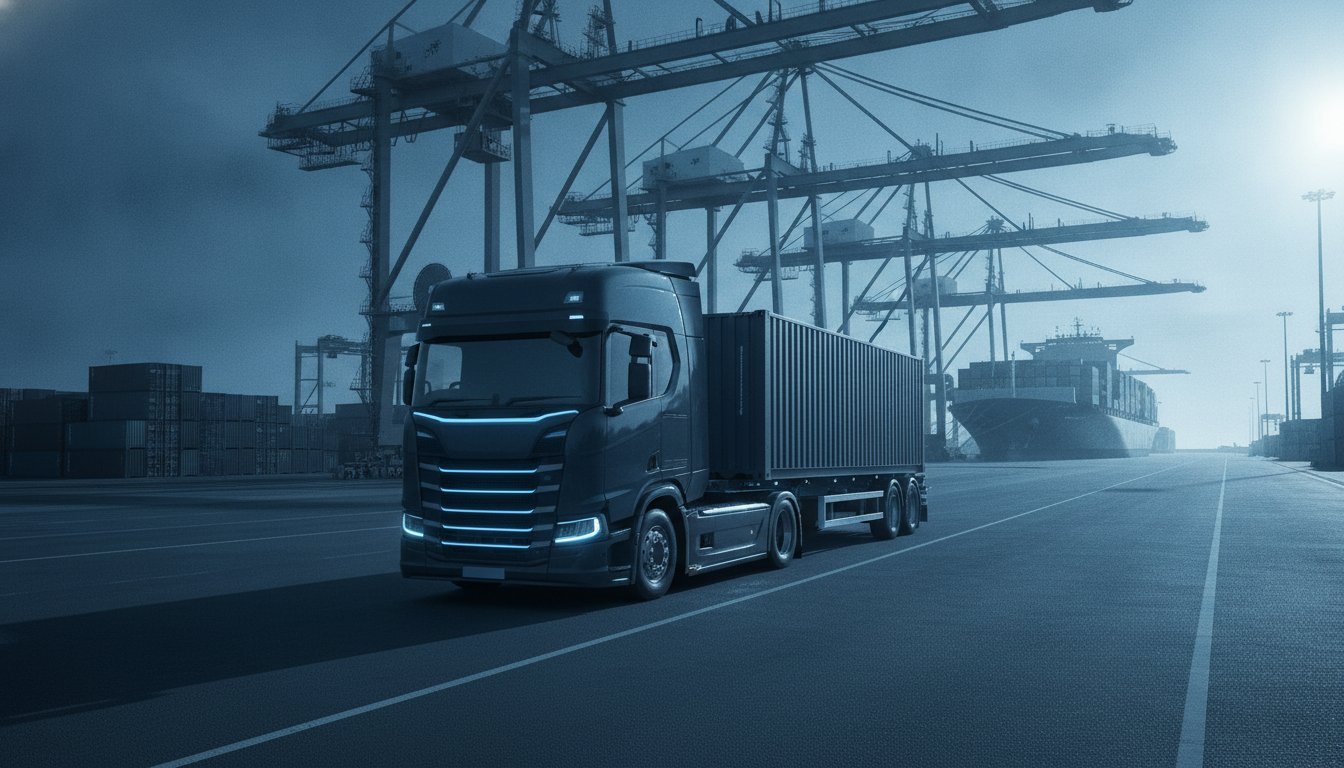
Efficiency in the UK supply chain is not a product of chance; it is the result of disciplined, strategic planning. You likely recognise that port congestion and unpredictable VBS delays at DP World Southampton can disrupt even the most robust national delivery schedules. When communication from hauliers falters and fleet availability becomes inconsistent, your operational security is at risk. Reliable container haulage Southampton requires more than just a truck; it demands a partner who understands the high stakes of modern logistics and the necessity of functional reliability.
This 2026 operational guide provides a professional analysis of managing container transport from the Port of Southampton to national destinations. We prioritise fleet reliability and the secure transport of high-value goods to ensure your schedules remain predictable despite shifting port variables. You will learn how a disciplined approach to merchant haulage can mitigate the impact of new VBS emissions charges and the latest ICS2 requirements. We preview the technical frameworks and fleet standards necessary to transform your transport requirements into a stable, strategic partnership that delivers consistent results across the UK.
Key Takeaways
- Understand why Southampton's strategic position as a deep-sea hub is essential for efficient national inland container transport.
- Discover how opting for merchant container haulage Southampton provides cargo owners with greater operational control and transparency than shipping line models.
- Learn the fleet standards and skeletal trailer requirements necessary to ensure the secure transport of 20ft, 40ft, and 45ft containers.
- Identify proven methods for navigating the Vehicle Booking System (VBS) to minimise delays and avoid costly demurrage or detention charges.
- Recognise how a disciplined haulage partnership with 15 years of experience translates into operational stability and protected delivery outcomes.
The Role of Southampton in National Container Haulage
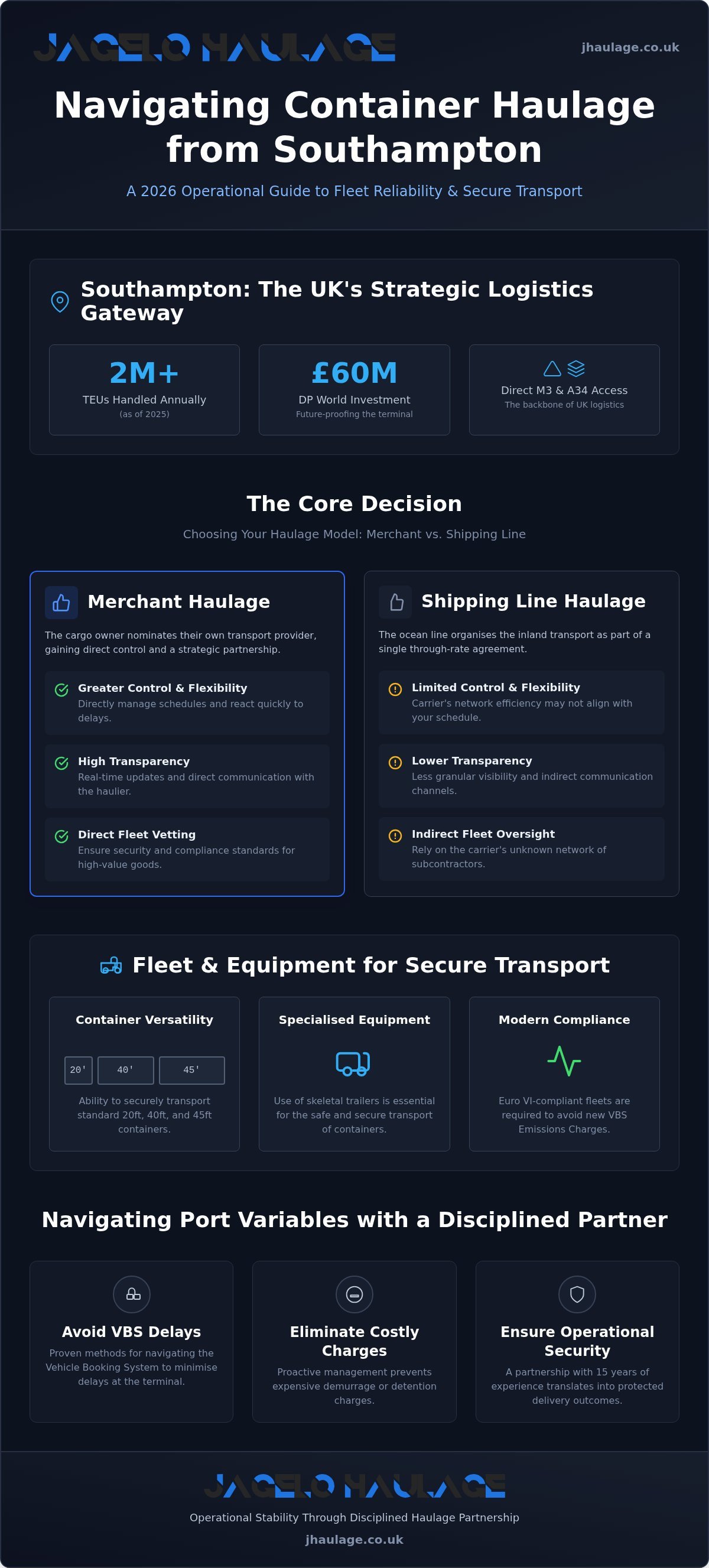
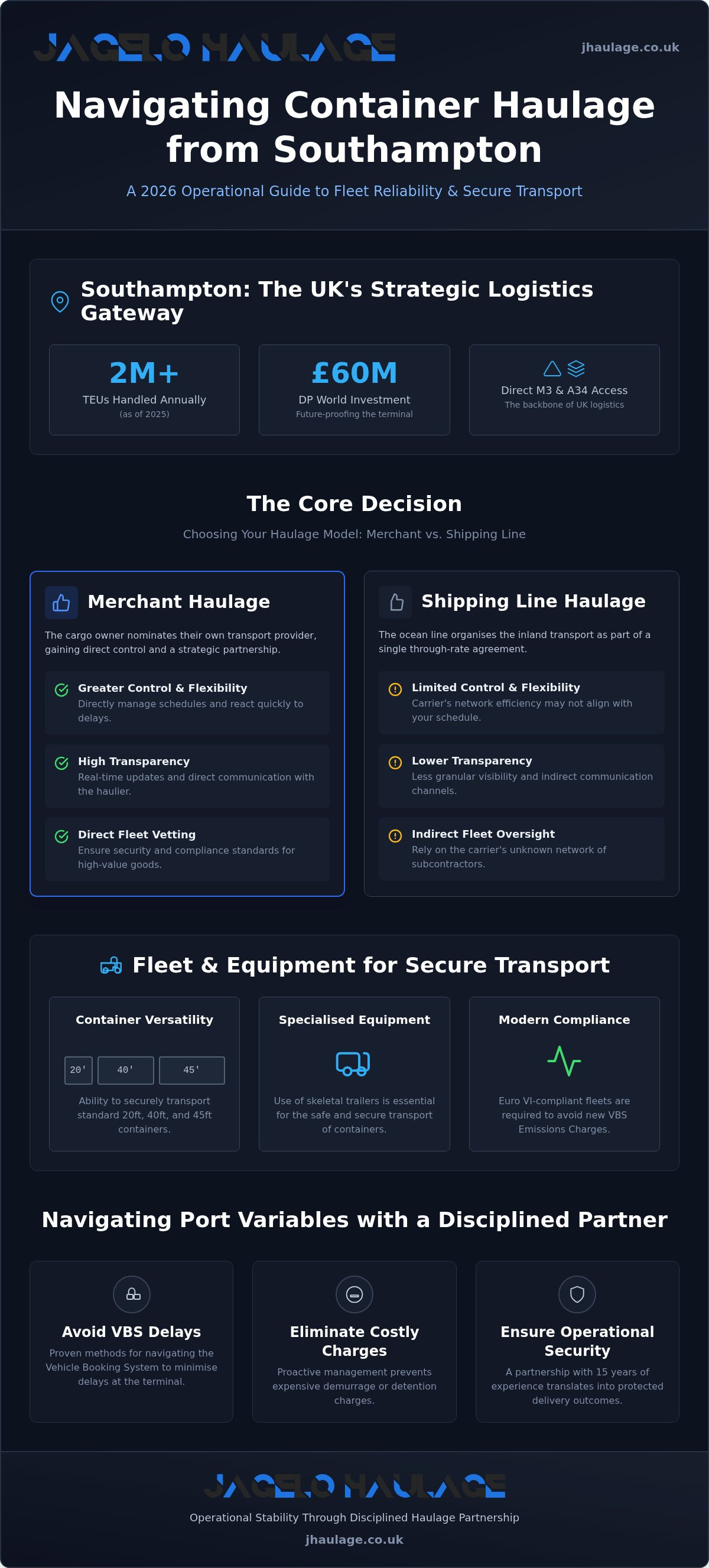
The Port of Southampton serves as a critical nexus for the UK's international trade, handling over 2 million TEUs in 2025. Its deep-water access allows it to accommodate the world's largest ultra-large container vessels (ULCVs), making it a primary entry point for goods from global markets. Efficient container haulage Southampton is the bridge between these maritime arrivals and the national consumer base. Without a disciplined transport framework, the massive volumes arriving on the South Coast would remain static. Strategic positioning is not just about geography; it's about the ability to move freight rapidly from the quay to the motorway network.
Southampton as a Strategic Logistics Gateway
National operators prioritise Southampton because of its direct connectivity to the M3 and A34. These routes form the backbone of the UK's logistics infrastructure, providing a clear path for inland container haulage to the Midlands and the North. The port's infrastructure supports a high-velocity supply chain. By minimising the distance between the terminal and major arterial roads, hauliers can maintain predictable delivery windows. This efficiency is vital for high-value goods that require secure, time-sensitive transport to distribution centres across the country. The reach of these operations extends far beyond the South Coast, serving as a vital artery for the entire UK economy.
The Evolution of Port Logistics in 2026
By 2026, the landscape of container haulage Southampton has become increasingly data-driven. DP World's £60 million investment in modernising the terminal, including a new fleet of quay cranes, has "future-proofed" the site for higher throughput. This modernisation forces hauliers to adapt. Professional operators, including the team at Jagelo Haulage, now use sophisticated tracking and scheduling tools to align with terminal operations. They ensure that every movement is accounted for and every delay is mitigated through proactive communication.
The shift toward merchant haulage allows for greater flexibility, as cargo owners seek to bypass the rigid structures of shipping line models. This evolution demands a disciplined approach where fleet reliability and operational security are the primary metrics of success. New regulatory requirements, such as the VBS Emissions Charge introduced in July 2026, mean that only hauliers with modern, Euro VI-compliant fleets can operate without incurring significant financial penalties. This ensures that the national supply chain remains both efficient and compliant with environmental standards. Professional management is now a prerequisite for any business looking to maintain stability in their logistics chain.
Merchant Haulage vs Shipping Line Haulage in Southampton
Selecting the appropriate transport model is a fundamental decision for any logistics manager overseeing container haulage Southampton. This choice dictates the level of control you maintain over your goods once they clear the terminal. Merchant haulage allows the cargo owner to nominate their own transport provider, creating a direct link between the port and the final destination. In contrast, shipping line haulage is a carrier-managed model where the ocean line organises the inland leg as part of a through-rate agreement. While the latter offers a simplified booking process, it often lacks the granular transparency required for complex national operations.
The distinction between these models involves more than just booking responsibilities. It affects how you manage compliance with the UK Freight Container Safety Regulations and other operational standards. Under a merchant haulage agreement, you have the authority to vet the haulier's fleet and safety protocols directly. This is particularly important for high-value or time-sensitive cargo where fleet reliability is non-negotiable. Shipping line haulage prioritises the carrier's own network efficiency; this might not always align with your specific delivery requirements or priority schedules.
Benefits of the Merchant Haulage Model
The primary advantage of merchant haulage is the ability to establish a strategic partnership with a disciplined operator. You gain direct access to the transport office, allowing for real-time updates and more agile responses to port delays. This model supports greater control over delivery windows to suit warehouse staffing and allows for the priority handling of urgent containers during peak port congestion. By managing your own container haulage Southampton, you eliminate the communication lag often found in carrier-managed systems. You also ensure your goods are moved by hauliers with modern, Euro VI-compliant fleets to avoid emissions surcharges.
When to Utilise Shipping Line Haulage
Shipping line haulage remains a viable option for low-volume shippers who prefer a single point of contact for the entire transit. It reduces administrative overhead by bundling ocean and inland costs into one invoice. However, this convenience comes at the cost of operational flexibility. Shippers must decide if the ease of a "door-to-door" service outweighs the risk of inconsistent fleet availability or lack of direct haulier contact. For a deeper dive into these logistics choices, read our merchant haulage vs shipping line comparison.
Achieving a stable supply chain requires choosing a model that mirrors your business's risk profile. If your operations demand high-level precision, you can request a professional haulage quote to see how a merchant-led approach improves your inland logistics.
Fleet Standards and Equipment for Secure Transport
Reliability in the supply chain is a direct consequence of the equipment used. For container haulage Southampton, a modern fleet is the primary safeguard against operational failure and unexpected surcharges. As of July 2026, all newly manufactured trucks must feature Advanced Emergency Braking (AEB) systems and Event Data Recorders (EDRs). These technical standards ensure that high-value cargo is protected by the latest safety frameworks. Maintaining a fleet of over 40 trucks requires a disciplined maintenance programme to achieve zero downtime. This proactive approach prevents mechanical delays that often compromise national delivery schedules.
Specialised Equipment for Diverse Container Types
Managing a variety of container sizes requires a versatile trailer fleet. Sliding skeletal trailers are essential for transporting 20ft, 40ft, and 45ft containers because they allow for precise weight distribution across the axles. This flexibility is vital for heavy or out-of-gauge (OOG) containers that require specific handling to remain compliant with UK road weight limits. Professional hauliers prioritise these specifications to ensure that every load, regardless of dimensions, is moved with maximum stability. The use of Euro VI Step E vehicles is also a strategic necessity. It allows operators to navigate the Southampton VBS Emissions Charge without incurring the £9.50 fee applied to older Euro VI A, B, or C models.
Security and Protection During Transit
Physical security is only one part of a protected outcome. Secure transport relies on a combination of robust insurance cover and disciplined driver protocols. Professional operators align their standards with the Chartered Institute of Logistics and Transport (CILT) to ensure that best practices are followed during every inland leg. Drivers undergo regular training on load security and the Freight Containers (Safety Convention) Regulations 2026, which mandate strict container marking and examination standards. This level of oversight ensures that goods are not only delivered on time but also remain in pristine condition throughout the journey.
Operational success is built on the fundamentals of fleet quality. You can read more about our modern container transport fleet to understand how specialised equipment supports national logistics. By choosing a partner with a modern, well-maintained fleet, you secure a more predictable and resilient supply chain. This disciplined focus on equipment standards is what separates a simple transport provider from a strategic logistics partner.
Planning Efficient Inland Deliveries from Southampton
Efficiency in container haulage Southampton is built on a foundation of meticulous planning and terminal coordination. Logistics managers must navigate a complex interface between deep-sea arrivals and inland transport. Success depends on the ability to sync vehicle availability with the Port of Southampton's Vehicle Booking System (VBS). Since July 2026, this system has integrated emissions-based charging, making fleet selection a financial imperative as well as an operational one. A disciplined haulier ensures that every booking is matched to a compliant vehicle, avoiding unnecessary costs and terminal delays.
Avoiding demurrage and detention charges requires proactive communication. If a container sits on the quay beyond its rent-free period, costs escalate quickly. Similarly, waiting time surcharges of £30 to £50 per hour are typical when delays occur at the delivery location. Professional management involves verifying that warehouses are ready for de-vanning before the truck leaves the port. This coordination ensures that the vehicle is unloaded and the empty container is returned within the carrier's specified window.
Step-by-Step: From Port Collection to Door Delivery
The process begins with securing the release note from the shipping line. Without this digital clearance, no collection can proceed. Once availability is confirmed, the transport office secures a VBS slot. This booking is a binding commitment to the terminal. The haulier then assigns a driver and vehicle, mapping a transit route that avoids known congestion points on the M3 or A34. Real-time tracking allows for precise ETAs, giving warehouses the visibility they need to prepare labour and equipment.
Overcoming Common Logistical Challenges
Peak-time congestion at port gates is a constant factor in container haulage Southampton. Disciplined operators use historical data to identify windows of lower activity, reducing the time spent in queues. Contingency planning is also essential. When road network disruptions occur, a seasoned haulier has the operational reach to re-route vehicles or adjust schedules without compromising the cargo's security. For urgent shipments, same-day delivery options provide a necessary buffer, ensuring that critical components reach their destination despite terminal bottlenecks.
To secure your supply chain against unpredictable port variables, request a professional haulage quote and establish a disciplined transport framework.
Why Professional Management Defines Reliable Logistics
Logistics managers often view transport as a commodity. However, container haulage Southampton is a strategic outcome that requires high-level oversight. Professional management transforms a simple task into a reliable component of the supply chain. This transition from a service provider to a strategic partner is defined by operational stability and a commitment to protocol. It's about moving beyond the physical transport of goods to provide a framework that guarantees performance.
With over 15 years of industry experience, an operator understands the nuances of port fluctuations and national road networks. This longevity translates into a disciplined approach where every movement is planned to minimise risk. A no-nonsense, corporate atmosphere ensures that the safety and efficiency of the operation remain the priority. It isn't about personality; it's about competence and the ability to provide protected outcomes for every load. This experience allows us to anticipate terminal challenges before they impact your delivery schedule, creating a brand atmosphere that's serious, corporate, and highly disciplined.
Disciplined Operations as a Competitive Advantage
Punctuality and strict adherence to protocols are the hallmarks of a seasoned haulier. By following established procedures, a disciplined operator reduces the administrative burden for freight forwarders and cargo owners. You don't need to chase for updates or worry about missing VBS slots. A disciplined and highly organised entity provides several key advantages:
- Punctuality in terminal gate arrivals and warehouse delivery windows.
- Strict adherence to load security and safety protocols.
- Proactive notification of delivery status and real-time ETAs.
- A systematic approach to regulatory compliance and emissions standards.
Consistent communication ensures that you aren't left guessing about the status of your containers. Responsive customer support provides immediate answers when variables change, allowing you to maintain focus on your core business activities. This level of reliability is a tangible competitive advantage in an industry where delays carry heavy financial consequences.
Partnering with Jagelo Haulage
Jagelo Haulage operates with a clear focus on the fundamentals of transport. Our approach to container haulage Southampton is rooted in steadfast professionalism and functional reliability. Our modern fleet of over 40 trucks and trailers provides the national reach required for inland deliveries from Southampton to any UK destination. We specialise in both merchant and shipping line haulage, ensuring that every movement is professionally managed and secure.
Securing your 2026 haulage capacity requires a partner who understands the high stakes of the supply chain. You can visit jhaulage.co.uk to learn more about our specialised services or to request a strategic haulage quote. By choosing a disciplined operator, you invest in the long-term stability and efficiency of your inland logistics network.
Securing Your National Supply Chain for 2026
Navigating the complexities of the 2026 logistics landscape requires a disciplined approach to every inland movement. You've seen how the strategic choice between merchant and shipping line haulage impacts your operational control. By prioritising modern fleet standards and proactive VBS coordination, you can mitigate the risks of port congestion and regulatory surcharges. Reliable container haulage Southampton is not merely about moving boxes; it's about establishing a resilient framework that protects your goods from the quay to the final national destination.
Operational stability is achieved through a partnership with a master of the fundamentals. Jagelo Haulage brings 15 years of port logistics expertise and a modern fleet of over 40 trucks to every delivery. Our fully insured national transport services ensure that your high-value cargo is handled with the highest level of corporate discipline. It's time to transition from reactive transport tasks to a strategically managed supply chain. Request a professional container haulage quote from Jagelo Haulage to secure your 2026 capacity. We look forward to supporting your national operations with steadfast professionalism.
Frequently Asked Questions
What is the difference between merchant and shipping line haulage?
Merchant haulage gives you the control to nominate your own haulier, while shipping line haulage is managed by the carrier. Merchant models offer direct communication and choice over fleet quality. This control is essential for managing container haulage Southampton efficiently. It allows cargo owners to prioritise urgent deliveries and establish a strategic partnership with a disciplined operator rather than relying on a carrier's internal network.
How far from Southampton do you provide container haulage services?
We provide national delivery reach from the Port of Southampton to destinations across the UK. Our operations cover the Midlands, the North, and the South East, ensuring that your goods reach their final destination regardless of distance. While we are specialists in collections from Southampton, our service is not localised. Our modern fleet of over 40 trucks is equipped for long-haul inland deliveries, maintaining operational stability for national supply chains.
What information is required to get an accurate container transport quote?
To provide a precise container transport quote, we require the container size, weight, and the collection and delivery postcodes. Please specify if the cargo is hazardous or requires temperature control. Including the release note status and any specific warehouse delivery windows helps us plan the route effectively. This detailed information allows our transport office to calculate a fixed rate that accounts for all operational requirements and ensures fleet availability.
How do you manage port delays and VBS bookings at Southampton?
We manage port delays through proactive VBS booking and real-time monitoring of terminal activity. Our transport team identifies windows of lower congestion to secure optimal slots at DP World Southampton. We maintain constant communication with our drivers to adjust schedules if gate delays occur. By using historical data and disciplined terminal coordination, we mitigate the impact of port bottlenecks and protect your national delivery schedules from unpredictable disruptions.
Can you handle specialised containers, such as reefers or dangerous goods?
Our primary expertise lies in standard merchant and shipping line haulage for dry containers across the UK. For specialised cargo such as refrigerated units or dangerous goods, we recommend contacting our transport office directly to verify current fleet capabilities and driver certifications. We maintain a disciplined focus on safety and compliance for every journey. This ensures that any technical requirements for your specific container haulage Southampton are managed with professional oversight.
Are your container movements fully insured during transit?
Yes, all container movements are fully insured during transit to provide our clients with complete operational security. We maintain comprehensive Goods in Transit and Public Liability insurance that meets industry standards for national haulage. This protection ensures that high-value cargo is covered from the moment it leaves the terminal until it is de-vanned at your warehouse. Our commitment to secure transport is a fundamental part of our professional management approach.
What are the current VBS requirements at DP World Southampton for 2026?
Current VBS requirements at DP World Southampton for 2026 include an emissions-based charging structure for all HGVs entering the terminal. From July 1, 2026, charges are applied based on the vehicle's Euro VI standard, with Euro VI E vehicles incurring no charge. Operators must secure a valid booking slot through the digital VBS portal before arrival. Our disciplined fleet management ensures all our vehicles are compliant with these latest environmental and terminal protocols.
Do you offer same-day container delivery from the port?
We offer same-day container delivery options depending on terminal availability and VBS slot timings. Urgent cargo can be prioritised if the release note is secured and the container is cleared for collection early in the day. Whilst same-day service is subject to port congestion and road network conditions, our transport team works to accommodate time-sensitive requirements. This responsive support is essential for maintaining the momentum of your national logistics operations.