Part of our guide to container haulage from Southampton
A single day of port congestion can erase your entire profit margin through unforeseen demurrage and detention charges. For many logistics managers, the frustration of vague collection times and inconsistent fleet standards makes Southampton container haulage feel like an unpredictable gamble rather than a streamlined process. You shouldn't have to tolerate poor communication or the risk of using non-compliant vehicles that fail to meet DP World’s strict safety protocols.
We understand that reliability in inland transport is the foundation of your supply chain's success. This guide provides the expert insights you need to master the complexities of moving goods from Southampton Port to your door. You'll learn how to navigate merchant haulage effectively, understand the latest VBS emissions charges, and secure a dependable partner with a modern, specialised fleet. We'll show you how a disciplined approach to port protocols can reduce logistics overheads and ensure nationwide delivery efficiency.
Key Takeaways
- Learn why merchant haulage provides greater operational control and flexibility than standard shipping line options.
- Understand the role of a modern fleet in maintaining a reliable supply chain and minimising the risk of transit delays.
- Discover how to manage the Vehicle Booking System effectively to secure collection slots during peak arrival windows.
- Master the requirements for Southampton container haulage to ensure seamless national distribution from the port to your door.
- Identify the safety standards and specialised training protocols necessary for secure inland container transport.
The Strategic Role of Southampton in UK Container Haulage
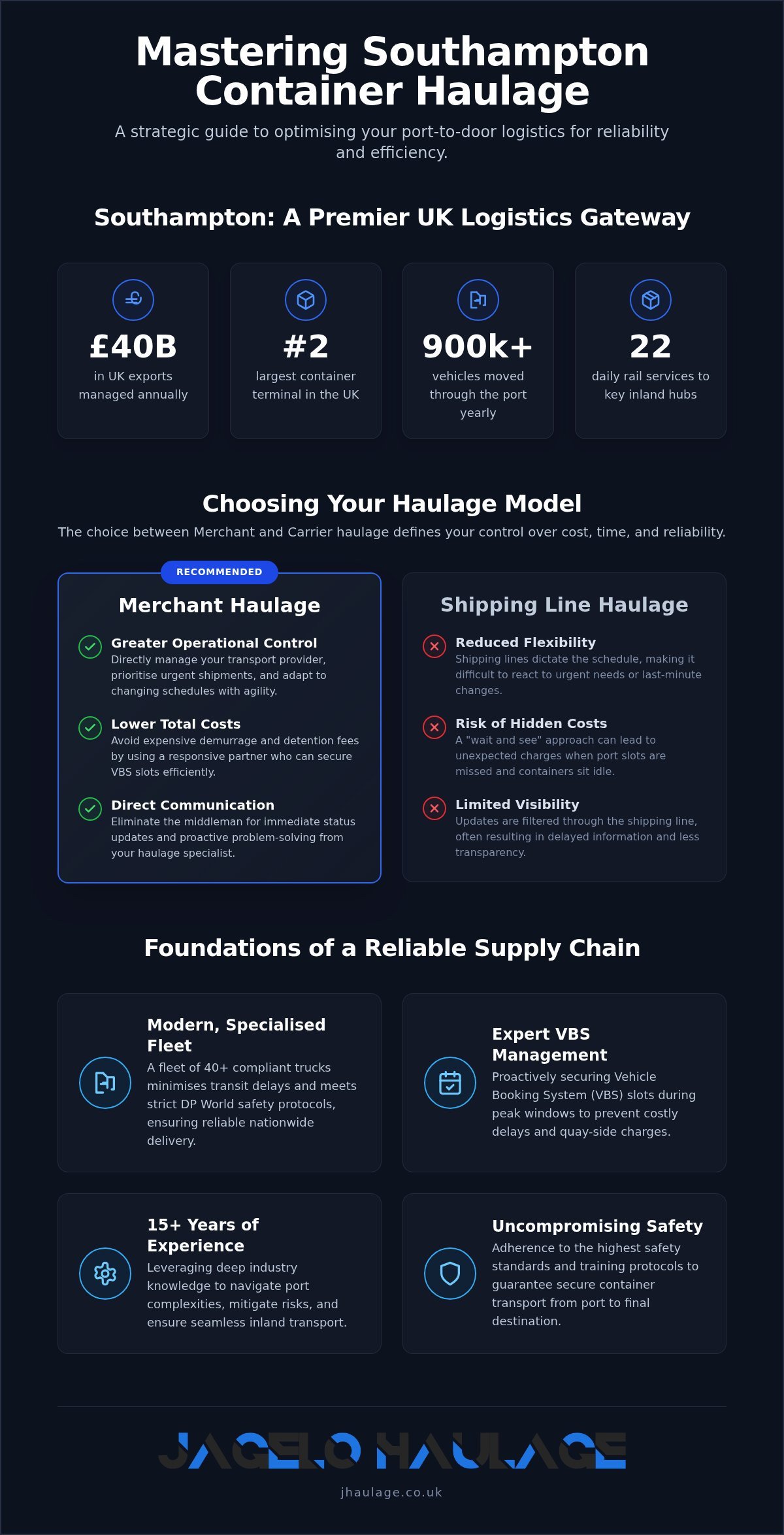
The Port of Southampton serves as a premier deep-sea gateway, managing approximately £40 billion of UK exports annually. It's the nation's second-largest container terminal and functions as a critical node in the global supply chain. For businesses relying on Southampton container haulage, the port's location on the south coast is a primary advantage. It offers minimal deviation from major international shipping lanes. DP World Southampton facilitates the movement of over 900,000 vehicles and millions of tonnes of cargo. This makes it indispensable for national trade and the continuous flow of consumer goods.
Efficient transit depends on overcoming specific local hurdles. Port congestion and the scarcity of peak-time Vehicle Booking System (VBS) slots often disrupt schedules. These bottlenecks lead to increased costs if they aren't managed by a disciplined transport partner. Establishing "Port-to-Door" efficiency isn't just a logistical goal; it's a competitive necessity for modern commerce. Reliable inland transport ensures that goods move from the quay to the warehouse without unnecessary dwell time or administrative friction.
Southampton Port Infrastructure and Capacity
The terminal features high-specification berth capabilities designed to handle the world's largest container vessels. In 2026, throughput remains high, supported by 22 daily rail services that connect the port to key inland hubs like Birmingham, Manchester, and Leeds. Southampton is the preferred choice for Far East and Transatlantic routes because of its deep-water access and advanced infrastructure. Port-centric logistics strategies significantly reduce inland delivery times by positioning distribution centres closer to the point of entry. It's a setup that rewards precision and punishes poor planning.
The Economic Impact of Efficient Container Movements
Haulage reliability directly dictates inventory turnover rates for UK retailers. When containers are delayed, stockouts occur and capital remains tied up on the docks. The cost of these delays is often compounded by demurrage and detention fees. These charges accrue quickly when port protocols aren't strictly followed. Container haulage functions as the critical link between maritime arrival and inland consumption. Jagelo Haulage leverages 15 years of industry experience and a modern fleet of 40+ trucks to mitigate these risks. Securing reliable Southampton container haulage ensures that cargo owners avoid the financial penalties associated with logistical friction while maintaining a steady supply to the market.
Merchant Haulage vs Shipping Line Haulage at Southampton Port
Selecting the appropriate haulage model determines the level of oversight a logistics manager maintains over their cargo. Carrier Haulage involves the shipping line arranging the final delivery, which often simplifies the administrative process but reduces visibility. Conversely, Merchant Haulage allows the cargo owner to appoint an independent provider for Southampton container haulage. This distinction is vital because the Port of Southampton Master Plan highlights increasing container traffic, which requires more precise scheduling to avoid bottlenecks at the terminal gates.
Why Merchant Haulage Offers Greater Control
Working directly with a haulier eliminates the shipping line as a middleman. It allows for immediate updates on container status and the ability to prioritise urgent consignments during peak periods. In a Merchant Haulage vs Shipping Line Haulage comparison, the primary benefit is the haulier's ability to navigate the Vehicle Booking System (VBS) with your specific deadlines in mind. Jagelo Haulage specialises in this model, providing the responsive support necessary to manage tight delivery windows and ensure containers don't sit idle on the quay.
Comparison Framework for Logistics Managers
Choosing the right model requires an analysis of operational priorities. While Carrier Haulage might offer a lower upfront administrative burden, Merchant Haulage often yields lower total costs by avoiding the "wait and see" approach that leads to expensive demurrage. Specialised hauliers manage the Merchant booking process by integrating directly with port systems to ensure that documentation and VBS slots are synchronised perfectly.
| Factor | Carrier Haulage | Merchant Haulage |
|---|---|---|
| Cost | Fixed rates; less transparent | Market-driven; potential for savings |
| Flexibility | Limited by carrier schedules | High; prioritised by the client |
| Communication | Indirect via shipping line | Direct with the transport provider |
| Responsibility | Carrier manages inland leg | Client controls the transport partner |
For freight forwarders, this control translates to more reliable service for their end customers. It ensures that Southampton container haulage remains a strategic asset rather than a logistical hurdle. If you require a partner that prioritises your specific schedule and provides direct communication, you can request a tailored haulage quote to see how the Merchant model improves your efficiency.
Ensuring Operational Reliability and Safety in Container Transport
Reliability in the supply chain is not an accident. It is the result of disciplined fleet management and strict adherence to safety protocols. For businesses requiring Southampton container haulage, the quality of the vehicle is as important as the skill of the driver. A modern fleet of over 40 trucks ensures that mechanical failures do not disrupt your delivery schedule. This operational stability allows cargo owners to maintain consistent inventory levels without the risk of transit-related delays.
The Modern Fleet Advantage
Investment in vehicle technology provides a clear competitive edge. Using Euro 6 compliant engines is no longer just about environmental responsibility; it's a financial necessity at DP World Southampton. As of July 2026, Euro VI E vehicles incur no VBS emissions charge, whilst older Euro VI A, B, or C models face a £9.50 charge per visit. Our commitment to The Modern Container Transport Fleet ensures that these efficiency gains are passed directly to our clients. GPS tracking and fleet intelligence systems provide real-time updates, allowing for precise coordination between the port and the final destination.
Safety Standards and Professional Management
Safety is more than a compliance checklist. It's a framework for providing protected outcomes for the client. Every container move must align with UK container safety regulations to ensure the integrity of the cargo and the safety of the public. This involves rigorous cargo securing and specialised driver training for managing variable container weights. Professionally managed transport operations understand the high stakes of the Southampton dock environment, where strict speed limits and mandatory PPE requirements are enforced to maintain a secure working area.
Jagelo Haulage has maintained a 15-year commitment to secure container logistics, ensuring that every delivery meets the highest standards of professional conduct. By following DVSA and port-specific safety regulations, we eliminate the risks associated with inconsistent fleet quality or poor safety compliance. This disciplined approach to Southampton container haulage provides the security and competence that corporate clients and operational managers demand. Reliability is built on the fundamentals of punctuality and protocol. It's about delivering results through performance rather than self-promotion.
Navigating Southampton Port Logistics: VBS and Collection Protocols
The Vehicle Booking System (VBS) is the digital gatekeeper at DP World Southampton. It ensures that terminal operations remain fluid by regulating the flow of heavy goods vehicles through the port's infrastructure. For any provider of Southampton container haulage, mastery of this system is mandatory. Failure to secure a slot within the designated windows results in terminal rejection and costly delays. Effective logistics managers prioritise hauliers who demonstrate a disciplined approach to these administrative protocols. It's a system that rewards precision and penalises poor planning.
The VBS Booking Process Explained
The booking process follows a strict sequence to ensure a successful container release. First, the haulier must acquire the container release and a unique PIN from the shipping line. Without this data, a booking cannot be initiated. Second, the haulier secures a VBS slot through the DP World portal. These slots are highly contested during peak vessel arrival windows. Finally, the driver arrives at the gatehouse within the specified time. All drivers must possess a valid Driver ID Card and have completed the annual Terminal Awareness Course (TAC) to gain entry. This course follows a three-year cost cycle, starting at £50 for the first year.
Mitigating Delays and Demurrage
Strategic timing is essential for reducing overheads. Off-peak collections often avoid the congestion associated with morning and late afternoon surges, helping to maintain the average truck turnaround time of 35 minutes. You should also account for "Restows", where containers are temporarily moved to access specific cargo, which can impact collection times. Managing these variables requires a partner that understands Port Logistics Services UK standards. Our team monitors vessel schedules in real-time to ensure that "Wait and Load" operations are executed without unnecessary dwell time.
To avoid common port-side delays, follow this operational checklist:
- Ensure the container PIN is active and verified before the driver departs for the terminal.
- Confirm the driver has a valid ID card and has completed the mandatory TAC training.
- Verify that the vehicle meets Euro VI E emissions standards to avoid the £9.50 VBS surcharge.
- Strictly adhere to port safety rules, including the 20 mph speed limit within the security fence.
If your current logistics partner lacks the technical precision required for these protocols, you can request a Southampton haulage quote to secure a more reliable and compliant service.
Strategic Partnering for National Container Distribution from Southampton
Southampton functions as the primary springboard for national distribution. Efficient Southampton container haulage must extend beyond the local dock road to reach the commercial centres of the Midlands and the industrial hubs of the North. Responsive customer support is critical in this context. It's about providing clear, factual updates on transit progress rather than vague assurances. A disciplined transport partner acts as a strategic extension of your own operations, ensuring that the transition from sea to road is managed with professional precision.
Relying on spot-hire often leads to inconsistent service and fluctuating costs. A strategic partnership offers long-term stability. It ensures that your cargo is prioritised by a provider who understands your specific operational requirements. This approach reduces the administrative burden and provides a predictable framework for your supply chain. When you move away from transactional hiring, you gain a partner invested in the "protected outcomes" mentioned previously. This reliability is the foundation of a successful national logistics strategy.
Nationwide Reach and Inland Logistics
Moving containers from the Solent to the Midlands, North, and beyond requires a deep understanding of the UK's motorway network. The M27 and M3 corridors serve as the essential arteries connecting Southampton to the "golden triangle" of distribution centres. For time-sensitive cargo, same-day delivery capabilities are a necessity. Jagelo Haulage leverages 15 years of operational experience to navigate these long-haul routes effectively. We connect major ports to any inland UK destination, providing the specialised expertise needed for heavy and high-value container movements. Experience matters when managing the variables of national transit.
Choosing Your Southampton Haulage Partner
Selecting a partner for Southampton container haulage requires an objective assessment of their capabilities. A dependable haulier should offer more than just a vehicle; they must provide a comprehensive logistical solution. Use this final checklist to evaluate your options:
- Fleet Quality: Does the provider operate a modern fleet of 40+ trucks to minimise breakdown risks?
- Merchant Expertise: Do they have a proven track record in managing independent merchant haulage bookings?
- Port Knowledge: Is their team well-versed in DP World Southampton’s VBS and safety protocols?
- National Coverage: Can they guarantee consistent service to all your UK delivery points?
To secure an accurate port haulage quote, ensure you have your container type, weight, and final destination postcode ready. Professional hauliers use this data to provide transparent, market-driven rates that avoid hidden surcharges. If you require a partner that prioritises performance over self-promotion, you can Contact Jagelo Haulage for reliable Southampton container transport. We provide the disciplined support necessary to turn your port logistics into a strategic advantage.
Optimising Your Port-to-Door Logistics Strategy
Managing the final leg of a container's journey requires more than just transport; it demands a disciplined approach to port protocols and a high-specification fleet. By prioritising merchant haulage, you gain the flexibility to navigate peak arrival windows and secure urgent consignments. Professional management of these variables ensures that your supply chain remains resilient against terminal congestion and administrative friction.
A strategic partnership with a seasoned haulier transforms Southampton container haulage from a potential bottleneck into a reliable operational asset. Jagelo Haulage provides this stability through 15+ years of port logistics expertise and a modern fleet of over 40 trucks. We facilitate nationwide delivery from all major UK ports, ensuring your goods reach their inland destination safely and on schedule.
Secure your Southampton container haulage with Jagelo Haulage today to experience a more efficient, professionally managed logistics solution. We look forward to supporting your national distribution requirements with the competence and reliability your business demands.
Frequently Asked Questions
What is the current VBS booking procedure at Southampton Port?
The Vehicle Booking System (VBS) requires hauliers to secure a specific time slot through the DP World portal after obtaining a container release and PIN. All drivers must possess a valid Driver ID Card and have completed the mandatory Terminal Awareness Course. As of 2026, vehicles meeting Euro VI E standards incur no emissions charge, whilst older models face surcharges. This disciplined procedure ensures fluid terminal operations and regulates heavy goods vehicle traffic through the port.
How much does container haulage from Southampton typically cost?
Costs for Southampton container haulage are determined by several factors, including the delivery distance, container weight, and the specific vehicle requirements. Market-driven rates also account for VBS emissions charges and port handling fees. We provide transparent, professionally managed transport quotes based on your specific inland destination and cargo type. This approach avoids hidden surcharges and ensures that your logistics budget remains predictable while maintaining high safety and service standards for nationwide delivery.
What is the difference between merchant haulage and shipping line haulage?
Merchant haulage allows the cargo owner to appoint an independent transport provider, offering greater flexibility and direct communication. Shipping line haulage, or carrier haulage, is arranged by the ocean carrier, which often results in less control over specific delivery times. Choosing the merchant model provides logistics managers with the ability to prioritise urgent consignments and navigate port protocols more effectively. This strategic choice is essential for maintaining a responsive and reliable national supply chain.
Can Jagelo Haulage handle hazardous (ADR) containers from Southampton?
We specialise in the secure transport of standard shipping containers and professionally managed inland deliveries across the United Kingdom. Whilst we operate a modern fleet of over 40 trucks, specific hazardous cargo requirements should be discussed directly with our operational team to ensure full compliance with current safety regulations. Our focus remains on providing protected outcomes and functional reliability for nationwide container distribution, adhering strictly to all port-specific safety protocols and DVSA standards.
What documentation is needed for a container collection at DP World Southampton?
Successful container collection requires a valid container release and a unique PIN provided by the shipping line. Drivers must also present a valid Driver ID Card and evidence of completing the Terminal Awareness Course. All documentation must be synchronised with a confirmed VBS booking slot to avoid terminal rejection. Maintaining precise administrative records is a fundamental part of our disciplined approach to port logistics, ensuring that your cargo moves through the gatehouse without unnecessary delays.
How do you prevent demurrage charges when port congestion occurs?
Preventing demurrage requires a proactive approach to vessel monitoring and the strategic timing of VBS bookings. We mitigate these risks by securing collection slots as soon as the container is released and utilising off-peak windows to avoid congestion. Our 15 years of industry experience allows us to manage restows and wait-and-load operations effectively. This disciplined coordination ensures containers are removed from the quay before the free-time period expires, reducing overall logistics overheads and protecting your profit margins.
Do you provide same-day container delivery from Southampton to inland locations?
We provide same-day container delivery services from Southampton to various inland destinations across the country. Our modern fleet and nationwide reach allow us to respond quickly to time-sensitive cargo requirements. This service is designed for logistics managers who require urgent transit without compromising on safety or professional standards. By maintaining a steady operational rhythm and high fleet availability, we ensure that your containers are delivered to your door with minimal dwell time at the port.
Is your fleet compliant with the latest UK environmental and safety standards?
Our fleet of over 40 trucks is fully compliant with the latest UK environmental and safety standards, including Euro VI emissions requirements. This compliance is essential for operating within the port without incurring additional VBS surcharges. We also maintain strict adherence to DVSA regulations and port-specific safety rules, such as mandatory PPE and speed limits. This commitment to modern, specialised equipment ensures a reliable service and provides our clients with protected outcomes for every movement.