Part of our guide to container haulage from Southampton
A single missed Vehicle Booking System (VBS) slot at DP World Southampton can trigger a cascade of terminal charges that quickly erode the profit margin of a shipment. You likely recognise that managing Southampton container haulage in 2026 requires more than just a vehicle. It demands a disciplined approach to timing and absolute transparency throughout the transit process. Many logistics managers feel the strain of unreliable delivery windows and the lack of proactive communication that often leads to costly port demurrage.
This strategic guide will help you master the complexities of Southampton container haulage and discover how to optimise your UK supply chain with professional port-to-door transport solutions. You'll learn how to navigate the latest terminal infrastructure charges and the new VBS emissions standards that penalise older fleets. We'll also examine how a partnership with a haulier that understands specific port requirements can reduce dwell times and provide fixed-rate reliability for your nationwide deliveries. By focusing on operational fundamentals and data-driven scheduling, you can transform your port logistics from a source of risk into a secure strategic asset.
Key Takeaways
- Understand how the Vehicle Booking System (VBS) acts as the digital heartbeat of the port and how to manage time-slots to ensure punctual collections.
- Compare merchant and shipping line haulage models to gain greater operational flexibility and superior control over your inland transport costs.
- Discover the industrial safety standards and fleet maintenance protocols necessary to prevent breakdowns and maintain supply chain stability.
- Master the complexities of Southampton container haulage by identifying the critical expertise required to navigate deep-sea terminal operations in 2026.
- Evaluate potential haulage partners based on their operational reach, fleet size, and ability to provide protected outcomes for urgent deliveries.
The Strategic Role of Southampton Container Haulage in UK Logistics
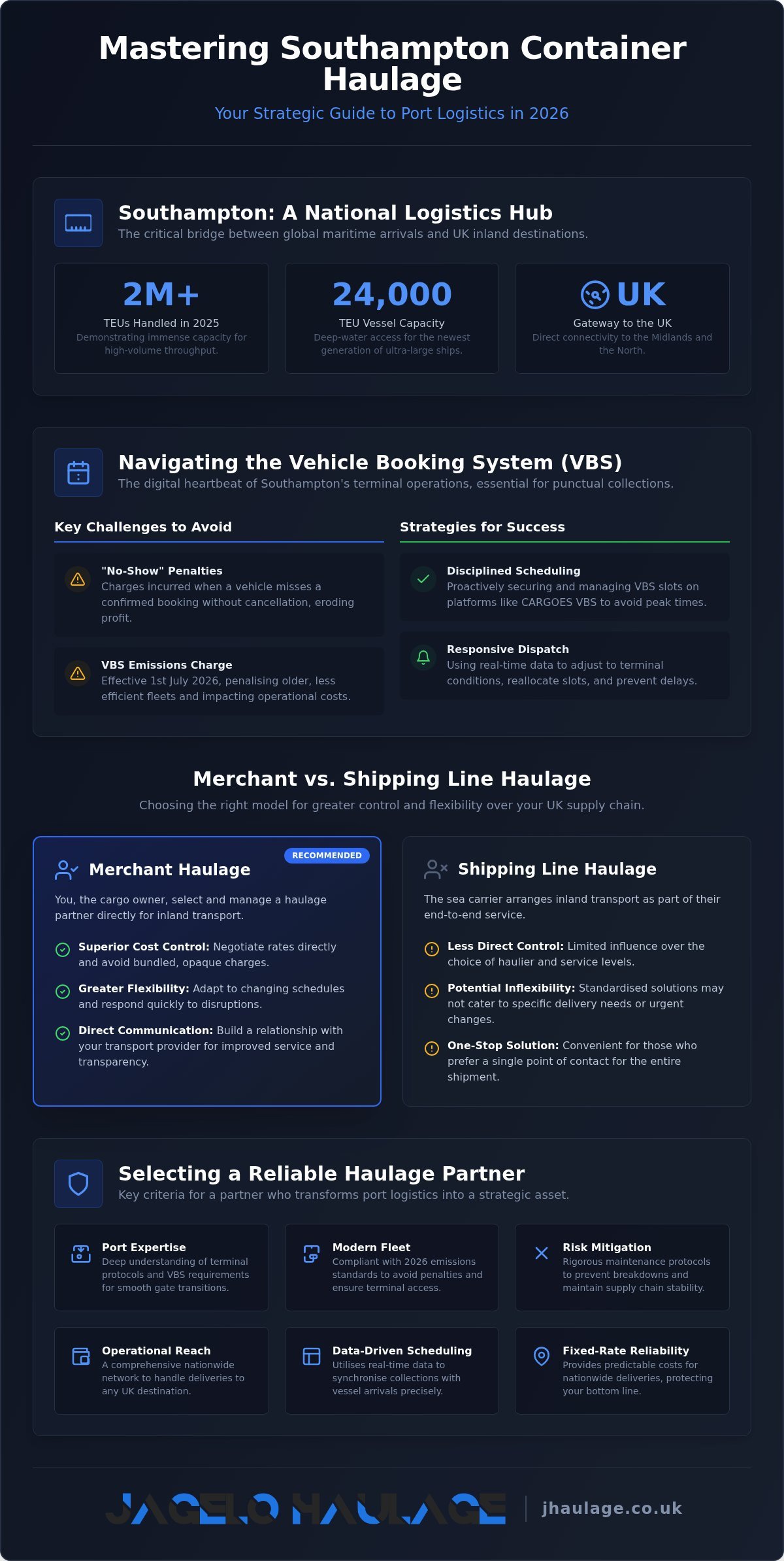
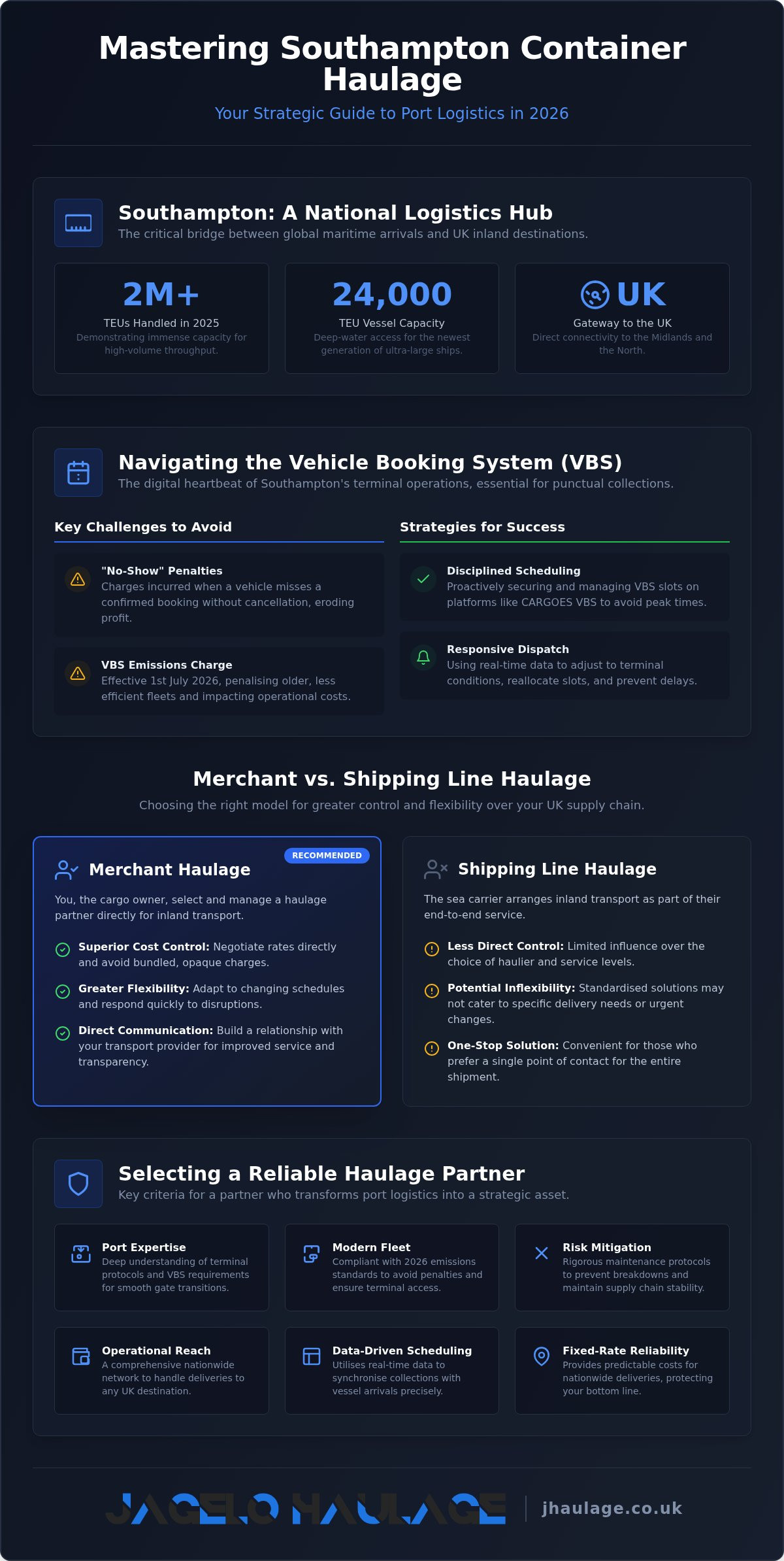
The Port of Southampton operates as a primary node in the global supply chain. It possesses the deep-water access required to service the newest generation of ultra-large container vessels that carry up to 24,000 TEUs. For cargo owners, Southampton container haulage represents the critical bridge between these maritime arrivals and their final inland destinations. Without professional haulage, the movement of goods stalls at the quayside. This leads to operational bottlenecks. Professional inland container haulage ensures that goods move through the terminal with precision. This discipline reduces the risk of port storage and demurrage fees that can quickly escalate.
Logistics managers prioritise port-centric models to shorten transit times. By collecting containers directly from the terminal and moving them to regional distribution centres, businesses can significantly reduce their carbon footprints. This efficiency isn't just about environmental targets. It's a financial necessity. A disciplined haulage strategy allows for the immediate evacuation of containers before terminal free-time expires. This approach protects the bottom line from the rising costs of port infrastructure charges and security fees seen in 2026. Precision is mandatory.
Southampton as a National Logistics Hub
The port's geographic position provides direct connectivity to the UK’s major road networks. It acts as a gateway to the industrial heartlands of the Midlands and the North. In 2025, the terminal handled over 2 million TEUs. This demonstrates its immense capacity for high-volume throughput. Southampton’s infrastructure is specifically designed to support diverse cargo types. This includes the handling of heavy and oversized containers that require specialised trailers and experienced drivers. Reliable inland container haulage from this hub ensures that even the most complex shipments reach their destination without delay.
The Impact of Efficient Port-to-Door Transport
Synchronised port collection is vital for minimising supply chain disruptions. When hauliers align their schedules with vessel arrivals, they support just-in-time manufacturing and retail inventory requirements. This precision reduces the need for expensive safety stock. There are clear economic benefits to using a haulier with established port relationships. These operators understand the specific terminal protocols and VBS requirements. This allows for smoother gate transitions. By choosing a partner with a modern fleet and deep port expertise, businesses gain better control over their logistics costs. They ensure a consistent flow of goods to the consumer.
Operational Excellence: Navigating Port Infrastructure and VBS
The Vehicle Booking System (VBS) acts as the digital heartbeat of Southampton container movements. It regulates the flow of heavy goods vehicles into the terminal to prevent quayside gridlock. For any logistics manager, mastering this system is a prerequisite for reliable Southampton container haulage. Efficient VBS management ensures that vehicles arrive within their designated windows. This prevents wasted fuel and unproductive driver hours. During peak periods, port congestion can disrupt even the most robust schedules. Professional hauliers mitigate these risks by using real-time data and responsive dispatch strategies to adjust to terminal conditions as they evolve.
Mastering the Vehicle Booking System
Securing VBS slots requires disciplined scheduling and constant monitoring. In 2026, DP World Southampton has transitioned to the CARGOES VBS platform. This system utilises a banded tariff structure that provides credits for off-peak bookings and penalises poor slot management. Hauliers must manage these bookings with precision to avoid "No-Show" penalties. These charges occur when a vehicle fails to arrive for a confirmed booking without prior cancellation. A responsive dispatch team acts as the first line of defence against such costs. They reallocate slots and maintain constant communication with drivers to navigate port-side delays. This coordination is essential for maintaining high service levels.
Fleet Readiness and Port Compliance
Operational excellence depends on fleet readiness and strict adherence to port protocols. Vehicles must meet specific environmental and safety standards to access the terminal. As of July 1, 2026, the VBS Emissions Charge at Southampton directly impacts fleet selection. Euro VI A, B, and C trucks incur a £9.50 fee per visit. Conversely, operators using electric HGVs receive a £20.00 credit per booking. These regulations align with broader trends documented in UK port freight statistics, which highlight a national shift toward decarbonised logistics. Compliance also extends to safety equipment. All goods vehicles used for international transport must now be fitted with Smart Tachograph Version 2 to ensure accurate monitoring of driver hours.
Modern fleet management software provides the real-time visibility needed for complex port logistics. It allows hauliers to track 20ft, 40ft, and high-cube containers from the moment they leave the quayside. This data is as important as the physical transport itself. It enables clients to plan their warehouse operations with certainty. If you require a partner that understands these technical requirements, you can request a professional haulage quote to secure your 2026 delivery schedule.
Merchant Haulage vs Shipping Line Haulage: A Strategic Comparison
Choosing the correct transport model is a fundamental decision for any organisation managing Southampton container haulage. In the shipping line haulage model, the carrier retains responsibility for the inland movement of the container. This often results in a standardised service that prioritises the line's operational convenience over the specific needs of the cargo owner. Conversely, merchant haulage allows the shipper to select and manage their own transport provider. This model provides a level of flexibility and transparency that is essential for complex supply chains in 2026. For a detailed breakdown of these differences, see our guide on Merchant Haulage vs Shipping Line Haulage: A Strategic Comparison.
Why Shippers Prefer Merchant Haulage
Control is the primary driver behind the preference for merchant haulage. Shippers gain direct access to their transport provider, effectively closing the information gap that exists when dealing with intermediaries. This direct line of communication allows for real-time updates and more agile decision-making. Professional hauliers, often vetted by the Road Haulage Association (RHA), provide a level of service that shipping lines cannot always guarantee. Customised delivery schedules can be synchronised with warehouse capacity and staff availability, rather than being dictated by port-side windows. This ensures that the quayside evacuation of goods aligns with the physical reality of the destination site.
Evaluating the Total Cost of Ownership
Analysing the total cost of ownership is vital for maintaining profitability. Merchant haulage offers superior cost transparency by allowing businesses to negotiate rates based on specific volume and lane requirements. This approach helps organisations avoid the opaque surcharges and administrative fees often bundled into shipping line quotes. By managing their own Southampton container haulage, businesses can actively work to reduce overall container transport costs through competitive tendering and improved operational efficiency. For freight forwarders managing multiple client accounts, this model provides the strategic benefit of consolidated volumes and a more reliable service level for their end customers. Merchant haulage transforms inland transport from a passive cost into a managed strategic outcome.
Safety, Compliance, and Fleet Modernisation in Container Transport
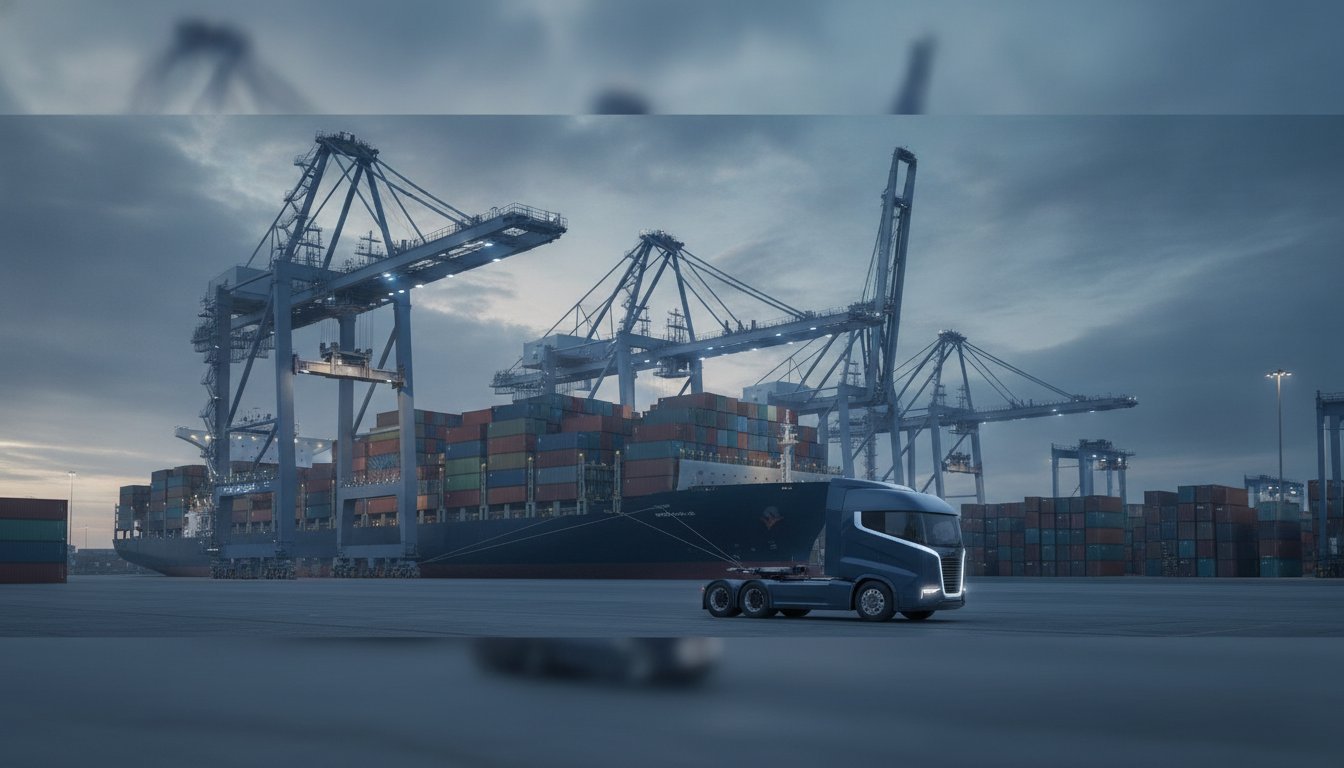
Safety is the primary metric of operational reliability in the haulage sector. It is not merely a regulatory requirement; it is a fundamental protection for the client's cargo and the integrity of the supply chain. Within the complex environment of Southampton container haulage, strict adherence to safety protocols prevents the accidents and mechanical failures that lead to terminal congestion and delivery delays. A disciplined approach to fleet modernisation ensures that every vehicle in The Modern Container Transport Fleet is equipped to handle the high stakes of port-to-door logistics.
Rigorous Safety Standards on the Road
Professional haulage operations depend on standardised safety procedures. This begins with robust load-securing protocols that account for the varying weights and centres of gravity found in diverse container types. Regular vehicle safety inspections are mandatory to identify potential issues before they result in roadside breakdowns. These inspections are supported by daily walk-around checks performed by drivers before terminal entry and scheduled preventative maintenance intervals in specialised workshops. Strict compliance with the Driver Certificate of Professional Competence (CPC) ensures high standards of road craft and professional behaviour. By maintaining these standards, hauliers provide a secure environment for cargo movement.
Technology and Environmental Responsibility
Fleet modernisation is currently driven by both environmental mandates and technical safety requirements. As of July 2026, all newly manufactured trucks are required to feature Advanced Emergency Braking (AEB) systems and Event Data Recorders (EDRs). Stricter Direct Vision Standard (DVS) requirements also apply to new HGV designs in 2026 to reduce driver blind spots. The mandate for Smart Tachograph Version 2, effective from July 1, 2026, for international transport, ensures precise monitoring of driver hours and location data. To meet the environmental requirements of UK ports and avoid the £9.50 VBS emissions charge for older Euro VI A, B, and C vehicles, operators must prioritise the latest engine standards.
Telematics systems now provide real-time data on fuel efficiency and driver performance. This technology allows dispatch teams to monitor routes and ensure that vehicles are operated with maximum efficiency. The transition toward paperless logistics, including digital delivery notes, further streamlines the administrative process at the port gate. If you require a partner that prioritises these high standards of compliance, request a professional haulage quote to secure your 2026 supply chain requirements.
Selecting a Reliable Haulage Partner for Southampton
Identifying the right partner for Southampton container haulage is a strategic decision that impacts the overall efficiency of the UK supply chain. A haulier must demonstrate more than just physical capacity. They must possess the technical expertise to navigate complex terminal protocols and the administrative precision required for effective VBS slot management. For organisations operating multiple distribution centres, nationwide coverage is a mandatory requirement. This ensures a consistent standard of service regardless of the final inland destination. Jagelo Haulage focuses on the mastery of these operational fundamentals, positioning itself as a dependable partner that prioritises the safety and efficiency of every movement.
The Importance of Proven Experience
Proven experience serves as a reliable benchmark for evaluating potential partners. In an industrial sector governed by strict regulations and evolving environmental standards, 15+ years of industry experience provides the stability needed to navigate port-side challenges. This track record reflects a haulier’s commitment to cargo security and punctual delivery. A fleet of 40+ modern trucks and trailers provides the necessary scale to handle high-volume arrivals whilst maintaining the agility to manage specialised merchant haulage requirements. This scale allows for the allocation of dedicated resources to specific lanes, ensuring that scheduled deliveries remain consistent and protected from external disruptions.
Next Steps: Securing Your Logistics Route
Securing your logistics route requires a methodical approach to onboarding and communication. A professional port haulage quote should be comprehensive, reflecting your specific needs for container types and delivery schedules. The value of a responsive customer support team cannot be overstated. These professionals manage the human element of transport, providing real-time updates and resolving urgent requirements as they arise. By establishing a long-term strategic partnership, businesses gain access to a disciplined fleet that understands the high stakes of their operations. This integration transforms haulage from a simple task into a strategic outcome that supports broader business objectives.
Optimising Your Port-to-Door Strategy for 2026
Maintaining a resilient supply chain requires a disciplined approach to every inland movement. As terminal infrastructure charges and environmental regulations evolve, precision in VBS management and the strategic selection of merchant haulage become critical for cost control. A professional partner doesn't just move cargo; they provide the operational stability needed to prevent port-side delays and protect your commercial interests.
Reliable Southampton container haulage is built on the fundamentals of safety, compliance, and functional expertise. By prioritising a haulier with a modern fleet and deep port-specific knowledge, you ensure that your goods move seamlessly from the quayside to their final destination. Jagelo Haulage leverages over 15 years of specialised experience and a fleet of more than 40 trucks to deliver professional port logistics management across all major UK hubs.
It's time to secure your logistics route with a partner that understands the high stakes of your operations. Secure your Southampton container haulage with Jagelo Haulage today and gain the operational reach your business requires. We look forward to supporting your 2026 distribution goals.
Frequently Asked Questions
What is the difference between merchant haulage and shipping line haulage at Southampton?
Merchant haulage allows the cargo owner to select their own transport provider; whereas shipping line haulage is arranged by the carrier. By choosing merchant haulage; businesses gain superior control over their delivery schedules and cost structures. This model eliminates the information gap often found with carrier-led transport. Jagelo Haulage specialises in merchant haulage; ensuring that your Southampton container haulage is managed with professional discipline and clear communication throughout the inland leg of the journey.
How much does container haulage from Southampton to the Midlands typically cost?
Transport rates for container movements between Southampton and the Midlands depend on several variables; including container dimensions and the total weight of the cargo. External factors like current fuel surcharges and specific terminal infrastructure fees also influence the final cost. Because every supply chain has unique requirements; we provide bespoke quotations that reflect your specific operational needs. Requesting a professional quote ensures you receive a precise figure that accounts for all 2026 port-side charges.
How does the Vehicle Booking System (VBS) affect my delivery times?
The Vehicle Booking System (VBS) regulates terminal access to maintain a steady flow of traffic. If a haulier fails to secure a slot or misses a designated window; the collection is delayed; which can lead to port demurrage charges. Professional haulage partners manage these time-slots with precision to ensure punctual arrivals. Disciplined VBS management is essential for maintaining reliable delivery windows and avoiding the "No-Show" penalties associated with the CARGOES platform used at Southampton.
Can Jagelo Haulage handle specialised or heavy container transport from Southampton?
Jagelo Haulage operates a modern fleet of over 40 trucks and trailers designed to handle a wide range of container types. This includes standard 20ft and 40ft units; as well as high-cubes and specialised heavy containers. Our drivers are trained in robust load-securing procedures to ensure the safe transport of diverse weights. With 15 years of industry experience; we understand the technical requirements for moving oversized or heavy cargo from major UK maritime hubs safely.
What information is required to get an accurate container transport quote?
To provide an accurate container transport quote; we require specific details regarding your shipment. This includes the container size; the total weight of the cargo; and the expected collection date from the Southampton terminal. You should also provide the full delivery address to calculate the inland mileage accurately. Providing the container number and any specific site access requirements allows our dispatch team to plan the most efficient route and ensure a smooth gate transition.
How do you ensure the security of containers during inland transit?
We ensure cargo security through a combination of modern technology and disciplined operational protocols. Our fleet is equipped with advanced telematics that allow for real-time tracking and monitoring of every vehicle. Drivers follow strict safety procedures; including regular vehicle inspections and robust load-securing methods. By maintaining a highly organised and professional workforce; we provide a secure environment for your goods from the moment they leave the quayside until they reach your distribution centre.
Do you offer same-day container delivery from Southampton port?
Jagelo Haulage provides same-day container delivery services from Southampton port to support businesses with urgent inventory requirements. Our fleet of over 40 trucks allows us to respond quickly to vessel arrivals and secure the necessary VBS slots for immediate collection. This service is particularly valuable for "just-in-time" manufacturing and retail supply chains that cannot afford quayside delays. We prioritise operational agility to ensure your Southampton container haulage moves through the port as efficiently as possible.
What happens if there are delays at the Southampton container terminal?
If delays occur at the Southampton container terminal; our responsive dispatch team takes immediate action to mitigate the impact on your supply chain. We monitor terminal conditions in real-time and maintain constant communication with our drivers to adjust schedules as needed. If a VBS slot is missed due to port congestion; we work to secure the next available window whilst keeping you informed of the revised delivery time. This proactive approach helps to minimise the risk of additional port storage fees.