Secure container haulage in the UK: what operators need to know

For UK freight operators, secure container transport means GPS-tracked trucks, tamper-evident seals, and timestamped custody logs, not fenced parking bays. The recommended route is straightforward: contract a haulage partner that fits smart seals on every load, tracks every vehicle in real time, and can produce custody evidence on demand. Jhaulage runs a fleet of over 40 GPS-tracked trucks and trailers across Felixstowe, Tilbury, Southampton, and Liverpool, with 24/7 monitoring built into the process.
TL;DR:
- Real-time GPS tracking is essential for detecting route deviations and unscheduled stops during container transit to prevent theft or tampering.
- Tamper-evident smart seals and locks, especially when combined with asset tracking, provide verifiable custody records that support insurance and customs needs.
- UK port and customs processes, including early slot booking and accurate paperwork, are crucial to reducing dwell time and exposure to theft risk.
- Choosing a haulage partner requires verifying live tracking access, exportable custody logs, and clear escalation protocols, not just promises of security.
- Implementation steps include confirming customs clearance, fitting appropriate seals or trackers, continuous transit monitoring, and verifying container integrity upon delivery.
Table of Contents
- What does secure container haulage actually involve?
- How do UK port and customs processes affect container security?
- How do you choose a secure container haulage partner in the UK?
- What’s the implementation checklist for a secure shipment?
- How Jhaulage handles secure container haulage in practice
- Get secure, tracked container haulage from Jhaulage
- Sources
What does secure container haulage actually involve?
Freight forwarders searching for secure truck parking UK are usually chasing something more specific: proof that a container stayed sealed, monitored, and accounted for between the terminal gate and the final delivery point. That proof comes from three layers working together, not from a locked yard.
Fleet GPS tracking gives you real-time location on every vehicle, geofencing around ports and depots, and automated alerts when a truck deviates from its planned route. If a driver stops somewhere unscheduled, or a trailer drifts off the agreed corridor, the system flags it immediately rather than at the delivery point three hours later.
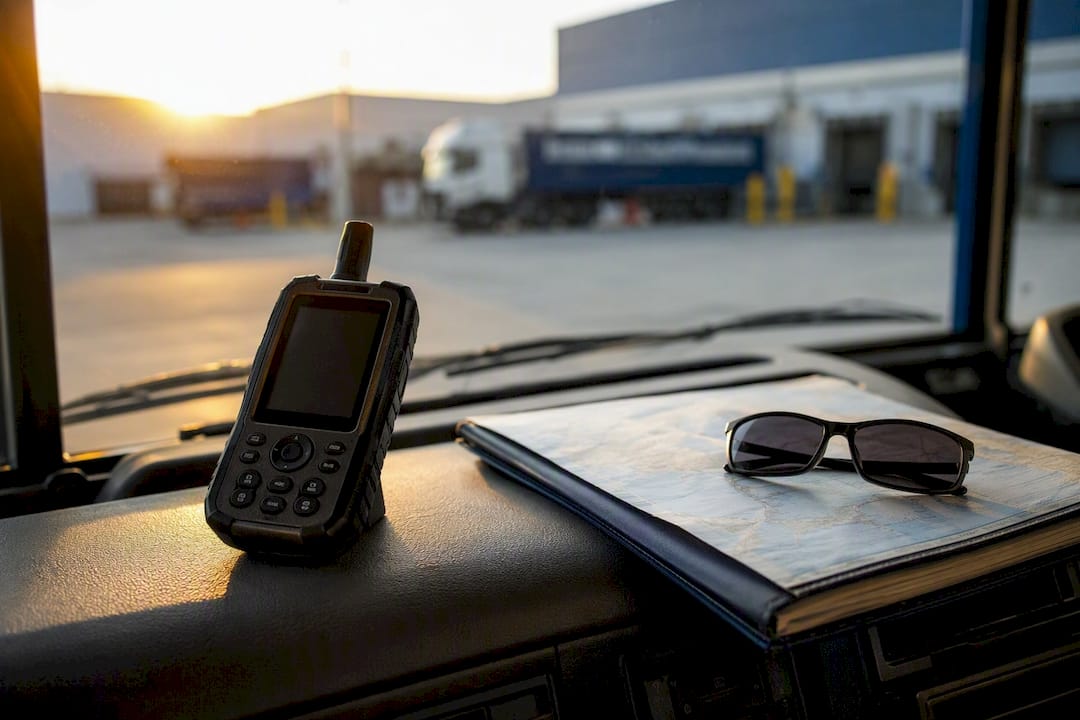
Smart bolt seals and smart padlocks add tamper detection at the container itself. Tetis devices fit to the door hinge, log intrusion attempts in real time, and flag journey deviations, making them well suited to single-trip deployment where you need a clean, disposable record for one movement. Lokies smart padlocks work differently: they log every access event with a timestamp and location, building a tamper-evident custody record that stands up in insurance disputes and customs queries.
The choice between a one-trip seal and a reusable asset tracker depends on the job. A single high-value shipment through Felixstowe suits a disposable bolt seal; a fleet of containers cycling between the same depot and customer sites over months justifies a reusable tracker with lower per-trip cost. Industry guidance on smart GPS bolt seals recommends combining both: the seal proves door integrity for that specific journey, the tracker gives you visibility across the asset’s working life.
- Fleet GPS tracking for real-time location and route deviation alerts
- Smart bolt seals for tamper detection and single-trip custody proof
- Reusable asset trackers for ongoing visibility across repeated journeys
- Combined telemetry for a layered record that satisfies both operations and insurers
Freight theft during UK road legs remains a genuine operational risk, and tampering incidents during transit are a recurring theme in industry commentary on container security, which is exactly why live visibility and tamper alerts matter more than a static parking arrangement.
Pro Tip: Ask any prospective haulier whether their seal or lock data is exportable in a timestamped format. A tamper log that only exists inside a proprietary app is far less useful when you need to hand it to an insurer or a customs officer quickly.
How do UK port and customs processes affect container security?
A container doesn’t become vulnerable the moment it leaves the port. It’s vulnerable during the gaps: the hours it sits in terminal inventory, the handover between terminal operator and haulier, and any depot transit before final delivery. UK-specific process steps determine how long those gaps last.
- Customs clearance first. A container remains in the terminal’s inventory until customs clearance and line release are granted, which requires a valid EORI number and correct declarations through the Customs Declaration Service (CDS). Get this wrong and the container sits longer, exposed, at the terminal.
- Book the terminal slot early. Terminal slot booking reduces dwell time by giving the haulier a fixed collection window rather than an open-ended wait, which shortens the period a container sits unmonitored in the yard.
- Identify the highest-risk stages. The container yard itself, the handover from terminal staff to the haulier’s driver, and any intermediate depot transit are where most exposure occurs. Each stage needs its own control: geofenced alerts at the yard, photographic or digital sign-off at handover, and continuous tracking through any depot leg.
- Build in scheduling buffers. Customs delays and slot changes are common enough that a haulier working to a razor-thin timeline has no room to recover if clearance slips by a day.
Correct paperwork and early booking aren’t administrative box-ticking. They’re the difference between a container that moves through the port in hours and one that sits exposed for days.
How do you choose a secure container haulage partner in the UK?
Not every haulier that advertises “secure transport” can actually produce evidence of it. The credentials worth checking are specific, not aspirational.
Look for a provider that can demonstrate live GPS tracking across its full fleet, not just a subset of vehicles. Ask for proof of insurance cover that explicitly recognises tracked, sealed transport, since this affects claims outcomes if something does go wrong. Confirm 24/7 support, not office-hours-only monitoring, and check the provider’s actual port coverage against the terminals you use.
- Does the provider offer client access to live tracking data, or only internal visibility?
- What seal or lock technology do they deploy, and is the custody log timestamped and exportable?
- What’s the escalation protocol if a tamper alert or route deviation fires at 2am?
- What are the incident response SLAs, in writing, not verbally promised?
- Does their insurance cover reflect the security measures they use?
Red flags include vague answers about tracking coverage, an unwillingness to share sample custody logs, or support that’s genuinely only available Monday to Friday. A haulier confident in its security model will happily walk you through its tracking dashboard and seal deployment process before you sign anything.
Pro Tip: Push for security capability to be written into the commercial terms, not treated as a verbal assurance. A contract clause specifying tracking access and custody log delivery protects you if a dispute arises later.
What’s the implementation checklist for a secure shipment?
A single container move from port to site breaks down into four phases, each with its own custody requirements.
- Pre-departure. Confirm your EORI number is valid, paperwork matches the CDS declaration, and the terminal slot is booked. Select the right device for the job, a single-trip bolt seal for a one-off high-value load, or a reusable tracker if the container cycles through the same route regularly.
- Dispatch. Fit the seal or tracker, log its serial ID against the shipment reference, and set up geofence boundaries and deviation notifications before the truck leaves the terminal.
- Transit monitoring. Someone needs clear ownership of watching the tracking feed, with a defined escalation path if a tamper alert or route deviation fires. Know exactly who gets called and what they do next.
- Delivery and post-delivery. Verify the container-opening event against the seal log at the destination, then archive the custody record alongside the delivery paperwork.
| Phase | Key action | Who’s responsible |
|---|---|---|
| Pre-departure | EORI check, slot booking, device selection | Forwarder / haulier |
| Dispatch | Seal fitted, serial logged, geofence set | Haulier operations |
| Transit | Live monitoring, escalation on alert | Haulier control room |
| Delivery | Opening event verified, records archived | Site receiver / haulier |
How Jhaulage handles secure container haulage in practice
Jagelo Haulage runs a fleet of GPS-tracked trucks and trailers, backed by a Suffolk workshop for commercial maintenance and 24/7 support that doesn’t stop at office hours. Coverage spans Felixstowe, Tilbury, Southampton, and Liverpool, which matters because most exposure happens at the port to depot handover.
The workflow is deliberately simple: confirm clearance and slot booking, deploy tracking on dispatch, monitor continuously through transit, and verify at delivery. It’s the same layered logic covered above, applied to real containers moving through real UK terminals every week, not a theoretical framework.
— Vytautas
Get secure, tracked container haulage from Jhaulage
Jhaulage is the direct route to secure container transport for UK freight forwarders who need proof, not promises. Every load moves on a GPS-tracked vehicle with 24/7 support behind it, and coverage across Felixstowe, Tilbury, Southampton, and Liverpool means the highest-risk port-to-depot handover is handled by people who work those terminals daily.
Get in touch and you’ll get a straightforward quote, evidence of the tracking systems in use, and a clear plan for which seal or tracker suits your specific load. If you’re moving a single high-value container or running a regular lane that needs consistent custody records, contact Jagelo Haulage directly to arrange transport and see the tracking setup for yourself.
Sources
- t42 Tracking Solutions | 30 Years of Worldwide IoT Expertise
- UK container security: Smart GPS bolt seals explained