More on overweight containers from Jagelo Haulage
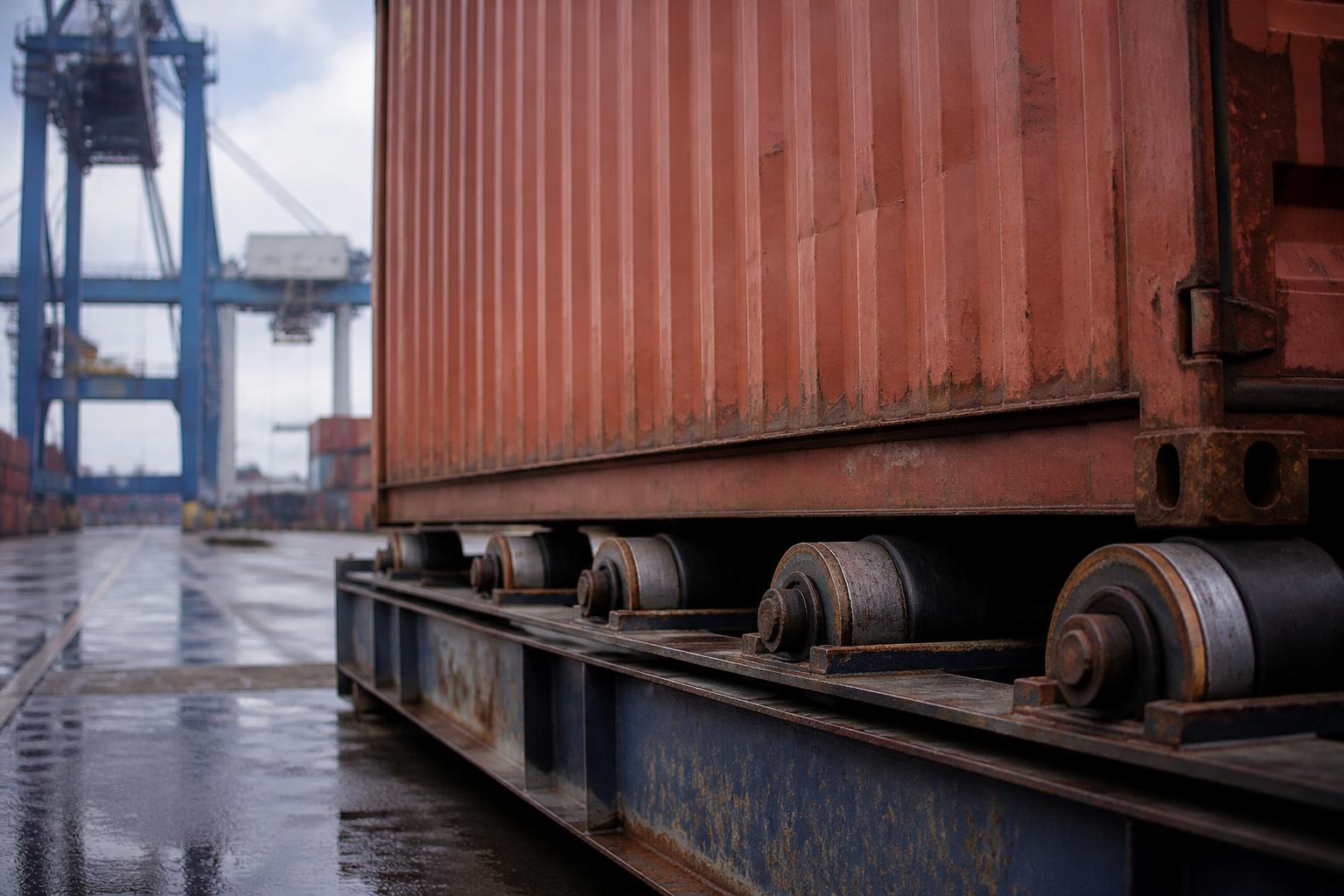
A failed collection on a heavy box usually starts long before the driver reaches the port. The container is released, customs is clear, the slot is booked, and only then does somebody notice that the gross weight works for the sea leg but not for the UK road leg. At that point the problem is no longer paperwork. It is axle weights, trailer choice, routing, port cut offs, and whether the cargo can lawfully move inland as loaded.
We deal with this every week on merchant haulage from Felixstowe, London Gateway, Tilbury, Purfleet, Southampton and Liverpool. The workable approach is simple. Check the actual gross weight, the container size, the cargo distribution, the collection port, the delivery postcode, and the unloading method before the booking is placed. If any of those points are unclear, the risk of storage, rework and missed free time rises quickly.
What makes a container overweight in practice
In practice, a container becomes overweight when its declared or actual loaded weight cannot be moved compliantly on UK roads on the planned vehicle combination and route. That is different from saying the box is too heavy for shipping. A line may accept it for sea carriage within the container CSC plate and vessel limits, and the VGM may be perfectly in order, but that does not mean it can be collected from the quay and delivered inland on a standard road movement.
For UK road haulage, the issue is not only gross vehicle weight. Axle loading matters just as much. A box can be within the legal gross weight for the combination and still be unworkable because too much of the cargo sits over one part of the trailer, usually towards the front of a 20ft box. That is why a heavy container can look fine on paper and still fail in the real world.
This is where UK practice needs to be separated from broad EU assumptions. People often quote maximum truck weights in general terms, but what matters on a UK container move is the actual tractor, trailer, kingpin setting, container position, and where the cargo mass sits inside the box. The legal and operational answer is not just "under 44 tonnes" or "over 44 tonnes". It is whether that specific load can travel compliantly on that specific setup.
Another practical point is that the terminal system weight is not always the whole story. Sometimes the shipping line documentation, the terminal record and the commercial invoice all show slightly different figures. We want the best available loaded gross weight before we send a vehicle. If the box is close to the limit, we also want to know what the goods are and how they are stowed. Dense cargo such as stone, metal products, tiles, liquids in IBCs, paper reels and bagged raw materials often creates the problem.
When people talk about overweight containers, what they usually mean is one of three things. First, the loaded box is too heavy for a standard road move in Great Britain. Second, the gross weight might be possible, but the axle distribution is likely to be wrong. Third, the move may be lawful only with a different plan, such as specialist equipment, a different delivery method, tipping, transloading, or a change of destination.
The checks to do before you book collection
Before booking collection, we need a short set of exact details. If we have them early, we can usually say straight away whether the box can move as loaded, needs review, or needs another plan.
Start with the container number, size and type. Tell us whether it is a 20ft ISO Container, 40ft ISO Container, 45ft ISO Container or Refrigerated Container. On heavy moves, size matters because the same weight behaves very differently in different ISO containers.
Next, confirm the loaded gross weight. Not an estimate, and not just the cargo net weight. We need the total loaded container weight as held by the line or terminal if possible. If there is any doubt, send the VGM figure and the packing list or commercial invoice. If the weight in the release differs from the weight on the documents, flag that at once.
Then confirm the commodity and packing format. "Machinery parts" is less useful than "bagged resin on pallets", "paper reels", "steel coils", "IBC tanks", or "loose floor loaded tiles". We also need to know whether the weight is evenly spread, centre loaded, or concentrated at the front. If the cargo is floor loaded and dense, say so. If the load is on pallets, tell us how many and whether unloading can be done from the doors. If it is LCL rather than FCL, say that too, because transloading options and access to the cargo may be different.
Delivery details matter just as much as weight. We need the full postcode, site restrictions, whether the delivery point has a loading bay, whether unloading is by forklift, clamp, crane or by tipping, and whether the receiver can accept the goods if the container itself cannot stay on site long. A warehouse that can strip pallets immediately gives more options than a site with no unloading equipment.
For port collection, we also need the practical movement status. Is the release live. Are there customs holds. Is the line showing demurrage risk. Has the port slot been booked in CARGOES VBS, the Container Booking System, or CBS, where required. If not, who is booking it. We routinely handle the slot booking, but the timing only works if the release and customs position are clear.
The final check is timing against free time and delivery readiness. A heavy box that cannot move on the first attempt becomes expensive quickly once storage starts. If the container is landing today but the consignee cannot unload until next week, that changes the advice. In some cases it is better to pause before collection and decide on tipping or transload arrangements, rather than pulling the box out and creating a second problem inland.
If the cargo is high value, tell us early. Our freight liability is £6,500 per tonne under RHA 2024 conditions, including subcontracted loads, and up to £10,000 per tonne is available by arrangement. That does not change the weight issue, but it does affect how we plan the move and any onward handling.
Why 20ft boxes cause most of the trouble
Most problem heavy moves involve a 20ft ISO Container. The reason is straightforward. Dense cargo fits into the cube and reaches a high weight very quickly, often while remaining compact and heavily concentrated over a short floor length. That concentration creates axle problems even where the overall gross vehicle weight looks manageable.
A 20ft box full of heavy commodity is common in imports because it is efficient for sea carriage. You can load a lot of weight into a small footprint. The sea leg is not the issue. The road leg is. Once that mass sits close together, especially towards the front end of the container, the tractor unit and trailer can end up carrying too much weight on individual axles.
A 40ft ISO Container behaves differently. It can still be too heavy, but the cargo has more floor length over which to spread. The same is generally true of a 45ft ISO Container, although the operational question there is often more about route, access and overall planning than raw weight concentration. In simple terms, a heavy 20ft box is much more likely to create an axle problem than a similarly heavy 40ft box with the load spread properly.
This is also why commodity description matters. Twenty six tonnes of evenly distributed product is one conversation. Twenty six tonnes of dense cargo packed hard up at the front of a 20ft box is another. We often ask where the first heavy pallet starts, whether there is dunnage, and whether there is any practical way to unload part of the weight near the doors if the box needs to be adjusted.
The same concentration issue can apply to a Refrigerated Container, depending on product and stow, but reefers add another layer because power, temperature integrity and unloading timing become part of the plan. If that is your issue, our guidance on avoiding unnecessary port cost on reefer collections covers the extra operational points.
What happens when the box is already at the port
Once the container has landed, the choices narrow, but there are still workable options. The first question is whether the box can move as loaded on a lawful and practical road setup. If yes, we plan the collection around release status, free time, slot availability and delivery readiness. If no, we need to decide quickly what the alternative is before storage builds up.
Option one is direct movement as loaded. That only works where the gross weight, axle distribution, route and delivery method all line up. For a straightforward heavy import, this is the cleanest outcome. We book the slot, collect, and deliver in one controlled move.
Option two is movement for tipping or controlled unloading at a suitable facility. This is common where the goods are bulk packed or where the receiver can handle the cargo more effectively once the box reaches a specialist site. Tipping is not a universal answer, because not every commodity can be tipped and not every container condition allows it, but for the right cargo it can solve a concentrated weight problem.
Option three is transloading. The cargo is stripped from the import box and reloaded into another vehicle or split into more than one road movement. This is often the answer where the container itself is the problem rather than the goods. It is also common where the load needs to be broken down for final delivery. For LCL cargo, this may already be part of the inland plan. For FCL, it is usually an exception used to make an otherwise impossible move workable.
Option four is a revised delivery plan. Sometimes the named delivery point is the issue, not the port collection. If the original site has poor access, no unloading equipment, or no capacity to receive a heavy box promptly, moving first to a better equipped warehouse can be the sensible answer. That is especially true where the consignee’s premises are not set up to deal with dense cargo in shipping containers.
Where the box is at Tilbury or London Gateway, timing matters because slot availability and terminal processes can turn a manageable issue into avoidable cost if nobody decides quickly. We have set out the Tilbury side in more detail in our guide to avoiding delay on heavy Tilbury collections, and the same principle applies elsewhere. Decide the movement method before free time disappears.
If the load is not just heavy but physically abnormal as well, for example if the cargo is out of gauge inside the box or needs specialist handling, that becomes a different job and should be treated as such from the start. In those cases, moving containerised out of gauge cargo without avoidable delay is the better reference point than a standard heavy box move.
How to reduce delay and extra port cost on overweight containers
The biggest savings on heavy container moves come from timing and communication, not from trying to force a collection too early. If a box is likely to be problematic, send the details as soon as the shipping documents are available, ideally before vessel arrival. We would rather review it before discharge than after the first failed plan.
Book against free time, but do not confuse speed with readiness. A same day collection is not a good result if the weight has not been checked properly. The better result is a lawful first collection with a delivery slot that matches the consignee’s unloading capability. Where urgent collection genuinely is needed, we can plan for that, but the documents still have to support the move.
For Felixstowe, London Gateway, Tilbury, Purfleet, Southampton and Liverpool, the practical process is similar even though the systems vary. We confirm release, customs status, line position, and slot availability. Where required, we book in CARGOES VBS or the relevant Container Booking System, or CBS. We then line up the vehicle and trailer to the load profile, rather than treating the booking as a generic import collection.
Communication with the receiver is often the missing piece. A consignee may say "we can unload a container" when what they mean is they can unload a normal palletised import. That is not the same as handling a very heavy 20ft box with floor loaded cargo or front concentrated pallets. We ask direct questions about forklift capacity, dock arrangement, unloading time, and whether partial stripping is possible if the load needs adjusting.
If there is any chance the box will need transloading or tipping, line that up before collection. Waiting until the container is already out of the port usually adds cost and reduces options. It can also create driver waiting time and failed delivery risk, neither of which helps when free time is already under pressure.
For imports through London Gateway, we often see good results when the inland warehouse plan is fixed before the slot is booked. Our page on planning London Gateway delivery to warehouse without avoidable port cost covers that sequence in more detail, and the logic transfers well to other ports.
The same disciplined approach applies at Felixstowe, where our proximity helps on responsiveness but does not change the need for correct information. Being about 35 miles by road from the port means we can react quickly, but quick reaction is only useful if the weight, release and delivery method are known. The same is true for Southampton and Liverpool, where distance makes failed planning more expensive, not less.
At Jagelo Haulage Limited, we run 40 vehicles and 40 trailers of our own on operator licence OF2023521, with vetted partner hauliers on their own operator licences for overflow. Since 2019 we have moved more than 75,000 containers, mostly on direct merchant haulage for importers and forwarders who want the port slot booked, the delivery planned properly, and an early warning when a box is at risk. Heavy boxes are manageable, but only when the decision is made on the actual movement, not just the shipping paperwork.
If you want to avoid failed collections on overweight containers, the rule is simple. Check the real loaded weight, check how that weight sits in the box, check how the receiver will unload it, and check the port timing before the collection is booked. Do that early, and most of the avoidable cost never starts.
Is an overweight container the same as an oversized container?
No. Overweight refers to mass and axle legality for road movement. Oversized usually means dimensions or out of gauge cargo. A container can be standard size but still be overweight for normal road haulage.
Can a container be within the shipping line limit but still not move by road?
Yes. Sea and terminal acceptance do not automatically mean the loaded box works on UK roads. Gross weight, weight distribution, container size and delivery point all affect whether it can move legally.
What information should I send a haulier about an overweight container?
Send the container number, size, gross weight, commodity, collection port, delivery postcode, whether it is FCL or LCL, and any deadline around free time, customs release or quay storage.
Are overweight containers usually a 20ft problem?
Often, yes. Dense cargo in a 20ft ISO Container can reach road weight limits quickly because the weight is concentrated in a shorter box. That is why these moves need checking before collection is booked.
Does Felixstowe booking work differently now?
Yes. At Felixstowe, collections are booked on the Container Booking System (CBS), which replaced CARGOES VBS in January 2025. Booking a slot does not remove the need to confirm the box can move legally.