Part of our guide to container haulage from London Gateway
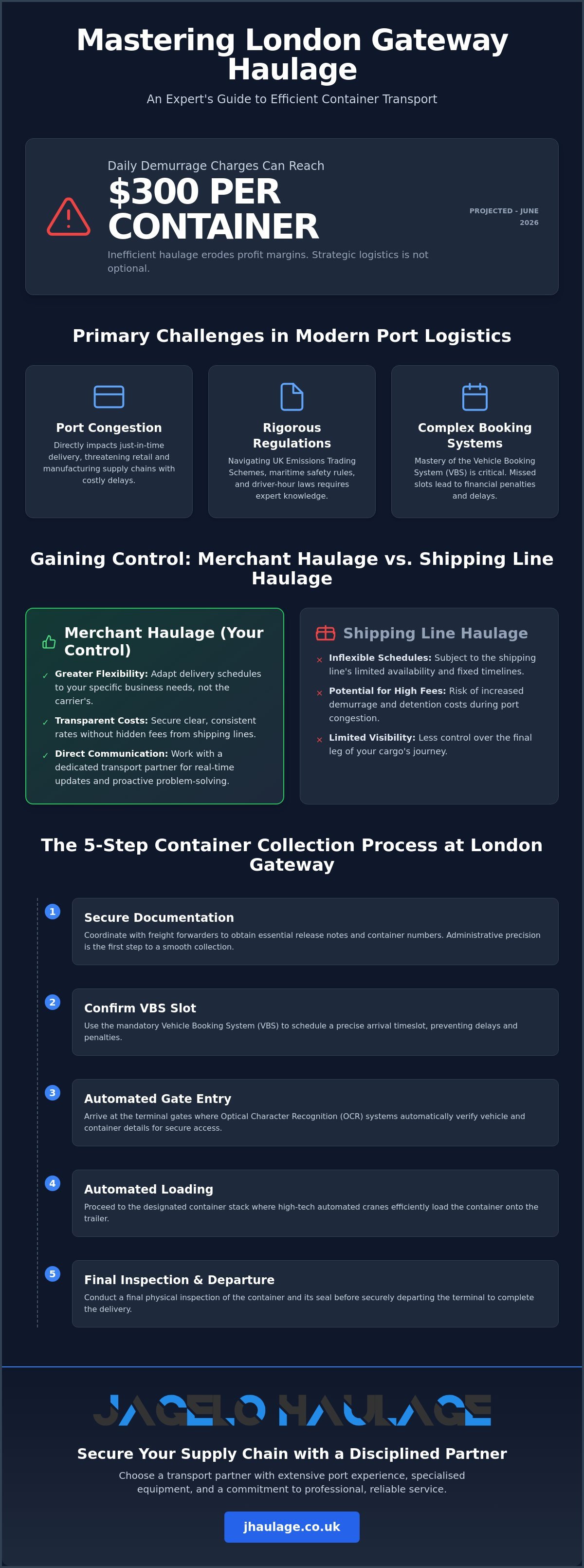
Did you know that daily demurrage charges for a container can reach up to $300 in June 2026? This reality makes efficient London Gateway Haulage a critical requirement for any disciplined supply chain. You've likely experienced the frustration of inflexible shipping line schedules and the complexity of the vehicle booking system whilst costs mount during port congestion. It's a common struggle to maintain operational flow when port dwell times begin to erode your profit margins.
Our expert guide helps you master the complexities of container transport from DP World London Gateway by providing a clear framework for operations and merchant haulage. You'll learn how to secure transparent rates and implement strategies that protect your cargo from unnecessary delays. We'll examine the impact of new maritime safety regulations and the UK Emissions Trading Scheme whilst outlining a methodical approach to reducing detention fees. By the end of this article, you'll have the knowledge to select a transport partner that prioritises functional reliability and professional competence.
Key Takeaways
- Understand the operational requirements and essential documentation needed to streamline container collection at the terminal.
- Evaluate the benefits of merchant haulage over shipping line arrangements to gain greater control over your delivery schedules.
- Implement strategic logistics management to reduce port dwell times and avoid costly demurrage and detention fees.
- Master the complexities of London Gateway Haulage by identifying the key factors that influence transparent and consistent transport rates.
- Learn how a disciplined transport partner with extensive port experience can secure your supply chain against common logistical disruptions.
Understanding London Gateway Haulage and its Role in UK Trade
London Gateway Haulage represents a specialised segment of the UK logistics sector, focusing on the movement of goods from the quayside to the final destination. This port-to-door service is essential for businesses that rely on the London Gateway port as their primary entry point for international cargo. As a deep-sea hub, the terminal handles some of the world's largest container vessels, making it a cornerstone of the national supply chain. Reliable haulage ensures that the transition from sea to road is seamless, protecting the integrity of the goods and the efficiency of the broader economy.
Operating within this environment requires more than just standard transport. It demands specialised equipment, such as sliding skeletal trailers for varying container sizes, and professional fleet management to meet the terminal's strict operational standards. Professional hauliers must maintain a disciplined approach to vehicle maintenance and driver training to ensure safety and compliance. This level of organisation is necessary to support the high stakes of modern trade. Even minor delays can disrupt manufacturing lines or retail stock levels across the country.
The Infrastructure of DP World London Gateway
The terminal uses advanced automated systems to manage container movements, which significantly impacts haulage turnaround times. These high-tech cranes and landside systems allow for the rapid processing of TEU (Twenty-foot Equivalent Unit) containers. The integration of rail and road facilities at the London Gateway Logistics Park further enhances this capability by providing a multi-modal hub. This infrastructure creates a streamlined environment where hauliers can execute collections with precision. Success here depends on the haulier's ability to navigate the Vehicle Booking System (VBS) and adhere to strict arrival windows.
Primary Challenges in Modern Port Logistics
Maintaining inland container haulage schedules is a complex task. Port congestion remains a primary concern for operators, as it directly affects the ability to meet just-in-time delivery requirements for the UK retail and manufacturing sectors. These industries depend on punctuality to function. Hauliers must also navigate a rigorous regulatory landscape whilst managing fuel efficiency and driver hours. It's a demanding environment that rewards methodical planning and operational reach. By treating London Gateway Haulage as a strategic outcome rather than a simple physical task, businesses can better manage the volatility of global shipping.
Navigating Port Operations: A Guide to Container Collection
Successful London Gateway Haulage requires a disciplined execution of terminal protocols. The collection process begins long before a vehicle reaches the gate. It starts with the haulier coordinating closely with freight forwarders to secure the necessary release notes and container numbers. This administrative precision ensures that every vehicle arrival is purposeful and compliant. Modern fleet technology now allows for real-time tracking of these movements, providing clients with a secure and transparent view of their container deliveries. This digital oversight ensures that all transport activities align with the latest container safety regulations.
A typical collection involves several methodical steps. Once a booking is confirmed, the driver arrives at the automated gates where optical character recognition systems verify the container and vehicle details. After passing through security, the vehicle proceeds to the designated stack for loading by automated stacking cranes. The final stage involves a physical inspection of the container and seal before the driver departs the terminal. Professional London Gateway Haulage providers use these technologies to maintain a brisk, operational pace that reduces idle time and maximises efficiency.
Managing the Vehicle Booking System (VBS)
The London Gateway VBS is the mandatory system for scheduling all road vehicle arrivals. This system organises terminal traffic by allocating specific timeslots to haulage operators, preventing quayside bottlenecks. Accuracy in booking is vital; a missed or late slot can result in financial penalties and the loss of the appointment. To maintain consistency during peak periods, disciplined hauliers implement buffer times and monitor port congestion in real-time. If you require a quote for managed collections that navigate these complexities, you can request a professional transport assessment.
Security Protocols and Site Access
Safety is a non-negotiable aspect of port operations. Every driver must possess the correct Personal Protective Equipment (PPE) and have completed the mandatory site-specific safety induction. Access is granted through a combination of RFID technology and automated gate systems that cross-reference vehicle data with VBS bookings. These rigorous security protocols are designed to provide protected outcomes for every consignment. By adhering strictly to port authority mandates, hauliers ensure the safety of the site and the security of the national supply chain.
Merchant Haulage vs Shipping Line Haulage at London Gateway
Choosing the right logistics model is a strategic decision that directly impacts the efficiency of your supply chain. Shipping line haulage involves the carrier arranging the final leg of the journey, often through their own contracted providers. Whilst this may seem convenient, it frequently lacks the granular control required for complex inland deliveries. In contrast, merchant haulage allows the cargo owner to manage their own transport arrangements. This distinction is vital when considering the UK government on London Gateway's importance as a hub that requires precise and disciplined logistical coordination.
Independent London Gateway Haulage provides the flexibility to synchronise same-day delivery services with warehouse capacity. Shipping lines operate on broad schedules that don't always align with the specific needs of a UK-based manufacturer or retailer. By opting for independent transport, you can avoid the rigid constraints of carrier-led logistics. This choice often leads to more transparent cost structures for nationwide distribution. You aren't subject to the carrier's internal subcontracting margins, allowing for a more direct and cost-effective relationship with your transport provider.
The Benefits of Independent Merchant Haulage
Selecting an independent partner offers significant advantages for managing inland transport routes. You gain the ability to consolidate shipments across multiple shipping lines under a single transport provider. This approach simplifies communication and ensures a consistent standard of service regardless of which carrier brought the container into the port. Working with a dedicated specialist like Jagelo Haulage reduces the administrative burden on your team. It replaces multiple carrier interfaces with one point of contact that understands your specific operational requirements and prioritises your cargo's safety.
Strategic Flexibility in the Supply Chain
Market conditions can change whilst containers are still in transit. Merchant haulage allows you to adapt to shifts in warehouse availability or customer demand without being locked into a carrier's predetermined route. This agility is essential for maintaining lean inventory levels and responding to seasonal peaks. Effective planning also helps in mitigating the impact of specific "merchant haulage" surcharges that carriers might apply when their own equipment isn't used for the final delivery. Merchant haulage empowers the cargo owner to select the most reliable transport partner. This strategic outcome ensures that your London Gateway Haulage framework remains resilient and professionally managed.
Optimising Container Transport Costs and Efficiency
Controlling the financial aspects of London Gateway Haulage requires a granular understanding of the UK transport market. Haulage rates are composed of several core elements, including base transport costs, fuel surcharges, and terminal booking fees. To maintain a disciplined budget, cargo owners must identify these components early in the procurement process. Efficiency isn't merely about speed; it's about the methodical reduction of waste in every part of the logistical chain. Route optimisation is a central pillar of this approach, as it directly influences fuel consumption and driver productivity.
Mitigating the risk of demurrage and detention charges is perhaps the most critical factor in cost control. As of June 2026, daily demurrage charges for a container can reach up to $300. These costs escalate significantly after the first five days of overstay. Such fees can quickly exceed the value of the transport itself if not managed with precision. Secure transport also involves protecting the financial value of the cargo through comprehensive insurance. For high-value consignments, ensuring your haulier has the correct level of goods-in-transit cover provides the necessary security for your investment.
Factors Influencing Nationwide Haulage Rates
Distance remains the primary driver of pricing, but external variables like driver availability and fuel price fluctuations create volatility. Understanding peak season surcharges is also essential for annual budget planning. These surcharges are common during periods of high demand. By utilising port-centric logistics, businesses can often reduce the distance of the final leg. This effectively lowers the overall cost to transport a shipping container whilst maintaining service standards. Professional London Gateway Haulage providers use these strategies to provide predictable outcomes for their clients.
Strategies for Reducing Port Dwell Times
The use of pre-advise data is a proven method for accelerating the container release process. This proactive communication ensures that the terminal has all necessary documentation before the vehicle arrives. Additionally, synchronising scheduled container deliveries with warehouse capacity prevents congestion at the unloading bay. It's a simple way to keep operations moving. For a more detailed breakdown of these variables, you can consult our guide on container transport costs. If you need a transparent breakdown of your transport requirements, you can request a professional haulage quote.
Reliable London Gateway Haulage with Jagelo Haulage
Jagelo Haulage brings over 15 years of specialised expertise to the port logistics sector. We provide a disciplined framework for every consignment, ensuring that your cargo moves from the quayside to its destination without friction. Our operations are anchored in functional reliability and a deep understanding of the UK's maritime infrastructure. By positioning ourselves as a master of the fundamentals, we ensure that every delivery is executed with quiet confidence and professional competence. This steadfast approach makes us the premier choice for both merchant and shipping line haulage across the country.
Successful London Gateway Haulage depends on a transport partner that understands the high stakes of the modern supply chain. We manage a modern fleet of over 40 trucks, allowing us to handle nationwide requirements with precision. Every movement is professionally managed to provide protected outcomes for our clients. We prioritise safety and efficiency above all else, creating a corporate atmosphere that our partners can depend on. Our team follows strict protocols to ensure your containers are delivered on time and in perfect condition, regardless of the complexity of the route.
Modern Fleet and Specialist Equipment
Our fleet consists of Euro 6 compliant vehicles, which ensures we meet all environmental and regulatory standards within the terminal. We possess the operational reach to execute same-day deliveries and time-critical inland container haulage for our clients. Advanced vehicle tracking systems provide real-time visibility, whilst rigorous safety protocols ensure every container is secure. This technical capability allows us to maintain a brisk pace without compromising on site security. To support the digital infrastructure required for modern logistics, many businesses learn more about HJS Technology Ltd and their comprehensive IT support services. Our drivers are trained to handle specialised equipment, ensuring that all container deliveries are completed to the highest professional standard. We're dedicated to maintaining the integrity of your supply chain through disciplined fleet management.
Partnering for Strategic Logistics Success
We act as a strategic partner for freight forwarders and nationwide operators who require consistent results. Our presence extends beyond London Gateway to other major maritime hubs, including Felixstowe and Southampton. This multi-port capability allows us to offer a consistent, high-quality service across the UK's primary trade lanes. We don't just move containers; we provide a stable foundation for your broader operational framework by delivering functional reliability at every turn. Our team understands that punctual delivery is the cornerstone of your business success. You can contact Jagelo Haulage for a professional port haulage quote to secure your next consignment.
Securing Your Supply Chain at London Gateway
Mastering the logistical demands of the terminal requires a methodical approach to port operations and cost management. By choosing merchant haulage, you gain the strategic flexibility to adapt to shifting warehouse requirements and avoid the rigid schedules of shipping lines. Implementing precise vehicle booking and leveraging real-time tracking ensures that your cargo remains secure whilst port dwell times are kept to a minimum. Efficient London Gateway Haulage is ultimately a result of disciplined planning and professional execution.
Jagelo Haulage provides this level of functional reliability through over 15 years of industry experience and a modern fleet of more than 40 trucks. As specialists in merchant and shipping line haulage, we prioritise the safety and punctuality of every consignment. We understand the high stakes of the UK supply chain and offer the expertise required to navigate its complexities with confidence. You can Request a Professional Container Haulage Quote from Jagelo Haulage to secure a dependable transport partner for your next delivery. We look forward to supporting your operational goals with our seasoned expertise.
Frequently Asked Questions
What is London Gateway haulage?
London Gateway haulage is a specialised port-to-door logistics service that facilitates the movement of freight containers from the DP World London Gateway terminal to inland destinations. It involves the use of heavy goods vehicles and specialised skeletal trailers to transport sea-bound cargo into the national supply chain. Professional hauliers manage this landside leg of the journey, ensuring that goods are moved with the precision required by modern trade standards.
How does the Vehicle Booking System (VBS) work at London Gateway?
The Vehicle Booking System is a mandatory digital platform that regulates road vehicle arrivals to prevent terminal congestion. Hauliers must book a specific timeslot for every container collection or drop-off to ensure an orderly flow of traffic. This methodical system allows the port to prepare containers for loading in advance, which helps to maintain a brisk operational pace and reduces idle time for drivers at the gate.
What is the difference between merchant haulage and shipping line haulage?
Merchant haulage empowers the cargo owner to select their own transport partner, whereas shipping line haulage is arranged by the carrier using their contracted providers. Choosing the merchant model provides greater strategic control over delivery windows and inland routes. This flexibility is often essential for businesses that require precise coordination with their warehouse operations or need to manage complex delivery schedules across multiple shipping lines.
How much does it cost to transport a shipping container from London Gateway?
The cost to transport a shipping container is determined by several variables, including the inland distance, current fuel surcharges, and terminal booking fees. Whilst industry benchmarks for a 44-tonne articulated lorry are approximately £3.00 per mile, total London Gateway haulage rates are also influenced by dynamic factors like port congestion surcharges. We recommend requesting a specific quote to obtain a transparent and disciplined breakdown of your transport costs.
Can Jagelo Haulage handle same-day container deliveries nationwide?
Yes, we specialise in time-critical inland container haulage and same-day delivery services across the United Kingdom. Our modern fleet of over 40 trucks is equipped to handle urgent requirements from the terminal to any nationwide location. We prioritise functional reliability to ensure that even the most demanding delivery schedules are met with professional competence and operational precision.
What documentation is needed for container collection at London Gateway?
Drivers must present valid release notes and specific container numbers to gain access to the terminal and collect cargo. Additionally, all personnel entering the site are required to have completed the mandatory safety induction and must possess valid identification. Proper documentation is a non-negotiable requirement that ensures the secure and disciplined movement of goods through the port's automated gate systems.
How can I avoid demurrage charges at the port?
You can avoid demurrage charges by implementing efficient planning and utilising merchant haulage to maintain control over collection schedules. As of June 2026, daily demurrage fees can reach $300 after the initial free period expires. Ensuring that your transport partner manages VBS bookings accurately and has the operational reach to collect containers promptly is the most effective way to mitigate these financial risks.
Are containers transported by Jagelo Haulage fully insured?
Every container transported by our team is protected by comprehensive goods-in-transit insurance to provide a secure outcome for our clients. We understand the high stakes involved in moving high-value cargo and maintain rigorous safety protocols to safeguard your investment. This commitment to protection ensures that your goods are fully insured from the moment they leave the terminal until they reach their final destination.