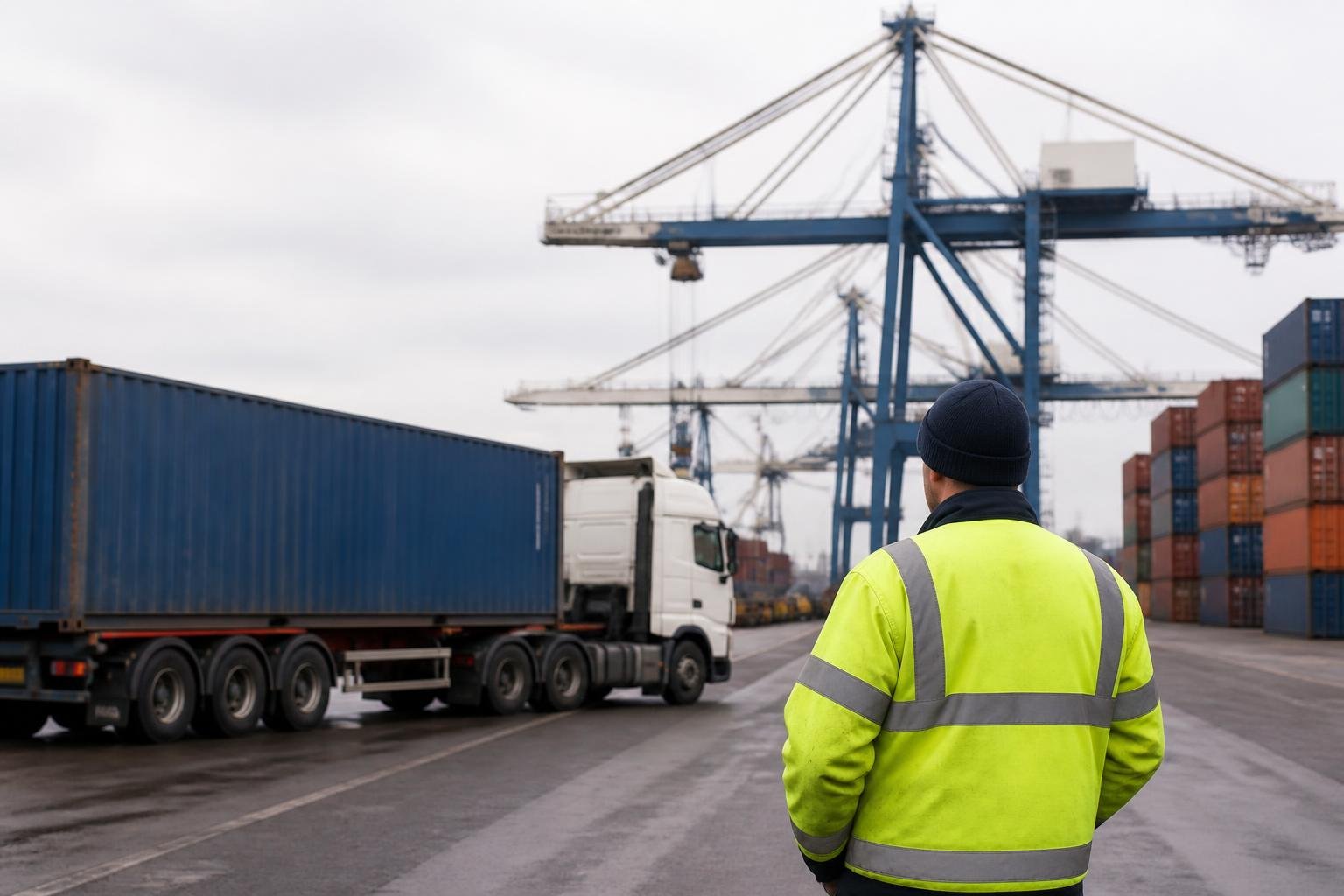
UK operators use subcontracted container haulage to keep port traffic moving when their own fleet is full, when a collection must be turned round quickly, or when the delivery point sits well outside their normal traffic area. In practice, the decision is usually operational rather than strategic. A planner has a booked slot at Felixstowe or DP World Gateway, a container has cleared, and the in-house vehicles are already committed. Bringing in a reliable subcontractor protects the booking, avoids storage and detention problems, and keeps the customer’s delivery window intact.
That is where experienced container haulage subcontractors add value. They give operators extra capacity without the delay of sourcing ad hoc transport from scratch, and they help cover specialist work such as Refrigerated Container movements, hazardous cargo, or oversized units that need the right trailer, driver brief and compliance checks. For businesses moving imports or exports through the main UK ports, the subcontractor is often the part of the chain that prevents a straightforward port move turning into a missed slot, a failed delivery or a costly rebook.
When operators use subcontracted container haulage
Most operators bring in subcontract support for five common reasons.
The first is overflow. Port work is uneven by nature. Vessel arrivals, customs release, warehouse readiness and customer booking windows do not spread neatly across the week. An operator may have a manageable plan on Monday and be short of vehicles by Tuesday afternoon because several containers become available at once. Subcontracting lets the traffic office add capacity quickly, especially on standard port to warehouse runs.
The second is urgent work. Same-day and next-day collections are common when a container is released later than expected, when a customer changes delivery requirements, or when a line’s free time is running down. In those cases, a subcontractor with responsive planning and emergency availability is often the only practical answer. The key is not just having a truck available, but having one that can meet the booking, collect with the correct reference, and deliver to a site that may have narrow access, fixed booking times or unloading restrictions.
The third is port collections themselves. Some operators run strong domestic fleets but do not maintain regular port coverage across all major terminals. A subcontractor already working daily into Felixstowe, Tilbury, Southampton or Liverpool will usually understand the local booking systems, queue patterns, terminal procedures and common causes of delay better than a general haulier drafted in at short notice.
The fourth is nationwide delivery. A container may land in Suffolk and need to go to the Midlands, Wales, the North East or Scotland. If the contracting operator’s own fleet is concentrated in one region, outsourcing the port collection and onward haulage can be more efficient than repositioning its own assets. This matters particularly where a delivery point has strict timed booking, security induction, or limited unloading windows.
The fifth is out-of-area coverage. Even large operators have traffic lanes they do not serve efficiently. A subcontractor based closer to the collection or delivery point can reduce empty running, improve response times and make it easier to recover from delays. For port work, that local knowledge often matters as much as distance. Knowing which warehouse insists on advance vehicle registration, which site refuses early arrivals, or which delivery point has a hard weight limit on approach roads saves failed journeys.
For buyers arranging regular imports, subcontracting is also a sensible way to flex between full container load haulage in the UK and more mixed traffic requirements without overcommitting their own fleet.
What a subcontractor needs before a container can move
A competent subcontractor cannot quote or plan a container job from “one box from port to warehouse”. The traffic office needs specific operating data.
Start with the port and terminal. “Felixstowe” is not enough if the booking and collection process depends on a particular terminal or line instruction. The subcontractor needs to know where the container sits, whether a vehicle booking is already in place, and whether any port card or system access issue could affect the collection.
Next is the collection reference. That may be the release reference, container number, booking reference, or line collection authority, depending on the move. Without the correct reference, the driver may reach the port and still be unable to collect. For UK port work, this is a basic but critical point. A missed or incorrect release reference can waste a booked slot and trigger rebooking.
The delivery point must be complete and usable. That means full address, postcode, site contact, phone number, booking reference if required, and clear delivery instructions. “Deliver to Birmingham” is not planning information. The subcontractor needs to know whether the container is for a distribution centre, manufacturing site, farm, construction project or urban premises with restricted access.
Container size and type are fundamental. A 20ft ISO Container, 40ft ISO Container and 45ft ISO Container are not interchangeable from a planning point of view. The traffic team must know the exact unit, because trailer choice, axle loading, routeing and delivery site suitability all depend on it. If the unit is a Refrigerated Container, the subcontractor also needs to know whether genset support is required during the movement, and whether temperature integrity must be maintained to handover.
Gross weight is equally important. A container can be legal at the port and still present routeing or delivery issues if the receiving site has a weak yard, a steep entrance, or a bridge restriction nearby. In the UK, operators also need to work within domestic road weight rules, which may differ from assumptions made on wider EU road movements. The verified gross mass declared for shipping does not remove the need to assess road legality and axle distribution for the actual haulage vehicle and trailer combination.
Timing details must be clear. Is the collection needed same day, next day or on a fixed future date? Is there a latest collection time before terminal cut-off? Is there a delivery booking? Can the site receive after normal hours? Port work fails when one side assumes flexibility and the other side is working to a hard slot.
Access constraints should be declared upfront. This includes low bridges, narrow lanes, urban restrictions, forklift unloading arrangements, side access issues, waiting restrictions, PPE rules, security procedures and whether the site can accept articulated vehicles. If the delivery point cannot safely or legally receive the planned vehicle, that should be identified before the container leaves the port, not when the driver reaches the gate.
Finally, customs and cargo status may matter. Is the unit customs cleared? Is it moving under bond? Is there any seal instruction? Does the load have a Hazardous Goods Requirement? The subcontractor needs enough information to decide whether the movement is routine or specialist before accepting the job.
Matching the vehicle and driver to the container
Good container haulage planning is about matching the load to the right equipment and the right driver, not simply assigning the nearest available unit.
For standard ISO containers, the main variables are size, weight and destination access. A 20ft ISO Container often concentrates weight in a shorter footprint, so axle loading and legal routeing can be more demanding than some customers expect. A 40ft ISO Container may be physically easier to balance but harder to place at a tight delivery site. A 45ft ISO Container introduces additional length considerations, especially where yard manoeuvring space is limited or where approach roads are unsuitable for a longer artic.
Trailer specification matters. Port skeleton trailers are standard for many moves, but not every trailer suits every container or delivery condition. Twistlock compatibility, sliding chassis position, rear overhang and overall combination length all affect whether the move can be carried out safely and legally.
A Refrigerated Container needs additional planning. The subcontractor must check whether the reefer requires power support during transit or while waiting. If a genset is needed, that changes equipment requirements. The receiving site may also have a strict handover process, especially where temperature-sensitive goods are involved. It is not enough to say “reefer collection”, the planner must know what operational support the unit requires.
Oversized loads need a different level of scrutiny. If the container-related load exceeds normal dimensions or creates route restrictions, the subcontractor may need specialist trailers, route survey checks, movement planning and, in some cases, notifications or escort arrangements depending on the exact dimensions and road use. This is where experience matters. A haulier used to routine port boxes may not be the right fit for an out-of-gauge movement.
A Hazardous Goods Requirement changes both compliance and driver selection. The subcontractor must know the UN number, class, packing group where relevant, and any segregation or documentation requirements. The vehicle may need specific equipment, the driver may need ADR entitlement for the class carried, and the paperwork must be in order before the journey starts. UK ADR carriage follows the domestic implementation of the ADR framework, but buyers should not assume every general container carrier is set up for hazardous movements just because the cargo arrived through the port.
Driver briefing is part of the match. The driver needs the collection reference, booking details, delivery contact, seal instructions, site rules and any exceptional access notes. On difficult jobs, a well-briefed driver can save hours. An under-briefed one can lose the slot.
How UK port collections are actually managed
Port collection work is won or lost in the details. Across Felixstowe, DP World Gateway, Tilbury, Southampton and Liverpool, the broad process is similar, but each port movement still needs active management.
At Felixstowe, vehicle bookings are commonly managed through CARGOES VBS. The haulier or booking party secures a slot, checks the container release status, and plans the driver around the allocated time. If the booking is missed, the container may need to be rebooked, and the knock-on effect can run into delivery failure, storage exposure or a next-day delay. Waiting time is a real planning factor. Even with a valid booking, queue times can vary with terminal activity, peak periods and operational disruption.
DP World Gateway also requires disciplined booking and release management. The subcontractor needs to confirm that the unit is available, the booking is live, and the driver has the correct details before entering the port cycle. A booked collection is not the same as a guaranteed quick turn. Traffic office planning must allow for waiting, especially where the onward delivery has a fixed warehouse slot.
Tilbury collections often combine port procedure with complex London and South East delivery planning. That means the subcontractor must think beyond the gate. A container collected on time can still fail the day’s plan if the delivery point sits inside a restricted urban area, requires timed arrival, or cannot accept the vehicle late in the afternoon. In those cases, the planner may choose to collect and ground, or collect and hold for next-day delivery, depending on the customer’s priorities and free time position.
Southampton work frequently demands close attention to cut-offs and onward routeing. If the container is export related, or if the import delivery has a hard receiving window, the planner must line up the collection slot with realistic motorway time and site booking. There is no value in collecting promptly if the delivery point has already closed its booking window by the time the driver reaches it.
Liverpool collections add another coverage consideration for operators based in the South or East. This is where regional subcontract support is especially useful. A subcontractor with practical port experience in Liverpool can often provide a cleaner plan than trying to stretch a distant fleet into a time-sensitive move.
Across all five ports, the actual management sequence is usually the same. Confirm release. Check booking. Validate references. Match vehicle and driver. Brief the driver. Monitor arrival and collection status. Update ETA to the delivery point. Manage delays if the port turn extends. Capture proof of delivery at the end. Buyers looking for dependable support should expect this level of control, not just a promise that “a truck will go”.
That is also why tracked transport matters. When a collection is delayed at the port, the customer needs to know early enough to rebook unloading or manage labour at the destination. Buyers who need that visibility can review tracked and insured transport support as part of the service expectation.
What to check before appointing a haulage subcontractor
Coverage comes first. Ask which ports the subcontractor actively serves, not just which ones it says it can cover. There is a difference between occasional access and daily operational familiarity. Jagelo Haulage Limited states coverage at Felixstowe, DP World Gateway, Tilbury, Southampton and Liverpool, with nationwide port coverage, which is the right kind of detail to look for.
Insurance should be checked properly. Buyers should confirm motor liability and goods in transit cover appropriate to the cargo and movement type. If the work includes hazardous or temperature-sensitive cargo, ask whether anything in the policy limits or excludes that work. “Insured” on its own is not enough.
Tracking and communication are operational essentials. The subcontractor should be able to provide live or near-live status updates, report delays promptly and give a realistic ETA rather than a vague assurance. This matters most on port collections because waiting time can change rapidly. A good subcontractor updates the operator before the operator has to chase.
Emergency availability is worth testing before a crisis. Can the subcontractor actually cover urgent same-day work, failed collections, rebooks, late releases or out-of-hours issues? Plenty of firms say yes to urgent work until the first evening call. Ask what happens when a driver is delayed at the port, a delivery refuses the load, or a reefer move needs immediate attention.
Proof of delivery should be routine, prompt and legible. For container work, that may include POD timing, seal check notes, delivery exceptions and any site sign-off required by the customer. If your operation depends on clean paperwork and quick closeout, ask how POD is returned and how exceptions are recorded.
Experience with FCL, LCL and CBM-based planning is another useful test. A subcontractor handling FCL movements should understand the difference between a straightforward full box delivery and a move supporting deconsolidation, part unload or warehouse planning linked to LCL volumes and CBM calculations. Even where the road movement itself is a single container, the receiving operation may be planned around cube, handling sequence and unloading time rather than just arrival time.
Finally, ask how the subcontractor handles specialist work. Can it cover ISO containers across the usual sizes? Can it move a Refrigerated Container correctly? Can it deal with a Hazardous Goods Requirement? Can it support oversized container-related moves? Buyers do not need a long sales pitch here. They need direct answers about equipment, driver competence, planning process and availability.
For operators that need reliable support through the main UK ports, the best subcontract relationship is the one that reduces uncertainty. Clear booking control, realistic port planning, tracked delivery, proper insurance and responsive communication are what keep container moves on track. Jagelo Haulage Limited is positioned around exactly those operational needs, helping businesses secure collections, manage onward transport and maintain delivery performance when port work becomes time-critical.
What does a container haulage subcontractor do?
A subcontractor collects containers from port or depot and moves them to the delivery point on behalf of an operator. They provide vehicle capacity, driver cover and local port knowledge when the main operator needs support.
When is subcontracted haulage most useful?
It is most useful during peak periods, urgent same-day work, driver shortages, out-of-area deliveries and jobs needing specialist equipment such as a Refrigerated Container trailer setup or hazardous load capability.
What details should I send for a quote?
Send the port, collection point, delivery postcode, container type, gross weight, booking reference, target date, time requirements and any site restrictions. Mention if the move involves FCL, LCL or a specific CBM calculation.
Can one subcontractor cover multiple UK ports?
Yes, if they have the fleet, driver availability and port access arrangements in place. Buyers often look for support at Felixstowe, DP World Gateway, Tilbury, Southampton and Liverpool with nationwide onward delivery.
How do I know a subcontractor is suitable for port work?
Check that they understand port booking processes, can work to collection windows, provide tracked and insured transport, communicate delays quickly and have equipment suited to the container and delivery site.