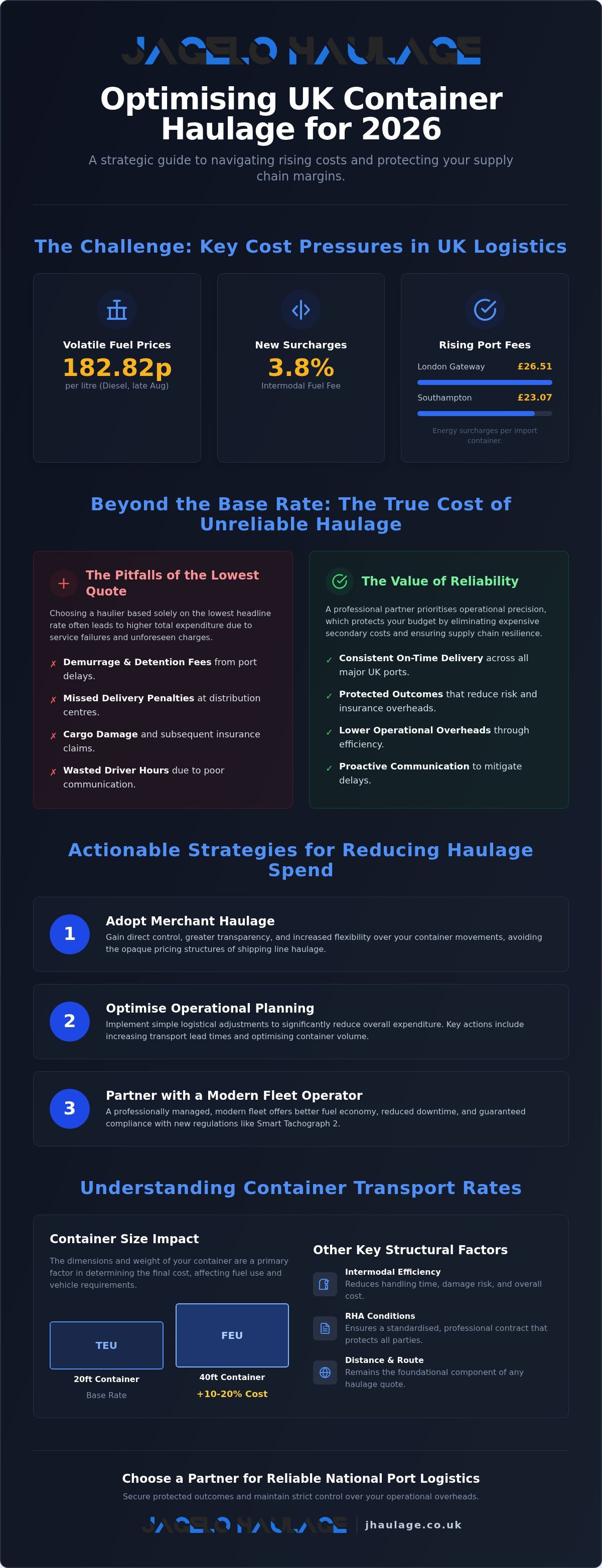
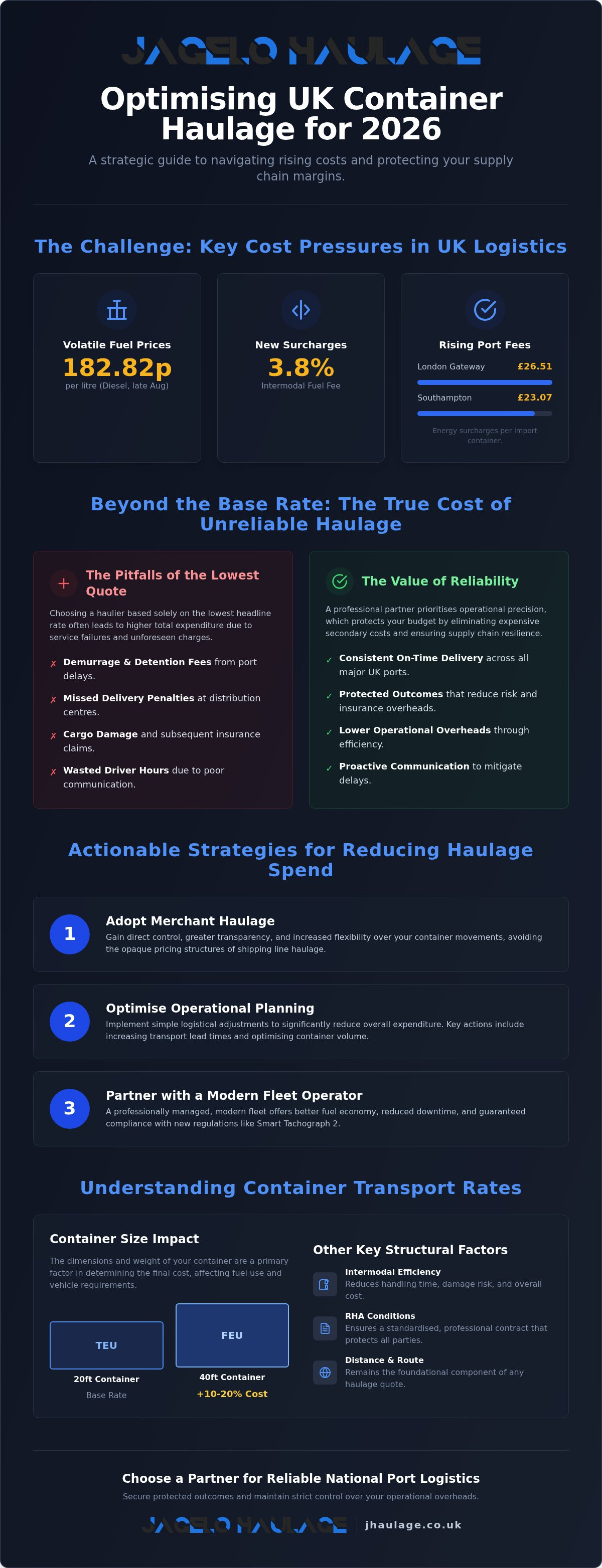
Could a strategic shift in your logistical framework be the key to protecting your margins against the volatile fuel surcharges of 2026? Many logistics managers currently face the pressure of rising diesel prices, which reached 182.82 pence per litre in late August, alongside new intermodal fuel fees of 3.8%. You likely feel that unpredictable rate fluctuations and opaque pricing structures make it difficult to maintain a stable budget. Achieving cost-effective container haulage requires more than just searching for the lowest quote; it demands a disciplined approach to port logistics and a partner who prioritises operational precision.
This guide provides the technical information you need to optimise your supply chain and reduce unnecessary expenditure through professional transport strategies. You'll learn how a modern, professionally managed fleet and the strategic use of merchant haulage can eliminate the common causes of expensive demurrage and detention fees. We examine the latest regulatory changes, including the Smart Tachograph 2 mandates and the 2026 HGV levy rates, to ensure your transport strategy remains compliant. This article offers a clear roadmap for securing consistent, on-time delivery across all major UK maritime hubs while maintaining strict control over your operational overheads.
Key Takeaways
- Understand how to balance competitive rates with high service reliability to ensure your supply chain remains resilient against market fluctuations.
- Learn the specific factors that influence transport rates, including the structural benefits of intermodal transfers between UK maritime hubs and inland centres.
- Discover how adopting merchant haulage provides greater transparency and control, serving as a primary strategy for achieving cost-effective container haulage.
- Implement practical strategies such as increased lead times and container volume optimisation to reduce overall logistics expenditure.
- Recognise the value of partnering with an established operator that utilises a modern, professionally managed fleet to secure protected outcomes.
The Economics of Cost-Effective Container Haulage in 2026
In the current economic climate, cost-effective container haulage is defined by the precise balance between competitive pricing and operational reliability. It's a strategic necessity rather than a simple procurement task. The UK supply chain depends on the efficient movement of goods from major maritime hubs to inland distribution centres. Since the history of containerization began, the ability to move standardised units has been the backbone of global trade. However, 2026 presents unique challenges for UK operators. Choosing the lowest headline rate often results in higher total expenditure because unreliable service leads to port fines or missed delivery windows. A modern, professionally managed fleet is essential for maintaining efficiency. Newer vehicles offer better fuel economy and reduced downtime, which translates directly into more stable pricing for the end client.
Primary Cost Drivers in Modern UK Logistics
Several external factors dictate national haulage rates. Fuel price volatility remains a significant concern; diesel prices reached 182.82 pence per litre in August 2026. These costs are typically managed through standard fuel surcharges, such as the 3.8% intermodal fee seen in recent carrier updates. Additionally, wage inflation and the ongoing requirement for qualified drivers impact the base cost of transport. Port infrastructure charges also play a critical role in the final delivery quote. For instance, London Gateway and Southampton have implemented energy-related surcharges of £26.51 and £23.07 respectively per import container. The HGV levy, which increased in April 2026, further influences the cost structure for heavy goods vehicles operating on UK roads.
The True Cost of Logistics: Beyond the Base Rate
The real value of cost-effective container haulage is found in the avoidance of secondary expenses. A missed delivery slot at a regional distribution centre can trigger significant financial penalties and disrupt production schedules. When you prioritise protected outcomes, you reduce the risk of cargo damage and subsequent insurance claims. Poor communication during the port-to-door journey often creates hidden expenses through wasted driver hours or unnecessary storage fees. Reliable operators like Jagelo Haulage focus on professional, responsive service to mitigate these risks. By ensuring consistent on-time delivery across all major UK ports, businesses can lower their overall operational overheads despite the rising costs of the primary inputs. Successful logistics planning requires a partner that understands these high stakes and follows strict protocols to protect your cargo.
Understanding Container Transport Rates and Structural Factors
Haulage rates are determined by a combination of fixed and variable costs. Distance remains the primary factor, but the specific dimensions and weight of the load significantly influence the final figure. For example, transporting a 40ft container (FEU) typically costs between 10% and 20% more than a 20ft container (TEU) on an identical route. This price difference reflects the increased fuel consumption and vehicle requirements for larger units. Professional operators calculate these rates using RHA (Road Haulage Association) conditions to ensure a standardised contract that protects both the haulier and the client, supporting the delivery of cost-effective container haulage. These conditions establish clear liability limits and operational protocols. Ensuring your cargo is moved by a fully insured partner is essential for risk management, as it prevents catastrophic financial loss in the event of an incident.
Standardisation and Intermodal Efficiency
The universal dimensions of shipping containers allow for high levels of vehicle loading optimisation. Specialised equipment, such as sliding skeletal trailers, enables drivers to adjust the chassis length to suit either TEU or FEU units, maintaining safety and aerodynamic efficiency. According to a Logistics UK industry report, infrastructure needs and border friction continue to shape the efficiency of these movements across the country. Intermodality is the seamless movement of cargo across multiple transport modes without repacking. This structural advantage reduces the handling time at ports and lowers the overall cost of inland container haulage by minimising manual intervention and potential damage during transit.
Fleet Standards and Compliance Costs
Operating a modern, professionally managed fleet is a prerequisite for achieving cost-effective container haulage in 2026. Euro 6 compliant engines are mandatory for avoiding daily Clean Air Zone (CAZ) charges in various UK urban centres. These compliance costs can quickly erode margins if an operator uses older, less efficient vehicles. Telematics and fleet intelligence systems are now standard tools for reducing operational waste. These systems monitor idling time and route efficiency, ensuring that fuel is not wasted in avoidable traffic congestion. Regular vehicle maintenance follows a strict protocol to prevent roadside breakdowns, which are far more expensive than scheduled servicing and lead to costly delays. If you require a transparent breakdown of how these factors influence your specific route, you can request a professional haulage quote to see the value of a disciplined logistics partner.
Merchant Haulage vs Shipping Line Haulage: A Cost Comparison
Choosing the right haulage model is a fundamental decision for any logistics manager seeking cost-effective container haulage. Merchant haulage occurs when the cargo owner or their freight forwarder organises inland transport independently. In contrast, shipping line haulage is a service where the carrier includes the road or rail transport as part of a combined through-rate. While shipping line haulage offers a single point of contact, it often lacks the pricing transparency and operational flexibility required to optimise a complex supply chain. For a more detailed analysis of these two approaches, you can read our specialised guide on Merchant haulage vs shipping line haulage.
Why Merchant Haulage Offers Superior Cost Control
Merchant haulage provides the ability to negotiate rates directly with an independent contractor. This direct relationship allows for greater flexibility in scheduling collections from major UK hubs like Felixstowe or London Gateway. By managing your own transport, you can time pickups to avoid port peak-time surcharges that shipping lines might pass on with an additional margin. Direct communication with a haulier like Jagelo Haulage also simplifies the coordination of specific operational requirements. Whether you need a 'Drop & Collect' service to keep your warehouse flowing or a 'Wait & Load' for rapid turnaround, a dedicated partner offers the responsiveness that large-scale carrier networks often cannot match.
Avoiding Expensive Demurrage and Detention Charges
Inland logistics costs often escalate due to administrative penalties rather than the transport itself. Demurrage refers to the storage fees charged by the port when a container remains on the quay beyond its allotted 'free time'. Detention is the daily rental fee applied when a container is kept outside the port for too long before being returned empty. These charges can quickly exceed the original haulage quote if scheduling is poor. A disciplined haulage partner helps you clear containers efficiently before these windows expire. Utilising same-day delivery services for urgent port clearances is a proven strategy for protecting your budget. This proactive management ensures that containers are returned to the depot within the agreed timeframe, eliminating the financial penalties that frequently disrupt operational overheads.
Actionable Strategies for Reducing Your Haulage Spend
Reducing expenditure in the UK supply chain requires a proactive approach to operational planning. Securing cost-effective container haulage is often a result of early bookings. Longer lead times allow hauliers to integrate your requirements into their existing schedules, which often results in more favourable rates compared to last-minute requests. You should also focus on optimising container loading. Ensuring that every FEU or TEU is utilised to its full capacity reduces the cost per unit of cargo. If you frequently move smaller volumes, consolidating shipments into a single vehicle movement is a highly effective method for minimising total haulage spend. This discipline prevents the financial waste associated with under-utilised trailers.
Implementing 'Drop & Collect' services significantly reduces vehicle waiting times at your warehouse. Instead of a driver waiting for several hours during the loading or unloading process, the trailer is left on-site and collected later. This approach maximises driver productivity and eliminates expensive waiting time charges. It's a simple operational shift that provides a more predictable workflow for your warehouse team and ensures that transport costs remain within the agreed budget.
Reducing 'Empty Miles' and Dead Leg Costs
Backhauling involves planning a return journey so that the vehicle is not travelling empty after a delivery. Minimising 'empty miles' is essential for both financial and environmental sustainability. Partnering with a haulier like Jagelo Haulage, which operates a modern, professionally managed national fleet, increases the probability of finding suitable return loads. This strategy contributes to a more efficient logistics network and ensures protected outcomes for your budget by sharing the operational burden across multiple legs of a journey. Reducing unnecessary vehicle mileage directly lowers fuel consumption and helps mitigate the impact of volatile diesel prices.
Leveraging Technology for Logistics Management
Modern fleet intelligence tools provide the transparency needed to manage warehouse labour effectively. Real-time tracking allows your team to prepare for container arrivals, ensuring that staff are ready to load or unload immediately. Electronic Proof of Delivery (ePOD) systems further streamline administrative processes by providing instant digital documentation, which reduces the overhead associated with manual paperwork. These technical solutions allow you to maintain a serious, corporate approach to your logistics. For more detailed efficiency tips, consult our guide on Logistics for shipping containers. If you're ready to implement these strategies, you can request a professional haulage quote to see how we can optimise your specific routes.
Choosing Jagelo Haulage for Reliable National Port Logistics
Jagelo Haulage serves as a strategic partner for businesses requiring cost-effective container haulage across the United Kingdom. With over 15 years of industry experience, the company understands the high stakes involved in port-to-door movements. We operate a modern fleet of over 40 trucks and trailers, providing a robust backbone for national logistics. Being a privately owned independent contractor ensures direct accountability and a level of responsive support that larger, subcontracted networks often fail to provide. This independence allows us to focus on the fundamentals of the supply chain. Every operation follows strict protocols to ensure the safety and efficiency of your cargo from all major maritime hubs, including Felixstowe, Southampton, and London Gateway. We don't just perform tasks; we deliver strategic outcomes that protect your bottom line.
A Modern Fleet for Protected Outcomes
Vehicle reliability is the foundation of a seamless supply chain. A breakdown doesn't just delay a single delivery; it disrupts warehouse schedules and risks port fines. Our professionally managed fleet utilises Euro 6 compliant engines and the latest telematics to ensure maximum uptime and fuel efficiency. This modern equipment is essential for avoiding the daily charges associated with UK Clean Air Zones whilst maintaining a serious, corporate image. We employ specialised trailers to accommodate diverse cargo types, ranging from standard dry vans to heavy loads. For a deeper look at our equipment standards, you can read about The modern container transport fleet. This investment in technology ensures that your logistics strategy delivers protected outcomes rather than unexpected costs.
Responsive Support for Nationwide Operators
Managing complex container movements requires a dedicated point of contact who understands your specific operational requirements. We provide nationwide operators with direct access to experienced staff who can handle urgent logistics challenges, such as same-day delivery or rapid port clearances. This direct communication model eliminates the delays associated with multi-layered call centres and automated systems. It allows for the immediate adjustment of routes or schedules when port conditions change. Our team understands the importance of punctuality and follows every protocol to ensure your cargo arrives exactly as planned. You can Contact Jagelo Haulage for a cost-effective container haulage quote to secure a partner that prioritises performance over self-promotion. We remain committed to providing a disciplined service that safeguards your operational reach across the country.
Securing Your Supply Chain for 2026 and Beyond
Optimising your logistics strategy requires a disciplined focus on operational fundamentals and cost transparency. By prioritising merchant haulage and utilising a modern, professionally managed fleet, you can eliminate the hidden expenses of demurrage and detention. Strategic planning and early bookings remain the most effective methods for securing cost-effective container haulage whilst protecting your margins from fuel volatility and regulatory shifts. These proactive measures ensure that your inland distribution remains both resilient and predictable.
Jagelo Haulage provides the technical expertise and responsive support needed to manage these complexities. With over 15 years of industry experience and a modern fleet of over 40 trucks, we ensure consistent performance across all major UK ports, including Felixstowe and Southampton. Our commitment to protected outcomes allows you to focus on your core business operations with total security. Request a cost-effective container haulage quote from Jagelo Haulage today to strengthen your inland distribution network. We look forward to supporting your national logistics requirements and ensuring the long-term reliability of your cargo movements.
Frequently Asked Questions
What is the most cost-effective way to transport a shipping container in the UK?
Achieving cost-effective container haulage involves a combination of merchant haulage and strategic scheduling. By organising your own transport, you gain the transparency needed to negotiate rates directly with independent contractors. Planning for early bookings and ensuring every container is loaded to full capacity further reduces the cost per unit. This disciplined approach eliminates the hidden margins often found in carrier-led through-rates and allows for more precise control over your logistics expenditure.
How do fuel surcharges affect container haulage rates?
Fuel surcharges are variable fees applied to account for the volatility of diesel prices, which reached 182.82 pence per litre in August 2026. These charges are typically calculated as a percentage of the base rate, such as the 3.8% intermodal fuel fee recently implemented. Professional hauliers apply these surcharges to maintain operational stability during periods of price fluctuation, ensuring that the service remains reliable and the fleet stays professionally managed.
Is merchant haulage cheaper than shipping line haulage?
Merchant haulage often provides better value because it offers greater transparency and direct control over the transport process. Unlike shipping line haulage, which includes inland transport in a bundled rate, merchant haulage allows you to choose an independent partner based on their performance and competitive pricing. This model enables you to time collections to avoid port peak-time surcharges and negotiate terms that align with your specific warehouse requirements and operational budget.
What are demurrage and detention charges, and how can I avoid them?
Demurrage is a storage fee charged by the port for containers left on the quay beyond the free-time period. Detention is a rental charge for keeping the container outside the port for too long. You can avoid these penalties by partnering with a responsive haulier that prioritises punctual collections and returns. Efficient scheduling and clear communication ensure that containers are moved before expensive daily charges are triggered by the port or carrier.
Does the weight of the container affect the haulage cost?
Yes, the weight of the cargo significantly influences the final haulage quote. Heavier containers increase fuel consumption and put additional strain on the vehicle's engine and tyres. Additionally, transporting heavy loads may require specialised skeletal trailers or specific route planning to comply with UK road weight limits. Professional operators calculate rates based on these technical requirements to ensure that the transport remains safe, compliant, and operationally efficient throughout the journey.
How much lead time is required for a cost-effective haulage booking?
Securing the best rates typically requires a lead time of at least five to seven working days. This window allows hauliers to integrate your delivery into their existing routes, which reduces empty miles and lowers the overall cost. Whilst urgent requests can be accommodated, early bookings provide the stability needed for long-term logistics planning. This proactive approach ensures that a modern, professionally managed vehicle is available at the maritime hub exactly when required.
What is the difference between TEU and FEU in container transport?
A TEU (Twenty-foot Equivalent Unit) refers to a standard 20ft shipping container, whilst an FEU (Forty-foot Equivalent Unit) refers to a 40ft container. In terms of cost-effective container haulage, transporting an FEU generally costs between 10% and 20% more than a TEU on the same route. This price difference accounts for the increased fuel requirements and the larger vehicle footprint needed to move the longer unit from the port to the inland destination.
Can I get a same-day container delivery from major UK ports?
Same-day container delivery is possible when working with a privately owned, responsive haulier that operates a large national fleet. Independent contractors like Jagelo Haulage often have the flexibility to handle urgent port clearances and rapid turnaround challenges that larger carrier networks cannot match. This service is essential for avoiding port storage fines or meeting strict production deadlines. It requires a disciplined partner capable of following strict protocols to ensure a punctual and secure outcome.