Container detention is an operational failure, not an inevitable cost of doing business. For many logistics managers, managing container detention charges UK often feels like a battle against hidden fees and inconsistent carrier terminology. You likely find the arrival of unexpected, high-value invoices frustrating, especially when port congestion at Felixstowe or Southampton causes delays that are seemingly beyond your control.
This guide provides the technical expertise required to eliminate these avoidable logistical costs. You'll gain a clear understanding of 'Free Time' and learn professional strategies to bring predictability back to your transport budget. We will examine the 2026 tariff revisions from major shipping lines and demonstrate how merchant haulage serves as a strategic tool for better window management. By adopting a disciplined approach to container returns, you can protect your operations from the financial impact of terminal delays.
Key Takeaways
- Distinguish between demurrage and detention to pinpoint whether costs arise from terminal storage or equipment delays.
- Identify how port congestion and VBS delays contribute to container detention charges UK at major hubs like Felixstowe.
- Establish a disciplined monitoring system for 'Free Time' to ensure every container is returned within the carrier's specified window.
- Recognise the financial impact of specialised equipment and prioritise these returns to avoid high-value daily penalties.
- Utilise professional merchant haulage to secure greater operational control and reduce reliance on rigid shipping line transport schedules.
What are Container Detention Charges in the UK?
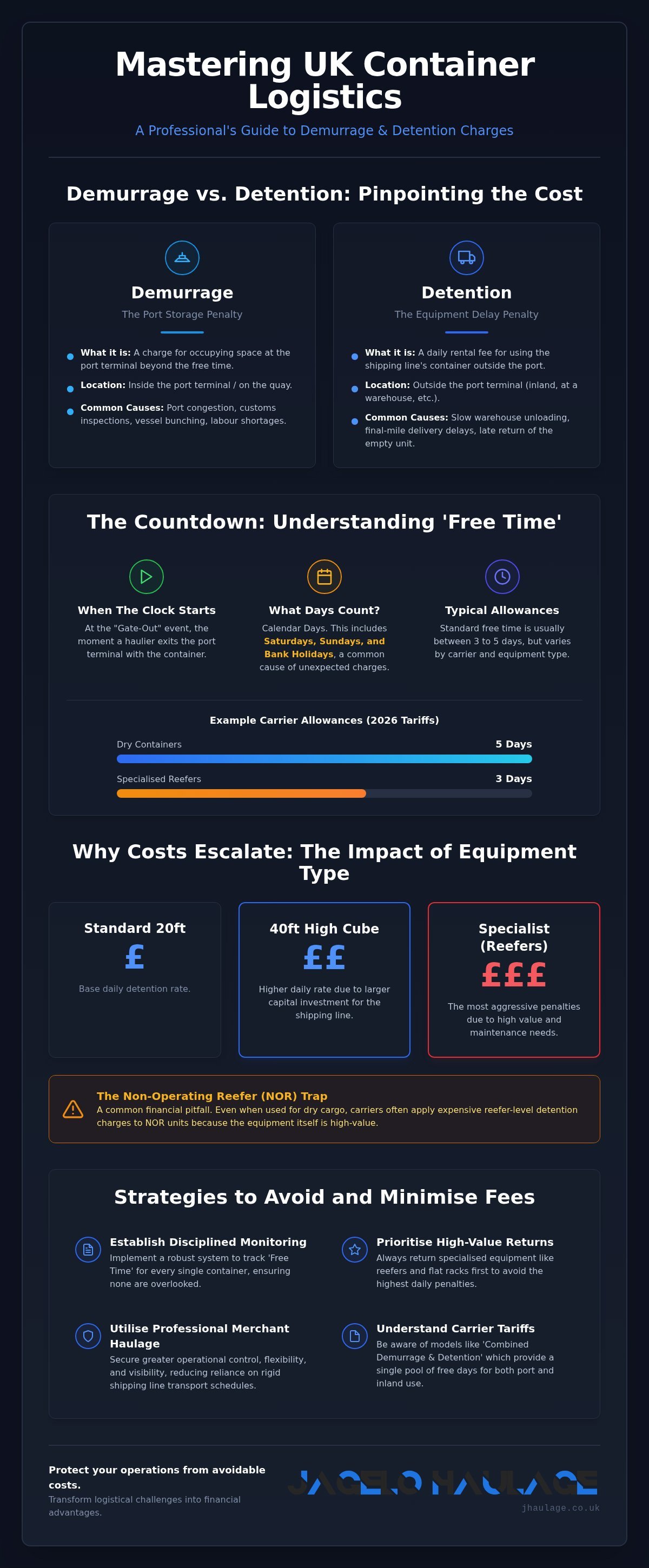
Container detention is a daily fee levied by shipping lines for the use of their equipment beyond an agreed period. It's a rental charge for the physical container itself whilst it's outside the port terminal. This charge is distinct from demurrage, which covers the cost of the terminal space occupied by a container. To manage your logistics budget, you must recognise the Demurrage vs. Detention: Understanding the Difference. Demurrage is a storage penalty; detention is an equipment delay penalty.
Shipping lines impose container detention charges UK to ensure their assets remain in constant circulation. A container sitting in a distribution centre for several weeks is a container that cannot be used for new export bookings. By applying daily fees, carriers incentivise the rapid return of empty equipment. In the 2026 UK market, standard free time allowances typically range between three and five days for dry containers. For example, Swire Shipping currently offers five free days for dry units but only three days for specialised reefers. Other major lines, including Maersk and CMA CGM, have also revised their tariffs in 2026 to reflect current equipment demand.
When the Detention Clock Starts
The detention clock usually triggers at the "gate-out" event. This is the precise moment the haulier exits the port terminal with the laden unit. Carriers also use a Price Calculation Date (PCD) to determine which specific tariff applies to your shipment. It's vital to note that in UK logistics, these periods almost always count calendar days. This means Saturdays, Sundays, and bank holidays are included in your countdown. If your free time expires on a Friday, you'll incur charges for the entire weekend if the container isn't returned to the designated de-hire depot.
The Impact of Container Type on Fees
Daily rates vary significantly based on the equipment type and size. A 40ft High Cube container generally carries a higher daily detention rate than a standard 20ft unit because it represents a larger capital investment for the shipping line. Specialist equipment, such as reefers or flat racks, incurs the most aggressive penalties. A common financial trap involves Non-Operating Reefers (NOR). Even when these units are used for dry cargo, carriers often apply reefer-level container detention charges UK because the equipment requires specialised maintenance and monitoring. Partnering with a specialist in merchant haulage ensures your team has the operational visibility to prioritise these high-value returns before costs escalate.
Demurrage vs. Detention: Understanding the Difference
Logistics managers must distinguish between demurrage and detention to identify where supply chain friction occurs. Demurrage is a penalty for the space a container occupies at the port terminal. Once the container leaves the terminal gate, the charge shifts to detention. This fee covers the extended use of the shipping line's equipment whilst it's inland until the empty unit is returned to a nominated de-hire depot.
The financial risk increases when these charges stack. If a container is delayed at the port due to customs inspections or terminal congestion, it exhausts its demurrage free time. If the haulier cannot then return the empty unit rapidly after delivery, the merchant faces container detention charges UK on top of the initial storage costs. Some carriers, such as Maersk, use "Combined Demurrage and Detention" tariffs. This model provides a single pool of free days for both port and inland use. It simplifies the invoice but requires tighter operational discipline to avoid exceeding the total allowance before the box is returned.
Demurrage: The Port Storage Factor
Port-side charges are largely driven by terminal capacity and quay space management. Congestion at major hubs like Felixstowe or London Gateway often stems from vessel bunching or labour shortages. External factors like extreme weather or industrial action can also halt operations, leading to rapid demurrage accumulation. According to the UK Chamber of Shipping, maintaining efficient port infrastructure is vital for national trade, yet merchants often bear the cost of terminal delays. Reliable haulage is the primary defence against these fees. A haulier with direct port operations can monitor vessel arrivals and secure collection slots immediately, minimising the time a unit sits on the quay.
Detention: The Equipment Availability Factor
Detention fees focus on equipment turnover rather than physical space. Shipping lines require their containers back at de-hire depots to fulfil export bookings. Delays in returning empty units are the most frequent cause of container detention charges UK. These delays often occur during the "final mile" of delivery or whilst waiting for a warehouse to unload the cargo.
Some operators attempt "street-turns" to mitigate these costs. A street-turn involves reusing an import container for an export load without returning it to the port first. Whilst this can save time, it requires precise accounting and carrier approval to ensure the detention clock stops correctly. Managing these complex return windows is easier when you request a professional haulage consultation to align your delivery schedules with carrier free time.
Common Causes of Detention Charges at UK Ports
Unexpected container detention charges UK often result from systemic friction at major terminals rather than simple oversight. Whilst global shipping lines set the tariffs, the physical reality at UK hubs like Felixstowe and DP World London Gateway dictates the final invoice. Port congestion in 2026, driven by vessel rerouting and bunched arrivals, has created a volatile environment for equipment returns. When a terminal is at capacity, hauliers cannot simply drop off a box; they require a confirmed slot within a rigid system.
Documentation errors also serve as a significant catalyst for cost accumulation. If de-hire instructions are incorrect or customs references are missing, the carrier may place a 'hold' on the empty return. This administrative delay prevents the haulier from completing the task, yet the detention clock continues to run. These errors are often avoidable through disciplined communication between the merchant and the logistics provider.
Port Congestion and VBS Constraints
The UK's Vehicle Booking System (VBS) is a primary bottleneck that many international guides overlook. Every haulier must secure a specific time slot to return an empty container to a port or inland depot. During peak periods, these slots become scarce. If your transport provider cannot book a return window before your free time expires, the carrier still holds you liable for the delay.
Stack closures further complicate this process. When a terminal zone is full or being reorganised, the port may temporarily refuse specific container types. A haulier with a smaller fleet may lack the operational agility to pivot when a slot is cancelled or a stack closes. In contrast, an operator with a modern fleet of 40+ trucks, such as Jagelo Haulage, possesses the scale to manage VBS bookings more effectively across multiple UK ports, ensuring a higher success rate for timely returns.
Inland Logistics Bottlenecks
Operational failures at the final destination frequently trigger unnecessary fees. The 'Friday Afternoon' problem is a classic example in UK logistics. If a container arrives at a warehouse late on a Friday and isn't unloaded until Monday morning, three days of free time are consumed instantly. Since detention is calculated on calendar days, weekends are a high-risk period for cost accumulation.
Warehouse inefficiencies often stem from a lack of communication between the site manager and the transport provider. If a driver is kept waiting for several hours, they may miss their pre-booked VBS return slot. This causes a ripple effect that extends the detention period. Whilst driver shortages have stabilised compared to previous years, the requirement for punctual loading and unloading remains critical to avoiding container detention charges UK. Professional management of these inland windows is the only way to ensure equipment is returned on schedule.
Strategies to Avoid and Minimise Detention Fees
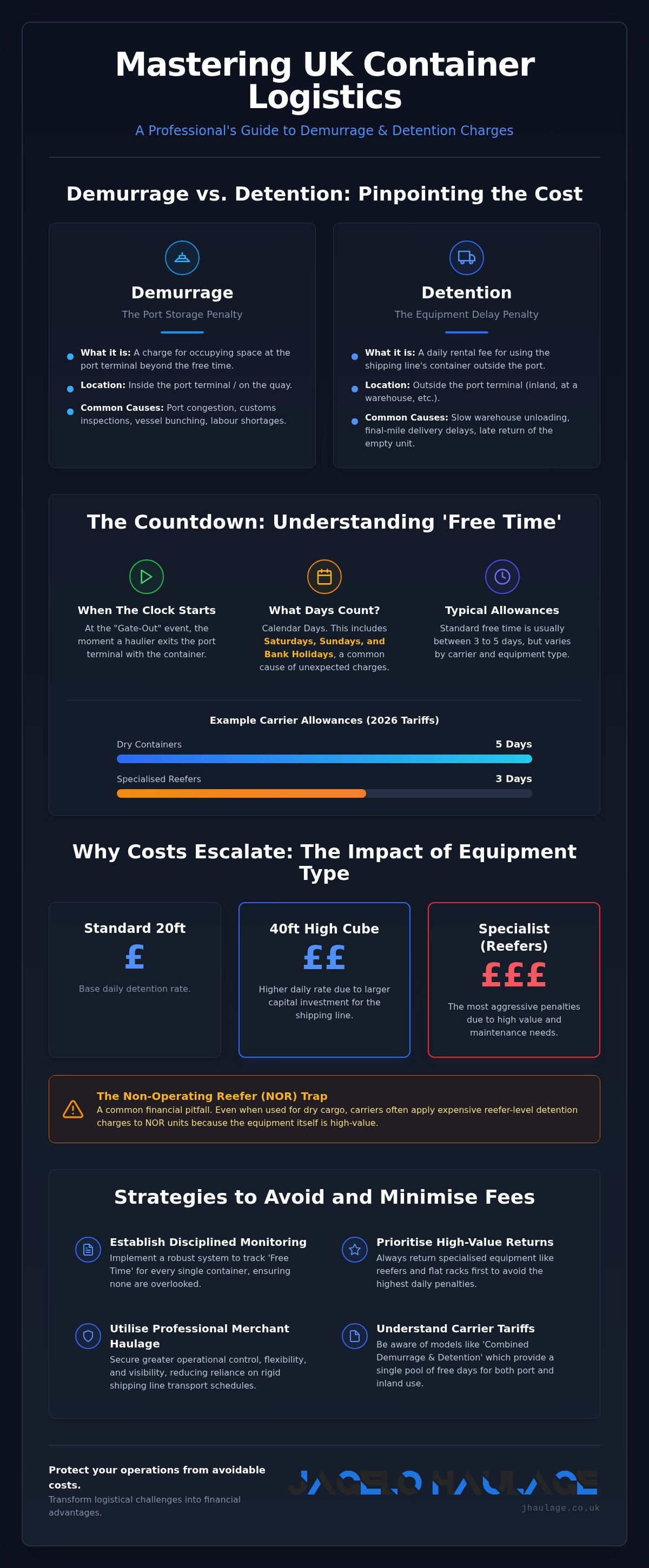
Managing container detention charges UK requires a shift from reactive accounting to proactive operational control. You must treat the return of empty equipment with the same urgency as the delivery of laden cargo. Prioritising the return of specialised units, such as reefers or 40ft High Cube containers, is essential because these units carry the highest daily penalties. A disciplined approach ensures that high-value equipment is never left sitting in a warehouse yard longer than necessary.
Selecting a haulier with a modern, reliable fleet is a fundamental strategy for cost mitigation. A provider with a substantial fleet of 40+ trucks offers the responsiveness needed to handle sudden changes in port accessibility or warehouse availability. This scale ensures that even when one return slot is missed, another can be secured quickly, protecting your budget from escalating daily fees. Professional haulage management is not just about transport; it's about the strategic timing of every equipment movement.
Effective Communication and Data Tracking
Successful detention management relies on the immediate availability of accurate data. You should request daily status reports from your logistics partner that clearly list every container's gate-out date and its corresponding free-time expiry. Digital tracking tools allow your team to identify units approaching their limit at a glance. This visibility prevents the "hidden" accumulation of fees that often occurs when manual spreadsheets fail to account for weekends or bank holidays.
A critical component of this process is the pre-advise. Pre-advise is the formal electronic notification sent to the terminal operator to confirm the haulier's intention to return a specific empty unit. Without a successful pre-advise, the haulier cannot secure a VBS slot, and the container remains on the merchant's clock. Establishing a protocol where pre-advise is completed at least 24 hours before the intended return is a professional standard that minimises friction.
Operational Scheduling for Success
Aligning delivery appointments with port collection times is a strategic method to maximise your free-time window. If a container is collected from the port on a Monday morning and delivered immediately, the warehouse has the full balance of the free period to unload and return the box. In contrast, collecting a unit on a Friday afternoon without a weekend unloading plan is an operational error that leads to avoidable container detention charges UK.
The 'Drop and Collect' model offers a potential solution but requires careful management. Whilst it allows for more flexible warehouse loading, it can also lead to containers being overlooked in a corner of the yard. You must also account for UK bank holidays and seasonal port peaks, such as the pre-Christmas rush, when terminal slots become exceptionally scarce. To secure a transport partner that understands these complexities, you can obtain a professional haulage quote to protect your supply chain from unnecessary equipment penalties.
The Strategic Advantage of Professional Merchant Haulage
Merchant haulage provides the operational flexibility required to mitigate container detention charges UK. Whilst carrier-controlled transport may seem convenient, it often lacks the responsiveness needed to manage tight return windows. Merchant haulage allows you to appoint a dedicated partner who prioritises your specific delivery and de-hire schedule. This direct control is the most effective way to ensure containers are returned before the free-time clock expires. You gain the ability to choose an operator that understands the nuances of UK port dynamics rather than relying on a shipping line's rigid internal schedule.
Jagelo Haulage acts as a strategic extension of your supply chain. We eliminate the 'black hole' of shipping line customer service by providing direct, transparent communication. When port congestion or warehouse delays occur, you need an immediate response from a team that understands the high stakes of the UK logistics sector. Our 15 years of industry experience ensures that every shipment is handled with disciplined precision. This level of professional management transforms haulage from a simple task into a strategic outcome that protects your commercial interests.
Why Fleet Capacity Matters for Detention
Fleet size is a critical factor in maintaining equipment turnover. A haulier with limited resources may struggle to respond to urgent 'empty return' requests if their vehicles are already committed. Jagelo Haulage operates a modern fleet of 40+ trucks, providing the necessary capacity to absorb fluctuations in demand. This operational reach allows us to manage port logistics from major hubs like Felixstowe, Gateway, and Tilbury with high reliability. By ensuring we have the vehicles available for prompt collection and return, we significantly reduce the risk of failed collections that lead to costly daily penalties. Responsive fleet management is your primary defence against the accumulation of container detention charges UK.
Cost-Effective Container Haulage in 2026
Integrating haulage costs into a broader supply chain strategy is essential for long-term financial stability. Professional merchant haulage isn't merely a service; it's a strategic tool that protects your bottom line. By managing the de-hire process efficiently, we help you maintain a predictable logistics budget despite the volatile nature of the 2026 shipping market. To better understand how these variables affect your expenditure, see our guide on understanding container transport costs. Positioning Jagelo Haulage as your strategic partner ensures that your UK-wide logistics are protected by a disciplined and highly organised entity.
Securing Your Supply Chain Against Equipment Penalties
Managing logistics in the current UK market requires a disciplined approach to equipment turnover. Distinguishing between port storage and equipment rental is the first step toward identifying where costs accumulate. By prioritising the return of specialised units and utilising merchant haulage, you can reclaim control over your delivery windows. Integrating these professional strategies into your standard operating procedures will significantly reduce the financial risk of container detention charges UK.
Jagelo Haulage provides the steadfast professionalism needed to protect your operations. With 15 years of UK port logistics expertise and a modern fleet of over 40 trucks, we ensure reliable and secure nationwide delivery. Our team understands the high stakes of the supply chain and follows strict protocols to maintain your operational efficiency. We focus on the master of the fundamentals to provide protected outcomes for every shipment.
Secure your container haulage with Jagelo Haulage today to ensure your cargo moves with precision and security. We look forward to becoming your strategic partner in professional port logistics.
Frequently Asked Questions
What is the standard free time for container detention in the UK?
Standard free time for dry containers in the UK typically ranges between three and five days. Specialised equipment, such as reefers or flat racks, often carries a shorter allowance of approximately three days. These windows are determined by the individual shipping line's tariff rather than a national standard. It's essential to verify the specific terms for every shipment, as carriers frequently revise these allowances to manage equipment turnover.
Can I dispute container detention charges if the port was congested?
You can attempt to dispute these fees, but success is not guaranteed. Shipping lines generally view detention as a strict liability charge regardless of port conditions. Whilst organisations like the British International Freight Association (BIFA) highlight the unfairness of charges during congestion, carriers rarely waive them unless the delay was caused by their own operational failure. Maintaining detailed records of VBS slot unavailability is critical for any formal appeal process.
How do detention charges differ between Felixstowe and Southampton?
The daily rates for container detention charges UK are set by the shipping lines rather than the port authorities. However, the operational impact differs between hubs like Felixstowe and Southampton due to varying Vehicle Booking System (VBS) availability. Congestion at Felixstowe might lead to longer return queues, whilst Southampton's terminal layout affects how quickly hauliers can de-hire equipment. Your total cost exposure depends on the specific carrier's tariff used at that terminal.
Is detention charged per day or per hour in the UK?
Detention is strictly calculated on a per-day basis using calendar days. This means that once your free time expires, you're charged for every subsequent 24-hour period, including weekends and bank holidays. Charges don't pause for terminal closures or transport delays. Because the clock doesn't pause, a container that's ready for return on a Friday afternoon but isn't de-hired until Monday will typically incur three full days of penalties.
What happens if a haulier cannot return the container due to VBS issues?
The merchant remains contractually liable for the charges even if VBS slot scarcity prevents a timely return. Shipping lines argue that equipment turnover is the merchant's responsibility, irrespective of terminal slot availability. This is why partnering with a haulier that operates a modern fleet of 40+ trucks is vital. Larger operators have more resources to monitor VBS windows and secure slots as soon as they become available, protecting you from avoidable costs.
Does merchant haulage increase the risk of detention charges?
Merchant haulage actually reduces your risk by providing greater operational flexibility. Unlike carrier haulage, where you're bound by the shipping line's transport schedule, merchant haulage allows you to prioritise specific returns. You can instruct your haulier to return high-value specialist containers first to avoid the most aggressive daily fees. This strategic control is a significant advantage for logistics managers who need to maintain a predictable and disciplined transport budget.
Are detention charges subject to VAT in the United Kingdom?
In the United Kingdom, detention and demurrage charges are generally treated as liquidated damages for a breach of contract. As these fees are compensatory rather than a payment for a specific service, they're typically considered outside the scope of VAT. You should always verify the specific tax treatment with your financial department or a qualified tax advisor. Most shipping lines will issue these invoices without a VAT component, reflecting their status as penalty charges.
How can I calculate my potential detention exposure before booking?
You can estimate your exposure by reviewing the shipping line's current 2026 tariff for container detention charges UK. Calculate the number of calendar days between the expected port collection and the likely return date. If this duration exceeds the carrier's free-time allowance, you'll incur daily fees. Accurate forecasting requires a realistic assessment of your warehouse's unloading speed and the haulier's ability to secure return slots at the destination terminal.