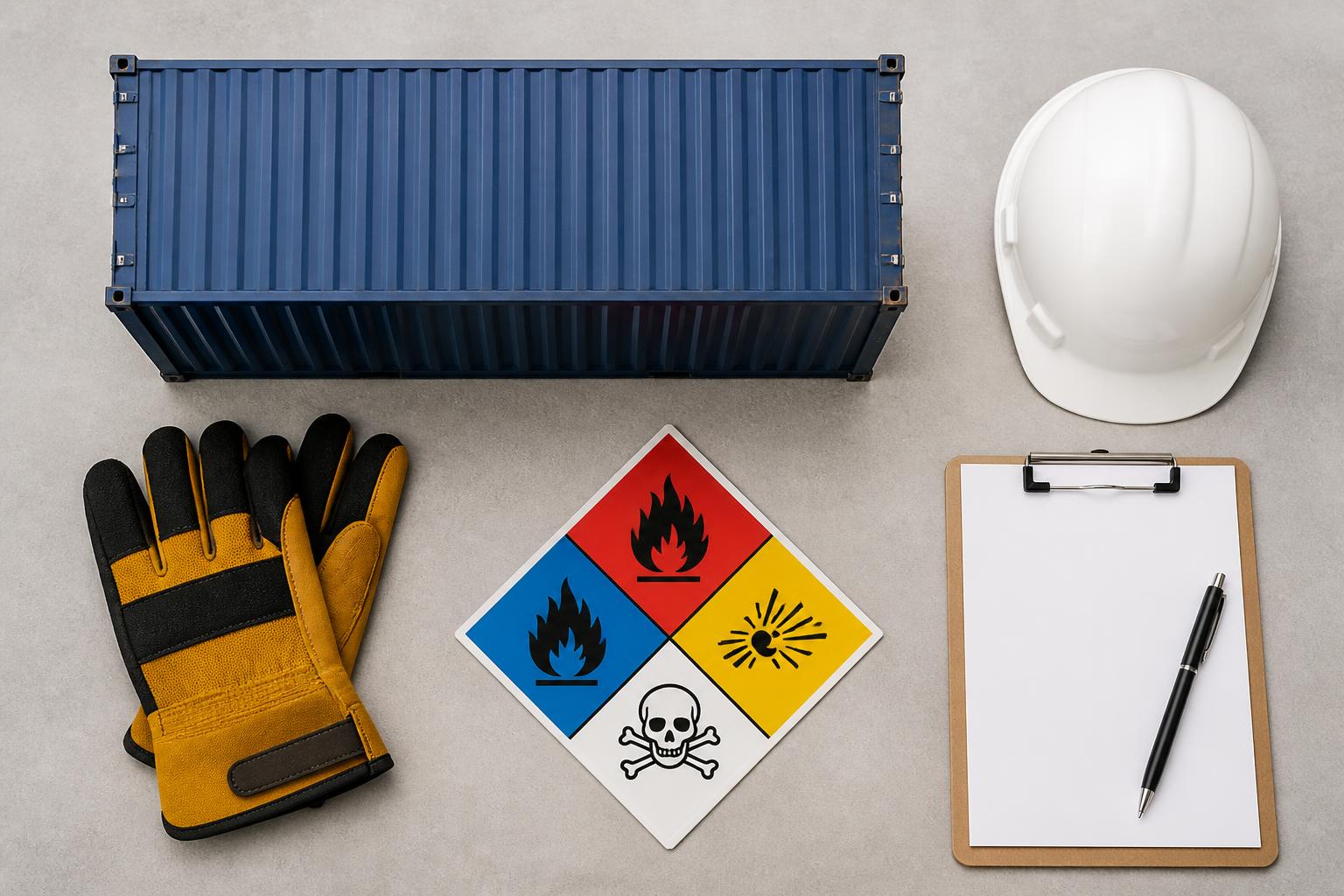
Moving an ADR container out of a UK port without avoidable delay comes down to getting the hazardous details right before anyone tries to book the job. In practice, most failed or delayed collections are not caused by the road move itself. They happen because the release is not in place, customs has not cleared, the port booking cannot be secured in time, or the ADR information sent to the haulier is incomplete.
At Jagelo Haulage Limited, we plan ADR container work the same way we plan any time-sensitive port collection, but with tighter checks at the start. If we have the correct UN number, class, packing group where relevant, container details, release position and delivery point early enough, we can usually tell you quickly whether the move is acceptable, what equipment is needed, and where the real risks sit before storage, demurrage or a wasted trip appears.
What ADR container haulage usually means in UK port work
In UK container work, ADR container haulage usually means moving a loaded import or export container by road where the goods inside are dangerous goods for carriage under ADR. In day to day port terms, that normally means a merchant haulage movement of an FCL import from quay to consignee, from quay to a temporary storage or unpack point, or an export move from shipper to port.
The key point is that the container itself is not automatically enough information. A 20ft ISO Container, 40ft ISO Container, 45ft ISO Container or Refrigerated Container can all be used for cargo that falls within ADR, but whether we can move it, and how we plan it, depends on the goods declaration, not the box size alone.
That is why we ask customers not to assume that because a container is described as hazardous by the shipping line, or because it has hazard labels on the doors, the road move can simply be booked in the same way as a standard import. Before we accept and plan the job, we need the actual dangerous goods details, starting with the UN number and class.
The UN number matters because it identifies the substance or article being carried. The class matters because it tells us the primary hazard. In many cases we also need any subsidiary risk, packing group, tunnel code if relevant to the route, marine pollutant status where shown on the paperwork, and whether there are quantity or packaging details that affect the move. Limited quantity and excepted quantity traffic can also need checking rather than assumption.
This is especially important in the UK because ADR applies through UK dangerous goods carriage rules, but port and shipping line processes are not the same thing as road compliance. A line release or terminal availability does not confirm that the road leg is acceptable. Nor does a customs release. We still need to confirm whether the load can move on our network and under what conditions.
If the goods details are wrong at booking stage, the consequences are usually practical rather than theoretical. The wrong vehicle may be planned. The route may need changing. A partner vehicle may need to be substituted if a specific capability is required. In the worst case, the collection fails at the port gate or the job has to be stood down after the slot has been used.
What your haulier needs before an ADR container can be booked
For an ADR container booking, we need three sets of information early, shipment details, port and release details, and the dangerous goods details themselves.
First, the shipment basics:
- Port of collection, such as Felixstowe, London Gateway, Tilbury, Purfleet, Southampton or Liverpool
- Container number
- Container size and type, for example 20ft ISO Container, 40ft ISO Container, 45ft ISO Container or Refrigerated Container
- Gross weight
- Whether the move is FCL or part of a wider movement involving LCL devanning or onward handling
- Delivery postcode and site constraints
- Required delivery date and any booking restrictions at the delivery point
Second, we need the port and release position:
- Shipping line
- Release reference or confirmation that line release is in place
- Whether customs is cleared, under hold, or still pending
- Whether any port community system step is still outstanding
- Last free day for demurrage and, where relevant, storage
- Any known issues with slot availability or line documentation
Third, we need the ADR information:
- UN number
- Proper shipping name if available on the transport document
- Class
- Any subsidiary risk
- Packing group, where applicable
- Number and type of packages if relevant to the declaration
- Emergency contact details where included in the transport paperwork
- Safety data sheet if available
- Whether the load is temperature controlled in a Refrigerated Container
- Any special handling point already raised by the shipper, line or forwarder
In practice, the document we most often need sight of is the dangerous goods note or the shipping document carrying the ADR details. Depending on the traffic, we may also ask for the commercial invoice, packing list, customs entry position, and any port release screen or line release confirmation that lets us see whether the box is truly collectible.
If the delivery point has its own restrictions, we need those at the same time. That includes opening hours, forklift availability if the container is to be tipped or devanned quickly, whether the site can accept a loaded articulated vehicle, and whether there are restrictions on hazardous goods arriving at certain times.
For importers and forwarders booking ADR container haulage in the UK, the quickest way to avoid delay is to send all of this in one instruction, not across several emails over a day or two. If we receive the container details first and the ADR details later, we cannot properly assess the move. That lost time is often what pushes a collection into storage or beyond free time.
Where ADR container collections get delayed
The most common delay is still release. A container can show as discharged, but if the shipping line release is not actually in place, we cannot collect it. Sometimes the release exists but the reference does not match what the terminal or line system expects. Sometimes a release is issued late in the day after practical slot availability has already gone.
Customs holds are another routine blocker. A box may be selected for documentary check, scan, or examination. Until that is resolved, there is nothing a road haulier can do except monitor the status and be ready to move once cleared. This is one reason we ask for the customs position up front rather than assuming clearance will come through in time.
Free time catches many import moves. The line’s demurrage free time and the terminal’s storage position are not the same thing, and customers sometimes focus on one but not the other. On ADR traffic, where acceptance checks can be tighter and planning is less flexible than a standard dry box, leaving the booking until the last free day creates unnecessary risk. We cover this in more detail in our guide to avoiding extra port cost on Felixstowe collections.
Slot booking is another major cause of delay. A box can be available on paper, but if there is no workable booking window, it will not move that day. This is particularly relevant when the release arrives late, customs clears late, or the customer asks for same day collection after the useful booking windows have narrowed. The issue is not only whether a slot exists, but whether it exists at a time that still allows legal driving hours, delivery booking compliance and safe route planning for the ADR load.
Paperwork gaps are common and avoidable. The usual examples are missing UN number, missing class, no gross weight, inconsistent container number, no confirmation of delivery point restrictions, or no clarity on whether the consignee can actually receive a hazardous load that day. We also see jobs where the commercial team has booked haulage before the operations team has checked whether the dangerous goods document is complete.
Weight can add another layer. A hazardous container that is also heavy may need a different vehicle plan or route assessment. If the gross weight is sent late, the collection window can be missed while equipment is rearranged. If this is a factor on your traffic, our note on moving overweight containers without port delays is relevant.
How port booking works for hazardous container collections
For most UK port collections, the practical sequence is simple. We confirm the box is available, check release and customs status, assess the ADR details, then secure a port booking and assign the vehicle. In reality, each terminal has its own system, capacity pattern and booking behaviour, so timing matters.
At Felixstowe, booking is made through the Container Booking System, often shortened to CBS. If you work the port regularly, you will know it as the Container Booking System used to secure collection and delivery slots. Availability in CBS affects whether we can collect on the preferred day and, in some cases, whether we should pull the container earlier to protect free time. If your shipment is moving through Felixstowe, our guide to fast container collection from Felixstowe when timing matters explains the operational side of that planning.
Other ports have their own booking and vehicle management processes. London Gateway and Southampton use CARGOES VBS for vehicle slot booking. Tilbury also works to booked collections and practical gate planning, and late release or late customs clearance can reduce the chance of securing a useful same day slot. Where the box is at London Gateway, Southampton, Tilbury, Purfleet or Liverpool, we plan around the actual booking conditions at the terminal, not around a generic assumption that a discharged container can be collected at any time.
The important point for ADR work is that a booking window is not just an administrative step. It determines when the vehicle can arrive at the port, which then drives route timing, delivery appointment timing, and compliance with driver hours. If the only available slot is late afternoon and the delivery point stops receiving hazardous loads at 16:00, the box may need to be rolled to the next day even though it is technically available.
This is one reason we prefer to receive ADR bookings before the collection day, especially where the line free time is tight. Early notice gives us room to assess the dangerous goods details, check the release position, secure a workable slot and flag any risk while there is still time to change plan.
We collect from Felixstowe, London Gateway, Tilbury, Purfleet, Southampton and Liverpool and deliver across Great Britain, mainly on a merchant haulage basis. We run 40 vehicles and 40 trailers of our own on operator licence OF2023521, managed via fleeta.co.uk, with vetted partner hauliers on their own operator licences covering additional volume when needed. That matters on ADR planning because capacity is only useful if the job is correctly assessed and booked in time.
How to brief a haulier so the container moves first time
If you want the container to move first time, the best instruction is a complete one. Send the brief as though the haulier has to make the accept or decline decision from your first email, because in practice that is what we are doing.
Use this checklist:
- Collection port
- Container number
- Container size and type
- Gross weight
- Shipping line
- Release reference or evidence release is in place
- Customs status
- Last free day for demurrage
- Any terminal storage deadline you are working to
- Delivery address and postcode
- Delivery contact
- Delivery booking requirements
- Site restrictions, including hazardous goods restrictions
- UN number
- Class
- Proper shipping name if available
- Packing group where applicable
- Subsidiary risk where applicable
- Dangerous goods note or equivalent transport document
- Safety data sheet if available
- Whether the container is a Refrigerated Container and, if so, the set temperature and power expectations at destination
- Any issue already raised by the line, port, customs agent or consignee
If the move is linked to unpacking, add the expected unload method and turnaround expectations. If it is going to a site with waiting time pressure, tell us that before we book the port slot. If the consignee cannot receive after a certain hour, say so clearly. If the goods are high value as well as hazardous, raise that at booking stage so that any enhanced arrangement needed can be agreed before collection. Our standard freight liability is £6,500 per tonne under RHA 2024 conditions, with the same limit on subcontracted loads, and up to £10,000 per tonne can be arranged for high value freight where agreed in advance.
For businesses that move hazardous containers regularly, consistency helps. Use the same booking template each time. Include the ADR fields as mandatory, not optional. Make sure the customs agent, freight forwarder and receiving site are all working from the same last free day and the same delivery date. Most avoidable delay happens in the handover between those parties, not at the port gate itself.
That is the practical standard we work to at Jagelo Haulage Limited. We have moved more than 75,000 containers since 2019, and the lesson is the same whether the box is standard import freight or ADR cargo. Early, complete information gets the right answer quickly. If a container can move, we book it and plan it properly. If there is a risk around release, customs, slot availability, weight or dangerous goods information, we would rather flag it early enough for you to act before charges and failed collections build up.
Do all container hauliers in the UK carry ADR loads?
No. Do not assume a container can move just because the release is in place. Send the UN number and class first so the haulier can confirm whether it can take the job.
What details should I send for an ADR container collection?
Send the container number, port, size, collection address, release status, customs status, free time, weight and the ADR details, including UN number and class.
Can an ADR container still be delayed after booking?
Yes. Common causes are missing release, customs holds, booking availability, paperwork issues, weight queries and free time already running short before collection.
Which ports does Jagelo Haulage Limited collect from?
Jagelo Haulage Limited collects from Felixstowe, London Gateway, Tilbury, Purfleet, Southampton and Liverpool for deliveries within Great Britain.
How are Felixstowe collections booked now?
At Felixstowe, collections are booked on the Container Booking System (CBS), which replaced the Vehicle Booking System (VBS) in January 2025.