Part of our guide to container haulage from Southampton
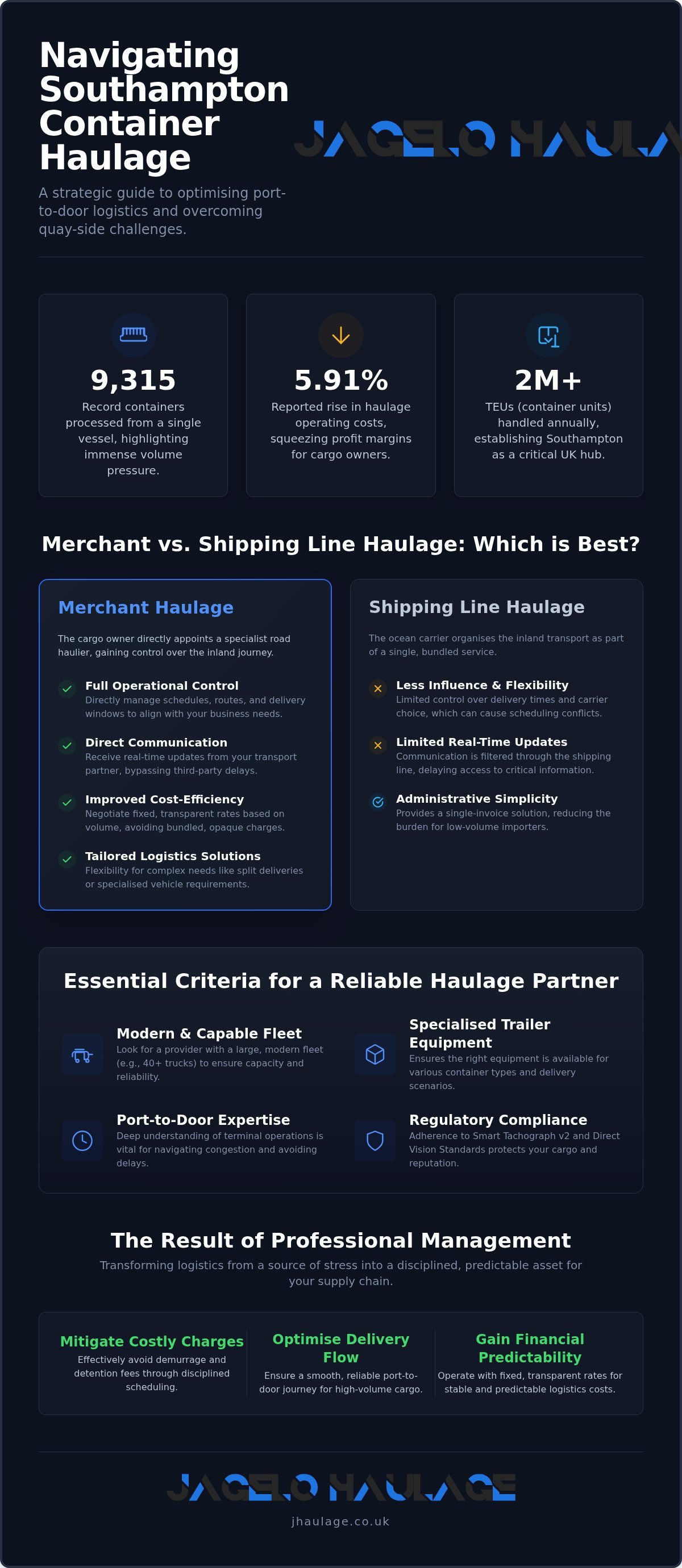
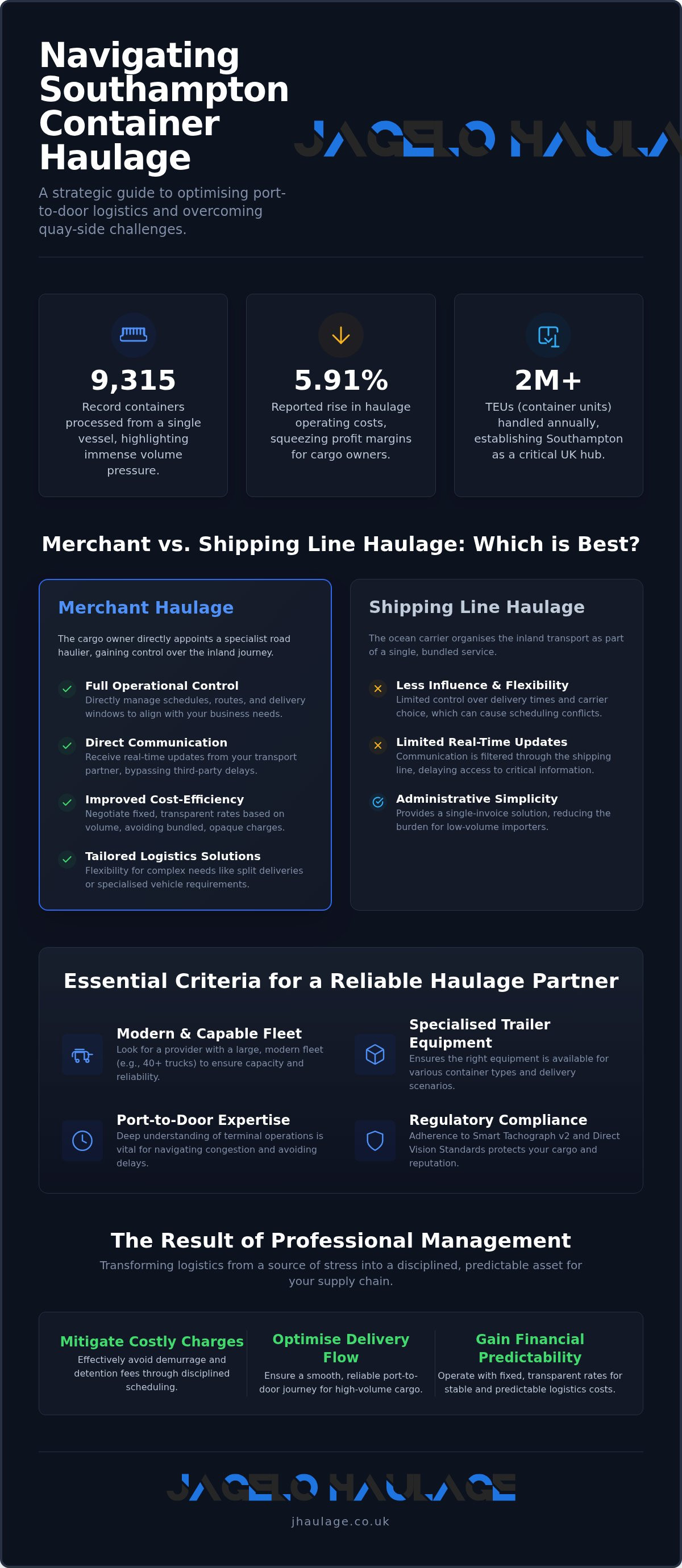
In September 2026, DP World Southampton processed a record-breaking 9,315 containers from a single vessel, yet for many cargo owners, these high volumes often translate into frustrating quay-side delays. Managing Southampton container haulage in a market defined by rising ISPS fees and strict VBS emissions charges is a significant operational challenge. You're likely concerned about the reported 5.91% rise in haulage operating costs and the constant threat of demurrage charges that erode your profit margins. Reliability isn't just a preference; it's a requirement for your supply chain's survival.
This guide provides the strategic framework you need to secure reliable transport, offering expert insights into merchant haulage and port efficiency. You'll learn how to master the complexities of port-to-door logistics whilst maintaining fixed, transparent rates. We'll examine the 2026 regulatory landscape, including Smart Tachograph Version 2 requirements and updated Direct Vision Standards. By the end of this article, you'll understand how professional management and a modern fleet can transform your logistics from a source of stress into a disciplined, predictable asset.
Key Takeaways
- Learn how to navigate the logistical complexities of the UK's premier deep-sea gateway to ensure the efficient movement of high-volume cargo.
- Understand the operational differences between merchant and shipping line haulage to determine which model provides the necessary control for your business.
- Identify the essential criteria for selecting a reliable Southampton container haulage partner, focusing on modern fleet standards and specialised trailer equipment.
- Discover how to optimise the port-to-door journey by implementing scheduled deliveries that effectively mitigate the risk of costly demurrage and detention charges.
- Gain insights into how professional management and a disciplined approach to container transport provide a stable foundation for nationwide logistics.
The Strategic Importance of Southampton Container Haulage
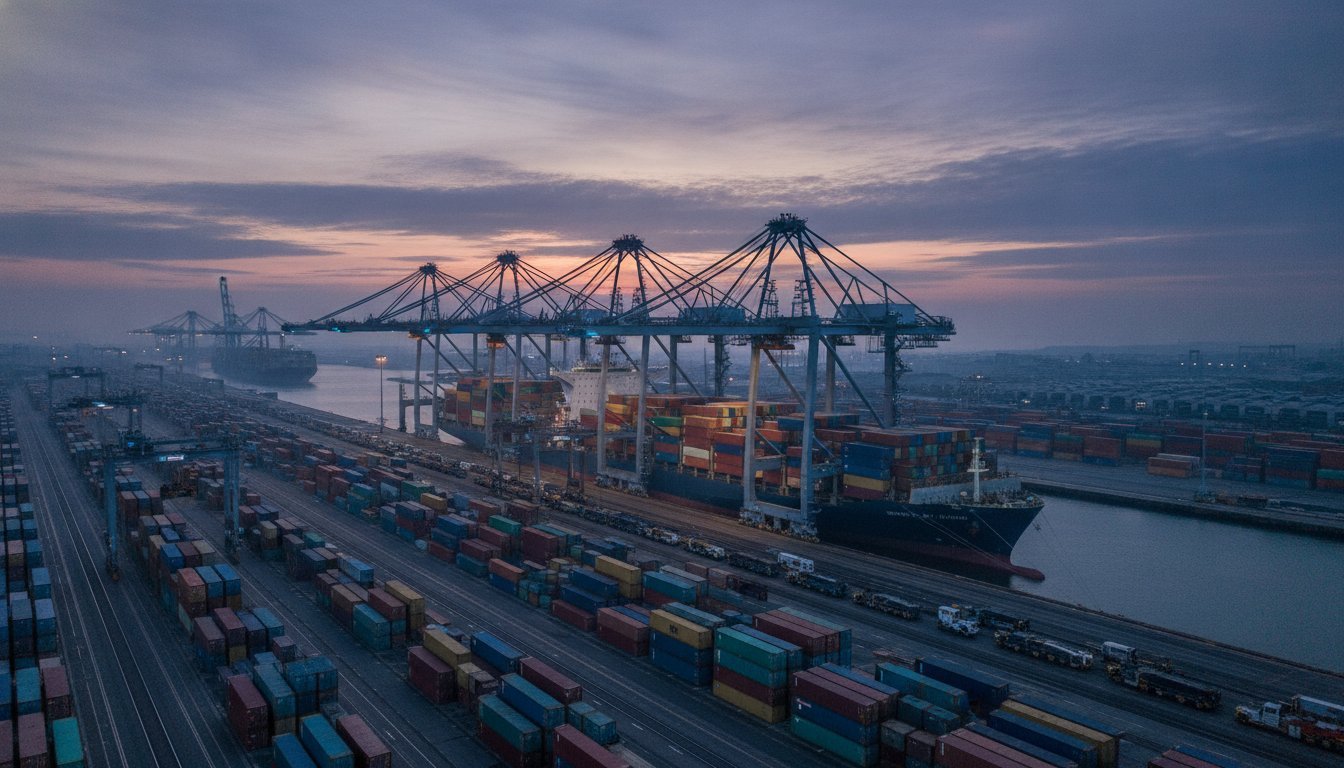
The Port of Southampton serves as a critical deep-sea gateway, handling over 2 million TEUs annually. It functions as a vital link for global trade routes and stands as a premier entry point for the UK market. Managing Southampton container haulage at this scale requires a disciplined approach to road transport. Professional haulage acts as the primary backbone of port logistics. It provides the essential connection between the quay-side and the final inland destination. Without reliable vehicle scheduling and professional management, the high-volume throughput of the port would lead to inland supply chain stagnation.
Southampton as a National Logistics Hub
This hub connects major global shipping lines to the UK's core infrastructure. In the second quarter of 2026, the port saw an increase of 49,000 container units compared to the same period in 2025. This growth places additional pressure on nationwide supply chains. Effective haulage from this centre requires specialised port-to-door expertise. A partner must understand the specific operational rhythm of the terminal to ensure goods move without friction. Jagelo Haulage leverages 15 years of industry experience to manage these complex movements. Our fleet of over 40 trucks provides the necessary capacity to support large-scale import and export operations across the country.
Navigating Port Congestion and Operational Efficiency
Port congestion remains a primary concern for cargo owners. Delays often stem from vessel bunching or temporary shortages in terminal capacity. These bottlenecks can lead to increased costs and missed delivery windows. With UK haulage operating costs rising by 5.91% in 2025, efficiency is no longer optional. Professional Southampton container haulage providers use real-time data to bypass terminal bottlenecks where possible. Responsive customer support is vital for mitigating these issues. A disciplined partner monitors the status of every container and provides updates as they happen. This proactive management helps avoid demurrage charges and ensures on-time deliveries. By maintaining a modern fleet and following strict protocols, a haulier can navigate terminal volatility effectively. Success in this sector depends on a provider's ability to adapt to the port's daily fluctuations whilst maintaining a steady delivery schedule.
Merchant Haulage vs Shipping Line Haulage: Which is Best?
Choosing the right booking model for inland transport is a critical decision for supply chain managers. Merchant haulage and shipping line haulage represent two distinct approaches to moving goods from the quay-side. Merchant haulage gives the importer or exporter complete control over the transport process. You choose the carrier, negotiate the rates, and manage the schedule directly. Shipping line haulage, by contrast, is a service where the ocean carrier organises the inland leg of the journey. Whilst both methods are common in Southampton container haulage, the choice significantly impacts your operational flexibility and total cost of ownership.
The Advantages of Merchant Haulage Solutions
Control is the primary asset of the merchant haulage model. By appointing a specialist like Jagelo Haulage, you establish a direct line of communication with the transport provider. This transparency is vital when navigating port congestion or tight delivery windows. You aren't reliant on a third-party shipping line to relay status updates. Direct engagement often results in better cost-efficiency. You can negotiate fixed rates that reflect your specific volume and frequency requirements. This model also allows for tailored logistics solutions, such as split deliveries or specific vehicle requirements, that shipping lines may not offer. Professional management ensures that all operations remain compliant with the latest international road haulage regulations, protecting your cargo and your reputation.
When to Opt for Shipping Line Haulage
Shipping line haulage is often preferred for its simplicity. It provides a single-invoice solution where the ocean freight and inland transport are bundled together. This reduces the administrative burden for smaller volume importers who may not have the capacity to manage multiple supplier relationships. However, this convenience comes with trade-offs. You typically have less influence over delivery times and limited access to real-time driver updates. Shipping lines often prioritise their own schedules over the specific needs of the cargo owner. If your priority is a hands-off approach and administrative ease, this model may suffice. For businesses requiring high levels of responsiveness and a disciplined supply chain, merchant haulage remains the superior strategic choice. If you're looking to gain more control over your logistics, you can request a transport consultation to explore your options.
Selecting a Reliable Container Haulage Partner
Reliability in the supply chain depends on the physical assets and professional standards of your provider. Choosing a partner for Southampton container haulage requires a thorough assessment of their operational infrastructure. Trust is built through consistent performance. Having 15 years of industry experience provides a proven track record of handling complex logistics requirements. A disciplined haulier doesn't just move boxes; they manage a critical stage of your business's strategic outcome. This level of competence is essential when the stakes involve high-value cargo and tight terminal deadlines.
The Impact of a Modern Fleet on Service Levels
A modern fleet is the foundation of functional reliability. Jagelo Haulage operates over 40 trucks, ensuring that mechanical delays remain at an absolute minimum. Older vehicles present a higher risk of breakdowns, which can lead to missed delivery windows and additional port storage fees. Well-maintained equipment also ensures compliance with Euro 6 emissions standards, which is vital for meeting the port's environmental requirements. There's a clear link between high-quality equipment and professional driver behaviour. Drivers who operate modern, safe vehicles are better equipped to follow strict protocols and maintain the discipline required for time-critical deliveries.
Specialised Equipment for Diverse Container Needs
Container transport isn't a one-size-fits-all operation. Different cargo requirements demand specialised equipment such as skeletal and splitter trailers. These tools allow for the precise handling of 20ft, 40ft, and high-cube containers. Splitter trailers are particularly effective for multiple drops, as they allow containers to be separated for easier unloading at the destination. Secure transport practices, including expert lashing and weight distribution, are non-negotiable for protecting your goods in transit. The strategic status of the terminal, reinforced by the UK's first Port Economic Partnership, means that haulage partners must match the port's own high standards for safety and efficiency. Comprehensive insurance coverage and strict adherence to safety protocols provide the final layer of security for your supply chain. By selecting a partner with the right equipment and a stoic commitment to safety, you ensure your cargo remains protected until it reaches its final inland destination.
Optimising the Port-to-Door Journey for Maximum Efficiency
Efficiency in Southampton container haulage starts the moment a vessel berths. Moving a container from the terminal to an inland warehouse requires strict coordination between the haulier, the terminal operator, and the cargo owner. It's a methodical process that rewards disciplined planning and punishes administrative oversight. The transition from the quay-side to the road is the most volatile stage of the supply chain. Success depends on a haulier's ability to synchronise vehicle movements with port availability whilst managing the rising costs of terminal compliance. Professional management ensures that this journey remains predictable, allowing you to maintain your own production or distribution schedules without interruption.
Step-by-Step: The Container Collection Process
The collection process begins with securing a valid release note from the shipping line. Once the container is cleared for collection, the haulier must coordinate with the terminal to secure a slot via the Vehicle Booking System (VBS). Effective VBS management is critical. As of July 2026, VBS emissions charges at Southampton favour modern fleets; Euro VI E vehicles incur no charge, whilst electric HGVs receive a £20 credit per visit. A disciplined partner uses these efficiencies to keep operational costs stable. After the container is loaded, the final mile involves ensuring a smooth handover at the inland destination. This requires precise timing to match the warehouse's intake capacity, preventing vehicles from idling and wasting valuable driver hours.
Avoiding Hidden Costs: Demurrage and Detention
Financial penalties like demurrage and detention are often the result of poor communication or inadequate fleet capacity. Demurrage refers to the storage charges applied by the port when a container stays on the quay past its "free time" allowance. Detention charges apply when the empty container isn't returned to the port or a designated depot within the agreed timeframe. Proactive scheduling is the only reliable way to prevent these unnecessary costs. By using a merchant haulage model, you gain the ability to control the clock. You can prioritise specific containers based on their expiry dates rather than relying on a shipping line's generic schedule. Real-time updates on container status allow you to adjust your inland logistics before delays become expensive. If you want to secure your supply chain against these hidden fees, you can book a professional haulage consultation to review your current transport plan.
Better planning leads to cost-effective outcomes. It's not just about moving goods; it's about managing the data and timings that surround the physical movement. A haulier with 15 years of experience understands the specific pressure points of the Southampton terminal. They anticipate potential bottlenecks and adjust routes or booking times accordingly. This level of professional foresight transforms the port-to-door journey from a logistical hurdle into a streamlined strategic asset for your business.
Jagelo Haulage: Professional Container Transport Solutions
Jagelo Haulage provides a disciplined alternative to less organised transport providers. With over 15 years of industry experience, we understand the high stakes involved in the supply chain. Our modern fleet of over 40 trucks ensures functional reliability for every collection and delivery. We prioritise the safety and efficiency of your operations above all else. This grounded approach reflects the industrial nature of the sector. Unlike larger, impersonal hauliers, our responsive customer support team provides direct communication. You won't be left waiting for updates whilst your cargo is in transit. Every statement we make is backed by the competence of our operational team. We position ourselves as masters of the fundamentals, ensuring your Southampton container haulage is handled with quiet confidence and corporate discipline.
Nationwide Reach from Major UK Hubs
Our team provides reliable inland deliveries from Southampton to any UK destination. This strategic reach extends across all major maritime hubs used by national supply chains. We maintain consistent service levels to ensure your cargo moves efficiently through the national infrastructure. Jagelo Haulage acts as a strategic partner for both merchant and shipping line haulage models. By maintaining a methodical rhythm in our operations, we provide the stability your logistics framework requires. Our drivers follow strict protocols to ensure every handover is punctual and professional. We take stoic pride in our ability to provide protected outcomes for our clients. This nationwide capability means your supply chain remains secure, regardless of the inland destination.
Requesting a Port Haulage Quote
Requesting a transport estimate requires specific data to ensure accuracy. Transparent pricing is a core component of our service. We don't include hidden operational extras that inflate your final bill. To receive a precise quote, you'll need to provide your container size, collection terminal, and final delivery postcode. Mentioning any specific site requirements or time constraints helps us plan the most efficient route. This structured approach to pricing mirrors the reliability of our physical operations. Our business philosophy values getting straight to the point and minimising the potential for misunderstanding. We view our service not just as a physical task, but as a strategic outcome for your business. Contact us today to discuss your Southampton container haulage requirements and secure a dependable partner for your supply chain.
Securing Your Supply Chain for 2026 and Beyond
Effective logistics management requires a shift from reactive transport to strategic planning. By choosing merchant haulage, you gain the control necessary to navigate the increasing complexity of UK port terminals. A modern fleet remains the most reliable defence against mechanical delays and evolving emissions standards. Jagelo Haulage leverages over 15 years of industry experience to provide this stability for your operations. We operate a modern fleet of 40+ trucks and trailers, ensuring your cargo moves with professional discipline and functional reliability.
Our expertise in both merchant and shipping line haulage allows us to tailor solutions to your specific business requirements. We focus on protecting your cargo and your profit margins by preventing unnecessary demurrage and detention charges. Professional Southampton container haulage is not just a service; it's a strategic partnership that ensures the integrity of your nationwide supply chain.
You can request a professional container haulage quote from Jagelo Haulage to begin optimising your port logistics. We look forward to providing the steadfast support your business needs to succeed in a demanding market.
Frequently Asked Questions
What is the difference between merchant haulage and shipping line haulage?
Merchant haulage allows the importer to appoint an independent carrier, providing direct control over the transport schedule. Shipping line haulage is managed by the ocean carrier, which often results in less visibility for the cargo owner. By choosing the merchant model for Southampton container haulage, businesses can communicate directly with drivers and prioritise urgent loads. This flexibility is essential for maintaining a disciplined supply chain and avoiding terminal delays.
How much does it cost to transport a shipping container from Southampton?
Transport costs are determined by the distance to the inland destination, container dimensions, and current terminal charges. Factors such as the ISPS fee and the Energy Adjustment Mechanism at the port also impact the final rate. We provide fixed quotes that include these operational variables to ensure transparency. Our pricing models are designed to reflect the functional reliability of our modern fleet whilst remaining competitive within the national market.
What information is needed to book container haulage from the port?
To book transport, we require the container number, a valid release note, and the specific terminal details. You should also provide the delivery address and any site-specific access requirements. Clear information regarding time windows and container type is vital for accurate vehicle allocation. This data allows our team to manage the Vehicle Booking System effectively and ensure a punctual handover at your inland warehouse.
How can I avoid demurrage charges at Southampton port?
Avoiding demurrage requires collecting containers before their port-side free time expires. Professional management and the use of merchant haulage allow you to prioritise specific units based on their terminal status. We monitor every container to ensure timely collection, which mitigates the risk of storage penalties. Proactive scheduling and responsive communication are the primary tools for preventing these unnecessary financial costs and protecting your profit margins.
Do you provide haulage for 20ft and 40ft containers?
We provide comprehensive transport for both 20ft and 40ft units, including high-cube containers. Our modern fleet uses specialised skeletal trailers to ensure the secure movement of goods across the country. These trailers are designed for the precise weight distribution required for heavy loads. By matching the equipment to the container type, we maintain the safety and efficiency standards expected by corporate logistics managers and operational directors.
Can you handle same-day container delivery from Southampton?
Same-day delivery is available for collections from the port, provided the container has been released by the shipping line and terminal. This service is designed for time-sensitive cargo that requires immediate inland transport. Our fleet capacity allows us to respond to urgent requirements with functional reliability. We coordinate closely with terminal systems to secure the earliest possible vehicle booking slots for your priority shipments and time-critical deliveries.
What areas of the UK do you cover for inland deliveries?
Jagelo Haulage provides national coverage for all inland container deliveries. We serve every major maritime gateway in the UK and deliver to any inland destination across the country. This nationwide reach ensures that your supply chain remains consistent regardless of the port of arrival. By maintaining a single point of contact for national logistics, we provide the stability and professionalism required for large-scale operations and complex distribution networks.
Is your container transport fleet fully insured?
Our transport operations are fully insured, including goods in transit and public liability coverage. We adhere to all UK road haulage safety protocols and ensure our modern fleet meets the latest compliance standards. This includes the Smart Tachograph Version 2 requirements and the updated Direct Vision Standard for HGVs. This disciplined approach to protection ensures your cargo remains secure from the quay-side to the final inland destination.