Part of our guide to container haulage from Southampton
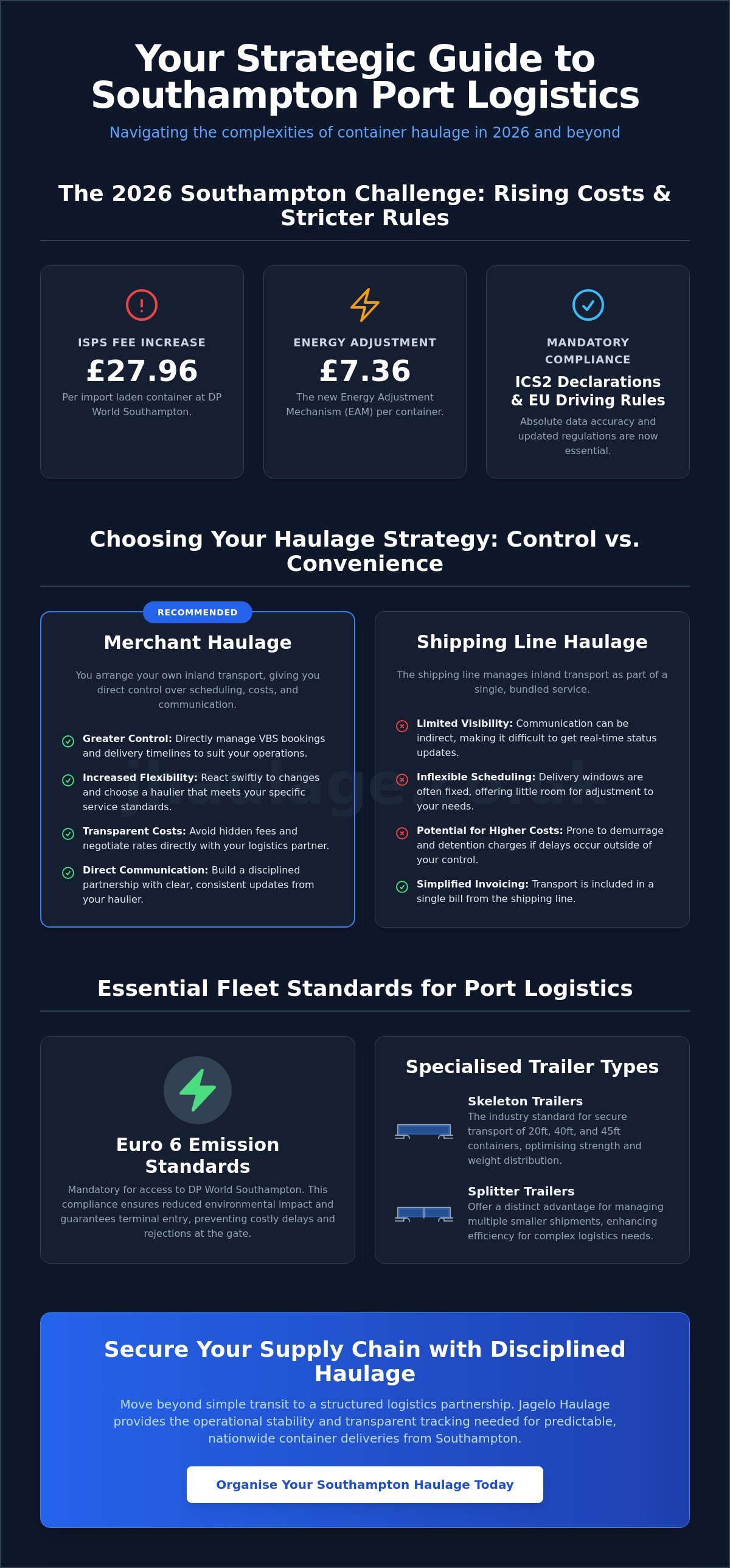
A single administrative error or a missed collection slot at DP World Southampton can compromise your entire supply chain. In 2026, the logistics sector faces heightened complexity, with the ISPS fee at Southampton rising to £27.96 and mandatory ICS2 declarations requiring absolute data accuracy. You understand that inconsistent communication and port delays are more than just inconveniences; they're direct threats to your operational stability. Securing dependable container haulage Southampton requires a partner that prioritises disciplined scheduling and transparent tracking over empty promises.
This guide explains how to optimise your port-to-door logistics through professional merchant haulage solutions and disciplined fleet management. You'll learn how to navigate the new Energy Adjustment Mechanism costs and the shifting EU driving rules taking effect this July. We provide a strategic framework to help you achieve predictable delivery times and secure transport for every shipment. By moving beyond simple transit to a structured logistics partnership, you ensure your cargo remains protected and your delivery schedules remain firm.
Key Takeaways
- Understand why Southampton Port serves as a primary gateway for UK trade and how its infrastructure supports efficient supply chain management.
- Identify the essential fleet standards, including Euro 6 compliance and specialised skeleton trailers, required for secure and professional port logistics.
- Evaluate the strategic benefits of merchant container haulage Southampton versus shipping line haulage to gain greater control over your inland transport schedules.
- Master operational best practices for managing the Vehicle Booking System (VBS) to minimise port congestion and avoid costly demurrage charges.
- Learn how a disciplined partnership with an established haulier like Jagelo Haulage provides the operational stability needed for nationwide container deliveries.
The Strategic Importance of Container Haulage at Southampton Port
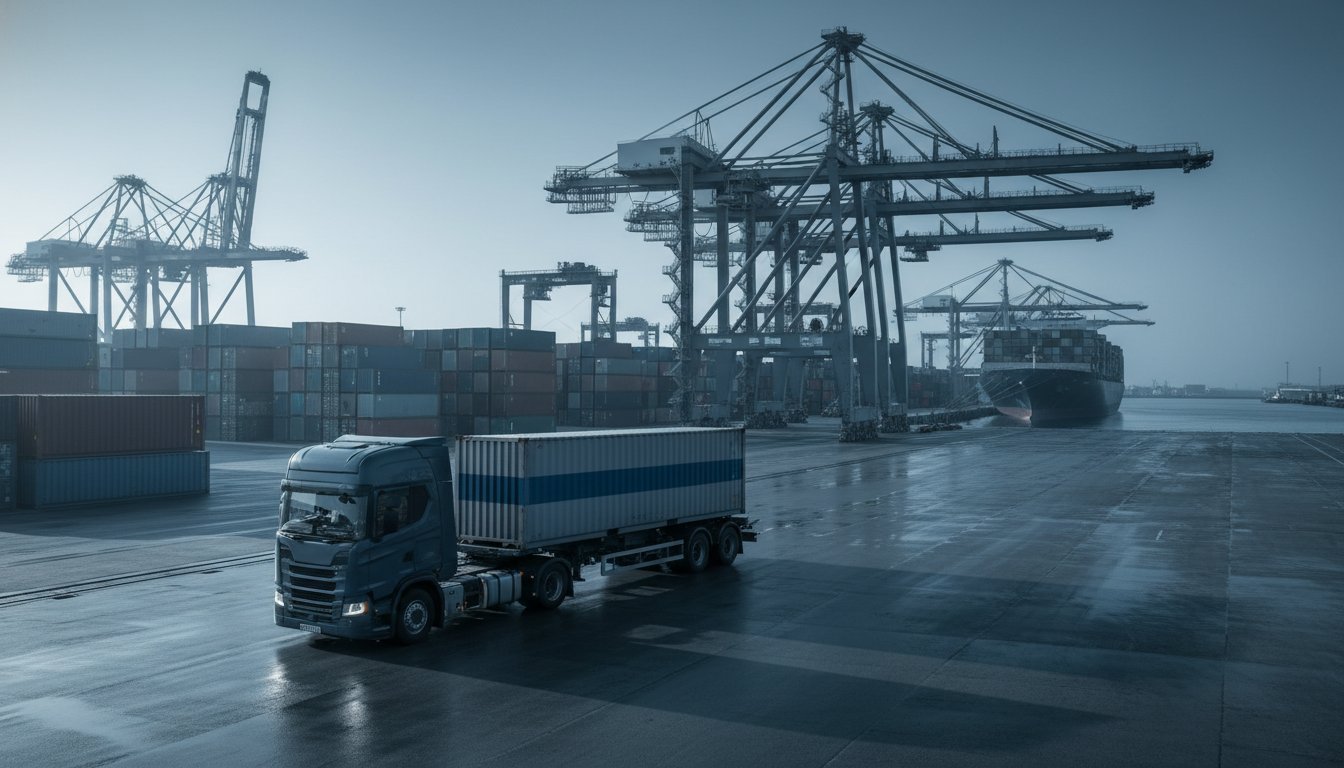
The Port of Southampton operates as a critical node in the United Kingdom's global supply chain. It handles millions of tonnes of cargo annually, serving as the primary gateway for international trade in the South of England. Container haulage Southampton is the essential link that bridges the gap between maritime arrival and inland distribution. Without a disciplined road transport framework, goods remain stationary at the quay, leading to terminal congestion and increased operational costs. Professional port logistics ensure that containers move efficiently from the terminal to the consumer, maintaining the momentum of the national economy.
Southampton as a Key Maritime Hub
The port's strategic location offers direct access to the M27 and M3 motorways, facilitating rapid transit to London, the Midlands, and the North. Efficient turnaround times are vital at the Solent, where vessel schedules demand precision from every landside partner. Container haulage is the professional transport of shipping containers from port terminals to final inland destinations. By prioritising methodical route planning and strict vehicle booking, hauliers maintain the flow of goods through one of the UK's busiest terminals. This operational reach allows businesses to distribute cargo across the country with minimal delay.
The Economic Impact of Reliable Port Logistics
Dependable transport supports the strict requirements of "just-in-time" manufacturing and retail inventory management. When cargo owners use Jagelo Haulage for their inland container haulage needs, they reduce supply chain friction through disciplined scheduling. Reliability in this sector prevents the accumulation of expensive demurrage and detention charges. These fees often arise from poor coordination or a lack of understanding regarding the specific operational nuances of Southampton Docks. A professional partnership ensures that every container is collected and returned within the agreed windows.
Effective logistics management becomes even more critical in 2026 as port fees increase to reflect rising operational costs. For instance, the International Ship & Port Security (ISPS) fee at DP World Southampton has risen to £27.96 per import laden container. Additionally, the Energy Adjustment Mechanism (EAM) now stands at £7.36 per container. By securing reliable container haulage Southampton, businesses can protect their margins against these rising costs. Disciplined haulage providers mitigate financial risks by ensuring:
- Punctual VBS bookings: Reducing the time a container spends on the quay.
- Accurate documentation: Preventing delays during the customs clearance process.
- Fleet efficiency: Utilising Euro 6 compliant vehicles to maintain port access and reduce environmental impact.
Precision is mandatory. In a landscape of shifting regulations and increasing costs, the ability to move goods securely and predictably is a significant competitive advantage. Professional merchant haulage provides the transparency and control required to manage these variables successfully.
Essential Equipment and Fleet Standards for Port Logistics
Reliable container haulage Southampton requires more than just a truck and a driver. It demands a fleet that meets the rigorous technical standards of modern port terminals. In 2026, environmental compliance is a primary concern. Every vehicle must adhere to Euro 6 emission standards to maintain access to the DP World Southampton terminal. Beyond environmental rules, mechanical reliability is the foundation of a disciplined supply chain. High-volume operators rely on hauliers that invest in regular maintenance and fleet renewals to prevent service interruptions. Using aged equipment isn't an option when terminal slots are strictly timed.
Specialised Trailer Types for Container Transport
The type of trailer used determines the efficiency of the entire movement. Skeleton trailers, often called "skels," are the industry standard for secure container carriage. These trailers are purpose-built to accommodate 20ft, 40ft, and 45ft containers. Their design focuses on strength and weight distribution, ensuring the cargo remains stable during transit. For businesses managing multiple small shipments, splitter trailers offer a distinct advantage. These trailers can carry two 20ft containers simultaneously and then separate for independent deliveries. This capability reduces the number of required port visits and improves route density.
High-cube containers present unique challenges due to their increased height. Transporting these units requires trailers with a lower deck height to ensure they clear UK bridges and overhead infrastructure safely. Using the correct equipment isn't optional; it's a fundamental requirement for protecting the goods and maintaining public safety. Professional hauliers maintain a diverse inventory of trailers to handle these specific cargo requirements without delay.
Technology and Safety in the Modern Fleet
Modern haulage is a data-driven discipline. Real-time GPS tracking and telematics are now essential tools for every professional haulier. These systems provide clients with accurate delivery windows and allow transport managers to monitor vehicle performance. Transparency in tracking helps to mitigate the frustration of delays, as stakeholders are informed of the container's progress at every stage. Safety protocols are equally vital. All containers must be secured using heavy-duty twist locks that meet strict container safety regulations. Drivers are trained to verify that every lock is engaged before the vehicle leaves the port perimeter.
A modern fleet of over 40 trucks ensures operational redundancy and consistent service availability for large-scale logistics. This scale allows for the handling of sudden volume surges without compromising on punctuality. When your supply chain depends on precision, the quality of the equipment is the first line of defence. If you require a dependable partner for your next movement, you can request a professional haulage quote to see how a disciplined fleet supports your operations.
Navigating Merchant Haulage vs. Shipping Line Haulage in Southampton
Determining the most effective method for inland transport is a primary strategic decision for cargo owners. In the context of container haulage Southampton, two distinct models exist: merchant haulage and shipping line haulage. Merchant haulage gives the cargo owner or freight forwarder full control over the haulier selection and scheduling. Conversely, shipping line haulage is an arrangement where the ocean carrier organises the inland movement as part of a through-rate. Whilst the latter offers convenience, it often lacks the precision and direct communication required for complex supply chains.
Choosing merchant haulage allows for a more personalised service. It eliminates the administrative layers between the transport office and the final delivery point. This direct link is essential when managing tight delivery windows or responding to port congestion. By selecting a dedicated partner, businesses ensure their inland container haulage is prioritised rather than being managed as a secondary task by a carrier. This model provides the transparency needed to manage inventory with confidence.
Why Freight Forwarders Prefer Merchant Haulage
Freight forwarders frequently choose merchant haulage to maintain superior communication with their clients. Large shipping line contracts can sometimes feel like a "black hole" of information; tracking updates are often delayed, and resolving issues can be slow. A dedicated partner like Jagelo Haulage provides immediate updates and remains accountable for every stage of the journey. This model also allows for cost-efficiency through direct negotiation. It removes the carrier's administrative markup and enables more flexible scheduling for inland container deliveries.
Integrating with Shipping Line Protocols
A professional haulier must be adept at coordinating with major lines such as Maersk, MSC, and COSCO at the terminal. This integration involves managing the release of containers and ensuring all port documentation is in order before the vehicle arrives at the quay. Each shipping line has specific administrative requirements and release protocols. A partner who understands these nuances can navigate the terminal efficiently, reducing the risk of wasted journeys or "no-show" fees. They act as the technical bridge between the maritime carrier and the inland destination.
Jagelo Haulage supports both models to ensure seamless port-to-door transitions. Whether you're using merchant haulage for its flexibility or coordinating a shipping line haulage movement, the focus remains on functional reliability. Our transport team manages the complex release systems of the various lines, ensuring that every container is cleared for collection without administrative delay. This expertise transforms a simple physical action into a strategic outcome for your business, ensuring that your container haulage Southampton operations remain disciplined and predictable.
Best Practices for Organising Efficient Port-to-Door Movements
The transition from the port terminal to the final inland destination is the most volatile stage of the supply chain. Achieving a seamless movement requires strict adherence to terminal protocols and precise coordination between the cargo owner and the haulier. In 2026, the financial stakes are high. With the ISPS fee and Energy Adjustment Mechanism already increasing the baseline cost of every container, businesses cannot afford the additional burden of storage or demurrage charges. Effective container haulage Southampton depends on a proactive approach to planning that begins long before the vessel berths at the quay.
Mastering the Vehicle Booking System (VBS)
The Vehicle Booking System is a mandatory digital interface used by DP World Southampton to manage traffic flow and terminal capacity. Hauliers must secure specific time slots to collect or drop off containers. These slots are finite and highly competitive during peak periods. When a haulier fails to secure a VBS appointment within the "free time" window allowed by the shipping line, the cargo owner faces daily storage fees. Proactive VBS management is the primary defence against rising port storage costs. Disciplined transport offices monitor vessel arrival times in real-time to claim the earliest possible slots, ensuring that containers move off the quay immediately after they're cleared.
Port congestion remains a significant factor in delivery reliability. Heavy traffic at the terminal gates or delays in crane operations can disrupt a driver's entire schedule. Professional hauliers build buffer time into their routes to account for these variables. Night-time movements are an effective strategy for bypassing the peak congestion on the M27 and M3 corridors. By collecting containers during off-peak hours, vehicles can reach inland distribution centres before the morning rush, ensuring that unloading teams can begin work exactly on schedule.
Effective Communication and Documentation
Precision in documentation is the foundation of a successful movement. A haulier cannot collect a container without the correct release codes and container numbers. Providing this data at least 24 hours in advance allows the transport office to verify the information against the port's system. If there's a discrepancy, it can be resolved before the truck arrives at the gate, preventing "no-show" fees and wasted journeys. Successful container haulage Southampton also requires the destination site to be fully prepared. Ensure that access routes are clear and that the necessary unloading equipment is available upon the vehicle's arrival.
- Clear delivery instructions: Include specific site contact details and any height or weight restrictions.
- Waiting time awareness: Most haulage quotes include 1 to 2 hours of free waiting time. After this, charges typically range from £30 to £50 per hour.
- Electronic Proof of Delivery: Utilise digital PODs to provide immediate confirmation that the cargo has reached its destination securely.
Operational discipline reduces the risk of unforeseen expenses. By following these structured protocols, you protect your margins and maintain the integrity of your delivery schedule. If you're ready to secure a reliable collection slot, you should request a professional haulage quote to begin your planning process.
Why Jagelo Haulage is the Preferred Partner for Southampton Operations
Jagelo Haulage provides over 15 years of specialised expertise in UK port logistics. Our operations are built on a foundation of steadfast professionalism and functional reliability. We understand that the movement of goods is a high-stakes environment where delays carry significant financial consequences. By maintaining a disciplined fleet of over 40 trucks and trailers, we provide the nationwide reach and operational redundancy required by modern businesses. Our approach to container haulage Southampton focuses on masterfully executing the fundamentals of transport management to ensure your cargo remains secure and on schedule.
Security and reliability are non-negotiable standards within our transport office. We don't rely on personality-driven charm; instead, we reassure our clients through a consistent display of competence and methodical planning. Our team understands the administrative complexities of the Southampton terminals and the specific requirements of major shipping lines. This expertise allows us to navigate the port environment with quiet confidence, providing a brand of service that feels serious, corporate, and highly disciplined.
A Disciplined Approach to National Distribution
Working with an independent contractor like Jagelo Haulage allows for a level of focus that large-scale shipping line haulage often lacks. We prioritise your specific cargo, ensuring that collection slots are secured and delivery windows are respected. Our drivers follow strict protocols regarding vehicle behaviour and safety standards, representing your business with professionalism at every destination. This discipline effectively bridges the logistical gap between the Southampton terminals and any inland UK location, from the industrial hubs of the Midlands to the distribution centres in the North.
Our modern fleet standards are a key differentiator in the sector. By utilising Euro 6 compliant vehicles and specialised skeleton trailers, we ensure uninterrupted access to the port whilst maintaining the highest safety ratings. Every vehicle is equipped with advanced telematics, providing the transparency you need to monitor your supply chain with precision. This commitment to equipment quality reduces the risk of mechanical failure and ensures that your container haulage Southampton operations remain predictable and protected.
Seamless Integration into Your Supply Chain
We position Jagelo Haulage as a strategic outcome provider rather than a simple transport service. Every container movement is framed as a critical component of your broader operational framework. Our responsive customer support team understands the urgency of the supply chain and provides direct, declarative communication to resolve issues before they impact your bottom line. This level of integration transforms a physical task into a reliable logistical asset for your company.
Getting started with a professional partnership is a straightforward process. You can learn more about the technical variables affecting your transport investment by reviewing our port haulage quote guide for 2026. This resource provides the clarity needed to make informed decisions about your inland movements. When you're ready to secure your transport schedule with a disciplined partner, Contact Jagelo Haulage today for secure container transport. We're prepared to provide the steadfast reliability your logistics operations demand.
Securing Your Supply Chain for 2026 and Beyond
Managing the complexities of port logistics requires more than just transit; it demands a disciplined operational framework. By prioritising merchant haulage and mastering the Vehicle Booking System, you gain the control necessary to avoid rising port fees and terminal congestion. A modern fleet and strict adherence to safety protocols ensure that your cargo remains protected throughout the final leg of its journey. Securing reliable container haulage Southampton is the definitive step towards achieving predictable delivery times and operational stability.
Jagelo Haulage brings over 15 years of port logistics experience to every movement. With a modern fleet of over 40 trucks and trailers, we specialise in both merchant and shipping line haulage to provide nationwide reach. Our team understands the high stakes of the supply chain and remains committed to providing functional, secure transport outcomes. We invite you to request a professional container haulage quote from Jagelo Haulage to see how our expertise can strengthen your logistics strategy. We look forward to supporting your business with the steadfast reliability it deserves.
Frequently Asked Questions
What is the difference between merchant haulage and shipping line haulage at Southampton?
Merchant haulage gives the cargo owner or freight forwarder full control over haulier selection and scheduling. This model allows for direct communication and flexible delivery windows tailored to specific site requirements. Shipping line haulage is organised by the ocean carrier as part of their through-rate. Whilst the carrier manages the logistics, the client often has less visibility and influence over the specific timing of collection and delivery.
How much does container haulage from Southampton typically cost?
The cost of container haulage Southampton is determined by several variables, including the distance to the inland destination and the container size. External factors such as fuel prices and port-related fees, including the ISPS and Energy Adjustment Mechanism, also influence the final rate. Businesses should request a specific quote to obtain an accurate figure based on their current logistical requirements and volume.
Does Jagelo Haulage provide same-day container delivery from the port?
Availability for urgent delivery windows depends on current terminal congestion and fleet scheduling. You should contact the transport office directly to check the feasibility of specific movements from the port. Professional hauliers prioritise disciplined scheduling to maintain reliability; therefore, early booking is always recommended to secure the necessary Vehicle Booking System slots and ensure vehicle availability.
What types of trailers are used for shipping container transport?
Professional hauliers primarily use skeleton trailers, also known as "skels," which are purpose-built to carry 20ft, 40ft, and 45ft containers securely. Splitter trailers are also utilised for multi-drop efficiency, allowing two 20ft containers to be transported together and then separated for independent deliveries. These specialised trailers ensure proper weight distribution and compliance with UK road safety regulations during transit.
How do you manage port storage fees (demurrage) for my containers?
Minimising demurrage and port storage fees requires proactive management of the Vehicle Booking System (VBS). By monitoring vessel arrival times and securing collection slots as soon as the cargo is cleared, hauliers ensure the container leaves the quay within the port's "free time" window. Precise coordination and the early provision of release codes are essential to avoid administrative delays for container haulage Southampton.
Can Jagelo Haulage transport containers to any location in the UK?
Yes, we provide inland container haulage to any location across the UK mainland. Our fleet of over 40 trucks is structured to handle national distribution from Southampton to major industrial hubs in the Midlands, the North, and the South East. This nationwide reach ensures that your cargo moves seamlessly from the maritime terminal to its final destination under the management of a single, disciplined partner.
What documentation is required for a haulier to collect my container from the port?
To collect a container from the terminal, a haulier requires the correct container number and a valid release code or PIN provided by the shipping line. All customs clearances must be completed and the container must be "released" in the port's system before the vehicle arrives at the gate. Providing these details to the transport office at least 24 hours in advance allows for the verification of documentation and the securing of a VBS appointment.