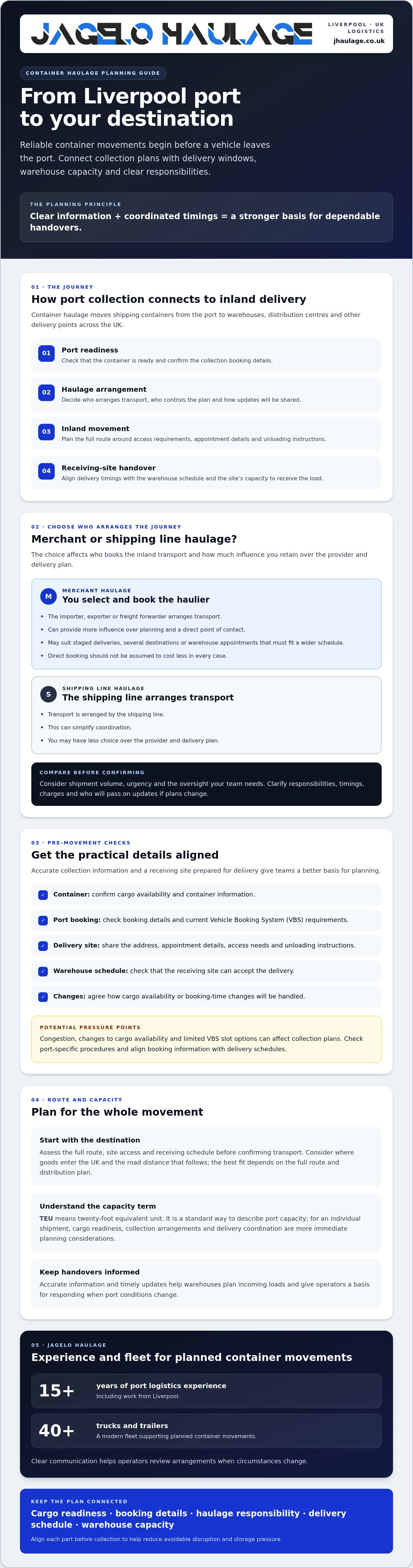
Part of our guide to container haulage from Liverpool
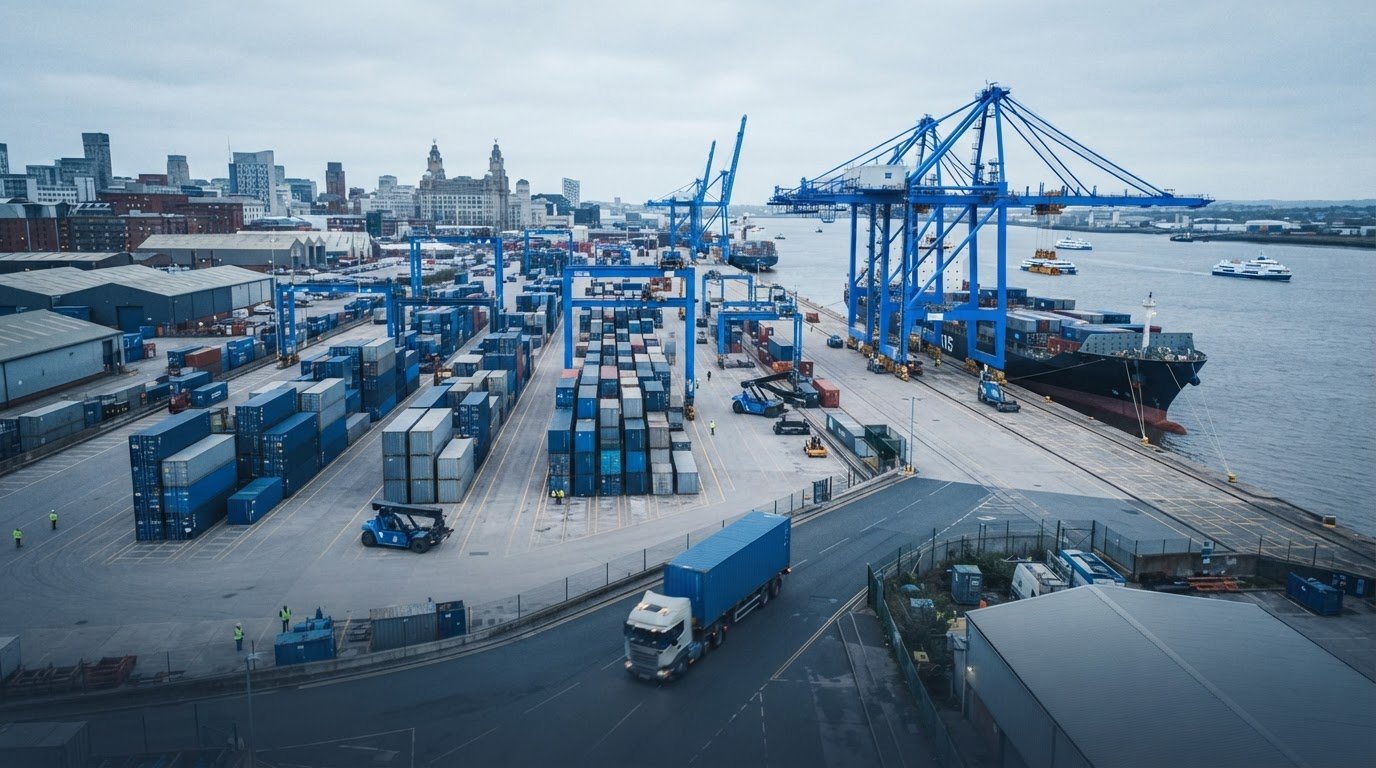
Reliable Liverpool container haulage starts with decisions made before a vehicle leaves the port. A clear plan connects collection with your wider distribution schedule, helping your team coordinate delivery windows and warehouse capacity.
For importers and exporters, arranging transport means coordinating bookings, knowing who controls the haulage and keeping track of the journey from port to destination. When responsibilities or timings are unclear, avoidable disruption becomes more likely. A haulage partner can help organise these moving parts. Jagelo Haulage has more than 15 years of port logistics experience and operates a modern fleet of over 40 trucks and trailers.
This guide explains the main haulage options, including merchant and shipping line haulage, and the practical points to consider when arranging container movements to destinations across the UK. It also covers booking requirements, coordination and how to assess a haulage partner. Use it to build a clearer transport plan and make informed decisions about your supply chain.
Key Takeaways
- Understand how container haulage connects port collections with inland deliveries across the UK.
- Compare merchant and shipping line haulage to decide which model suits your control and coordination needs.
- Check fleet capacity, container details and handling requirements before confirming a movement.
- Coordinate port bookings, haulage arrangements and warehouse schedules to help reduce avoidable delays and storage pressure.
- Jagelo Haulage’s fleet of over 40 trucks and more than 15 years of port logistics experience support nationwide container transport.
The Strategic Importance of Liverpool Container Haulage in UK Logistics
Liverpool container haulage is the transport of shipping containers from the port to inland destinations. It connects maritime arrivals with warehouses, distribution centres and other delivery points across the UK. Each handover needs clear arrangements: uncertain timings or collection instructions can disrupt warehouse planning and the onward movement of goods.
Effective port logistics connect cargo availability with haulage bookings and destination requirements. Before arranging a collection, check that the container is ready, the booking details are correct and the receiving site can accept the delivery. For background on the port, see this overview of the Port of Liverpool.
Planning Port Collections for National Distribution
A port collection is only one part of the journey. Assess the full route, the destination’s access requirements and the receiving site’s schedule before confirming transport. Share the delivery address, appointment details and any unloading instructions with the haulier so they can plan the inland movement around the actual requirements.
Container-handling capacity is commonly expressed in TEUs, or twenty-foot equivalent units. This standard unit helps describe port capacity, but for an individual shipment, cargo readiness, collection arrangements and delivery coordination are the more immediate planning considerations.
Challenges in Modern Port Haulage
Port collections depend on operational coordination. Congestion, changes to cargo availability and limited Vehicle Booking System (VBS) slot options can affect collection plans. Check the current VBS requirements with the port and make sure booking details, container information and delivery schedules align before arranging a vehicle.
Port-specific procedures can also affect how a collection is planned. Confirm the relevant requirements for each movement and agree how changes to cargo availability or booking times will be handled. Jagelo Haulage brings more than 15 years of port logistics experience, including work from Liverpool. Its modern fleet of over 40 trucks and trailers supports planned container movements, while clear communication helps operators review arrangements if circumstances change.
Protecting Supply Chain Continuity
Professional haulage involves more than moving a container. It connects collection, transport and delivery planning, helping teams prepare for incoming loads and manage handovers. Accurate information and timely updates give warehouses a better basis for planning and help operators respond when port conditions change.
Businesses can also consider where goods enter the UK and how far they will travel by road afterwards. Choosing an entry point that suits the destination may avoid unnecessary inland mileage, although the outcome depends on the full route and distribution plan. The aim is to balance access, delivery requirements and supply chain reliability.
Evaluating Merchant Haulage vs Shipping Line Haulage at the Port
For Liverpool container haulage, the choice between merchant and shipping line haulage determines who arranges the inland transport and how much control you retain. With merchant haulage, the importer, exporter or freight forwarder selects and books the haulier. With shipping line haulage, the shipping line arranges the transport. This can simplify coordination, but may give you less choice over the provider and delivery plan.
Neither model suits every shipment. Consider who needs to coordinate collection, how specific the delivery window is and how much oversight your team requires. Before confirming, clarify responsibilities, timings and charges, including who will pass on updates if the plan changes.
When Merchant Haulage May Suit Your Shipment
Merchant haulage can suit freight forwarders coordinating several destinations, staged deliveries or warehouse appointments that need to fit a wider schedule. Booking directly with a specialist contractor gives the organiser a direct point of contact and more influence over how the inland movement is planned. It can also make it easier to compare arrangements and check what is included. Direct booking should not be assumed to be cheaper in every case.
For a closer comparison of responsibilities and trade-offs, see Merchant Haulage vs Shipping Line Haulage.
Choosing an Arrangement for Your Collection
Assess the shipment against three practical factors:
- Volume: Consider whether you need to coordinate one container or several movements as part of a delivery plan.
- Urgency: Check which option best aligns collection and delivery timings with your receiving site.
- Cargo requirements: Confirm that the planned transport arrangement suits the container and any handling needs.
A larger or more complex schedule may make the control offered by merchant haulage valuable. For a straightforward movement, shipping line haulage may offer simpler coordination. Jagelo Haulage specialises in both merchant and shipping line haulage, with a modern fleet of over 40 trucks to support planned container movements. For general guidance on the UK road freight sector, the Road Haulage Association is a useful reference when considering haulage providers and industry matters.
If you are comparing arrangements for a collection, you can request a container haulage quote and discuss the transport requirements for your movement.
Essential Factors for Secure and Reliable Container Transport
Reliable Liverpool container haulage depends on more than allocating a truck. Fleet condition, container suitability, securement, insurance and accurate transport information all affect how a shipment is planned from port to destination. These checks are especially important for long inland journeys and containers with unusual dimensions or handling requirements.
Fleet Suitability and Maintenance
A modern, well-maintained fleet can help reduce the risk of disruption caused by vehicle faults. Ask how the operator manages vehicle maintenance and what arrangements apply if a vehicle issue affects a planned movement. Vehicle technology may also support efficient operations, but the specific benefits depend on the equipment and how it is used. Jagelo Haulage operates over 40 trucks and trailers. For further context on fleet considerations, read about container haulage and transport.
Before confirming a movement, provide accurate container details, including its dimensions and any out-of-gauge characteristics. This allows the haulier to assess whether the planned equipment and route are suitable. For heavy or unusual cargo, confirm in advance how the container will be secured and what information the transport operator needs.
Security and Professional Planning
Secure transport relies on sound planning at each handover. Check that container details, collection instructions and delivery arrangements are consistent. Ask how the operator manages cargo security during the inland journey. For complex or out-of-gauge loads, establish who confirms the transport plan and what precautions apply before the vehicle leaves the port.
Driver experience and task-specific training are also worth discussing, particularly where port procedures or unusual cargo create additional handling considerations. A professional operator should be able to explain its approach clearly. The UK's National Policy Statement for Ports sets out the wider strategic role of ports in the national freight network, where dependable onward transport is an important part of supply chain planning.
Insurance requires the same care. Do not assume a policy covers every cargo value or circumstance. Ask what protection applies to the movement, check relevant limits or exclusions, and establish whether separate cover is needed for your shipment.
Tracking can provide operational visibility, but the level of detail varies between providers. Before booking, ask whether updates are available, how they are shared and who to contact if plans change. A clear communication process helps teams coordinate with receiving sites without relying on assumptions.
These checks make transport selection a practical risk review, rather than simply a vehicle booking. To discuss your container movement and request a container haulage quote, provide the cargo details, destination and any special handling requirements.
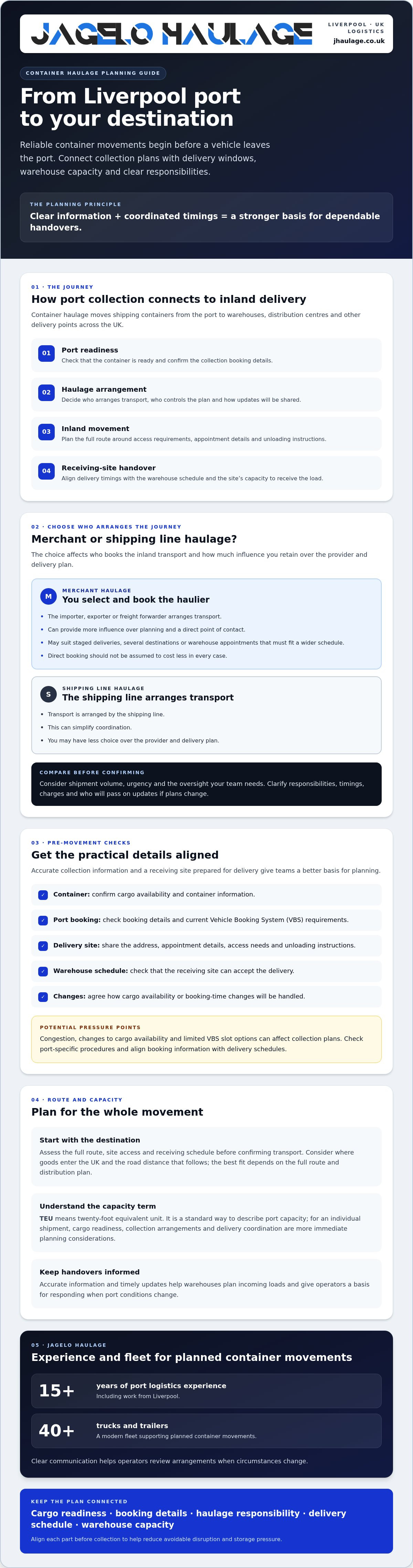
Best Practices for Coordinating Inland Container Deliveries Nationwide
Moving a container from port to a UK destination takes coordination beyond the port gate. A workable schedule must account for cargo availability, collection arrangements, the inland journey and the receiving warehouse’s capacity. Before booking, confirm the delivery address, site access requirements, contact details and unloading arrangements. Missing information can lead to avoidable waiting or a failed handover.
Planning the Inland Route
For Liverpool container haulage, plan around the destination and the full transport schedule, not just the distance on a map. Check suitable routes, expected journey conditions and any site-specific access constraints. For longer journeys, build the schedule around applicable driver hours and rest requirements. Allow a practical margin for delays rather than relying on an unrealistically tight arrival window.
Align the port collection plan with the warehouse appointment. Share changes promptly with the haulier and receiving team, especially if cargo release or collection timing shifts. Same-day delivery may be required for time-critical goods, but should not be assumed. Confirm feasibility in advance, including container availability, port booking requirements, journey time and the destination’s ability to receive the load.
Managing Port Logistics and Time Limits
Proactive coordination can help reduce the risk of demurrage or detention charges, but applicable terms and free-time allowances depend on the relevant arrangements. Check these details with the shipping line or other responsible party, record key dates and work backwards to set collection and return plans. A late booking or unconfirmed delivery slot can disrupt the schedule, so identify who owns each action and when it must be completed.
A specialist haulage partner can coordinate the inland leg from port collection to destination. Give the operator accurate cargo, timing and delivery information, then agree how schedule changes will be communicated. Jagelo Haulage provides responsive customer support for operators nationwide, helping keep transport coordination clear as containers move to destinations across the UK.
Use this planning check before confirming a delivery:
- Port: Confirm cargo readiness, collection details and current booking requirements.
- Journey: Set a workable route and schedule, including driver rest periods where relevant.
- Destination: Confirm the receiving slot, site access and unloading arrangements.
- Responsibilities: Agree who monitors changes and informs each party.
For a coordinated inland container movement, request a container haulage quote with the collection point, destination and delivery requirements.
Optimising Your Logistics with Jagelo Haulage’s Modern Fleet
Effective Liverpool container haulage depends on disciplined coordination as well as vehicle capacity. Jagelo Haulage has more than 15 years of port logistics experience and specialises in merchant and shipping line haulage from major UK ports, including Liverpool. This experience supports practical planning around collection arrangements and the onward movement of containers to destinations nationwide.
A modern fleet of over 40 trucks and trailers gives operators a substantial resource for planning container movements. Fleet size alone cannot remove port delays or guarantee a delivery window, but it supports capacity planning and helps a haulage partner organise movements around customer requirements. Outcomes still depend on accurate information, suitable scheduling and communication between the parties involved.
A Strategic Partner for Port Logistics
Container transport is one part of a wider supply chain. A haulage partner helps connect port collection with inland delivery requirements, making responsibilities and transport details clearer for the teams involved. This can help operators plan warehouse activity, coordinate handovers and address changes through an identified point of contact.
Reliability depends on consistent execution: accurate booking details, appropriate planning and clear communication. Jagelo Haulage’s port logistics experience and fleet support container movements across the UK. For businesses, the value lies in a transport arrangement that fits the wider distribution plan and reduces uncertainty between collection and delivery.
Preparing for a Haulage Quote
To help establish the requirements for a quote, provide the key details of the movement. These typically include:
- Collection and destination: Confirm the port collection point and the full delivery address.
- Container information: Share the container size and any relevant cargo or handling requirements.
- Haulage arrangement: State whether you need merchant or shipping line haulage, if known.
- Schedule: Provide your preferred collection and delivery timings, along with any receiving-site constraints.
Complete information in your initial enquiry helps clarify the scope of the movement. Keep communication open as arrangements progress, and promptly share changes to cargo readiness, timings or delivery instructions. This gives everyone involved a clearer basis for coordinating the transport plan.
For professionally managed container movements to UK destinations, request a container haulage quote. Share your collection, destination, container and scheduling details so the requirements can be reviewed clearly.
Build a More Dependable Container Transport Plan
Reliable Liverpool container haulage starts with a clear choice of haulage model, realistic collection and delivery planning, and a transport partner that understands port operations. Coordinating bookings, cargo details and warehouse requirements can help reduce avoidable disruption and give your team better oversight from collection to destination.
Jagelo Haulage brings more than 15 years of specialist port logistics experience and operates a modern fleet of over 40 trucks and trailers. The team specialises in merchant and shipping line haulage, supporting professionally managed container transport from major UK ports to destinations across the country. Clear communication and careful coordination help teams plan movements around their wider distribution requirements.
Share your collection point, destination, container details and delivery requirements to clarify the scope of your movement. Request your container haulage quote and take the next step towards a more structured transport plan.
Frequently Asked Questions
What is the primary difference between merchant haulage and shipping line haulage?
Merchant haulage is arranged by the importer, exporter or their freight forwarder, who selects the haulage provider. With shipping line haulage, the shipping line arranges the inland transport. Merchant haulage can offer more choice and direct control over delivery planning, while shipping line haulage may simplify coordination. The right option depends on your schedule, responsibilities and preference for managing the transport arrangements.
How much does Liverpool container haulage typically cost?
There is no standard price for Liverpool container haulage, as a quote depends on the details of the movement. The collection and delivery points, container information, timing and any specific handling requirements can all affect the transport plan. For an accurate quote, provide the full destination address, container details and preferred schedule. Jagelo Haulage can then review the requirements for your container movement.
Can Jagelo Haulage handle same-day container deliveries from the port?
Jagelo Haulage provides same-day delivery services, but availability for a specific container movement must be confirmed. Feasibility can depend on cargo readiness, collection arrangements, distance, port booking requirements and the receiving site’s ability to accept delivery. Share your required timing and destination when making an enquiry. The team can review the details and advise whether the requested schedule can be accommodated. Not every movement will be suitable for same-day delivery.
What types of containers can be transported by your fleet?
Jagelo Haulage specialises in shipping container transport and operates a modern fleet of over 40 trucks and trailers. The available information does not specify every container size or specialist cargo type, so confirm your requirements before booking. Include the container’s size and any unusual dimensions or handling needs in your enquiry. This allows the team to assess the movement and clarify whether the transport requirements can be met.
Is my cargo fully insured during inland container haulage?
Insurance cover for your cargo is not specified, so do not assume it is fully insured as part of the haulage arrangement. Before confirming a booking, ask what cover applies, including relevant limits, exclusions and responsibilities during transit. Check whether your own cargo policy provides the protection you need. Clarifying this in advance helps you identify any additional cover required for your shipment.
How do you manage port congestion and VBS bookings at Liverpool?
Check current Vehicle Booking System (VBS) requirements for the relevant port and collection. Requirements and available slots may affect planning, so confirm the latest booking process and cargo readiness before arranging transport. Provide accurate collection details and share changes promptly with your haulier and receiving site. Jagelo Haulage has more than 15 years of port logistics experience, but specific booking arrangements should be agreed for each movement.
What areas of the UK do you cover for container deliveries?
Jagelo Haulage provides container haulage and inland deliveries for operators nationwide across the UK. To check a particular movement, provide the full delivery address, port collection details and required schedule. This gives the team the information needed to review the journey and transport arrangements. Confirm coverage for your specific request when you enquire, especially if the destination has particular access or delivery requirements.
How can I get an accurate quote for container transport services?
Provide the collection port, full delivery address, container size, preferred timings and any relevant cargo or site requirements. Also state whether you need merchant or shipping line haulage, if you know which arrangement applies. Accurate information helps Jagelo Haulage review the movement and clarify the transport requirements. If details change after your enquiry, share updates promptly so the proposed arrangements can be reviewed with the latest information.