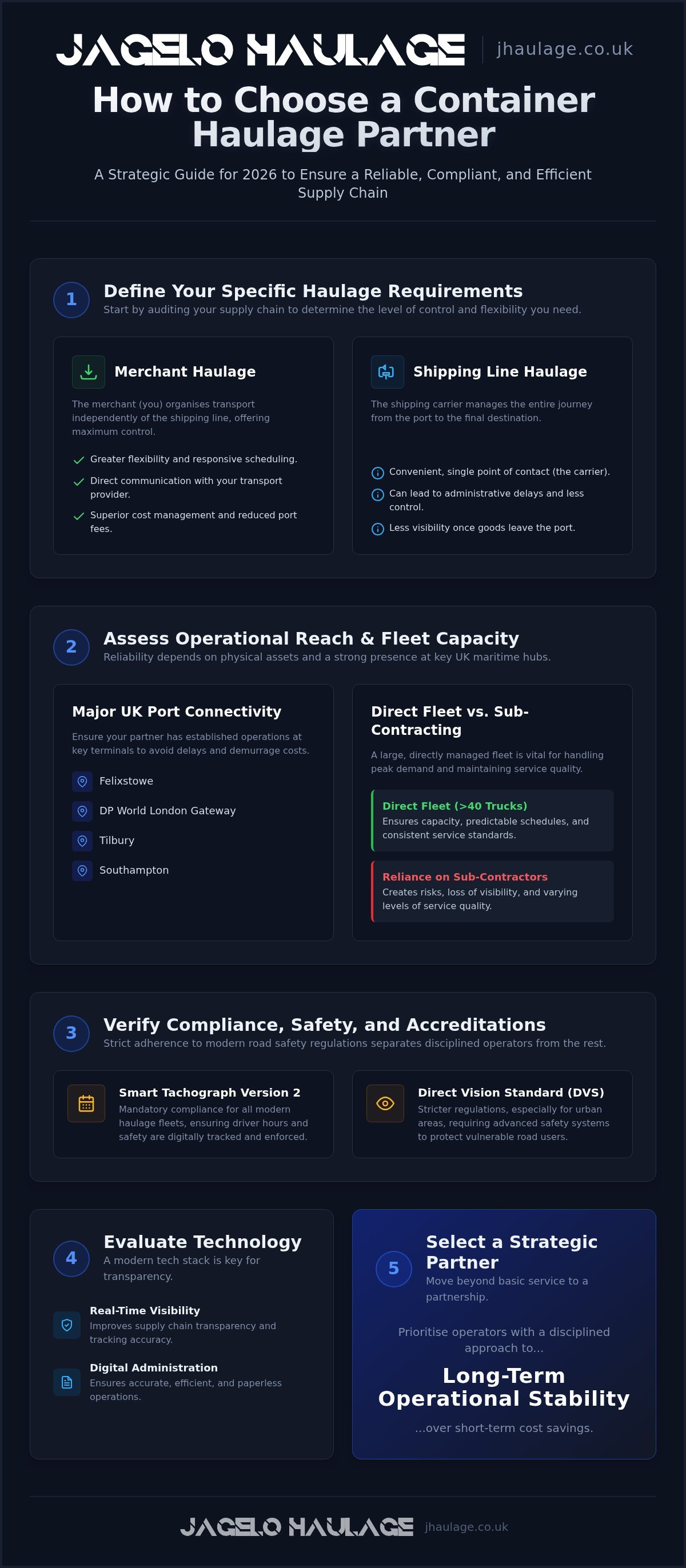
Reliability in container haulage is a product of operational discipline and modern fleet management; it's never just about finding the lowest routing cost. When you're determining how to choose a container haulage company, the primary focus must be on a provider's ability to maintain a secure and predictable supply chain. You likely recognise that port delays and a lack of visibility once a container leaves the terminal are significant bottlenecks that your business can't afford. It's frustrating to deal with inconsistent communication from operators who lack the necessary organisational structure to handle complex logistics.
This strategic guide for 2026 outlines the essential criteria for selecting a partner that ensures your logistics remain efficient and cost-effective. We'll explore how modern compliance, including the mandatory Smart Tachograph Version 2 and stricter Direct Vision Standards (DVS), separates disciplined operators from the rest. You'll learn how to identify transparent pricing models and robust safety records. This overview provides the information you need to move from a basic service to a strategic partnership that protects your operational outcomes.
Key Takeaways
- Identify whether your business requires merchant or shipping line haulage solutions to better organise your container movements from UK ports.
- Confirm a provider's presence at major maritime hubs and their direct fleet capacity to ensure consistent service and prevent sub-contracting risks.
- Learn how to choose a container haulage company by verifying essential transport accreditations and strict adherence to the latest 2026 road safety regulations.
- Assess the technology stack of a potential partner, focusing on real-time visibility and digital administration to improve supply chain transparency and accuracy.
- Evaluate the total value of a haulage partnership by prioritising established operators with a disciplined approach to long-term operational stability.
Understanding Your Specific Container Haulage Requirements
Defining your operational requirements is the first step in how to choose a container haulage company. This process begins with a thorough audit of your current supply chain structure and delivery expectations. The global system of containerization has standardised the movement of goods across the sea, yet the method of inland delivery from the port to your facility varies significantly. You must decide whether your business requires a high level of control over the transport leg or if you prefer the shipping carrier to manage the process to the final destination.
Merchant Haulage vs Shipping Line Haulage
Merchant haulage occurs when the merchant organises transport independently of the shipping line. This method provides greater flexibility and allows for direct communication with the transport provider. In contrast, shipping line haulage involves the carrier managing the entire journey from the port to your door. While carrier haulage might seem convenient, choosing a merchant haulage specialist like Jagelo Haulage often results in superior cost management and more responsive scheduling. Direct partnerships ensure that your specific delivery protocols are followed strictly without the administrative delays often found in carrier-managed systems.
Assessing Volume and Lead Times
Evaluate the typical volume and frequency of your container movements from major UK maritime hubs like Felixstowe, Tilbury, and Southampton. Businesses with consistent volume require a partner with a large, flexible fleet to handle fluctuations in demand. A professionally managed fleet of over 40 trucks provides the necessary capacity to absorb peak periods without relying on unorganised sub-contractors. This stability is vital for maintaining predictable delivery schedules during busy periods.
Responsive booking windows are essential for time-sensitive cargo. When considering how to choose a container haulage company, look for providers that understand the financial impact of port storage fees. Efficient scheduling reduces the time a container sits at the terminal, which directly lowers your overall port storage costs. If your operations require emergency transport or rapid inland container haulage, verify that the provider has the operational reach and driver availability to accommodate these requests.
Consider the geographical spread of your inland delivery points. A haulage partner must demonstrate a proven track record of reaching distribution centres across the UK with punctuality. A disciplined provider understands the high stakes of the supply chain and maintains the necessary infrastructure to ensure your goods arrive at the designated centre on time and in secure condition.
Assessing Operational Reach and Fleet Capacity
A haulage company is only as effective as its physical assets and geographical presence. When you're determining how to choose a container haulage company, you must look beyond the initial sales pitch to the actual fleet on the ground. A provider with a small, localised footprint may struggle to maintain consistency if your cargo arrives at an alternative terminal or if your volumes spike unexpectedly. Reliability depends on the provider's ability to deploy their own equipment exactly where it's needed.
Major UK Port Connectivity
Connectivity is a fundamental pillar of a resilient transport strategy. A partner who maintains established operations at major hubs like Felixstowe, DP World London Gateway, and Tilbury simultaneously offers a level of flexibility that single-port operators cannot match. Each terminal has its own distinct operating system and gate protocols. Navigating these efficiently requires specific port expertise to avoid unnecessary delays and costly demurrages. For more detailed insight into port-specific logistics, you can read about Reliable Container Haulage from Felixstowe. This broad operational reach ensures that your supply chain remains fluid, regardless of which maritime gateway your containers enter.
Fleet size is equally critical to your business continuity. You should verify that the company has a fleet large enough to handle your peak demand without resorting to unorganised sub-contracting. Reliance on third-party drivers often leads to a loss of visibility and varying service standards. A disciplined operator manages their own assets to ensure they meet official operator licence requirements and maintain full control over the delivery schedule.
The Importance of a Modern Fleet
Vehicle age directly correlates with operational uptime and delivery security. Older trucks are more prone to mechanical failure, which creates immediate bottlenecks in your logistics chain. A modern fleet, predominantly comprising Euro 6 vehicles, is now a baseline requirement for 2026. These engines are essential for compliance with Clean Air Zones (CAZ) and Low Emission Zones (LEZ) currently active in cities like Birmingham, Bristol, and Sheffield. Beyond environmental compliance, professionally managed fleets are maintained to strict DVSA standards, ensuring that every vehicle is roadworthy and reliable.
Specialised equipment is the final technical check in your selection process. Ensure your provider uses high-quality skeletal trailers designed to accommodate various container sizes, including 20ft, 40ft, and 45ft units. This equipment must be maintained with the same discipline as the tractor units themselves. If you require a partner that prioritises these technical fundamentals, you can request a bespoke haulage quotation to see how a professional fleet supports your operational goals.
Verifying Compliance, Safety, and Industry Accreditations
Selecting a partner based on price alone ignores the legal and financial risks associated with non-compliant operators. When researching how to choose a container haulage company, you must prioritise a provider’s adherence to safety standards and regulatory frameworks. A disciplined operator views compliance as a fundamental operational requirement rather than an administrative burden. This commitment protects your cargo from legal disputes and ensures that your supply chain remains resilient against enforcement interventions.
Essential UK Transport Certifications
The Driver and Vehicle Standards Agency (DVSA) monitors operators to ensure road safety and technical compliance. A professionally managed operator maintains a transparent relationship with the DVSA, often aiming for the highest standards of the Earned Recognition scheme. The Fleet Operator Recognition Scheme (FORS) serves as a critical benchmark for excellence in the sector. Achieving FORS Silver or Gold status demonstrates a haulier's commitment to safety, fuel efficiency, and environmental protection. You can learn more about how equipment standards impact these strategic goals in our guide to The Modern Container Transport Fleet. These accreditations provide tangible proof that a provider follows strict protocols and understands the high stakes of the container logistics sector.
Insurance and Liability Coverage
High-value container cargo requires robust protection during inland transit. Verify that the company holds comprehensive Goods in Transit (GIT) insurance with limits that reflect the actual value of your goods. Standard RHA (Road Haulage Association) conditions often limit liability by weight; this may be insufficient for high-value electronics or specialised machinery. A professional partner should also maintain significant Public Liability and Employers’ Liability insurance. Always request a current copy of the haulier’s insurance certificate during the vetting process. A disciplined provider will supply this documentation immediately, reflecting their organised approach to risk management and client protection.
Safety extends beyond paperwork to the daily behaviour of the drivers. Confirm that the company adheres to strict Driver Hours and Tachograph regulations to prevent fatigue-related incidents and ensure legal compliance. As highlighted in the latest supply chain technology trends, data-driven monitoring is becoming a standard for identifying operational risk. Ongoing driver training and internal safety protocols ensure that every movement from the port is handled with professional care. When evaluating how to choose a container haulage company, these indicators of operational discipline are more reliable than simple reviews. They offer the quiet confidence that your container logistics are in the hands of a dependable and highly disciplined partner.
Evaluating Technology and Real-Time Visibility
Operational transparency is a hallmark of a disciplined haulage partner. When researching how to choose a container haulage company, you must look for providers that integrate advanced data solutions into their daily workflows. A modern transport management system (TMS) allows an operator to optimise routes, reducing unnecessary mileage and ensuring that every container movement is as efficient as possible. This technological foundation provides the quiet confidence that your cargo is being managed with professional precision.
Tracking and Status Updates
Intermodal visibility is the ability to track cargo across road and sea transitions. This level of oversight is essential for maintaining a predictable supply chain. You should prioritise companies that offer real-time GPS tracking for every container movement from the port. This visibility prevents "where is my container?" anxieties for your warehouse team, allowing them to plan labour and dock space effectively. Automated alerts for port collections and final delivery completions remove the need for manual check-ins, creating a more streamlined communication flow.
Administrative Efficiency and PODs
The administrative side of logistics is often overlooked but is critical for business continuity. Digital Proof of Delivery (POD) systems ensure immediate administrative accuracy by providing electronic confirmation as soon as the container is dropped. The role of instant digital PODs in streamlining your invoicing and supply chain records is significant for maintaining clean audit trails. For a deeper look at these processes, see our guide on Logistics for Shipping Containers.
High-quality customer support teams use these technologies to provide proactive alerts. If a port delay occurs, a disciplined provider will notify you before the scheduled delivery window passes. This level of clear, responsive communication is far more valuable than a slightly lower rate from an unorganised operator. It ensures that you remain in control of your operations even when external factors create challenges. Effective evaluation of how to choose a container haulage company involves assessing the quality of this support team and their ability to act on real-time data. To experience the security of a technologically integrated transport partner, you can get a professional haulage quote today.
Selecting a Strategic Partner for Long-Term Stability
The final stage of how to choose a container haulage company involves a shift in perspective. You must move from viewing haulage as a commodity to seeing it as a strategic asset. A transactional approach often leads to fragmented logistics and increased risk. A strategic partnership provides the stability required to navigate the complexities of 2026 port operations. You need a partner that doesn't just move cargo but understands the broader impact of every delivery on your business continuity.
Beyond the Quote: Identifying Total Value
Base haulage rates represent only a fraction of the total cost of transport. A reliable partner saves your business money by eliminating avoidable charges like demurrage and quay rent. These fees accumulate quickly when an unorganised operator fails to collect a container within the port's free period. The hidden costs of cheap haulage include missed vehicle slots, failed deliveries, and poor communication. These failures disrupt your downstream operations and damage your reputation with your own clients. Understanding the differences between Merchant Haulage vs Shipping Line Haulage is essential for identifying where you can exert more control over these costs. A disciplined provider ensures that every container movement is planned to avoid these financial penalties, providing a more cost-effective outcome over the long term.
Why Jagelo Haulage is the Professional Choice
Jagelo Haulage represents the professional standard for UK container transport. With over 15 years of industry experience, the company has built a reputation for functional reliability and operational reach. We operate a modern fleet of over 40 trucks and trailers from major maritime gateways, including Felixstowe, Tilbury, and Southampton. This scale allows us to provide protected outcomes for our clients, ensuring that your logistics remain secure and efficient even during periods of high demand. Our personality is rooted in discipline; we follow protocols strictly and understand the high stakes of your supply chain.
When you're deciding how to choose a container haulage company, you should evaluate the provider’s ability to scale with your business. As your container volumes grow, you require a partner with the fleet capacity and port-specific expertise to accommodate that expansion without a drop in service quality. Jagelo Haulage positions itself as a master of the fundamentals, providing the quiet confidence that your operations are in the hands of a seasoned professional. Our focus on secure, professionally managed transport ensures that your goods are delivered on time, every time. Contact the team at Jagelo Haulage to discuss a reliable, nationwide container logistics solution that supports your strategic goals and ensures long-term stability.
Securing Your Container Logistics Strategy
A resilient supply chain depends on the operational discipline of your transport partner. You now recognise that how to choose a container haulage company involves more than a simple price comparison; it requires a thorough assessment of fleet capacity, technical compliance, and real-time visibility. By prioritising a provider that manages its own assets and follows strict safety protocols, you eliminate the hidden costs of delays and administrative errors.
Jagelo Haulage offers this level of functional reliability through over 15 years of industry experience and a modern fleet of 40+ trucks. We provide professional container transport from all major UK ports, including Felixstowe and Southampton, ensuring your cargo remains secure throughout the inland journey. Our commitment to punctuality and transparent communication helps you maintain a predictable delivery schedule. Get a professional container haulage quote from Jagelo Haulage to secure your logistics for the year ahead. We look forward to supporting your operational success.
Frequently Asked Questions
What is the difference between merchant and shipping line haulage?
Merchant haulage allows you to organise transport independently of the shipping carrier, providing greater control over scheduling and provider selection. Shipping line haulage is managed by the carrier as part of the overall sea freight contract. Whilst carrier haulage offers administrative convenience, merchant haulage often results in more responsive communication and better visibility for your inland logistics.
How much does it cost to transport a shipping container in the UK?
The cost of container transport depends on the distance from the port, current fuel surcharges, and the specific equipment required for the delivery. Rates are typically structured as a base price per movement plus a floating fuel percentage. To ensure budget accuracy, you should request a bespoke quote that accounts for your specific delivery route and any potential terminal fees.
Which UK ports do container haulage companies usually serve?
Professional haulage operators focus on the primary UK maritime gateways, including Felixstowe, Southampton, Tilbury, and DP World London Gateway. These hubs handle the vast majority of the UK's deep-sea container traffic. An operator with a disciplined presence at these ports can ensure reliable inland container haulage to distribution centres and warehouses across the country.
Do I need my own insurance when hiring a container haulage company?
Whilst hauliers maintain Goods in Transit (GIT) insurance, it's advisable to have your own cargo insurance to cover the full replacement value of the goods. Haulier liability is usually limited by weight under standard Road Haulage Association (RHA) conditions. If you're transporting high-value items, your own insurance provides the necessary protection beyond these standard industry limits.
How quickly can a container be collected from the port after arrival?
Collection typically occurs within 24 to 48 hours of vessel discharge, provided the container has cleared customs and a vehicle booking slot is secured. Efficient operators monitor vessel arrivals closely to ensure containers are moved before port storage fees begin to accrue. This proactive approach is essential for maintaining a cost-effective and fluid supply chain.
What information do I need to provide for a container haulage quote?
You must provide the container size, gross weight, and the type of commodity being transported. It's also necessary to specify the collection port and the final delivery address, including any site-specific constraints like narrow access or timed delivery windows. Providing these details allows the provider to calculate a transparent price and allocate the correct vehicle.
Can haulage companies handle hazardous or specialised container cargo?
Haulage companies can transport hazardous cargo if they utilise ADR-trained drivers and vehicles equipped with the necessary safety kits. Specialised cargo, such as refrigerated units, requires trailers fitted with generators to maintain the cold chain. Verifying these technical capabilities is a vital step when researching how to choose a container haulage company for complex goods.
Why is Euro 6 compliance important for UK container haulage?
Euro 6 compliance is essential for entering Clean Air Zones (CAZ) and Low Emission Zones (LEZ) in cities like Birmingham, Bristol, and London without paying daily penalties. These standards ensure that the fleet meets strict emission requirements, reducing the environmental impact of your logistics. Using compliant vehicles prevents unexpected operational costs and ensures your cargo can reach city-centre destinations.