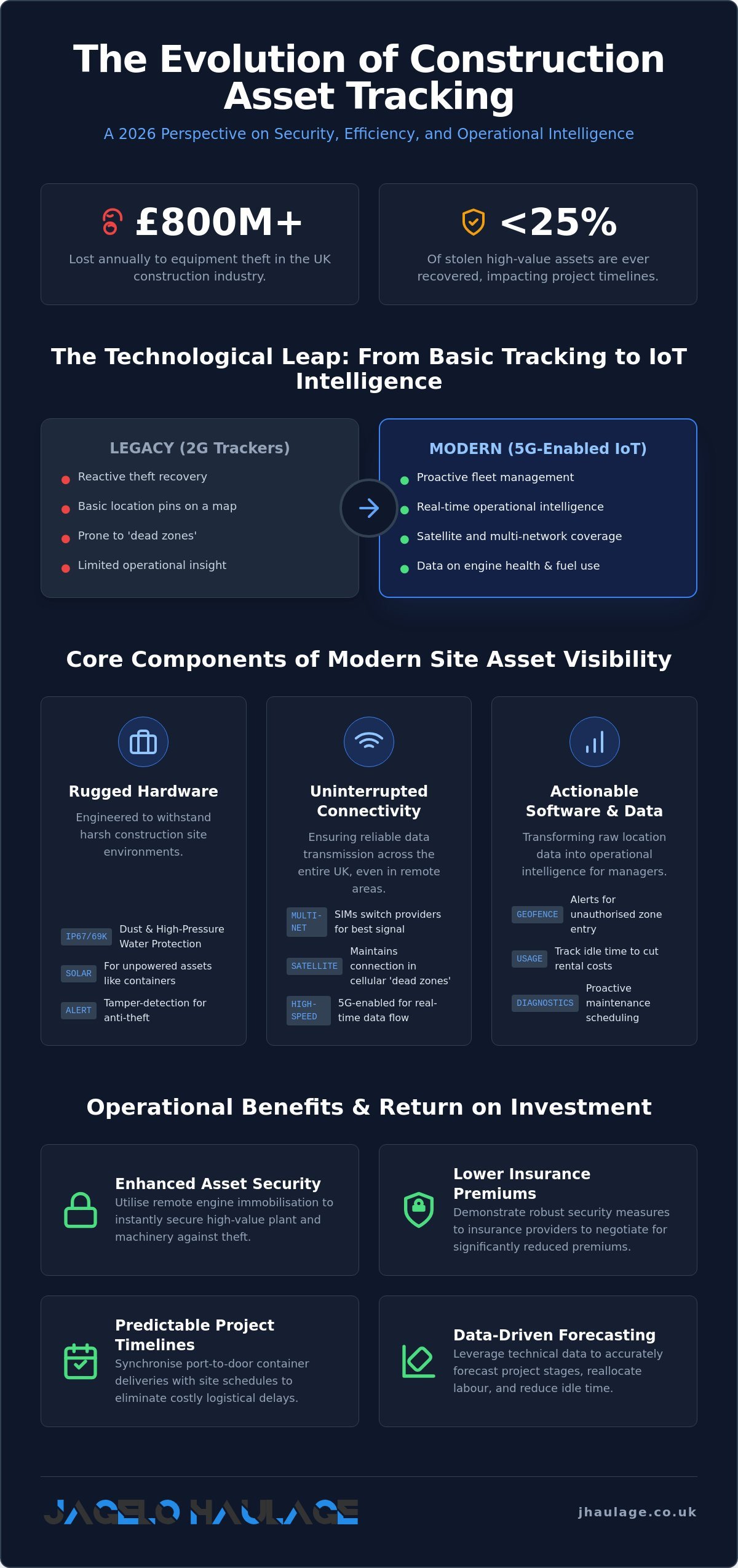
The construction industry loses over £800 million annually to equipment theft, yet less than 25% of these stolen assets are ever recovered. You likely recognise that maintaining site security is a constant challenge, particularly when logistical delays result in inaccurate project forecasting. Robust construction gps tracking is now a fundamental requirement for any firm looking to mitigate these risks and maintain a disciplined schedule. It's a frustrating reality that poor visibility of plant and container movements often leads to avoidable operational friction and increased costs.
This article demonstrates how modern tracking technology has evolved into a central operational strategy for 2026. We will show you how to move beyond basic security to achieve a high-performance logistical framework that prioritises efficiency. By implementing these strategies, you can expect reduced insurance premiums and real-time visibility over every incoming delivery. We'll examine the methods for creating seamless integration between your site operations and haulage partners. This transition ensures that your assets remain protected whilst your project timelines stay predictable. You'll discover how to leverage technical data to secure better outcomes for your entire supply chain and maintain a competitive advantage in a demanding sector.
Key Takeaways
- Identify the transition from basic 2G hardware to 5G-enabled IoT devices that provide operational intelligence for site managers.
- Evaluate the core hardware components, including solar-powered trackers and multi-network SIMs, required for consistent nationwide UK coverage.
- Discover how construction gps tracking secures high-value assets through engine immobilisation; it's an effective way to negotiate lower insurance premiums.
- Learn to synchronise port-to-door container deliveries with site installation schedules to eliminate logistical delays and improve project forecasting.
- Understand the criteria for selecting a haulage partner who provides live tracking access and prioritises the safety of your cargo.
What is Construction GPS Tracking in 2026?
Construction GPS tracking has transitioned from a basic security measure into a sophisticated system for operational intelligence. In 2026, the industry has largely abandoned legacy 2G trackers in favour of 5G-enabled IoT devices. These modern units provide the high-speed data transmission required for complex site management. Major UK infrastructure projects now mandate real-time visibility as a standard contractual requirement. This oversight ensures that every asset, from heavy excavators to small power tools and shipping containers, is accounted for at all times.
To meet these requirements, many firms turn to Fleetmaxx Solutions for advanced fleet management systems that ensure every piece of equipment is monitored in real-time.
The scope of tracking has widened significantly. It's no longer just about the location of a digger. Professional logistics partners, such as Jagelo Haulage, utilise these systems to manage container deliveries with precision. By integrating tracking data across the entire supply chain, firms can ensure that high-value materials arrive exactly when they're needed. This disciplined approach eliminates the guesswork that often plagues large-scale builds. It provides a level of certainty that is essential for maintaining a high-performance operational strategy.
The Evolution of Asset Visibility
Historically, asset tracking focused on reactive theft recovery. If a machine went missing, the tracker helped find it. Today, the focus is on proactive fleet management and protected outcomes. Modern equipment tracking technologies utilise satellite constellations to maintain connectivity in remote 'dead zones' where cellular signals fail. 2026 standards demand granular data, such as engine health diagnostics and fuel consumption, rather than just a simple location pin on a map. This level of detail allows for disciplined maintenance scheduling and reduces the likelihood of mechanical failure on-site.
Why Real-Time Data Matters for Project Timelines
Real-time data from construction gps tracking platforms is the primary driver of digital adoption in the modern sector. Usage tracking identifies underutilised machinery, allowing managers to reduce idle time and cut unnecessary rental costs. To see how professional plant hire can support your project efficiency, you can check out Rocket Rentals Ltd. This data also facilitates the synchronisation of site readiness with incoming deliveries from UK ports. If a container is delayed, site teams are notified immediately and can reallocate labour to other tasks. Geofencing adds a layer of safety by alerting supervisors if unauthorised personnel enter hazardous zones. It's a structured approach that prioritises both safety and productivity, ensuring that site operations remain consistent and predictable.
The Core Components of Modern Site Asset Visibility
A high-performance logistics strategy relies on a robust technical foundation. Modern construction gps tracking requires three primary layers: hardware, connectivity, and software. Each layer must be engineered to withstand the rigorous conditions of a live site whilst delivering precise data to operational managers. This structured approach ensures that every piece of plant and every shipping container is monitored with absolute consistency.
Choosing the Right Hardware for Harsh Environments
Building sites are notoriously difficult environments for electronic equipment. When choosing a GPS tracking system, prioritising industrial-grade IP ratings is essential. Units should ideally carry an IP67 or IP69K rating. These certifications guarantee protection against dust ingress and high-pressure water jets used during equipment cleaning. Without these standards, hardware failure becomes a significant risk to project visibility.
Battery life is another critical factor for site managers. Vehicles with permanent power sources can support high-frequency updates every few seconds. However, unpowered assets like trailers or shipping containers require long-term solutions. Solar-powered trackers or high-capacity internal batteries are the industry standard for 2026. These units often include tamper-detection features. If a device is forcibly removed, it triggers an immediate alert to the central dashboard, allowing for rapid security intervention. For firms looking to optimise their fleet's physical infrastructure for such technology, you can learn more about Tim Halpin Equipment Corp and their specialist commercial upfitting services.
Connectivity and System Integration
Reliable data transmission is the backbone of any tracking strategy. UK construction sites often sit in areas with inconsistent cellular reception. Using multi-network SIMs ensures that devices can switch between providers to maintain a signal across the entire country. This connectivity allows for the use of APIs that link tracking data directly to project management software. When your site operations are synchronised with your inland container haulage partner, you can automate arrival notifications and labour scheduling. This integration eliminates the manual checking of delivery status and reduces administrative overhead.
Software Dashboards and Actionable Intelligence
Centralised dashboards aggregate data from various subcontractors into a single, authoritative view. This level of visibility is vital for large-scale projects involving multiple plant providers. It allows managers to make decisions based on factual data rather than estimates.
- Customisable Alerts: Geofencing allows you to set virtual boundaries around a site. You'll receive an instant notification if an asset moves outside a designated zone or operates during restricted out-of-hours periods.
- Sustainability Analytics: Modern software provides detailed fuel consumption and idle-time reports. This data helps firms meet environmental targets by identifying inefficient machinery usage and reducing carbon footprints.
- Maintenance Scheduling: Instead of relying on calendar dates, managers can schedule service based on actual engine hours. This disciplined approach reduces unplanned downtime and extends the operational lifespan of the fleet.
For firms managing high-value deliveries from major ports, integrating these technical components is the most effective way to secure your logistics route and ensure long-term project stability.
Evaluating the Operational Benefits: Security, Safety, and ROI
Implementing construction gps tracking is a strategic investment that delivers measurable returns across security, safety, and financial performance. While many firms view tracking solely as a recovery tool, its primary value lies in preventing loss before it occurs. High-performance systems use real-time alerts and engine immobilisation to neutralise threats immediately. This level of protection allows businesses to negotiate 'fully tracked' status with insurers, which often results in lower annual premiums. It's a disciplined approach to risk management that transforms a site from a vulnerable target into a secure environment.
The True Cost of Equipment Theft in the UK
The financial impact of plant theft extends far beyond the replacement value of the machinery. Industry data indicates that the sector loses over $1 billion annually to equipment theft. In the UK, the disruption caused by stolen plant leads to catastrophic project delays and unplanned downtime. Research shows that unplanned equipment downtime can cost an average of $260,000 per hour. Whilst general recovery rates for stolen machinery remain below 25%, GPS-enabled assets are significantly more likely to be retrieved. This security provides a vital psychological benefit to stakeholders, who can trust that site operations are protected against criminal interference.
Maximising ROI through Logistical Precision
Return on investment is achieved through the granular analysis of operational data. Digital asset tracking platforms can deliver a 200-500% ROI within the first year by identifying underutilised assets. If a machine sits idle, tracking data justifies the decision to end a hire period or redeploy the plant to another sector. This precision reduces fuel waste and optimises the movement of materials amongst various site zones. By linking tracking data to container deliveries, managers ensure that site labour is ready the moment a vehicle arrives. This synchronisation eliminates bottlenecks and ensures that the supply chain remains fluid and predictable.
Safety Compliance and Behavioural Monitoring
Monitoring driver behaviour and equipment location is a critical component of modern health and safety protocols. Geofencing ensures that heavy machinery stays within designated safe zones, preventing accidents in high-risk areas. These systems also automate the creation of digital records, which is essential for meeting expanded 2026 recordkeeping requirements. It's a structured method for maintaining compliance whilst protecting the workforce. By integrating these safety metrics into a central dashboard, site managers can identify risky patterns and implement corrective training before an incident occurs. This proactive stance reinforces the brand's commitment to a highly disciplined and secure operational environment.
Integrating Site Tracking with Port-to-Door Logistics
Integrating site-level construction gps tracking with port-to-door logistics is the final step in achieving a fully transparent supply chain. The critical link between port arrival and site-level installation schedules determines whether a project remains on track or falls behind. Haulage partners who utilise advanced GPS technology provide accurate ETAs, allowing site managers to clear access routes for heavy vehicles. This coordination is essential for managing the 'last mile' of delivery, where logistical friction is most likely to occur. It's a structured approach that ensures your high-value materials don't sit idle whilst your labour force waits on-site.
From Port to Site: A Synchronised Journey
Efficient container haulage from Felixstowe requires real-time coordination between the port terminal and the destination site. When tracking is fragmented, containers often sit idle, incurring significant 'demurrage' and 'detention' costs. These avoidable fees escalate quickly and can erode project margins. By utilising a unified tracking framework, you can monitor a container's progress from the moment it leaves the quay. This visibility allows site teams to prepare for offloading exactly as the vehicle arrives, ensuring a disciplined transition from transport to installation. For more details on managing these complex movements, see our guide on port logistics services UK.
Merchant Haulage: The Advantage of Independent Tracking
The choice between merchant haulage vs shipping line haulage has a direct impact on your operational visibility. Merchant haulage offers a more flexible, tracked transport solution because the client maintains control over the carrier selection. Working with an independent partner who operates a modern, fully tracked fleet ensures that high-value construction components are monitored with professional rigour. Jagelo Haulage maintains a fleet of over 40 trucks and trailers equipped with the latest tracking technology. This infrastructure provides the "protected outcomes" necessary when moving sensitive or expensive materials across the UK.
Managing the final approach to a construction site requires precise communication. Heavy haulage vehicles need clear paths and ready personnel to avoid blocking local traffic or idling on-site. GPS data allows haulage partners to provide live updates, enabling site supervisors to manage gates and plant machinery with confidence. This structured approach to the last mile reduces risk and ensures that the delivery process is as disciplined as the construction itself. It eliminates the uncertainty that often leads to logistical bottlenecks during the final stage of transport.
To further streamline site efficiency, many managers also coordinate waste disposal with providers like Greenline Environmental, whose wait-and-load services prevent site congestion and keep access points open for scheduled haulage.
In addition to site logistics, managing the integration of specialised technical equipment is key; for instance, developers can explore Commercial AV Integration and Equipment Hire when outfitting new commercial venues with high-performance audio and visual technology.
Furthermore, once the structural work is complete, developers often look to explore Project-based Installation and Landscaping Fees with Wolverhampton Driveways Ltd to manage the costs of professional paving and driveway installations as part of the final site handover.
To ensure the completed project maintains its professional appearance, you can discover Balo Jetwash for specialist exterior cleaning and moss removal services that provide a high-quality finish for site handovers.
To secure a predictable delivery schedule for your next project, request a professional haulage quote from our specialist team.
Selecting a Logistics Partner with Integrated Tracking Capabilities
A sophisticated digital strategy for construction gps tracking is only as effective as the physical haulage partner supporting it. The most advanced on-site software cannot compensate for a lack of visibility during the inland transit phase. Selecting a haulage contractor requires a disciplined evaluation of their fleet capabilities, technical infrastructure, and operational history. A professional partner shouldn't just move containers; they should act as a strategic extension of your site's logistical framework, providing the data necessary to maintain project momentum.
Key Criteria for Your Haulage Partner
Reliability in the supply chain is built on the quality of the equipment used. When assessing a potential contractor, consider the age and size of their fleet. A provider operating a modern fleet of over 40 trucks is better equipped to handle volume fluctuations and minimise the risk of mechanical delays. They must also demonstrate technical competence by providing live tracking access to their clients. This transparency is vital for synchronising site labour with vehicle arrivals. You should also verify their experience in logistics for shipping containers across the UK. A partner who understands the specific protocols of major ports can navigate the complexities of port-to-door transport with greater efficiency.
Responsive customer support is non-negotiable for high-stakes construction projects. If a delivery schedule changes, you need a partner who provides immediate updates and can facilitate same-day container delivery for urgent requirements. This level of service ensures that your site operations remain fluid. Comprehensive insurance coverage is also a primary indicator of a professional entity. It provides the security needed when transporting high-value construction components, ensuring that every "protected outcome" is backed by industrial-grade protection.
The Jagelo Haulage Commitment to Protected Outcomes
Jagelo Haulage utilises over 15 years of industry experience to provide secure, tracked transport solutions for the construction sector. Our operations are centred on major UK hubs, specialising in port-to-door logistics from Felixstowe and Southampton. We understand that site logistics require more than just a physical delivery; they require a disciplined, professionally managed approach that prioritises the safety of your cargo. By maintaining a modern fleet of over 40 trucks and trailers, we ensure that your materials arrive on schedule and in perfect condition. Our commitment to operational reach and functional reliability makes us a dependable partner in your broader supply chain.
Securing your project's timeline starts with choosing a partner that understands the high stakes of the industrial sector. Contact Jagelo Haulage today for secure, nationwide container transport solutions and ensure your logistics are as disciplined as your build.
Securing Your Operational Future with Integrated Tracking
Modern site management requires a transition from reactive security to proactive logistical control. Implementing construction gps tracking allows firms to gain the visibility needed to reduce mechanical downtime and eliminate administrative bottlenecks. This technology ensures that every asset, from the smallest tool to the largest shipping container, contributes to a disciplined project timeline. By synchronising site readiness with real-time transit data, managers can maintain a steady operational rhythm and avoid the costs associated with idle labour.
Achieving these protected outcomes depends on the reliability of your haulage partner. Jagelo Haulage provides over 15 years of industry-leading expertise and operates a modern fleet of 40+ trucks equipped with advanced tracking. We specialise in secure transport from major hubs like Felixstowe and DP World Gateway. This infrastructure ensures your high-value materials arrive exactly when site labour is ready to receive them. It's a structured approach that prioritises consistency and security at every stage of the journey.
Request a secure container haulage quote from Jagelo Haulage to synchronise your supply chain and protect your operational margins. A disciplined approach to logistics is the most effective way to ensure your next build remains predictable and secure. We look forward to supporting your site operations with our professional transport solutions.
Frequently Asked Questions
How does GPS tracking improve construction site safety?
GPS tracking enhances safety by establishing geofenced exclusion zones around hazardous areas. Supervisors receive instant alerts if plant machinery enters a restricted zone or if an operator exceeds safe speed limits. These systems also automate the creation of digital maintenance logs; this ensures that equipment is always in a safe, operational condition. It's a structured approach that prioritises worker protection through constant, data-driven oversight.
Can GPS tracking help reduce my construction insurance premiums?
Implementing construction gps tracking frequently leads to lower insurance premiums by achieving 'fully tracked' status. Insurers recognise that real-time visibility and engine immobilisation significantly reduce the risk of unrecovered theft. By providing evidence of robust asset protection, firms can demonstrate a lower risk profile during premium negotiations. This disciplined approach to security transforms tracking from a cost into a strategic financial benefit.
What is the difference between active and passive GPS tracking for assets?
Active tracking provides real-time location data transmitted via cellular or satellite networks. This allows for live monitoring of vehicle movements and immediate alerts if a geofence is breached. Passive tracking stores location data on the device for later download and analysis. Whilst passive systems are often more affordable, they don't provide the immediate security response required for high-value asset protection on modern UK building sites.
How long do the batteries last on non-powered asset trackers?
Battery life on non-powered trackers depends on the frequency of data pings. High-capacity internal batteries can last between three and five years if configured for daily updates. Solar-powered units offer a virtually indefinite lifespan by recharging during daylight hours. For high-frequency tracking, such as minute-by-minute updates during transit, devices are usually wired into the asset's power supply to ensure consistent performance.
Is it legal to track employee-operated vehicles on UK construction sites?
It's legal to track employee-operated vehicles provided that the company follows GDPR guidelines and provides clear written notice. Employers must document the legitimate business interest for tracking, such as asset security or safety compliance. It's best practice to obtain written consent and maintain a transparent policy regarding how data is used. This ensures that the firm remains compliant with UK labour laws whilst protecting its physical assets.
What happens if a GPS tracker is tampered with or removed?
Modern trackers include light sensors or internal switches that trigger an immediate alert if the device is removed or the casing is opened. These 'tamper alerts' are sent directly to the centralised dashboard and via mobile notification to site managers. This rapid notification allows for immediate security intervention or the deployment of recovery teams. It's a critical feature for maintaining a secure and disciplined site environment.
How does GPS tracking integrate with port-to-door container logistics?
Tracking data allows haulage partners to provide live ETAs for container deliveries. This enables site managers to clear access routes and ensure that plant machinery and labour are ready the moment a vehicle arrives. Synchronising port-to-door logistics with site operations eliminates the 'last mile' friction that often causes project delays. It ensures a seamless transition from the port terminal to the final installation point without unnecessary idling.
What is the cost of implementing GPS tracking across a large construction fleet?
The cost of implementing construction gps tracking includes one-time hardware purchases and ongoing subscription fees. Industry data suggests hardware costs typically range from $35 to $200 per unit depending on the feature set. Monthly subscriptions for data transmission and software access generally range from $8 to $30 per tracker. These costs are often offset by the significant ROI gained through reduced theft and improved equipment utilisation across the fleet.