Part of our guide to container haulage from Felixstowe
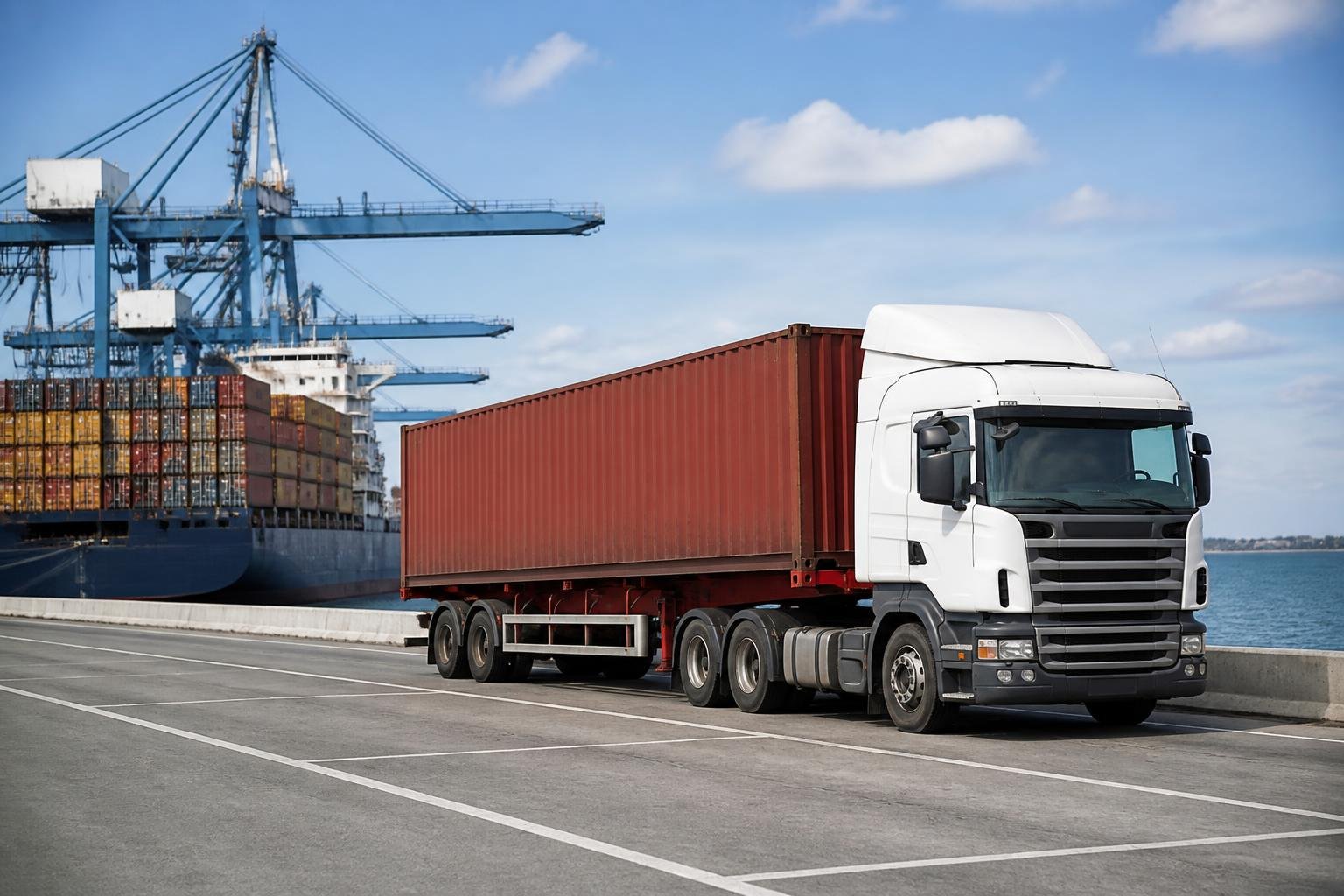
Choosing a provider for container haulage from Felixstowe comes down to operational control. The right haulier is not just the one with a tractor unit available. It is the one that can secure the booking, collect within the port’s time controls, match the right equipment to the box and cargo, and keep the movement visible until delivery or return.
For UK operators, delays usually start in the handover points. The release is not in place, the VBS slot is wrong, the weight or container type has not been checked, the delivery point cannot accept the vehicle booked, or a late change is not communicated properly. A good haulier reduces those risks before the driver reaches Felixstowe, and deals with exceptions quickly when they still occur.
What buyers should compare on Felixstowe haulage
When comparing providers for container haulage from Felixstowe, start with the parts of the job that create delay or extra cost if they are handled badly.
First, check port experience. A haulier that works Felixstowe regularly will understand release procedures, line requirements, stack collection discipline, driver ID and site rules, and the practical effect of missed or poorly timed bookings. That matters more than broad claims about nationwide transport.
Second, check what the quote actually covers. For port work, you need clarity on whether the movement is a simple FCL collection and delivery, a live unload, a drop and swap, a storage move, or a job involving demurrage, detention, waiting time, or container return. If the movement is LCL related, confirm whether the haulier is collecting a full box for devanning or moving cargo after unpack. The transport requirement is different, and assumptions create disputes.
Third, ask how the provider handles documentation. At minimum, the haulier should be able to work from the container number, booking reference, release details, collection point, delivery address, cargo description, gross weight, and any delivery constraints. If the load is customs-sensitive, time-critical, food-related, temperature-controlled, or dangerous, that needs to be identified before the booking is accepted, not after the driver is on the road.
Fourth, check visibility. Buyers should expect tracked vehicles, status updates, and prompt proof of delivery. If you are moving high-value cargo, controlled goods, or customer-critical stock, you need to know where the unit is and whether the delivery window is still achievable. Tracked and insured container transport across UK ports is not an extra nice-to-have on port work. It is part of basic control.
Finally, compare response quality, not just response speed. A quick “yes” is not useful if the provider has not checked the container size, gross weight, delivery restrictions, or whether the consignee can actually receive the box. Jagelo Haulage Limited positions itself around responsive support, but buyers should still test that in practice by seeing how thoroughly the job is assessed at booking stage.
Port access, booking systems and collection timing
Felixstowe collections depend heavily on booking discipline. In practice, that means the release must be valid, the driver and vehicle must be correctly assigned, and the collection slot must be secured and used properly through CARGOES VBS.
CARGOES VBS is central to timed collections at Felixstowe. A haulier needs access, familiarity with slot booking, and the discipline to manage amendments if the job changes. If the line release is delayed, the container is not grounded where expected, the vehicle is held up on a previous job, or the delivery point changes, the booking may need to move. A provider that cannot manage CARGOES VBS efficiently will struggle to keep collections on plan.
Buyers should ask practical questions. Who books the slot? Who checks release status? What happens if the line has not cleared the box? What happens if the collection misses its booked window? Does the haulier monitor the job actively on the day, or only react when the driver reports a problem?
Collection timing also depends on realistic planning from the delivery end. A morning collection from Felixstowe does not automatically mean a same-day delivery anywhere in the UK. The route, driver hours, traffic conditions, delivery restrictions, and unloading method all matter. If the consignee requires a narrow slot, forklift attendance, security pre-clearance, or site induction, those details need to be known in advance.
This is where experienced operators stand out. They do not just chase the earliest available collection. They book the collection that gives the best chance of successful end-to-end completion. Sometimes that means collecting later, because the consignee cannot receive before a certain time or because a rushed collection would create avoidable waiting time inland.
For importers managing regular FCL traffic, it also helps to work with a provider that understands how port timing affects detention and quay rent risk. The haulier cannot control shipping line free time, but it can help avoid preventable overruns by collecting promptly once the box is available. Businesses moving regular full loads can compare operating models with practical UK full container load haulage support.
Matching the vehicle to the container and load
Not every container movement from Felixstowe can be covered by the same tractor and trailer setup. Buyers should expect the haulier to confirm the exact unit type and cargo characteristics before allocating the vehicle.
A 20ft ISO Container often creates weight issues rather than length issues. Dense cargo in a 20ft box can push axle loading and gross vehicle planning to the front of the conversation. The haulier should ask for the gross weight and commodity, and should know when a standard skeletal trailer is suitable and when a different setup is needed to move legally and practically.
A 40ft ISO Container is common, but still needs checking against cargo type, destination access, and unloading method. Some delivery sites can receive a standard 40ft box without issue. Others have turning constraints, overhead obstacles, poor yard surfaces, or booking systems that make delivery with a full-length articulated vehicle more difficult. A provider should ask these questions, not leave them to the driver to discover on arrival.
A 45ft ISO Container introduces another layer. Not every delivery point that can accept a 40ft unit can handle a 45ft movement comfortably. Tail swing, yard space, gate layout, and waiting areas all matter. If the consignee has limited room, the haulier should challenge the instruction early and, where possible, agree a workable delivery plan before dispatch.
A Refrigerated Container needs more than a trailer allocation. The haulier must confirm whether the reefer is running, whether genset support is required during the road move, what temperature integrity is expected, and whether the delivery point can plug in or unload immediately. For chilled or frozen goods, delays are not just inconvenient. They can affect cargo condition, customer acceptance, and claims exposure.
Oversized or specialist movements need even more care. If the load is out of gauge, unusually heavy, awkward to secure, or tied to specialist handling equipment, the haulier should assess routeing, permits, escort requirements if applicable, and delivery site readiness. These are not jobs to accept on standard assumptions.
If the cargo is dangerous, the Hazardous Goods Requirement must be identified at booking stage. In the UK, dangerous goods road transport is governed by ADR as implemented domestically, alongside wider health and safety and carriage obligations. The haulier needs the correct UN information, class, packing group where relevant, and any handling instructions. Vehicle equipment, driver qualifications, placarding, route restrictions, and consignee readiness may all be affected. A provider advertising hazardous capability should be able to state clearly what information it needs before confirming the move.
The same principle applies to cargo declared in volume terms such as CBM, especially on LCL-related movements. Volume alone is not enough for road planning. The haulier still needs the actual weight, package type, loading method, and whether the cargo is palletised, loose-loaded, fragile, or non-stackable.
When nationwide coverage matters after port collection
Many delays happen after the box leaves Felixstowe. A provider may collect well from the port but have weak onward coverage, limited planning depth outside its home area, or poor coordination when the job changes en route. That is why buyers should look beyond port collection and compare the full delivery network.
Nationwide capability matters if your imports go to more than one region, if you deliver direct to customer sites, or if you need flexibility between warehouse, cross-dock, manufacturing, and retail destinations. It also matters if a consignee rejects the load, the site is not ready, or the box must be diverted to temporary storage. A haulier with real national reach can re-plan without losing control of the container.
For many operators, the comparison should include whether the same provider can support other port flows as well as Felixstowe. If your traffic also moves through DP World Gateway, Tilbury, Southampton, or Liverpool, there is a practical advantage in working with a haulier that can apply similar standards across all those gateways. It simplifies communication, reporting, and exception handling.
That does not mean every movement should be forced into one supplier. It does mean buyers should ask whether the provider has established operating capability at those ports, or whether it is relying entirely on ad hoc subcontracting. Subcontracting is common in UK haulage, but the control standard still matters. Who manages the booking? Who tracks the vehicle? Who updates the customer? Who owns the delivery problem if the site refuses the box?
Jagelo Haulage Limited states coverage from Suffolk across Felixstowe, DP World Gateway, Tilbury, Southampton and Liverpool, with nationwide port coverage. For buyers, the key question is how that coverage is managed in practice. You want a provider that can keep one operating picture across collection, trunking, delivery, return, and any exception that appears in between.
This is especially relevant where the move links multiple logistics stages. A box may be collected from Felixstowe, delivered to a Midlands warehouse for devanning, then returned empty to a different location, or repositioned for export stuffing. A provider with wider UK capability can often handle those linked stages more cleanly than one focused only on the first leg out of port.
Urgent jobs, exceptions and communication standards
The test of a haulier is rarely the easy job. It is what happens when the release comes through late, the consignee changes the booking window, the delivery site refuses access, or a same-day request lands after the original plan has failed.
For urgent work, buyers should expect a direct answer on feasibility. Can the haulier collect today? Is there a realistic slot in CARGOES VBS? What cut-off applies for same-day delivery to the inland point? Is a compliant vehicle available for the specific container and cargo? A credible provider will set out what is possible and what is not, rather than promising a result that depends on luck.
Late changes should trigger active communication. If the delivery point changes after collection, the haulier should confirm the revised address, access restrictions, unloading method, contact details, and whether the diversion affects driver hours or same-day completion. If the consignee pushes the slot back, the provider should say whether waiting is viable or whether storage or redelivery will be needed.
Access issues are common and should be treated as a standard operating risk. Narrow roads, low bridges, urban restrictions, construction works, site congestion, and missing booking references can all stop a straightforward delivery. Buyers should choose a haulier that checks site suitability in advance and escalates quickly if a problem appears on approach. “Driver on site, cannot get in” is useful only if it is followed immediately by options.
Communication standards should be simple and measurable. You should know who is managing the job, how updates will be sent, and when exceptions will be escalated. At a minimum, expect collection confirmation, en route status where needed, arrival advice for booked sites, and prompt POD. If the movement is urgent or sensitive, telephone escalation should sit alongside email updates, not replace them.
For a Hazardous Goods Requirement, communication needs to be tighter still. If documents are incomplete, labels do not match the declaration, or the delivery point lacks the agreed receiving controls, the haulier should stop and clarify before movement continues. On dangerous goods work, speed matters less than compliance and safe handling.
The same applies to reefer jobs and oversized units. If a Refrigerated Container is delayed, the customer should be told what is happening, what protects the cargo, and whether the revised ETA still supports the delivery plan. If an oversized movement is affected by route restrictions or escort timing, the update should explain the operational reason, not just state that the job is late.
A useful benchmark is whether the provider can support both routine and emergency work without changing its communication standard. Responsive port collection and urgent nationwide haulage support should mean the same clear control on a difficult afternoon as on a normal planned movement.
Choosing well means looking at the entire chain. For container haulage from Felixstowe, the difference between a smooth move and a delayed one is usually visible before the vehicle even enters the port. Booking discipline, CARGOES VBS control, correct equipment, realistic delivery planning, and fast exception handling are what keep containers moving. Buyers that compare hauliers on those practical points will make better decisions than those who compare only headline rate or claimed coverage.
What is the main risk when arranging container haulage from Felixstowe?
The main risk is delay at collection or delivery caused by poor slot planning, weak communication or a haulier without the right equipment for the container and cargo.
Can one haulier handle both FCL and LCL movements?
Yes, but the service model may differ. FCL moves focus on direct container transport, while LCL planning may depend more on timing, consolidation points and delivery coordination.
Why does container type matter when comparing hauliers?
Container type affects trailer choice, payload planning, delivery access and whether specialist support is needed for reefer, hazardous or oversized work.
Is tracked transport important for port collections?
Yes. Tracking gives operators visibility on collection, transit and delivery status, which helps with customer updates, site planning and exception handling.
What information should be ready before booking?
Have the container size, collection point, delivery postcode, cargo details, weight, timing requirements and any Hazardous Goods Requirement ready before requesting haulage.