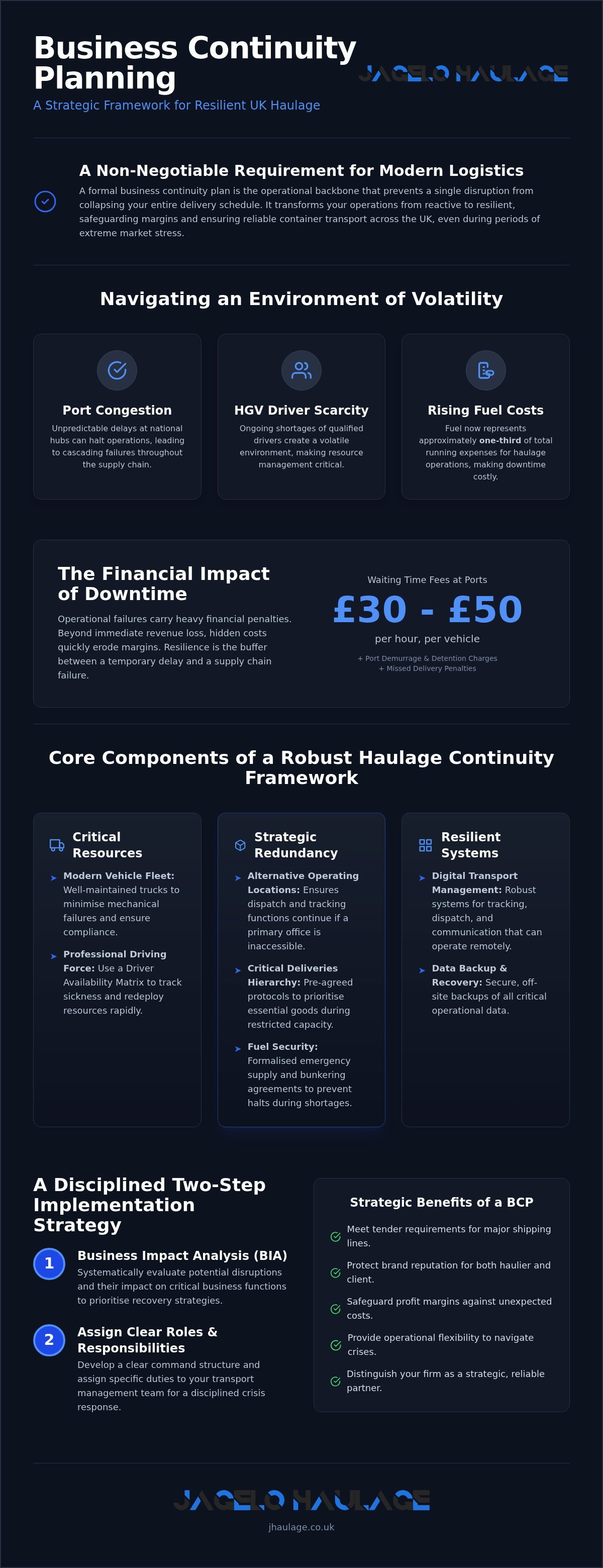
A business continuity plan is not a theoretical exercise; it's the operational backbone that prevents a single port delay from collapsing your entire delivery schedule. You know that unpredictable congestion at national hubs and the ongoing scarcity of qualified HGV drivers create a volatile environment where unplanned downtime quickly translates into significant financial loss. Managing these risks is essential when fuel costs alone now represent approximately one-third of the total running expenses for haulage operations.
This guide provides a strategic framework to secure your logistics operations against these disruptions, ensuring you maintain the reliable container transport UK businesses require even during periods of extreme market stress. We will examine the practical steps needed to protect your fleet from resource shortages and port delays while improving trust with major shipping lines. You will discover how to build a disciplined response to black swan events that safeguards your margins and ensures your operations remain functional, regardless of external volatility. By focusing on masterly execution of the fundamentals, you can transform your continuity plan from a static document into a live operational advantage.
Key Takeaways
- Understand why a business continuity plan is a non-negotiable requirement for modern logistics managers to protect margins from port congestion and driver shortages.
- Learn how to identify and safeguard critical assets, including your fleet, personnel, and digital transport management systems.
- Discover how a robust risk assessment framework ensures you maintain reliable container transport UK wide, even during major infrastructure failures or motorway disruptions.
- Implement a two-step strategy involving a Business Impact Analysis (BIA) and the assignment of clear, disciplined roles to your transport management team.
- Evaluate the strategic benefits of merchant haulage and modern fleets in providing the operational flexibility needed to navigate supply chain crises.
Why a Business Continuity Plan is Essential for UK Haulage in 2026
A Business Continuity Plan is the tactical framework that allows a haulier to maintain critical container movements when standard operating procedures fail. In the current year, the UK’s just-in-time logistics model leaves no room for error. Merchants rely on the punctual arrival of goods to meet strict retail windows; a single missed slot can disrupt an entire season's inventory. Formalised resilience planning has moved from a secondary consideration to a non-negotiable requirement for any firm providing reliable container transport UK wide.
Insurance providers and regulatory bodies increasingly prioritise hauliers who can demonstrate a disciplined approach to risk. A robust plan serves as a protective layer for the brand reputation of both the transport provider and the shipping line. When disruptions occur, a professional response distinguishes a strategic partner from a simple service provider. This discipline ensures that operational reach is maintained even when national maritime hubs face congestion or resource shortages. Without this structure, a business is reactive rather than resilient, which often leads to avoidable financial and reputational damage.
The Financial Impact of Operational Downtime
Operational failures carry heavy financial penalties. Beyond the immediate loss of revenue, hidden costs like finance payments on standing fleets and missed delivery penalties erode margins. In 2026, waiting time fees at ports or delivery sites typically range between £30 and £50 per hour. If a fleet is immobilised, these costs compound alongside potential port demurrage and detention charges. Operational resilience is the buffer between a temporary delay and a total supply chain failure.
Meeting Tender Requirements for Shipping Lines
Major shipping lines now evaluate haulage partners based on their ability to withstand shocks. Evidence of a functional BCP is often a prerequisite for awarding long-term contracts. This is particularly vital when securing port logistics services UK contracts, where the stakes of delayed container clearance are highest. The industry has seen a clear shift from selecting the lowest price to prioritising the highest reliability. Shipping lines recognise that a haulier with a disciplined continuity strategy offers a more secure strategic outcome for their global clients, ensuring that reliable container transport UK operations remain stable under pressure.
Core Components of a Robust Haulage Continuity Framework
A robust framework for haulage continuity is built upon the disciplined management of physical and digital assets. It moves beyond simple contingency planning to create a masterly execution of the fundamentals. This structure ensures that operations remain steady even when the primary infrastructure is compromised. The framework prioritises three critical pillars: a modern vehicle fleet, a professional driving force, and resilient transport management systems. These elements work in unison to provide reliable container transport UK wide, regardless of external volatility.
Strategic redundancy is central to this framework. An Alternative Operating Locations strategy must be established to ensure that if a primary transport office becomes inaccessible, dispatch and tracking functions continue from a secondary site. Furthermore, a hierarchy of Critical Deliveries must be defined. This ensures that during periods of restricted capacity, essential goods are moved first according to pre-agreed protocols. This methodical approach is a cornerstone of building resilient supply chains that can withstand environmental or logistical shocks. Fuel security is also formalised through emergency supply agreements and bunkering, preventing operational halts during national fuel shortages.
Critical Resource Management: Drivers and Fleet
Managing personnel requires a Driver Availability Matrix. This tool tracks sickness and sudden shortages across the country, allowing for the rapid redeployment of resources to high-priority routes. Maintaining a container transport fleet of modern, well-maintained vehicles is equally vital. Newer trucks are less prone to mechanical failure and comply with the latest emissions standards, which reduces unplanned downtime and ensures consistent service. Secure and disciplined transport practices protect the cargo and the client's brand, fostering long-term trust during national disruptions.
Communication Protocols for Logistics Partners
Clear communication is the primary tool for managing a crisis. Lines of contact must be established between the transport office, drivers, and port authorities to ensure real-time data flow. When delays occur, merchants must be notified through professional, structured updates that protect brand trust. A Crisis Contact List is essential, containing verified details for emergency services, insurers, and key port contacts. This level of preparation ensures that reliable container transport UK operations are supported by a responsive and organized management team. If you require a partner who prioritises these disciplined standards, you can request a professional haulage consultation to discuss your specific requirements.
Identifying and Mitigating Haulage-Specific Risks
Identifying risks in the haulage sector requires a disciplined evaluation of every link in the supply chain. A primary focus is port congestion at national maritime hubs, where delays ripple through the entire network. Infrastructure failure, such as major motorway accidents on key arterial routes like the M25 or M6, also poses a constant threat to delivery schedules. A resilient operator must also account for sudden volatility in container transport costs. With the main rate for diesel fuel duty set at 52.95 pence per litre, and the temporary 5 pence cut expiring on 31 December 2026, hauliers must maintain efficient operations to absorb these shifts.
Mitigating the risk of a Single Point of Failure is essential for maintaining reliable container transport UK wide. This involves diversifying fuel suppliers and ensuring that critical transport management software has redundant backups. Relying on a single provider for fuel or digital infrastructure creates a vulnerability that can halt operations during a localised crisis. A professional haulier identifies these weak points before they fail, ensuring that service remains steady even when a primary supplier is compromised.
Port Congestion and Maritime Delays
Managing Vehicle Booking System (VBS) outages is a critical skill for modern hauliers. When these digital systems fail at major ports, the ability to coordinate container haulage from Felixstowe depends on pre-established manual protocols and flexible scheduling. Unlike rigid shipping line haulage, merchant haulage often provides the operational flexibility needed to bypass temporary bottlenecks. By adjusting arrival windows and utilising off-peak slots, a disciplined haulier ensures service levels remain consistent whilst others are stalled at the port gate. This strategy protects the merchant's delivery window from the unpredictability of port operations.
Cyber Security in Digital Logistics
Digital logistics systems are targets for ransomware and cyber-attacks. Protecting sensitive freight data and live delivery schedules requires robust encryption and regular security audits. Hauliers must develop manual workarounds to ensure reliable container transport UK services continue if telematics or TMS systems go offline. This includes maintaining physical copies of manifests and establishing offline communication channels. Compliance with GDPR remains a priority during any IT recovery phase to protect driver and client data. A secure digital environment is just as important as a secure vehicle fleet in the current logistics landscape.
Implementing and Testing Your Continuity Strategy
Implementation transforms a Business Continuity Plan from a static document into a functional asset. A disciplined approach follows five distinct steps to ensure the strategy remains effective under pressure. First, conduct a Business Impact Analysis (BIA) to quantify the specific financial and operational costs of losing primary haulage routes. Second, assign specific BCP roles to the transport management team to ensure every individual understands their duties during a crisis. Third, organise Tabletop Exercises to simulate real-world disruptions, such as a national fuel strike or a major port closure. Fourth, review and update the plan bi-annually or whenever the fleet expands. Finally, audit the resilience of third-party partners, including fuel suppliers and software providers, to eliminate weak links in the supply chain.
This methodical cycle ensures that your operations are not just planned, but prepared. By formalising these steps, a haulier moves beyond hope and into the masterly execution of the fundamentals. This level of preparation is what underpins reliable container transport UK wide, providing clients with the quiet confidence that their cargo is in capable hands. Continuous review is vital; as the UK Road Freight Transport Market is projected to be valued at £57.5 billion in 2026, the stakes for maintaining operational uptime have never been higher.
The Business Impact Analysis (BIA) for Hauliers
The BIA framework must differentiate between urgent and non-urgent container movements. This allows the transport office to prioritise high-value or time-sensitive cargo when capacity is restricted. Calculating the Maximum Tolerable Period of Disruption (MTPD) for key logistics contracts is essential; this figure dictates the speed at which recovery operations must commence. The Business Impact Analysis (BIA) is the process of determining which haulage activities are vital for survival.
Scenario Testing: From Fuel Strikes to IT Failures
Testing should include live assessments of driver communication systems without interrupting actual deliveries. This ensures that drivers can receive and acknowledge instructions during a network failure. Simulating a total loss of the main transport office is equally important to verify that remote access and cloud-based systems are fully operational. After each test, the management team must evaluate the response and identify areas for continuous improvement. This rigorous testing cycle ensures that your commitment to reliable container transport UK is backed by a proven capability to recover from any disruption. To ensure your logistics are protected by these disciplined standards, request a professional haulage quote today.
Securing Your Supply Chain with a Resilient Logistics Partner
Choosing a partner with a modern, professionally managed fleet is the primary step in establishing a functional BCP. A well-maintained vehicle reduces the risk of mechanical failure, which is essential when recovery windows are tight. Jagelo Haulage prioritises this steadfast professionalism to ensure that client outcomes are protected, even when the broader supply chain faces stress. This disciplined approach ensures that the physical movement of goods remains a predictable component of your business model.
The choice between merchant haulage vs shipping line haulage is a strategic decision that directly impacts operational flexibility. Merchant haulage offers the ability to pivot resources quickly, bypassing the rigid schedules and administrative bottlenecks often associated with shipping line operations. This flexibility is vital for maintaining reliable container transport UK wide during periods of port congestion or industrial action. It allows for a more responsive and tailored logistics strategy that prioritises the merchant's specific delivery requirements.
Merchants should audit their haulage partners' resilience as a standard part of corporate governance. Assessing a provider's fuel bunkering capacity, driver backup protocols, and digital redundancy provides the security needed for long-term stability. A disciplined partner doesn't just move cargo; they act as a strategic anchor for your entire logistics framework. By verifying these capabilities, you protect your brand from the reputational damage caused by supply chain failures.
The Value of Specialised Industry Expertise
Experience is a critical factor in managing maritime crises. With 15+ years of industry experience, Jagelo Haulage understands the nuances of port logistics and the specific pressures of UK hubs. A national reach across all major UK ports allows for effective cargo diversion strategies. If one hub is throttled, a seasoned professional can reroute deliveries to maintain the flow of goods. This positions the haulier as a strategic partner rather than a simple service provider, ensuring that expertise is applied where it's needed most.
Ensuring Reliable Port-to-Door Deliveries
Responsive customer support is essential for managing expectations during a disruption. Clear, factual communication allows merchants to adjust their own operations in real-time. A fleet of over 40 trucks and trailers provides the physical capacity required to recover quickly from unavoidable delays. This scale, combined with disciplined operational protocols, ensures that reliable container transport UK remains a consistent outcome for every client. To secure your supply chain against future disruptions, contact Jagelo Haulage for a quote to discuss secure and resilient container transport solutions.
Securing Your Logistics Future Through Strategic Resilience
Resilience in the haulage sector is achieved through meticulous preparation and the masterly execution of the fundamentals. A robust continuity framework ensures that port congestion and resource shortages don't compromise your delivery schedule. By prioritising modern fleet management and disciplined communication, you safeguard your margins and protect your brand reputation from the volatility of the UK logistics market. This strategic approach ensures you maintain the reliable container transport UK businesses require to remain competitive.
Jagelo Haulage provides the stability your supply chain needs. With a modern fleet of over 40 trucks and trailers and 15+ years of specialised port logistics experience, we offer national coverage across all major UK maritime hubs. Our operations are designed to provide protected outcomes, regardless of external disruptions. You can secure your supply chain with Jagelo Haulage’s professional container transport services today. We look forward to helping you build a more resilient and efficient logistics operation.
Frequently Asked Questions
What is a Business Continuity Plan (BCP) in the context of haulage?
A Business Continuity Plan is a tactical framework that allows a haulier to maintain critical container movements when standard operating procedures fail. It identifies potential risks, such as port delays or driver shortages, and establishes clear protocols to ensure deliveries continue. This disciplined approach ensures that the physical movement of goods remains a predictable component of the supply chain, even during a crisis.
How often should a transport company test its business continuity plan?
A transport company should review and test its plan at least bi-annually or whenever there is a significant expansion of the fleet. Regular testing through tabletop exercises ensures that the management team understands their roles and that digital backup systems are functional. This methodical cycle of review is essential for maintaining the quiet confidence that the operation can withstand sudden market shocks.
What are the most common threats to UK haulage operations in 2026?
The primary threats include unpredictable port congestion at national maritime hubs and a persistent shortage of qualified HGV drivers. Operational costs also pose a risk; for example, the main rate for diesel fuel duty is 52.95 pence per litre. Additionally, the increasing reliance on digital transport management systems makes cyber-attacks and ransomware significant threats to modern logistics stability.
Why do shipping lines require hauliers to have a business continuity plan?
Shipping lines prioritise partners who can demonstrate long-term stability and a masterly execution of the fundamentals. They require evidence of a BCP before awarding long-term contracts to ensure that their global clients' cargo is protected from localised disruptions. A haulier with a formalised plan is viewed as a strategic partner capable of providing secure and consistent results under pressure.
How can a BCP help manage port congestion at Felixstowe or Southampton?
A BCP provides pre-established manual protocols for when Vehicle Booking Systems (VBS) fail at major ports. It allows for the rapid implementation of flexible scheduling and alternative route strategies to bypass temporary bottlenecks. This level of preparation ensures reliable container transport UK wide, maintaining service levels whilst other operators are stalled at the port gate.
What is the difference between Disaster Recovery and Business Continuity in logistics?
Disaster Recovery focuses on the technical restoration of critical IT infrastructure and data after a failure. Business Continuity is the broader strategic framework that ensures the entire physical operation, including the fleet and driving force, remains functional. Whilst Disaster Recovery might involve manual workarounds for a TMS, Business Continuity ensures that the actual container deliveries reach the merchant on time.
Does a BCP help with insurance premiums for haulage companies?
Insurers often look favourably upon haulage companies that can demonstrate a disciplined approach to risk management. A formalised BCP suggests a lower risk of total operational failure, which can lead to more competitive premiums. By prioritising the safety and efficiency of the operation through a modern fleet and a robust plan, hauliers project an image of a dependable and low-risk partner.
Can a small haulage operator afford to implement a formal BCP?
Small operators can't afford to ignore resilience planning; a single disruption can quickly erode thin margins. Implementing a BCP is more about organisational discipline than a large financial investment. By identifying critical assets and establishing emergency communication lines, a small firm can provide the same reliable container transport UK services as larger competitors, ensuring their business survives a black swan event.