Demurrage is not an inevitable cost of doing business at British terminals; it is a manageable operational challenge that requires disciplined planning and precise execution. With industry benchmarks for daily charges reaching up to $300 per container in June 2026, the financial stakes for your supply chain have never been higher. You likely feel the pressure of eroding profit margins as vessel bunching and customs delays at major hubs like Southampton or Tilbury make avoiding container demurrage fees UK increasingly difficult. It's a frustrating reality when communication breakdowns with shipping lines lead to unexpected invoices that disrupt your financial forecasts.
We understand that a reliable logistics budget depends on precision and speed. This guide provides the operational strategies and documentation protocols you need to regain control over your cargo. You'll learn how to navigate the current congestion at UK terminals and implement a proactive approach to container turnaround. We will outline the specific steps required to master terminal appointments and documentation workflows. This framework ensures you can establish a predictable logistics schedule and a secure partnership with a haulage specialist to protect your bottom line.
Key Takeaways
- Distinguish between port-side demurrage and off-site detention to identify exactly where your supply chain is losing revenue.
- Establish rigorous pre-arrival protocols by securing accurate documentation and initiating customs pre-clearance to ensure your cargo is green-routed immediately.
- Evaluate the strategic advantages of merchant haulage to gain direct control over inland transport and bypass the delays common with shipping line haulage.
- Utilise real-time tracking systems and automated notifications for avoiding container demurrage fees UK and maintaining a disciplined collection schedule.
- Prioritise partnerships with haulage specialists who offer modern fleets and deep industry expertise to navigate the specific operational demands of major UK terminals.
Understanding Container Demurrage and Detention in the UK
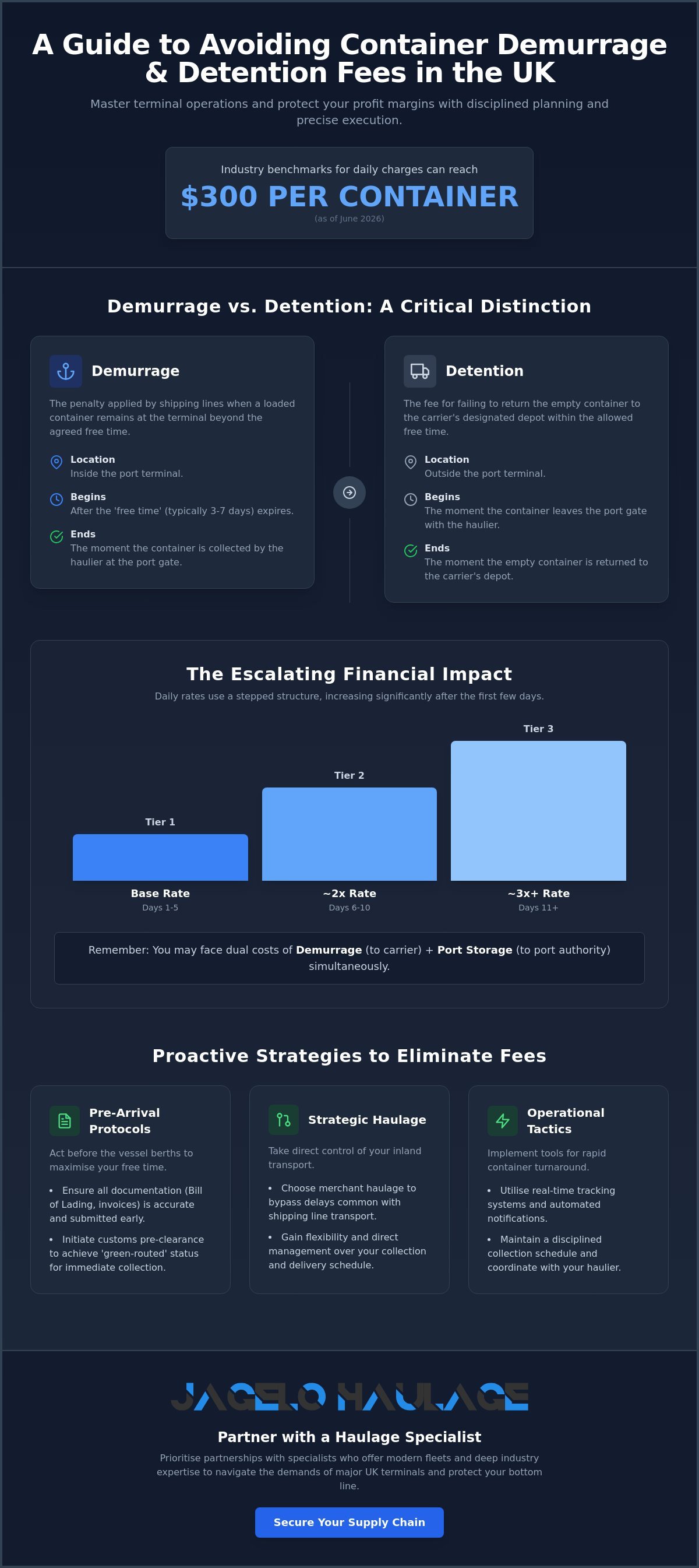
Demurrage is a specific penalty applied by shipping lines when a loaded container remains at a UK terminal beyond the agreed free time. This period typically ranges from three to seven days depending on the carrier and the volume of the contract. Understanding Demurrage is the first step in protecting your operational margins from unnecessary erosion. These charges are intended to incentivise the rapid movement of equipment, ensuring that terminal space remains available for incoming vessels. When containers sit idle, they consume valuable quay space and disrupt the flow of the entire supply chain.
Shipping lines calculate these daily rates using a stepped structure. The initial daily fee might appear manageable, but costs escalate significantly after the first five days of overstay. For example, a standard 40ft container might incur a tier-one daily fee that doubles or triples once it enters tier-two or tier-three. In the current 2026 logistics environment, where global routing disruptions have led to vessel bunching at major hubs like London Gateway, avoiding container demurrage fees UK has become a critical priority for commercial managers. Proactive management is no longer optional; it's a fundamental requirement for maintaining a disciplined supply chain amidst ongoing port congestion and potential industrial actions.
The Financial Impact of Port Dwell Times
Unmanaged dwell times can lead to daily fees that quickly surpass the original ocean freight costs. It's essential to distinguish between shipping line demurrage and port storage fees. Whilst demurrage is paid to the carrier for the use of their equipment, storage fees are paid to the port authority for the physical space occupied on the quay. These dual costs often accumulate simultaneously, creating a significant financial burden. This lack of predictability disrupts your budget and damages customer satisfaction when delivery schedules are missed due to administrative holds or financial disputes.
Demurrage vs. Detention: A Critical Distinction
A precise understanding of where one fee ends and another begins is vital for operational control. The transition occurs at the port gate, and separate strategies are required to manage both fee types simultaneously.
- Demurrage: This charge applies whilst the loaded container is inside the terminal. It ends the moment the container is collected by the haulier at the port gate.
- Detention: This fee begins the moment the container leaves the port gate. It continues until the empty equipment is returned to the carrier's designated depot or terminal.
Managing these fees requires a coordinated effort between your documentation team and your transport provider. Whilst demurrage is often caused by documentation delays or customs holds, detention is typically the result of inland transport inefficiencies or slow unloading times at the final destination. A reliable partner like J Haulage focuses on both milestones to ensure equipment is returned within the free time window, protecting you from the cascading costs of equipment overstay.
Pre-Arrival Protocols: Avoiding Fees Before the Vessel Berths
The process of avoiding container demurrage fees UK starts long before the vessel arrives at the quay. Effective logistics management relies on a disciplined pre-arrival sequence that removes administrative friction. If you wait for the container to be discharged before addressing paperwork, you have already lost the opportunity to utilise your free time effectively. Proactive planning is the only reliable method for protecting your margins from escalating terminal charges.
First, you must ensure that all Bill of Lading (BoL) documents and commercial invoices are accurate and received by your clearing agent well in advance. Discrepancies in weight, cargo description, or HS codes are the primary drivers of terminal delays. Second, initiate customs pre-clearance immediately. Aiming for a 'green-routed' status ensures the container is available for immediate collection upon discharge. You should also consult the Official HMRC Guidance on Demurrage to understand the regulatory framework surrounding these charges and their tax implications.
Third, confirm your 'Free Time' agreement with the shipping line in writing before the vessel departs the port of origin. Standard terms are often insufficient during periods of high congestion. Finally, secure your transport capacity by pre-booking your haulage slot. We recommend scheduling your collection at least 72 hours before the vessel is scheduled to berth. If you require a dependable partner to manage this timeline, you can request a haulage quote to secure your position in the collection queue and ensure a punctual pickup.
Streamlining UK Customs and Documentation
A professional customs broker is essential for preventing administrative holds. They act as the interface between your business and HMRC, ensuring that your declarations meet the latest Border Target Operating Model requirements. Common discrepancies, such as mismatched container numbers or incorrect value declarations, lead to mandatory inspections. These physical examinations can add days to your dwell time. Using cloud-based platforms to organise digital documentation allows all parties to access the necessary paperwork instantly, reducing the risk of manual processing errors that cause containers to sit idle.
Negotiating Extended Free Time
You should negotiate your free time allowances during the initial freight procurement stage. Whilst standard allowances are typically five to seven days, businesses with consistent volume can often secure ten to fourteen days. This buffer is vital when major UK terminals face vessel bunching or infrastructure constraints. In 2026, the difference between standard and extended free time can represent thousands of pounds in saved operational costs. Always ensure these terms are clearly stated on your booking confirmation to avoid disputes once the container is on the quay.
Merchant Haulage: The Strategic Choice for Operational Control
Merchant haulage is an operational strategy that places control of inland transport directly in your hands. Under this arrangement, you select an independent contractor to manage the movement of goods rather than relying on the shipping line's internal transport department. This distinction is fundamental to avoiding container demurrage fees UK because it allows you to dictate the collection schedule based on your specific free time windows. Whilst shipping line haulage is often perceived as a convenient option, it frequently leaves importers vulnerable to the carrier's internal priorities and haulier shortages during peak terminal periods.
According to the HMRC definition of demurrage, these charges are essentially liquidated damages for the detention of equipment. When you utilise merchant haulage, you gain the authority to prioritise urgent containers that are nearing their free time limit. Shipping lines often manage thousands of movements simultaneously and may not prioritise your specific cargo if their own fleet is overstretched. This lack of local control often leads to "no-show" hauliers at the port gate, resulting in automatic penalties that you are still contractually obligated to pay. Dedicated fleet capacity through an independent specialist ensures that your collection slot is secured and executed punctually.
The Benefits of Merchant Haulage for Fee Mitigation
The primary advantage of this model is the ability to maintain direct communication with the transport manager and the driver. You receive real-time updates on the container's status, allowing you to react immediately to any terminal delays or gate congestion. This transparency is rarely available through carrier haulage portals. For a detailed analysis of how these two models impact your bottom line, you can read our guide on Merchant Haulage vs Shipping Line Haulage. Having a direct line to the operational team ensures that any documentation issues at the gate are resolved in minutes rather than hours.
Managing the Empty Return Window
Operational control extends beyond the initial collection to the prompt return of empty equipment. Once the container reaches your facility, the process of de-vanning must be completed with discipline to stay within the detention-free period. A professional haulier manages this through efficient "back-loading" strategies, where they coordinate the return of the empty unit with the collection of a new loaded container. This methodical approach is vital when your warehouse is at full capacity. By synchronising these movements, you eliminate the risk of equipment sitting idle at your site and incurring daily detention penalties that are easily avoided with structured planning.
Operational Tactics for Rapid Container Turnaround
Once you have secured your haulage partner, the focus shifts to the physical execution of the container collection. Efficiency at this stage is the final safeguard in avoiding container demurrage fees UK. You must utilise real-time port tracking systems to monitor vessel arrival and container discharge status with precision. Relying on manual updates or delayed carrier emails often results in lost hours that push your cargo into penalty tiers. A disciplined approach to tracking ensures that your transport provider is ready to act the moment the container is grounded.
Implementing automated notifications for milestones like vessel berthing and container released allows your team to synchronise warehouse operations with port activity. It's also essential to maintain a strategic buffer in your supply chain schedule. Unexpected port inspections or terminal congestion can occur without warning; having a 24 to 48 hour margin ensures these events don't trigger automatic charges. This proactive stance transforms your logistics from a reactive process into a controlled, strategic operation.
Real-Time Tracking and Port Notifications
The demurrage clock starts the moment the container is grounded in the terminal stack. Knowing this exact timestamp is vital for managing your free time allowance. Modern logistics providers use GPS-tracked fleets that allow you to monitor the progress of your delivery from the port gate to your facility. These proactive notifications prevent missed collection slots and allow for immediate re-routing if terminal gates are blocked by technical failures or congestion. This visibility is a fundamental tactic for avoiding container demurrage fees UK, as it provides the data needed to hold carriers accountable for delays they might cause during the discharge process.
Warehouse Readiness and Rapid Discharge
Speed at the warehouse is just as important as speed at the port gate. You must organise your warehouse space and ensure all necessary equipment is ready before the container arrives. Rapid discharge, or de-vanning, is the only way to beat tight demurrage deadlines. Minimising dwell time on the trailer keeps the haulage fleet moving and ensures the empty equipment is ready for return. This disciplined approach prevents the 'empty return trap' where detention fees accumulate because the container was not unloaded promptly. By synchronising your internal labour with the haulage schedule, you maintain a fluid supply chain that protects your profit margins.
For businesses requiring a haulage partner that prioritises these operational milestones, you can request a haulage quote to secure your next delivery window.
Selecting a Professional Haulage Partner to Eliminate Fees
Haulage selection is the final and most critical component in your strategy for avoiding container demurrage fees UK. A transport provider should not be viewed as a mere vendor but as a strategic extension of your supply chain. The complexity of UK port operations requires a partner with the infrastructure and experience to navigate terminal congestion and shifting vessel schedules. Selecting a haulier based on price alone often leads to the very delays and penalties this guide seeks to eliminate. A disciplined partnership ensures that your containers move from the quay to the warehouse without administrative friction.
A professional haulage specialist understands that demurrage is a documentation and coordination problem rather than a port problem. By aligning your business with a provider that follows strict operational protocols, you move from a reactive state to a position of control. This strategic alignment is the only way to maintain a predictable logistics budget and protect your profit margins from the escalating costs of terminal overstays. Secure transport is the foundation of a reliable supply chain.
Fleet Reliability and Port-Side Expertise
A modern and reliable fleet is essential for maintaining consistent port collections. Jagelo Haulage operates a fleet of over 40 trucks, providing the necessary capacity to handle high-volume arrivals even during peak seasonal demand. This scale ensures that your containers are collected within their free time windows, regardless of terminal pressures. Our drivers possess deep familiarity with major UK maritime hubs, including Felixstowe, Southampton, and London Gateway. This port-side expertise allows for the efficient navigation of gate protocols and vehicle booking systems (VBS). For more information on our equipment standards and operational capabilities, you can consult our Modern Container Transport Fleet guide.
Responsive Support and Strategic Partnership
Effective fee mitigation requires moving beyond transactional interactions toward a strategic logistics partnership. Responsive customer support is vital for resolving the logistical bottlenecks that occur when vessels are delayed or diverted. Jagelo Haulage provides the discipline and professionalism required for logistics planning, ensuring that all stakeholders are informed of discharge status and collection times. Our team understands the high stakes of the supply chain and follows strict protocols to protect your operational outcomes. This methodical communication rhythm mirrors the reliability of our physical operations.
With over 15 years of industry experience, we have developed the refined documentation and communication workflows necessary for avoiding container demurrage fees UK. This seasoned perspective allows us to anticipate terminal challenges before they impact your budget. We take stoic pride in our ability to provide secure, punctual, and protected transport outcomes for every client. If you require a partner that prioritises the safety and efficiency of your operations, you should Contact Jagelo Haulage for a professional port haulage quote to secure your next shipment.
Securing Your Supply Chain Against Terminal Penalties
Mastering the fundamentals of port logistics is the only way to protect your profit margins from escalating daily charges. Success in avoiding container demurrage fees UK requires a transition from reactive collection to a disciplined, data-driven strategy. By prioritising early documentation and selecting merchant haulage, you gain the operational control necessary to navigate terminal congestion. These proactive measures ensure your cargo remains fluid and your budget remains predictable.
A reliable logistics partner is the final component of this strategic framework. Jagelo Haulage offers over 15 years of port logistics expertise to ensure your cargo moves without friction. With a modern fleet of more than 40 trucks and trailers, we provide consistent capacity at major UK maritime hubs. Our team understands the high stakes of the supply chain and follows strict protocols to ensure your equipment is collected punctually and returned within the free time window. You can take the first step toward a more secure logistics operation today. Request a Secure Port Haulage Quote from Jagelo Haulage to protect your bottom line. We're ready to provide the professional support your business requires.
Frequently Asked Questions
How many free days do I typically get at UK ports before demurrage starts?
You typically receive three to seven free days at UK ports before demurrage charges begin. This specific window is determined by your contract with the shipping line and varies between carriers. Whilst some high-volume importers negotiate extended periods of ten days or more; standard shipments often face shorter windows. You must confirm these terms in writing during the booking stage to ensure your collection schedule aligns with the allocated free time.
Can I appeal demurrage charges if the delay was caused by the port terminal?
Appealing demurrage charges is possible but requires a high threshold of documented evidence. Shipping lines rarely waive fees for general port congestion or equipment shortages unless you can prove the delay was entirely outside your control. You should provide timestamped records of failed vehicle booking attempts or official terminal closure notices to support your claim. It's a difficult process; so maintaining a disciplined collection routine is always the most reliable strategy.
What is the difference between demurrage and port storage fees?
Demurrage is a fee paid to the shipping line for the use of their container equipment beyond the agreed free time. In contrast; port storage fees are paid directly to the terminal for the physical space your container occupies on the quay. These charges are separate and often accumulate at the same time. This dual-cost structure makes avoiding container demurrage fees UK a critical priority for protecting your overall supply chain margins.
How much does demurrage cost per day at major UK terminals in 2026?
Daily demurrage rates at major UK terminals in June 2026 typically range from $150 to $300 per container. These costs often escalate using a tiered system; where the daily rate increases significantly after the first five days of overstay. You should also account for additional local charges; such as the £18 container maintenance fee or the £124 terminal handling charge common at major ports. These daily penalties can quickly surpass the original freight cost if left unmanaged.
Who is responsible for paying demurrage: the shipper or the consignee?
The consignee, or the importer of record, is generally responsible for paying demurrage charges at the destination port. Whilst the ocean freight contract is between the carrier and the shipper; the terminal will not release the cargo until all local fees are settled. It's standard practice for hauliers or freight forwarders to pay these costs on your behalf to secure the container's release; subsequently invoicing you for the total amount plus administrative fees.
Does insurance cover container demurrage and detention charges?
Standard marine cargo insurance policies don't typically cover demurrage or detention charges. These fees are classified as operational penalties rather than physical loss or damage to the goods themselves. You may find specialised "delay in start-up" policies that offer limited protection; but they're often expensive and come with strict conditions. Most businesses must manage these potential costs as an operational risk through precise logistics planning and reliable haulage partnerships.
How can Merchant Haulage help me avoid detention fees?
Merchant haulage helps you avoid detention fees by giving you direct control over the return of empty equipment. When you use an independent haulier; you can coordinate the return of containers based on your specific warehouse schedule. This flexibility allows you to prioritise the return of units that are nearing their detention deadline. Unlike carrier haulage; you aren't dependent on the shipping line's internal transport fleet; which may be overstretched during peak periods.
What happens if my container is selected for a mandatory customs inspection?
A mandatory customs inspection does not pause the demurrage clock or stop the accumulation of fees. HMRC and terminal authorities continue to count inspection days as part of the container's dwell time. This reality highlights the importance of avoiding container demurrage fees UK by ensuring all documentation is accurate before the vessel berths. If an inspection occurs; you must work closely with your haulier to collect the container the moment it's released to minimise further financial exposure.