More on merchant haulage from Jagelo Haulage
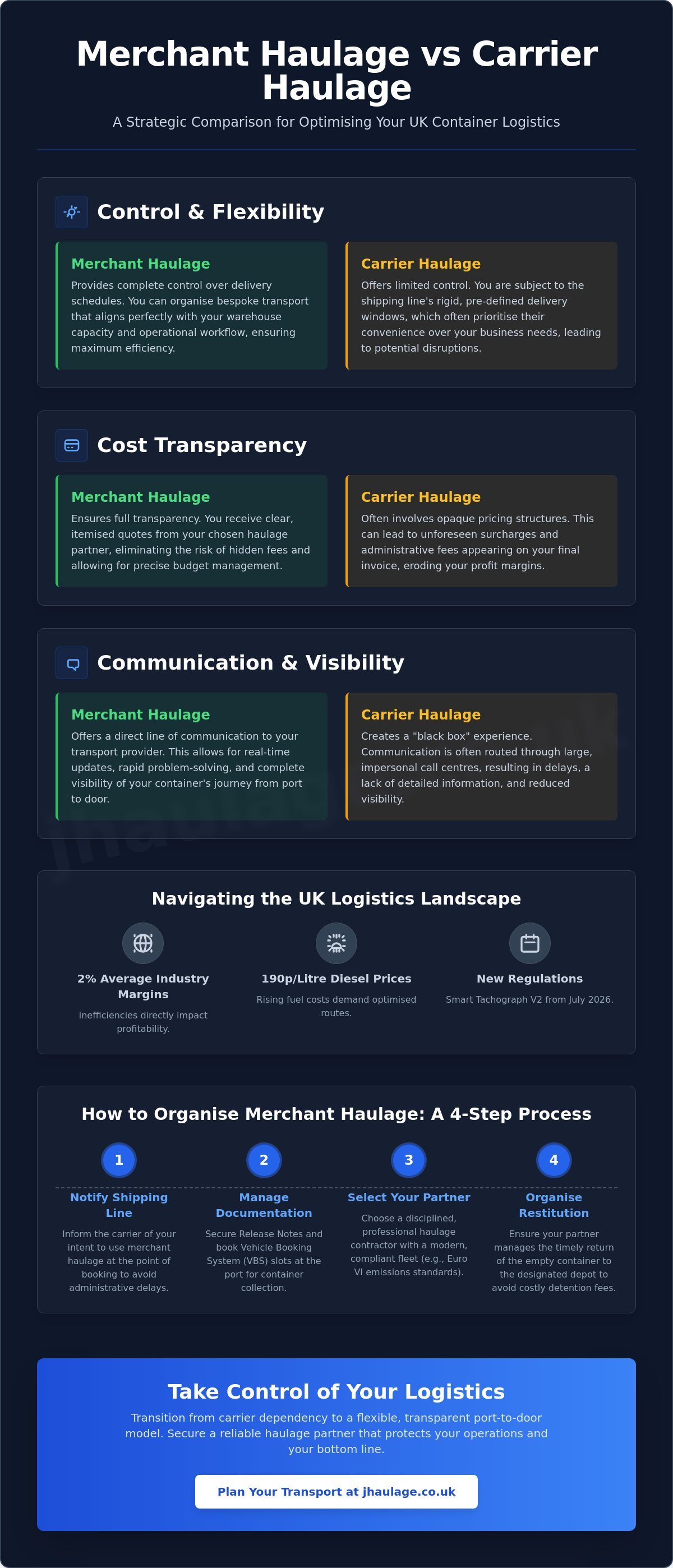
Relinquishing control of your container logistics to a shipping line often results in unforeseen costs and rigid delivery schedules that disrupt your supply chain. You've likely experienced the frustration of carrier haulage, where hidden fees and fixed windows make it difficult to manage a precise operational flow. In a market where UK diesel prices reached 190p per litre in April 2026 and industry margins remain near 2%, every logistical delay impacts your bottom line. Transitioning to merchant haulage offers a strategic alternative that returns authority to the cargo owner.
We understand that managing your own container transport requires a mastery of the fundamentals, from navigating the Vehicle Booking System (VBS) at UK ports to complying with the Smart Tachograph Version 2 mandates effective from July 2026. This professional guide will show you how to organise efficient UK container transport that prioritises reliability and cost transparency. You'll learn the specific steps to move from shipping line dependency to a flexible, port-to-door logistics model that protects your operations. We'll outline the regulatory landscape, cost-saving strategies, and the essential protocols for securing a dependable transport partner.
Key Takeaways
- Understand how merchant haulage provides superior control over delivery schedules and transparent transport costs compared to shipping line carrier services.
- Learn the essential technical requirements for container collection, including the management of Release Notes and port Vehicle Booking System (VBS) slots.
- Follow a methodical step-by-step process to transition from carrier-led logistics to an independent, port-to-door transport model.
- Identify the criteria for selecting a disciplined haulage partner capable of navigating the high stakes of UK container logistics.
- Discover how to mitigate the impact of rising operational costs through strategic planning and efficient inland container movements.
Understanding Merchant Haulage in the UK Logistics Landscape
In the professional logistics sector, merchant haulage describes a specific operational arrangement where the shipper or consignee takes full responsibility for organising inland container transport. Unlike carrier haulage, where the shipping line manages the movement from port to door, this model places the merchant in the position of the strategic decision-maker. This distinction is fundamental for British businesses that require precise control over their supply chain timelines. By selecting their own transport provider, companies can bypass the rigid, "one size fits all" scheduling often imposed by global shipping lines.
British businesses are increasingly moving towards independent haulage solutions to secure greater operational predictability. In an environment where UK road freight margins are typically around 2%, any inefficiency in the collection or delivery process can quickly erode profitability. Relying on a shipping line's internal network often leads to a lack of transparency regarding vehicle location and arrival times. When a merchant organises their own transport, they eliminate these communication gaps and gain the ability to prioritise specific containers based on urgent warehouse requirements or customer demand.
The Core Components of Merchant Haulage
Successful merchant haulage relies on a disciplined three-way relationship between the merchant, the freight forwarder, and the haulage contractor. The merchant must ensure that the shipping line is notified of the intent to use independent transport at the point of booking to avoid administrative delays. A critical technical element in this process is "restitution," which refers to the return of the empty container to a designated port or inland depot. A professional haulage partner manages this cycle with precision, ensuring containers are returned within the agreed "detention-free" period to avoid significant daily penalties from the shipping line. It's essential to select a contractor with a modern fleet that adheres to Euro VI emissions standards, as this ensures uninterrupted access to Clean Air Zones (CAZ) in major UK cities.
Why Control Matters in Modern Supply Chains
Direct control over logistics allows for bespoke scheduling that directly supports warehouse efficiency. Shipping line haulage operates on the carrier's convenience, which can lead to vehicles arriving at inconvenient times or failing to appear during booked windows. Independent haulage allows for a structured delivery programme that matches your on-site labour capacity. There's also a significant psychological and operational benefit to having a direct line to your transport provider. Instead of waiting for updates from a global call centre, you have immediate access to the professionals managing your goods. This direct communication allows for rapid adjustments if port conditions change or if a delivery site faces unexpected delays, ensuring the safety and security of the cargo at every stage.
Merchant Haulage vs Shipping Line Haulage: A Strategic Comparison
Choosing between transport models is a critical decision for UK supply chain managers seeking to optimise their inland logistics. According to BIMCO's definition of merchant haulage, the merchant assumes full responsibility for the inland leg of the journey. While carrier haulage is often marketed as a simplified solution, it frequently masks operational inefficiencies that can disrupt a tight schedule. Merchant haulage allows for a strategic alignment between the port collection and the final delivery site, ensuring that the transport serves the needs of the business rather than the convenience of the shipping line.
The primary difference lies in the level of oversight and the speed of response. Shipping lines operate vast, global networks where individual containers are merely units in a high-volume system. This often results in a "black box" experience for the cargo owner, where visibility is limited once the container leaves the vessel. When you manage your own transport, you eliminate these communication gaps. You gain the ability to prioritise urgent loads and adjust schedules in real-time based on actual warehouse capacity or changing customer requirements.
The Myth of Carrier Convenience
Many shippers believe carrier haulage reduces administrative burden. This perception often overlooks the reality of managing deliveries through automated call centres and generic tracking portals. If a delay occurs at a UK port, a carrier's response is governed by rigid internal protocols that don't account for your specific business priorities. Dedicated merchant haulage provides direct accountability. You speak to the planners who actually control the vehicles. This direct link ensures that your logistics partner understands the high stakes of your supply chain and follows strict protocols to protect your outcomes. Convenience shouldn't be confused with a lack of control, as the latter often leads to missed windows and wasted labour costs at the delivery point.
Cost Management and Transparency
Carrier rates are typically presented as fixed figures, but these often include significant margins to cover the shipping line's administrative overheads. Independent haulage provides a transparent breakdown of the transport cost, allowing you to see exactly where your budget is allocated. This transparency is vital for managing the financial risks of demurrage and detention. Shipping lines charge steep daily fees if containers aren't returned promptly to the quay. By using a disciplined partner, you gain proactive oversight of the restitution process. You can track the status of every box and ensure empty equipment returns before penalties accrue. Cost-effective haulage is a precise balance of competitive rates and operational reliability. If you're looking to refine your inland transport budget, you can request a transparent transport quote that reflects your specific operational needs.
The administrative effort required for independent transport involves managing PIN codes and port booking systems, but the rewards are substantial. The potential for logistical savings and the reduction in warehouse disruption usually outweighs the initial setup time. A seasoned haulier handles the complex port-side interactions on your behalf, acting as a strategic partner in your broader operational framework.
The Technical Mechanism: How Merchant Haulage Works
The technical success of merchant haulage depends on a precise exchange of data between the shipping line, the merchant, and the transport provider. This process begins once the vessel discharges the cargo at the terminal. The shipping line issues a Release Note and a unique PIN code to the merchant or their freight forwarder. This code serves as the digital authorisation that allows a specific haulier to collect the container. Without this verified data, port security and terminal systems will not permit the release of the equipment. A disciplined haulier integrates this information into their planning system to ensure a seamless "handshake" at the port gates.
The workflow of a container move follows a strict, methodical sequence to protect the integrity of the supply chain. It starts with the arrival notice and subsequent customs clearance. Once the container is "cleared and attainable," the haulier synchronises the collection with the merchant's delivery window. Modern transport providers utilise integrated telematics and GPS tracking to monitor every stage of this journey. This technology allows the haulier to provide real-time updates and precise arrival estimates, ensuring the merchant stays informed without needing to request manual status reports.
Port Systems and Access
Major UK terminals, such as Felixstowe, Southampton, and London Gateway, manage heavy vehicle traffic through a Vehicle Booking System (VBS). This digital platform is essential for regulating the volume of HGVs entering the port to prevent severe congestion. A professional haulier must secure these VBS slots in advance, matching the port's availability with the merchant's specific delivery requirements. Whilst waiting for final customs or health clearances, a competent transport partner prepares the necessary documentation and driver instructions. This proactive preparation ensures that the collection occurs immediately upon release, which is vital for avoiding costly port storage fees.
Equipment and Fleet Standards
Maintaining a modern fleet of over 40 vehicles provides the operational security required for consistent merchant haulage outcomes. Different cargo requirements necessitate specialised trailers, ranging from standard skeletal trailers for 20ft and 40ft units to extendable chassis for 45ft high-cube containers. Safety remains the paramount priority amongst all transport operations. This commitment includes adhering to the 2026 Direct Vision Standard (DVS) requirements and ensuring all new vehicles are equipped with Advanced Emergency Braking (AEB) systems. By employing standardised, high-specification equipment, a haulier ensures that the transport process is both safe and efficient, reflecting the serious and disciplined nature of the industrial sector.
How to Organise Merchant Haulage: A Step-by-Step Guide
Transitioning to an independent logistics model requires a methodical approach to ensure every stage of the container move is protected. Whilst the technical mechanisms were covered previously, the practical execution begins at the point of booking. Shippers must follow a structured protocol to maintain the flow of goods from the terminal to the warehouse without incurring unnecessary delays. Following these steps ensures that the merchant haulage process remains efficient and cost-effective.
- Step 1: Confirm Status. You must inform the shipping line that you intend to use independent transport during the initial booking process. This ensures the cargo is correctly coded for release, allowing your chosen haulier to access the unit upon arrival at the UK port.
- Step 2: Select a Specialist. Partner with a transport provider that has extensive experience in port-to-door movements. A haulier with a significant fleet and established port relationships will navigate the complexities of collection more reliably than a general carrier.
- Step 3: Coordinate the Release. Work closely with your freight forwarder to secure the Delivery Order and the unique PIN code. This authorisation is the final handshake required for the haulier to perform the collection.
- Step 4: Schedule Delivery and Restitution. Provide your haulage contractor with clear instructions for the final delivery and the subsequent return of the empty container. Precise scheduling helps you avoid detention fees by ensuring equipment is returned within the carrier's free-time window.
- Step 5: Monitor the Movement. Use the haulier's tracking systems to oversee the container's progress. Proactive monitoring allows you to prepare your warehouse staff for arrival and manage any potential port congestion issues in real-time.
Selecting Your Haulage Partner
The success of your supply chain depends on the competence of your transport provider. When evaluating potential partners, prioritise those with a large, modern fleet and comprehensive coverage of major UK terminals. It's vital to secure reliable container haulage from specialists who understand the high stakes of port logistics. A disciplined partner will follow strict protocols to protect your cargo and ensure that all vehicles meet the latest safety and environmental standards. If you're ready to secure a dependable transport solution, you can request a merchant haulage quote to begin the process.
Managing the Documentation
Accurate documentation is the foundation of a smooth collection process. The Delivery Order and PIN code must be communicated to your haulier as soon as they're available to allow for early VBS booking. You must also provide clear restitution instructions to ensure the haulier knows exactly where and when to return the empty equipment. Failing to manage these details can lead to significant daily penalties from the shipping line. For a deeper look at the financial side of these operations, consult our guide on Understanding Container Transport Costs. This resource provides a comprehensive breakdown of the fees associated with UK container movements in 2026.
Secure and Professional Merchant Haulage with Jagelo Haulage
Jagelo Haulage brings 15 years of industry-specific experience to every container move. We position our brand as a master of the logistical fundamentals, ensuring that your merchant haulage operations are managed with the highest level of functional reliability. We don't attempt to disrupt the market with hyperbolic claims or trendy jargon. Instead, we offer a grounded, disciplined service that prioritises the safety of your goods and the efficiency of your schedule. Our reputation is built on a sense of steadfast professionalism and a no-nonsense approach to the industrial nature of the transport sector.
Our personality is that of a seasoned professional who understands the high stakes of the UK supply chain. We follow protocols strictly and maintain a methodical communication rhythm that mirrors our well-planned operational routes. This rhythmic stability helps to build long-term trust with our clients, providing a sense of quiet confidence in an often volatile market. We treat every delivery as a strategic outcome, ensuring that your cargo is protected from the point of collection to the final destination.
Our Commitment to Reliable Port Logistics
Our commitment to reliable port logistics is backed by a modern fleet of over 40 heavy goods vehicles. This operational reach allows us to provide consistent outcomes across all major UK terminals, including Felixstowe, Southampton, and London Gateway. We understand that the road freight industry operates on slim margins, often around 2%, and we work to eliminate waste through precise coordination. We provide haulage for shipping lines and independent merchants who require a partner that understands the nuances of port systems. Every vehicle in our fleet adheres to the latest safety standards, including the 2026 Direct Vision Standard requirements and mandatory AEB systems, ensuring your logistics remain compliant and secure.
Get a Professional Haulage Quote
We streamline your logistics with a no-nonsense, operational approach that removes the complexity from container transport. Our team provides responsive customer support for operators nationwide, focusing on the immediate delivery of accurate information. We don't use automated call centres; you speak directly to professionals who understand your specific requirements. We frame our service as a strategic partnership designed to protect your broader operational framework. If you're ready to secure a reliable and disciplined inland transport solution, Request a professional merchant haulage quote from Jagelo Haulage. Our team will provide a tailored solution that reflects our commitment to performance, results, and long-term stability.
Securing Your UK Supply Chain Through Strategic Logistics
Transitioning to merchant haulage provides the operational autonomy necessary to manage complex UK supply chains with precision. You've seen how direct control over port collections and restitution protocols eliminates the lack of visibility often associated with carrier haulage. This transition leads to transparent transport costs and significantly improved warehouse efficiency. By mastering the technical mechanisms of the Vehicle Booking System and securing the correct port credentials, your business can bypass the rigid schedules of global shipping lines.
Jagelo Haulage provides the disciplined support required for these high-stakes operations. With over 15 years of industry experience and a modern fleet of 40+ trucks and trailers, we offer the functional reliability your cargo deserves. Our nationwide port coverage, including major terminals such as Felixstowe and Southampton, ensures your containers are managed by a partner who understands the fundamentals of UK logistics. Every movement we perform is a strategic outcome designed to protect your supply chain from unnecessary delays or hidden fees.
Request a professional merchant haulage quote from Jagelo Haulage to refine your inland transport strategy and restore control to your logistics. We look forward to securing your next container move with the professional oversight your business requires.
Frequently Asked Questions
What is the main difference between merchant and carrier haulage?
The primary difference lies in who holds responsibility for the inland transport leg of the journey. Under merchant haulage, the cargo owner or their freight forwarder selects an independent transport provider to manage the movement from port to door. Carrier haulage relies on the shipping line's internal network, which often prioritises the carrier's convenience over the merchant's specific delivery schedule.
Can I switch from carrier haulage to merchant haulage after the ship has arrived?
It's possible to switch transport modes after arrival, but this typically requires the shipping line's consent and an administrative fee. You must notify the carrier to change the status so they can issue the necessary release documentation and PIN codes. This process is most efficient when handled well before the vessel reaches the UK terminal to prevent delays in collection.
What are the risks of managing my own merchant haulage?
Managing your own transport involves risks related to port storage fees and equipment restitution. If your haulier fails to secure a collection slot or returns the empty container late, you're liable for quay rent and detention charges. Professional hauliers mitigate these risks through disciplined scheduling and strict adherence to established port protocols.
How much does merchant haulage cost compared to shipping line rates?
Merchant haulage costs are typically more transparent than the "all-in" rates provided by shipping lines. While carrier rates might appear simplified, they often include hidden administrative margins to cover the shipping line's overheads. Independent transport allows you to see a clear breakdown of every logistical expense, ensuring your budget is allocated efficiently.
What is a VBS booking in the context of UK port haulage?
A VBS booking is a mandatory time slot secured through the port's Vehicle Booking System. This digital platform regulates HGV traffic at major UK terminals like Felixstowe and London Gateway to prevent congestion. Your haulier must secure a valid slot to enter the port and collect your container, ensuring the terminal operates with functional reliability.
How do I avoid detention and demurrage charges with merchant haulage?
You avoid these charges by ensuring containers are collected and returned within the shipping line's "free-time" window. Disciplined restitution management is essential for this outcome. A reliable partner monitors these deadlines and returns empty equipment to the designated depot before daily penalties accrue, protecting your operational budget from unforeseen costs.
Do I need a special contract to use merchant haulage?
You don't need a formal special contract, but you must specify your transport preference at the point of booking with the shipping line. The carrier will then facilitate the release once the freight and local charges are settled. Establishing a relationship with a professional haulier ensures they understand your specific documentation and delivery requirements for every move.
What happens if my haulier cannot collect the container on time?
If a haulier misses the collection window, the container remains at the port and may incur expensive quay rent charges. This risk highlights the importance of selecting a partner with a modern, reliable fleet and a proven track record in port logistics. Professional transport providers use real-time tracking to anticipate delays and adjust bookings to minimise your financial exposure.