What is bulk cargo handling: a 2026 guide
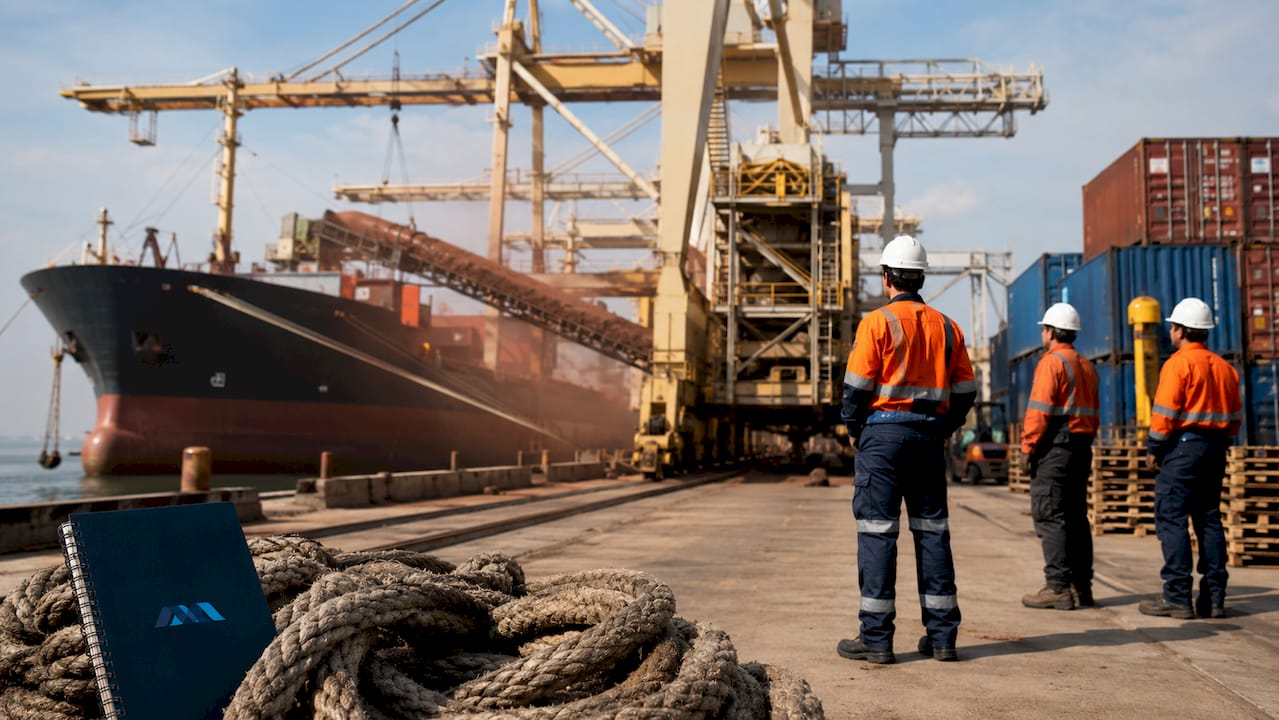
Bulk cargo handling is the specialised operation of loading, unloading, storing, and transporting large quantities of unpackaged homogeneous goods, including grains, coal, minerals, fertilisers, and liquid commodities, using dedicated equipment and coordinated logistics processes. Bulk cargo accounts for approximately 60% of total global maritime trade volume, making it the dominant mode of freight movement by weight. The distinction between bulk and break-bulk lies in handling technology: flow-based systems versus unit lifting and palletised handling. For logistics professionals and business owners, understanding what is bulk cargo handling means understanding the operational framework that underpins the majority of global commodity supply chains.
What is bulk cargo handling and why does it matter?
Bulk cargo handling is defined as the systematic management of unpackaged goods moved in large, continuous volumes rather than in discrete units or containers. The process spans loading at origin terminals, sea transit aboard bulk carriers, discharge at destination ports, and onward inland distribution. Each stage requires purpose-built equipment, documented procedures, and tight coordination between vessel operators, port terminals, and inland transport providers.

The economic case for bulk freight is compelling. Shipments exceeding 1,000 tons typically justify bulk freight methods owing to significantly lower per-unit costs compared to containerised freight. That cost advantage disappears rapidly when coordination breaks down, vessels wait at berth, or cargo is damaged through poor handling. The entire model depends on throughput speed and product integrity maintained from origin to final delivery.
Bulk commodities divide into two primary categories. Dry bulk covers grains, coal, iron ore, bauxite, and cement. Liquid bulk covers crude oil, refined petroleum products, vegetable oils, and liquid chemicals. Each category demands a distinct handling infrastructure, and mixing the two operationally is not possible. Knowing which category your cargo falls into determines every subsequent equipment and logistics decision.
What methods and equipment are used in bulk cargo handling?
The choice of handling method depends directly on the physical properties of the cargo: particle size, density, moisture content, and flowability. Four principal methods cover the majority of bulk cargo operations.
- Gravity discharge uses inclined chutes and hoppers to move free-flowing dry materials such as grain and coal by their own weight. It is the lowest-cost method but requires cargo with consistent flowability.
- Pneumatic conveying uses pressurised air streams to transfer fine powders and granules, including cement and flour, through enclosed pipelines. This method controls dust and prevents contamination, making it the preferred choice for food-grade and pharmaceutical-adjacent commodities.
- Mechanical conveyors including belt conveyors, screw conveyors, and bucket elevators move bulk materials continuously at high throughput rates. Advanced boom feeders achieve throughput rates up to 1,000 m³/h without permanent infrastructure, which is critical for flexible terminal operations.
- Grab cranes use hydraulic or electromechanical grabs to discharge coarse dry bulk such as iron ore, scrap metal, and aggregates from vessel holds. Grab cranes are slower than conveyor systems but handle irregular or heavy materials that conveyors cannot manage.
Liquid bulk requires a separate equipment set entirely. Shore-based pumping stations, insulated pipelines, and heated storage tanks handle crude oil, chemicals, and edible oils. Sealing technology within liquid systems prevents vapour loss, contamination, and environmental discharge, all of which carry regulatory consequences.
Pro Tip: Match your equipment selection to the cargo’s flowability index before committing to a terminal. A material that flows well in dry conditions may cake or bridge in humid environments, rendering gravity or conveyor systems inoperable mid-discharge.
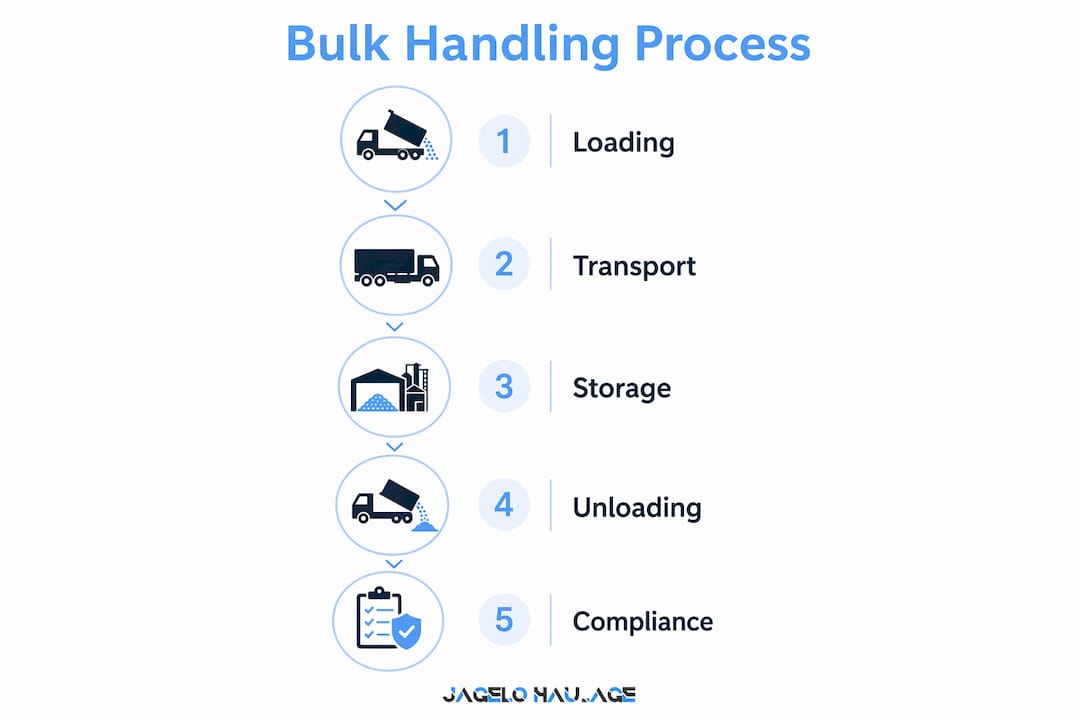
The industry trend toward fully sealed systems prioritises product purity, dust suppression, and environmental compliance. Open-air handling of fine dry bulk is increasingly restricted at European ports due to air quality regulations. Sealed pneumatic and enclosed conveyor systems are now the standard for new terminal installations across the UK and Northern Europe.
How is bulk cargo transported and stored during the supply chain?
Bulk cargo transportation is a multimodal operation. The cargo moves through a sequence of modes and storage points, each of which must be matched to the cargo’s physical and chemical properties.
Storage facilities for dry bulk include:
- Silos and grain elevators for free-flowing agricultural commodities requiring moisture control and pest prevention
- Covered warehouses for bagged or semi-processed bulk materials sensitive to weather
- Open stockyards for coal, iron ore, and aggregates that tolerate outdoor exposure
- Pressurised or insulated tanks for liquid bulk including petroleum products and edible oils
Transport modes follow a similar logic. Deep-sea bulk carriers handle ocean legs for large volumes. River barges and coastal vessels serve shorter routes and inland waterways. Rail wagons with hopper or tanker configurations move bulk from port to inland distribution points. Specialised road tankers and tipping trucks complete the final leg to customer facilities.
Coordination between these modes is the critical operational variable. Bulk handling success demands coordination across the entire logistics chain, including inland transport, to avoid costly demurrage. A vessel waiting at berth because a rail connection is delayed generates demurrage charges that can exceed the per-tonne freight cost on shorter routes. You can read more about scheduling and coordination in the context of UK port logistics.
Sealed transfer systems between storage and transport modes are not optional for fine or hazardous bulk. Dust emissions during transfer from silo to road tanker, for example, create both a health risk and a product loss that compounds across a high-volume operation.
What challenges and risks affect bulk cargo handling?
Bulk cargo handling carries operational risks that containerised freight does not face to the same degree. Understanding these risks is the first step to managing them.
-
Cargo contamination and cross-mixing. Shared equipment handling multiple commodity types creates cross-contamination risk. A conveyor belt used for sulphur that is not thoroughly cleaned before handling grain will render the grain unfit for human consumption. Dedicated equipment lines or rigorous cleaning protocols between cargo types are non-negotiable.
-
Moisture damage and spoilage. Grain, fertiliser, and cement absorb atmospheric moisture during open-air transfer or storage. Moisture ingress causes caking, reduces flowability, and in the case of grain, triggers mycotoxin growth. Covered storage and sealed transfer systems are the primary controls.
-
Cargo liquefaction and shifting. Certain fine-grained bulk materials, including nickel ore and iron ore fines, can liquefy under vibration during sea transit if their moisture content exceeds the Transportable Moisture Limit (TML). Ignoring moisture content or flowability leads to cargo shifting, which causes vessel instability and has resulted in total vessel losses. The International Maritime Solid Bulk Cargoes (IMSBC) Code mandates moisture testing before loading.
-
Demurrage and scheduling failures. Vessel time is the most expensive variable in bulk shipping. Port congestion, equipment breakdown, or delayed inland transport all extend vessel time at berth. Bulk handling is a holistic operation spanning origin, transport, and terminal discharge, and poor coordination leads directly to demurrage charges. Effective cargo tracking across the supply chain reduces the risk of unplanned delays.
-
Quality disputes and cargo rejection. Buyers receiving bulk commodities frequently dispute weight or quality at destination. Without pre-agreed verification methods and documented quality certificates, disputes escalate to arbitration, which is costly and time-consuming.
Pro Tip: Commission an independent pre-shipment survey covering moisture content, particle size distribution, and TML before loading any fine-grained mineral bulk. The survey cost is negligible compared to the liability exposure from a cargo shift incident at sea.
What documentation and compliance requirements apply to bulk cargo?
Bulk cargo documentation differs materially from containerised shipment paperwork. The volume, homogeneity, and physical properties of bulk cargo create specific legal and operational requirements.
Key documents in a bulk cargo shipment include:
- Bulk Bill of Lading specifying cargo type, quantity, and physical characteristics including moisture content and flowability
- Quality certificates issued by independent surveyors at load port confirming commodity specification
- Draft survey reports recording vessel displacement before and after loading to calculate cargo weight
- Cargo declaration under the IMSBC Code for solid bulk cargoes classified as potentially hazardous
- Phytosanitary certificates for agricultural bulk including grains and oilseeds
Draft surveys, measuring vessel displacement, are the primary quantitative method for verifying bulk cargo weight during loading and discharge. Scales are impractical for large bulk volumes, and draft surveys are accepted by courts and arbitration panels as the standard verification method. The accuracy of a draft survey depends on calm water conditions and a competent surveyor, both of which should be specified in the charter party.
Bulk Bills of Lading must specify cargo characteristics like moisture content and flowability because disputes over these properties are frequently settled by international arbitration. A vague Bill of Lading that omits moisture data gives neither party a defensible position when cargo arrives in a degraded condition.
The regulatory framework governing bulk cargo safety at sea is set by the International Maritime Organisation (IMO) through the Safety of Life at Sea (SOLAS) Convention and the IMSBC Code. These instruments classify solid bulk cargoes into three groups based on hazard level and mandate specific testing, documentation, and stowage requirements. UK port operators and vessel operators must comply with these standards on every bulk shipment. The compliance requirements for UK freight transport extend to inland haulage legs as well.
| Document | Purpose |
|---|---|
| Bulk Bill of Lading | Legal title and cargo specification record |
| Draft survey report | Quantitative weight verification at load and discharge |
| Quality certificate | Independent confirmation of commodity specification |
| IMSBC cargo declaration | Regulatory hazard classification for solid bulk |
| Phytosanitary certificate | Agricultural commodity health clearance |
Key takeaways
Effective bulk cargo handling requires end-to-end coordination across equipment selection, storage, transport, documentation, and regulatory compliance to protect cargo integrity and control costs.
| Point | Details |
|---|---|
| Scale justifies bulk methods | Shipments exceeding 1,000 tons achieve materially lower per-unit costs than containerised freight. |
| Equipment must match cargo properties | Flowability, moisture content, and particle size determine whether gravity, pneumatic, conveyor, or grab crane systems are appropriate. |
| Coordination prevents demurrage | Poor synchronisation between vessel, terminal, and inland transport generates demurrage charges that erode freight economics. |
| Documentation is legally binding | Draft surveys and Bulk Bills of Lading are the accepted standard for weight verification and dispute resolution in international arbitration. |
| Regulatory compliance is mandatory | The IMO SOLAS Convention and IMSBC Code set binding requirements for hazard classification, moisture testing, and stowage of solid bulk cargoes. |
What I have learned from years of watching bulk cargo operations succeed and fail
The single most consistent failure I observe in bulk cargo supply chains is treating the terminal as the start of the operation rather than the midpoint. By the time cargo reaches the discharge berth, every upstream decision, from moisture testing at origin to inland transport booking, has already determined whether the operation will be profitable or not.
The shift toward fully sealed pneumatic and enclosed conveyor systems is not merely a regulatory response. It reflects a genuine operational improvement. Operators who made that transition early report fewer quality disputes, lower product loss, and measurably better relationships with buyers who can verify purity at destination. The environmental compliance benefit is real, but the commercial benefit is what drives adoption.
Physical cargo properties remain the most underestimated variable in planning. I have seen experienced logistics managers book road tankers for a liquid bulk consignment without checking the product’s viscosity at ambient temperature, only to find the cargo will not pump at a UK winter temperature. That kind of oversight is avoidable with a one-page technical data sheet reviewed before booking.
The operations that run well share one characteristic: every party in the chain, from the shipper to the terminal operator to the inland haulier, has the same schedule and the same cargo specification. When that information is siloed, delays compound and costs escalate. Integrated supply chain visibility is not a technology aspiration. It is the baseline requirement for bulk cargo operations at any meaningful scale.
— Vytautas
How Jhaulage supports bulk cargo supply chains across the UK
Bulk cargo operations depend on the final inland leg as much as on the terminal itself. A vessel discharged on time and cargo stored correctly still fails to deliver value if the road haulage leg is unreliable or poorly coordinated with port schedules.
Jhaulage operates a fleet of over 40 GPS-tracked trucks and trailers serving major UK ports including Felixstowe, Tilbury, Southampton, and Liverpool. The fleet provides container haulage services with 24/7 operational support, same-day delivery capability, and full container load movements coordinated to port timetables. For logistics professionals managing bulk cargo supply chains, that level of port-to-door reliability reduces the risk of demurrage and keeps inland distribution on schedule. Contact Jhaulage to discuss how UK port haulage can be integrated into your bulk cargo logistics plan.
FAQ
What is bulk cargo handling in simple terms?
Bulk cargo handling is the process of loading, transporting, storing, and discharging large quantities of unpackaged goods such as grain, coal, or oil using specialised equipment and coordinated logistics. It differs from containerised freight in that cargo flows continuously rather than moving in discrete units.
What equipment is used to handle dry bulk cargo?
Dry bulk cargo is handled using belt conveyors, screw conveyors, bucket elevators, pneumatic unloaders, and grab cranes, with the choice determined by the cargo’s particle size, density, and flowability. Advanced boom feeders can achieve throughput rates up to 1,000 m³/h for high-volume terminal operations.
Why is moisture content critical in bulk cargo handling?
Moisture content determines whether a bulk cargo will flow, cake, or liquefy under vibration during transit. The IMSBC Code requires moisture testing against the Transportable Moisture Limit before loading fine-grained minerals, because cargo that exceeds this limit can shift and destabilise a vessel at sea.
How is bulk cargo weight verified at port?
Draft surveys, which measure vessel displacement before and after loading, are the accepted standard for bulk cargo weight verification at large terminals. They are preferred over weighbridges for large volumes and are recognised by courts and international arbitration panels.
What regulations govern bulk cargo safety at sea?
The IMO SOLAS Convention and the IMSBC Code set the primary regulatory framework for bulk cargo safety, covering hazard classification, moisture testing, stowage requirements, and cargo declarations for solid bulk shipments on international voyages.
Recommended
- Heavy Container Haulage: A Strategic Reference Guide for UK Logistics 2026 | Jagelo Haulage
- Efficient Bulk Container Haulage Solutions for UK Business | Jagelo Haulage
- Merchant Haulage Companies: A Strategic Guide to UK Container Transport 2026 | Jagelo Haulage
- The Professional Guide to Cost-Effective Container Haulage in 2026 | Jagelo Haulage