A standard shipping container transport quote is not merely a number on a page; it is a strategic commitment to the stability of your supply chain. Many logistics managers find that an initially low price often masks the reality of unpredictable surcharges, poor communication, or missed port slots that result in expensive detention charges. You likely recognise that inconsistent vehicle availability can jeopardise your operations, making a transparent and disciplined approach to haulage essential for professional success.
This guide identifies the critical operational factors that dictate haulage rates and provides the framework for securing a reliable, fixed-rate transport quote for your logistics requirements. We will detail the influence of the UK Emissions Trading Scheme expansion, port-specific energy adjustment mechanisms, and the importance of a modern, compliant fleet in maintaining consistent delivery times across major UK maritime hubs. By understanding these variables, you can move from reactive booking to strategic logistics planning with a partner that prioritises performance and operational results.
Key Takeaways
- Learn how to evaluate a shipping container transport quote by distinguishing between base logistical costs and essential variable surcharges.
- Examine the geographic variables and port-specific factors that influence haulage rates across the United Kingdom's maritime hubs.
- Contrast merchant and shipping line haulage models to identify the most flexible and strategic solution for your inland container movements.
- Discover the precise information required to secure a firm, fixed-rate price and eliminate the risk of unexpected post-delivery adjustments.
- Understand the operational benefits of partnering with a disciplined haulier that maintains a modern, compliant fleet for nationwide coverage.
Understanding the Components of a Shipping Container Transport Quote
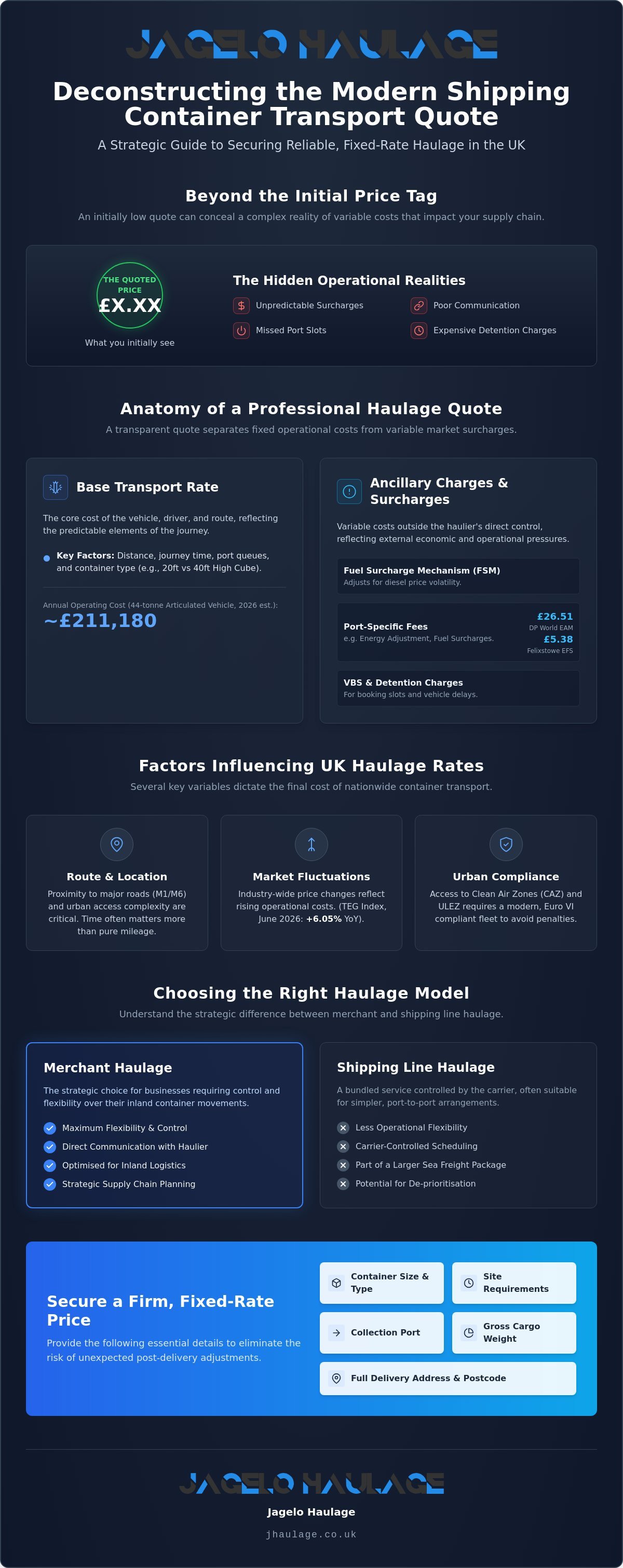
A professional shipping container transport quote is a strategic document rather than a simple price list. It details the precise logistical commitment required to navigate the modern containerization system. Disciplined hauliers provide these comprehensive breakdowns to ensure clients understand the full scope of their transport costs. This approach avoids the confusion of a single mileage rate, which often hides the technical reality of moving goods from UK maritime hubs to inland destinations. By separating fixed operational costs from variable market-led surcharges, a haulier provides the transparency necessary for accurate corporate budgeting.
Fixed rates usually cover the predictable elements of the journey, such as vehicle maintenance and driver wages. Variable surcharges react to external economic pressures, such as fuel price volatility or port-specific operational changes. This structure provides a level of security for the cargo owner. It ensures that the haulier can maintain high operational standards whilst offering a fair market price that reflects current industry conditions. When you request a shipping container transport quote from a provider like Jagelo Haulage, you receive a breakdown designed to eliminate the risk of unexpected invoices after the delivery is finalised.
The Role of the Base Transport Rate
The base transport rate reflects the core cost of the vehicle, the driver, and the specific route. Distance is the primary metric, but time is often more significant in UK port logistics. Hauliers calculate the time spent in port queues and the hours required for the inland journey. The type of container significantly influences this calculation. Moving a 20ft unit differs from a 40ft or 45ft High Cube in terms of trailer requirements and fuel consumption. According to the Road Haulage Association (RHA), the annual operating cost for a 44-tonne articulated vehicle in 2026 is approximately £211,180. These high baseline costs mean that quotes must be precise. Professional operators also factor in driver rest requirements to ensure compliance with safety standards whilst maintaining a predictable delivery schedule.
Ancillary Charges and Surcharges
Ancillary charges cover the costs that are outside the haulier's direct control. The Fuel Surcharge Mechanism (FSM) is the most common example. It allows the shipping container transport quote to remain accurate even when diesel prices fluctuate. Port-specific fees are another essential component. As of May 2026, DP World London Gateway applies an Energy Adjustment Mechanism of £26.51 per import laden container. Similarly, the Port of Felixstowe has an Emergency Fuel Surcharge of £5.38. These are standard industry costs passed through to the client. You should also expect Vehicle Booking System (VBS) charges, which are the fees required to secure a collection or drop-off slot. Finally, be aware of detention charges. These occur if the vehicle is held at your premises beyond the agreed window, disrupting the haulier's disciplined schedule.
Factors Influencing Nationwide Container Haulage Rates
Geographic location remains the primary driver of any shipping container transport quote. The proximity of a delivery site to major arterial roads, such as the M1 or M6, significantly affects the operational efficiency of a vehicle. A site located deep within an urban centre requires more time to access than a warehouse situated on a motorway junction. This time-sensitive nature of haulage means that rates aren't just about mileage; they're about the predictability of the route. Current data from the TEG Road Transport Price Index for June 2026 shows that haulage prices rose by 0.15% in a single month, with a year-on-year increase of 6.05%. These fluctuations reflect the rising costs of maintaining a disciplined, nationwide fleet across the United Kingdom.
Route Complexity and Urban Access
Urban deliveries present specific challenges that impact the final price. Many UK cities now operate Clean Air Zones (CAZ) or Ultra Low Emission Zones (ULEZ), requiring hauliers to deploy Euro VI compliant vehicles to avoid daily penalties. Professional providers maintain a modern fleet to ensure seamless access to these areas without passing on avoidable fines to the client. Additionally, the physical constraints of industrial sites often dictate the equipment used. Specialised skeleton trailers are essential for certain container types to ensure safe transit and unloading. When preparing documentation, following official government guidance on transport modes ensures that all equipment requirements are correctly identified during the booking phase.
Operational Timing and Port Efficiency
Port efficiency directly correlates with vehicle availability. If a port experiences congestion, turn-around times for drivers increase, reducing the number of deliveries a single vehicle can perform in a day. New infrastructure charges, such as the £2.25 fee applied at Teesport from June 2026, also contribute to the total cost. Seasonal demand, particularly during the pre-Christmas peak, creates high competition for vehicle slots. Scheduling deliveries in advance allows for better asset management and helps maintain more consistent pricing. A disciplined approach to slot management ensures that your cargo moves according to plan, even during turbulent market periods. If you require a transparent breakdown of these factors, you can request a professional transport quote to see how these variables apply to your specific route.
Merchant vs Shipping Line Haulage: Choosing the Right Model
Choosing between merchant and carrier haulage is a fundamental decision that dictates the structure of your shipping container transport quote. Carrier haulage, also known as shipping line haulage, involves the ocean carrier arranging the inland transport from the port to your facility. Whilst this offers a single point of contact, it often lacks the flexibility required for complex industrial schedules. In contrast, merchant haulage allows the cargo owner to appoint an independent specialist to manage the land-based leg of the journey. This model provides direct access to the haulier's operational team, ensuring that specific delivery requirements are met with precision. For a detailed breakdown of these operational differences, you may consult our Merchant Haulage vs Shipping Line Haulage comparison.
The choice of model significantly impacts the transparency of your logistics costs. Shipping lines often apply standardised tariffs that may not account for the specific geographic or urban access challenges discussed in previous sections. Independent hauliers provide a more granular breakdown of costs, reflecting the actual resources deployed for your specific route. The current complexity of the UK transport market, as highlighted in recent Logistics UK industry reports, suggests that direct oversight is increasingly vital for maintaining supply chain stability. By engaging directly with a haulier, businesses can secure a shipping container transport quote that reflects a strategic commitment to reliability rather than a generic service level.
The Advantages of Merchant Haulage
Merchant haulage provides cargo owners with direct oversight of the logistics chain and driver scheduling. This transparency allows for real-time adjustments to collection times, which is essential for avoiding the port detention charges mentioned earlier. Independent hauliers can offer bespoke rates tailored to your specific volume and frequency, rather than relying on the rigid pricing structures of global shipping lines. Merchant haulage represents a strategic choice for businesses requiring high-response logistics. It ensures that the haulier's assets, such as a modern fleet of over 40 trucks, are dedicated to your operational success. This direct relationship fosters a partnership based on performance and mutual accountability.
When Shipping Line Haulage is Used
The carrier-controlled model is often used by businesses with lower shipping volumes or those with very simple delivery requirements. However, this model has limitations for businesses managing complex inland requirements or multiple delivery sites. As operational complexity increases, many organisations transition to merchant haulage to gain better control over their timing and costs. When evaluating container transport costs across both models, it's essential to consider the value of reliability. A lower initial price from a shipping line may be offset by the costs of poor communication or missed delivery windows. Professional logistics managers prioritise the security and consistency offered by a dedicated haulage partner to ensure their goods arrive safely and on schedule.
Essential Information for Requesting an Accurate Quote
Producing an accurate shipping container transport quote requires a high level of technical detail from the outset. Professional hauliers rely on precise data to allocate the correct vehicle assets and secure the necessary port slots. Providing incomplete information often leads to operational delays or post-delivery price adjustments that disrupt your financial planning. To ensure a disciplined and transparent service, you must provide a definitive set of specifications that define the scope of the movement. This data allows the haulier to calculate the exact resources required, ensuring the price you receive is both firm and reliable.
Technical Specifications and Cargo Details
Confirming the container dimensions is the first step in the process. A 20ft unit requires a different trailer configuration than a 40ft or 45ft High Cube (HC). Beyond physical size, the gross weight of the cargo is a critical factor for safety and legal compliance. Under the International Convention for the Safety of Life at Sea (SOLAS), every packed container must have a Verified Gross Mass (VGM). As of June 11, 2026, the UK's Maritime and Coastguard Agency (MCA) maintains strict oversight of approved organisations for determining this weight. You must also identify if the cargo is classified as hazardous (ADR) or requires temperature control via a reefer unit. Finally, providing the correct container number and release reference is essential for a seamless collection from the port terminal.
Site Logistics and Access Requirements
Site logistics are just as important as the cargo details themselves. You must specify the exact delivery window and any time-sensitive constraints at your destination. Heavy Goods Vehicles (HGVs) require significant space to manoeuvre, so reporting physical restrictions is vital for a successful delivery. This includes identifying low bridges, narrow gates, or weight-limited roads on the approach to your site. You should also confirm the required unloading method. If you lack a loading dock, you may require a specialised vehicle for grounding the container. This is often necessary for sensitive equipment; for example, when receiving display systems from Coker Exhibition Systems Ltd (CokerExpo), ensuring a safe and level unloading area is paramount. Alternatively, if you plan to unload whilst the container remains on the trailer, a process known as devanning, you must agree on the time allowed for this task. Clear communication regarding these factors prevents the detention charges mentioned previously in this guide.
To secure a price that reflects these specific operational requirements, you can provide your details for a shipping container transport quote today. Ensuring this information is correct from the start allows for a more secure and professionally managed logistics operation.
Why Jagelo Haulage is the Strategic Choice for Port Logistics
Jagelo Haulage operates as a disciplined, asset-based partner within the UK transport sector. With a 15-year track record in port logistics, we understand the high stakes involved in the movement of goods. Our fleet of over 40 modern trucks and trailers provides the physical capacity required to serve all major UK maritime hubs, from Felixstowe and Southampton to London Gateway and Teesport. When you request a shipping container transport quote from our team, you're engaging with a seasoned professional who follows protocols strictly. We prioritise functional reliability and operational reach, ensuring that your operations remain safe and efficient. This grounded approach has established us as a dependable partner for haulage requirements amongst corporate clients and operational managers across the country.
Professional Fleet Management
Our commitment to excellence begins with our assets. Maintaining a modern container transport fleet is essential for ensuring both operational reliability and environmental compliance. Every vehicle in our fleet is fully insured and equipped for the secure transport of high-value cargo. We understand that punctuality is the foundation of a successful supply chain. Our drivers follow precise routes and adhere to all safety protocols to ensure consistent delivery times across the national road network. By managing our own assets rather than relying on third-party sub-contractors, we maintain total control over the quality and security of the service provided. This asset-based model allows us to provide protected outcomes for our clients, regardless of the complexity of the urban access or route requirements.
Securing Your Logistics Future
A shipping container transport quote from Jagelo Haulage represents more than a single delivery; it is an investment in a stable supply chain. Our port logistics services UK are designed to integrate seamlessly with your broader operational goals. We provide the strategic support necessary for long-term planning, helping you navigate the complexities of port congestion and regulatory changes, such as the UK Emissions Trading Scheme expansion. Our team offers quiet confidence through competence, providing the protection your cargo requires from the port terminal to the final destination. This methodical approach mirrors the reliability of the physical operations themselves, fostering a relationship built on performance and results rather than self-promotion.
To discuss your specific logistical requirements and receive a transparent, fixed-rate breakdown of costs, contact Jagelo Haulage today for a professional container transport quote. Our disciplined approach ensures your goods are moved with the precision and security your business demands.
Optimising Your Inland Logistics Strategy
Securing a shipping container transport quote is a strategic task that requires attention to technical detail and an understanding of the current port environment. By distinguishing between fixed base rates and variable surcharges, such as the Energy Adjustment Mechanism at major hubs, you ensure your logistics budget remains protected. Prioritising merchant haulage provides the direct oversight needed to manage complex delivery windows and avoid unnecessary detention costs whilst maintaining a clear line of communication with your haulier.
Jagelo Haulage delivers this level of discipline through 15+ years of specialist industry experience and a modern fleet of over 40 trucks and trailers. Our comprehensive nationwide coverage ensures your cargo moves efficiently from any major UK maritime hub to its final destination. We follow strict protocols to provide a secure and punctual service that supports your broader operational objectives and long-term supply chain stability.
Request a professional container transport quote from Jagelo Haulage to establish a stable and reliable foundation for your inland logistics. We look forward to supporting your next delivery with our seasoned expertise and commitment to operational excellence.
Frequently Asked Questions
How much does it cost to transport a shipping container in the UK?
Transport costs depend on the distance from the port, container dimensions, and current market surcharges. A professional shipping container transport quote reflects the high baseline of vehicle operating costs, which the Road Haulage Association calculated at £211,180 annually for a 44-tonne vehicle in 2026. Rates fluctuate based on route complexity and the specific requirements of urban access zones across the United Kingdom.
What information do I need to provide for a container haulage quote?
You must provide the container size, gross weight, collection port, and the precise delivery address to receive a firm price. Technical details like the container number and release reference are essential for port collection. Reporting physical site restrictions, such as narrow gates or weight-limited roads, ensures the haulier allocates the correct equipment and helps prevent expensive detention charges later.
How do fuel surcharges affect my transport quote?
Fuel surcharges act as a variable mechanism that adjusts your rate based on current diesel price volatility. This protects both the haulier and the client from sudden market shifts. These charges are typically calculated as a percentage of the base transport rate or as a fixed fee per unit, reflecting the real-time costs of maintaining a disciplined, nationwide logistics operation.
What is the difference between merchant and shipping line haulage?
Merchant haulage involves the cargo owner appointing an independent specialist, whilst shipping line haulage is managed by the ocean carrier. Merchant haulage offers greater flexibility and direct oversight of the logistics chain. This model allows businesses to negotiate bespoke rates and gain better control over delivery windows compared to the standardised pricing structures used in the carrier-controlled model.
Can you provide same-day container delivery quotes?
We provide quotes for immediate requirements, but vehicle availability remains subject to current port turn-around times and existing schedules. Whilst we aim for a high response, the disciplined nature of container haulage means that advanced booking is always preferable. This ensures your delivery slot is secured within a modern fleet of over 40 trucks and trailers.
Are port booking fees (VBS) included in the initial quote?
Vehicle Booking System (VBS) fees are standard industry charges required to secure collection slots and are typically included in your initial quote. These fees cover the cost of port access and vary between terminals. Professional hauliers ensure these costs are transparent from the outset to prevent unexpected invoices after the container has been successfully delivered to your site.
Do you provide quotes for hazardous (ADR) container transport?
Yes, we provide quotes for hazardous (ADR) container transport, provided the cargo classification is clearly stated during the initial request. Moving hazardous goods requires drivers with specific certifications and vehicles equipped with specialised safety gear. Specifying the ADR class ensures we allocate a compliant asset to maintain the safety and legality of your inland transport.
How far in advance should I request a container transport quote?
You should request your shipping container transport quote at least 48 to 72 hours before the required collection date to ensure asset availability. During peak shipping seasons or periods of high port congestion, booking even further in advance is recommended. This proactive approach allows for better asset management and helps secure a more consistent rate for your broader logistics planning.