Part of our guide to container haulage from Southampton
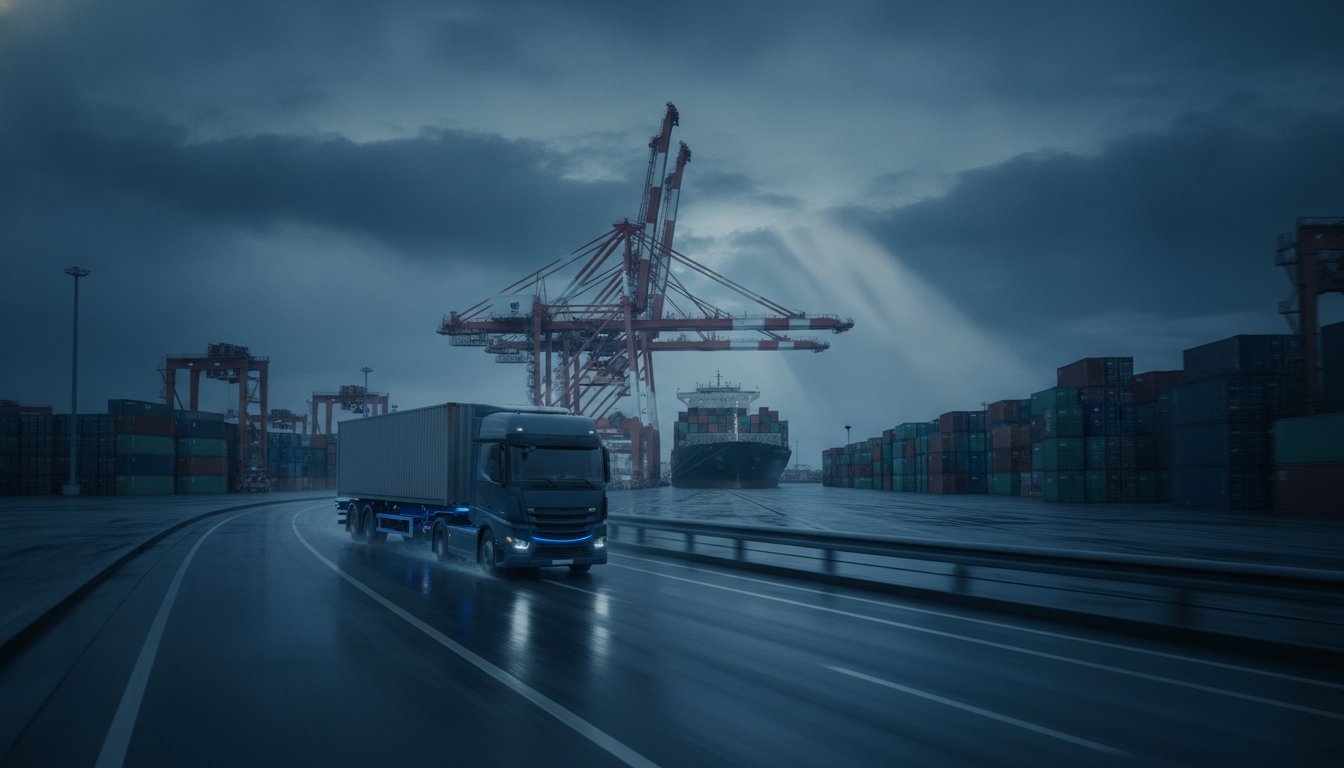
Relying on shipping line haulage or unvetted sub-contractors often results in a loss of control that your supply chain cannot afford. You likely recognise the frustration of port delays and the sudden appearance of demurrage charges that arise when communication breaks down. Securing reliable Southampton container haulage is not merely about moving a box from the terminal to a warehouse; it's about maintaining a disciplined operational flow that protects your bottom line.
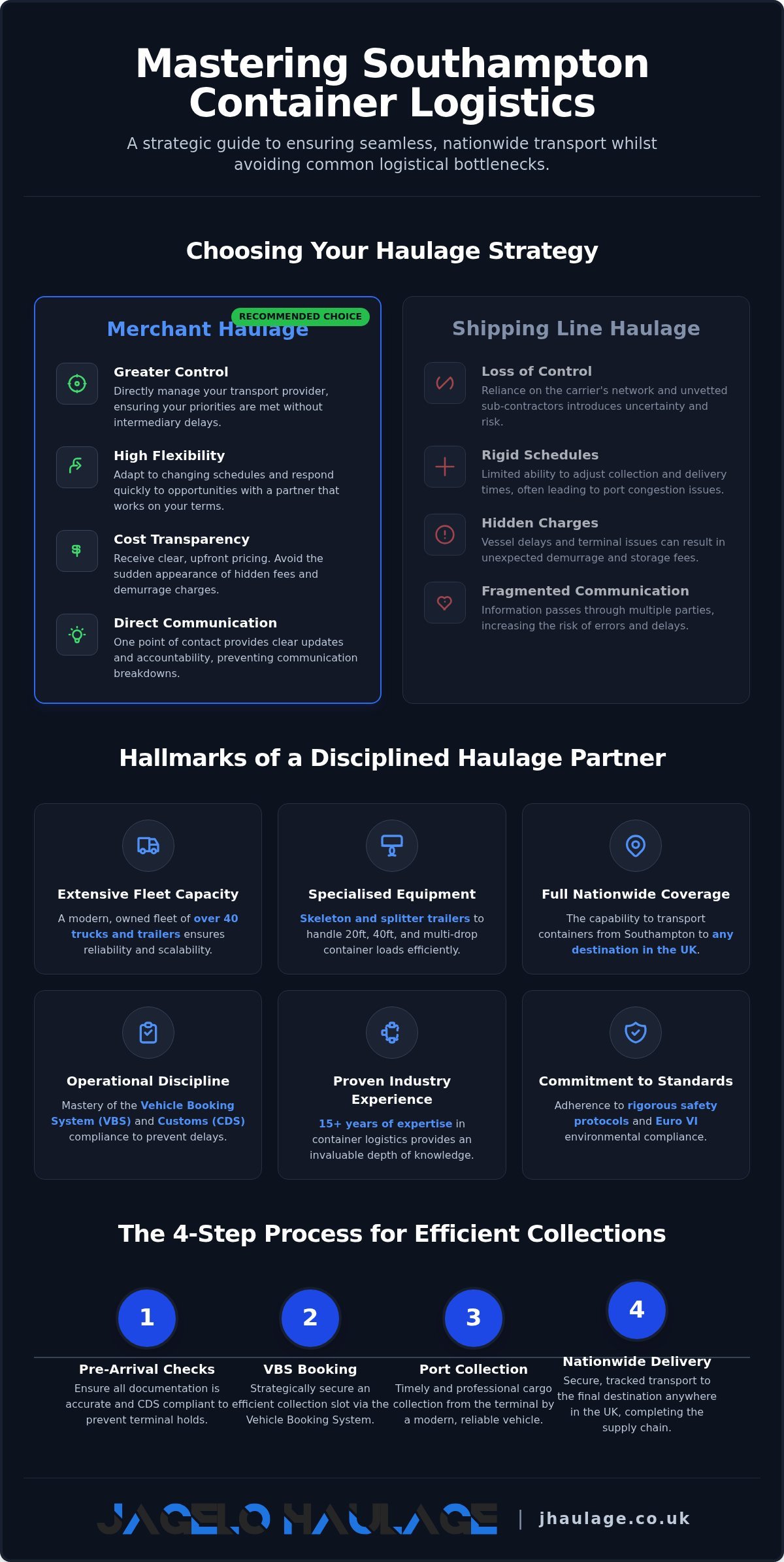
This article demonstrates how to achieve seamless, nationwide transport from the Port of Southampton to any UK destination whilst avoiding the common logistical bottlenecks that stall growth. You'll discover the strategic advantages of merchant haulage and how professional fleet management provides the transparency your business requires. We'll outline the essential steps to ensure your cargo moves through the terminal efficiently, supported by a modern fleet of over 40 trucks and trailers that provides the capacity for consistent, nationwide delivery and steadfast reliability.
Key Takeaways
- Recognise the strategic role of Southampton port and how disciplined road transport ensures your cargo reaches its inland destination without delay.
- Evaluate the importance of a modern fleet and specialised equipment, such as skeleton trailers, in maintaining high operational standards and cargo safety.
- Determine the benefits of merchant Southampton container haulage for securing greater flexibility and cost transparency compared to carrier-managed shipping line options.
- Optimise your port collections by mastering the Vehicle Booking System (VBS) and ensuring all documentation is accurate to prevent costly terminal delays.
- Identify the hallmarks of a professional haulage partner, focusing on the value of 15 years of industry experience and a commitment to rigorous safety protocols.
The Strategic Importance of Southampton Container Haulage
Southampton serves as a primary gateway for deep-sea trade, positioning it as a cornerstone of the UK's industrial supply chain. For importers and exporters, the efficiency of this port directly influences the health of their operations. However, a container's arrival at the berth is only the first stage of the journey. Professional Southampton container haulage acts as the essential bridge between maritime arrival and final inland delivery, ensuring that goods reach warehouses and distribution centres across the country without unnecessary friction.
Southampton Port: A Hub for Global Trade
The Port of Southampton is operated by Associated British Ports (ABP), with the container terminal managed by DP World. It handles millions of TEUs (Twenty-foot Equivalent Units) annually, accommodating some of the world's largest container vessels. High-volume trade requires disciplined turnaround times to maintain terminal fluidity. When hauliers operate with precision, they support the wider merchant economy by keeping the flow of goods constant. Jagelo Haulage leverages its modern fleet of over 40 trucks and trailers to facilitate these movements, providing the capacity required for large-scale inland container deliveries and ensuring that cargo doesn't sit idle on the quayside.
The Challenges of Port-to-Door Logistics
Moving cargo from the coast to the heart of the UK presents several operational hurdles. Port congestion can lead to significant delays if a haulier lacks the discipline to manage the Vehicle Booking System (VBS) effectively. Since February 2026, the mandatory use of the Customs Declaration Service (CDS) has added another layer of required compliance. Without cleared documentation, containers cannot be collected, leading to costly storage fees and demurrage charges that erode profit margins.
Reliability in this sector depends on a haulier's ability to provide nationwide reach from the South Coast. Many providers restrict their services to local routes, but a strategic partner must offer transport to any UK destination. This national capability ensures that businesses aren't left searching for multiple sub-contractors to complete a single shipment. By maintaining control over a dedicated, owned fleet, a professional haulier eliminates the uncertainty often found in fragmented supply chains. This structured approach is the only way to safeguard against the logistical bottlenecks that threaten on-time delivery.
Essential Equipment for Professional Container Transport
Operational reliability in Southampton container haulage depends on the technical specification and maintenance of the transport fleet. A haulier must operate a modern fleet to ensure consistent service and avoid the mechanical failures that disrupt supply chains. With over 40 trucks and trailers, Jagelo Haulage maintains the capacity to handle large-scale inland container deliveries. This scale of operation allows for a disciplined approach to equipment rotation, ensuring that every vehicle on the road is capable of meeting demanding port collection schedules.
The Role of Skeleton and Splitter Trailers
Skeleton trailers are the primary tool for standard container movements. These trailers are designed to be lightweight yet structurally robust, providing a secure platform for 20ft and 40ft containers. For more complex requirements, splitter trailers allow for the transport of two 20ft containers on a single vehicle. These can then be separated for individual site deliveries, offering a strategic outcome for clients with multiple drop-off points. All equipment must adhere to the Freight Containers (Safety Convention) Regulations 2017, ensuring that every load is carried on a chassis that meets rigorous safety and stackability standards.
Fleet Modernisation and Environmental Standards
Accessing major UK terminals now requires compliance with strict environmental protocols. Modern fleets utilised for Southampton container haulage must feature Euro VI compliant engines to minimise emissions and avoid port access penalties. Beyond environmental benefits, newer vehicles are equipped with advanced telematics and real-time tracking systems. This technology is non-negotiable in 2026. It allows operational managers to monitor delivery status and provide clients with accurate arrival times. These systems also enhance cargo security by providing constant visibility of the vehicle's location and engine performance data, which helps in identifying potential issues before they cause a delay.
A disciplined maintenance regime is the final pillar of professional logistics. Zero-defect operations are only possible when vehicles undergo regular safety inspections and preventative servicing. This proactive approach reduces the likelihood of roadside breakdowns that lead to missed delivery windows. It ensures that every vehicle entering the port is fit for the high-intensity demands of container transport. If you require a haulier that prioritises equipment integrity, you can request a transport quote to see how a modern fleet supports your logistics.
Merchant Haulage vs Shipping Line Haulage in Southampton
Choosing between merchant and shipping line haulage is a critical decision for any business utilising Southampton container haulage services. This choice defines the level of control an importer maintains over their inland supply chain. Whilst both models aim to move cargo from the terminal to the final destination, the operational methods and communication structures differ significantly. Understanding these differences is essential for strategic cost management and avoiding the delays that often plague port logistics.
The Benefits of Merchant Haulage Control
Merchant haulage involves the importer or their freight forwarder appointing an independent transport provider. This model prioritises flexibility and transparency. You aren't restricted by a shipping line's rigid schedules or their choice of third-party sub-contractors. Instead, you build a direct relationship with a partner that understands your specific warehouse requirements and delivery windows. This direct line of communication is vital for avoiding port storage fees whilst maintaining a lean operation.
For a deeper technical analysis of these models, read our guide on Merchant Haulage vs Shipping Line Haulage: A Strategic Comparison. Regardless of the chosen model, all containers must adhere to UK container safety regulations to ensure they are fit for road transport. An independent haulier with 15 years of experience ensures that every container collected from Southampton meets these rigorous safety and approval standards before it leaves the terminal gates.
When to Utilise Shipping Line Haulage
Shipping line haulage, also known as carrier haulage, is often perceived as the simpler option for low-volume or infrequent importers. The shipping line manages the entire process from the overseas port to your door, providing a single point of contact for the maritime and inland journey. This convenience can be beneficial for businesses without dedicated logistics teams. However, the trade-off is a lack of operational control. You often have little influence over the delivery slot, which can lead to congestion at your premises or missed windows if the line's chosen haulier is overstretched.
Jagelo Haulage supports both logistical frameworks with equal discipline. Whether you're a freight forwarder managing merchant bookings or a shipping line requiring a reliable sub-contractor, our modern fleet provides the stability needed for on-time delivery. We apply the same professional standards to every container, ensuring that the strategic outcome—a safe and punctual arrival—is always achieved for our clients.
Best Practices for Efficient Port Collections and Deliveries
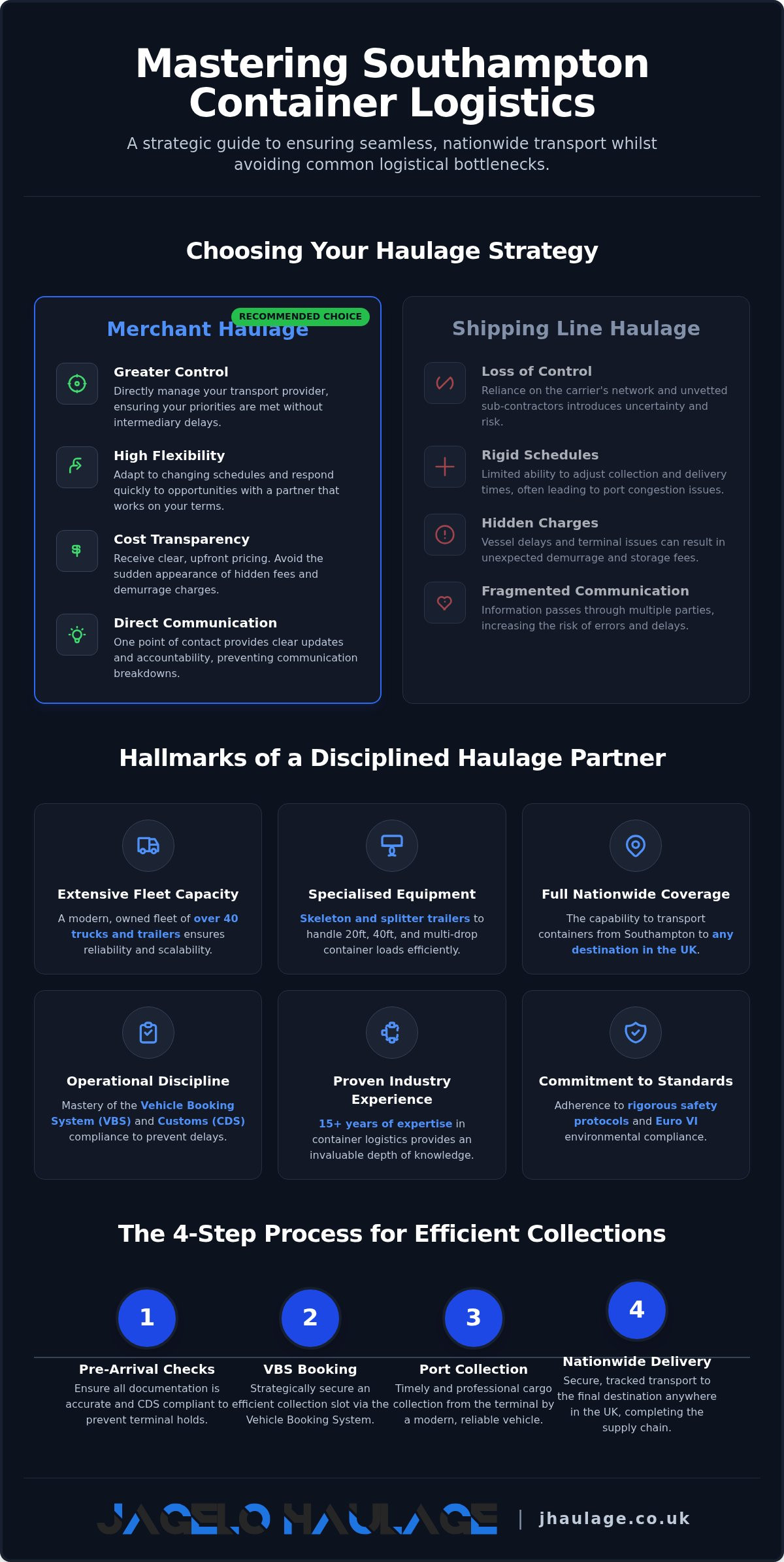
Efficiency in Southampton container haulage is achieved through rigorous operational management and an intimate understanding of port-specific protocols. It's not enough to simply have the trucks; a haulier must master the administrative and technical frameworks that govern the terminal. This includes precise coordination with freight forwarders to ensure all documentation is cleared before the vehicle arrives at the gate. A disciplined approach to these fundamentals prevents the logistical friction that leads to increased costs.
Mastering the Vehicle Booking System
The Vehicle Booking System (VBS) at Southampton is the primary tool used by DP World to manage terminal traffic. Hauliers must secure specific time slots to collect or drop off containers. A professional provider monitors these slots proactively to avoid container detention fees and ensure that vehicle turnaround time is minimised. If a haulier fails to secure a slot or misses their window, the resulting delay can trigger a chain reaction of costs across your entire supply chain. Securing these slots requires a haulier who understands the rhythm of port operations and can react quickly to terminal status changes.
Accurate documentation is the foundation of a successful collection. Since the mandatory transition to the Customs Declaration Service (CDS) in February 2026, any error in the customs entry will prevent the container from being released. Beyond the port, cost-efficiency is maintained by reducing "dead miles"—the distance a truck travels without a load. By optimising routes for nationwide delivery, a professional operator ensures that resources are utilised effectively, providing a more sustainable and economically viable transport solution for the importer.
Streamlining Communication for On-Time Delivery
Clear communication is as important as the physical movement of goods. A responsive customer support team acts as a strategic partner, providing real-time updates that keep all stakeholders informed. This transparency allows warehouse managers to prepare for arrivals and manage their labour more effectively. It eliminates the guesswork that often leads to congestion at delivery points. For a broader perspective on these operational standards across different terminals, you may consult The Comprehensive Guide to UK Container Haulage.
Maintaining these best practices ensures a protected outcome for every shipment, regardless of its destination. If you need to secure disciplined transport for your next arrival at the terminal, you can book your Southampton container collection today to ensure your cargo moves without delay.
Choosing a Disciplined Partner for Nationwide Container Logistics
Selecting a partner for Southampton container haulage requires an evaluation of operational maturity and asset control. Reliability in this sector isn't a product of chance; it's the result of established protocols and a deep understanding of the UK's logistical infrastructure. For corporate clients and operational managers, the primary objective is to find a haulier that functions as a strategic extension of their own supply chain. This requires a partner that prioritises the master of fundamentals over disruptive marketing claims, focusing instead on punctuality and the strict following of port protocols.
The Value of Industry Experience
Industry experience is the most reliable indicator of a haulier's ability to navigate the complexities of the UK supply chain. A provider with over 15 years of industry experience has managed the transition through various regulatory shifts, including the mandatory adoption of the Customs Declaration Service (CDS) in February 2026. This longevity provides a grounded approach to problem-solving. When terminal issues arise or vessel schedules shift, a seasoned haulier understands how to adjust bookings within the Vehicle Booking System (VBS) to protect the client from demurrage. You can learn more about these professional standards on the Jagelo Haulage Homepage, where our commitment to functional reliability is clearly defined.
Operational Reach and Nationwide Delivery
A common bottleneck in port logistics occurs when a haulier lacks the capacity to deliver beyond a local radius. Many providers at the Port of Southampton focus on regional routes, which forces importers to manage multiple contractors for their nationwide requirements. This fragmentation increases the risk of communication breakdowns and inconsistent service levels. Jagelo Haulage eliminates this friction by operating a modern fleet of over 40 trucks and trailers, providing the scale necessary to handle inland container haulage to any UK destination with ease.
Operating a privately owned fleet ensures that your cargo is never handed off to unvetted sub-contractors. This control allows for a consistent application of safety standards and professional conduct from the terminal gates to your warehouse door. Every vehicle is maintained to meet the 44-tonne gross weight limit and the latest safety convention regulations, ensuring that your goods are protected throughout the journey. By choosing a disciplined partner with a 40-strong fleet, you secure a strategic outcome that provides long-term stability and efficiency for your UK operations. This methodical approach to Southampton container haulage is the only way to ensure your cargo moves with the precision your business demands.
Securing Your Supply Chain with Disciplined Logistics
Efficient port logistics depend on more than just physical transport. Success requires a mastery of terminal protocols and the capacity to deliver across the country without delay. By prioritising a modern fleet and independent asset control, you eliminate the friction that often disrupts inland deliveries. Whether you're managing merchant or shipping line cargo, a structured approach to Vehicle Booking System slots and accurate documentation is the only way to avoid costly port storage fees.
Jagelo Haulage provides the stability your operations require. With 15 years of port logistics expertise and a modern fleet of over 40 vehicles, we ensure your cargo moves with precision. We specialise in Southampton container haulage that bridges the gap between the terminal and your warehouse door, providing a protected outcome for every shipment. Our nationwide reach ensures that your containers reach any UK destination on schedule, supported by a team that understands the high stakes of your supply chain.
You can contact Jagelo Haulage for a professional container haulage quote to secure your next collection. We look forward to supporting your logistical requirements with the competence and reliability your business deserves.
Frequently Asked Questions
How much does Southampton container haulage cost?
The cost of Southampton container haulage is determined by several variables, including the distance to the inland destination and the weight of the cargo. Other factors include current fuel surcharges and specific port fees such as terminal handling charges. Because every logistical requirement differs, we don't provide fixed rates. Instead, we offer transparent, bespoke quotes that reflect the precise operational needs of your shipment to ensure cost-efficiency and clarity.
What is the difference between merchant haulage and shipping line haulage?
Merchant haulage gives the importer or freight forwarder full control over the inland transport provider, allowing for greater flexibility in scheduling. In contrast, shipping line haulage is managed entirely by the ocean carrier. Whilst carrier haulage offers simplicity for infrequent importers, merchant haulage is often preferred by businesses requiring direct communication and disciplined operational management. This model allows for a more responsive relationship with a dedicated transport partner to avoid terminal delays.
Can Jagelo Haulage collect containers from DP World Southampton?
Yes, Jagelo Haulage is fully authorised to collect containers from DP World Southampton. Our team possesses over 15 years of industry experience managing Southampton container haulage and navigating the specific protocols of the terminal. We operate a modern fleet of over 40 trucks and trailers, ensuring we have the capacity to manage large-scale inland deliveries to any nationwide destination with the professional precision your supply chain requires.
Do you provide same-day container delivery from Southampton?
We support same-day container delivery services from Southampton, provided that the cargo has cleared customs via the Customs Declaration Service (CDS) and a VBS slot is available. Our operational reach allows us to move containers rapidly from the port to inland locations. This service depends on the timing of the vessel's discharge and the terminal's current traffic flow. We recommend early coordination to ensure that all administrative requirements are met for urgent shipments.
What types of trailers are used for container transport?
Professional container transport utilises specialised skeleton trailers designed to carry standard 20ft and 40ft units securely. These trailers are lightweight but structurally robust, meeting all UK road safety standards. We also use splitter trailers, which allow two 20ft containers to be transported on a single vehicle and then separated for individual site deliveries. Every trailer in our fleet undergoes regular safety inspections to ensure zero-defect operations and the protection of your cargo throughout the journey.
How do I avoid demurrage and detention charges at the port?
Avoiding demurrage requires proactive management of terminal free time and disciplined scheduling. You should ensure that all customs documentation is processed through the CDS before the vessel arrives to prevent clearance delays. Securing a VBS slot early is also essential. By partnering with an experienced haulier who monitors port status in real-time, you can coordinate the collection immediately after the container becomes available, effectively minimising the risk of expensive storage and detention fees.
Is Jagelo Haulage fully insured for high-value container loads?
Jagelo Haulage maintains comprehensive insurance coverage for all container movements, including high-value loads. As a disciplined and privately owned independent contractor, we prioritise the safety and security of every shipment. Our modern fleet is equipped with telematics and tracking technology to provide constant visibility, whilst our drivers follow strict safety protocols. We understand the high stakes of the supply chain and ensure that every transport operation is protected by industry-standard liability and goods-in-transit insurance.
What information do I need to provide for a haulage quote?
To provide an accurate quote, we require the container size, the estimated weight of the cargo, and the final delivery postcode. It's also helpful to specify whether the shipment is merchant or shipping line haulage. Once you're ready to proceed, you'll need to provide the container number and the port release reference. This information allows our team to check VBS availability and plan the most efficient route for your nationwide delivery from the port.