A single day of delay at a major hub like Felixstowe or Southampton can disrupt an entire production schedule and trigger unnecessary demurrage costs. With the UK road freight market valued at USD 57.5 billion in 2026, the demand for precision in UK drayage services has never been higher. You likely recognise that coordinating between shipping lines and road transport is a complex task that often lacks transparency. It's frustrating when supply chain bottlenecks occur right at the quayside due to poor coordination or administrative hurdles like the February 2026 transition to the Customs Declaration Service (CDS).
Jagelo Haulage provides a professional transportation solution that ensures a seamless transition from port to warehouse. We understand the impact of specific port charges, such as the £44.56 Green Energy fee at Felixstowe or the £35.89 connection fee at London Gateway. This guide will help you master these complexities and discover how to organise secure, efficient container transport from any major maritime hub. We'll examine the critical differences between merchant and shipping line haulage whilst providing a clear framework for reducing detention costs through operational discipline and reliable port logistics.
Key Takeaways
- Understand why drayage acts as the vital strategic link between maritime hubs and your inland supply chain.
- Discover how to select the right Uk drayage services for your requirements, including inter-carrier movements and expedited transport for time-critical cargo.
- Evaluate the operational differences between merchant haulage and shipping line haulage to determine which model provides the most control over your logistics.
- Learn how to coordinate container collection times with warehouse labour to improve efficiency and minimise the risk of demurrage costs.
- Identify the benefits of a professional transportation solution that prioritises secure and reliable port logistics for your container transport.
What are UK Drayage Services? Defining the Vital Link
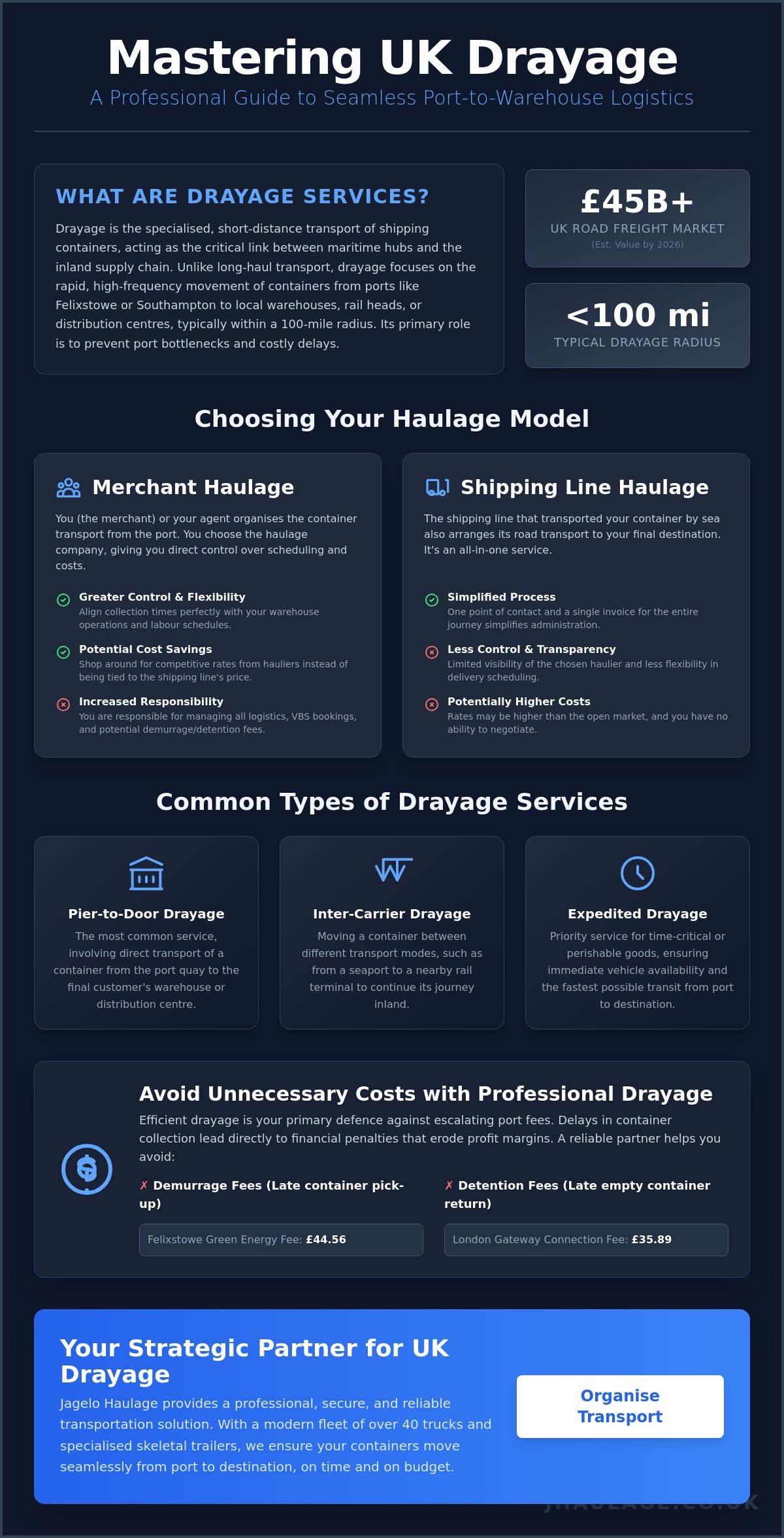
Drayage represents the specialised transport of shipping containers over relatively short distances between maritime hubs and inland locations. Whilst the term originated in the United States, it's increasingly adopted within the UK logistics sector to distinguish port-centric container movements from general haulage. This service acts as the critical connector in an intermodal supply chain, ensuring that cargo doesn't remain stationary at the quayside. Professional Uk drayage services focus on the immediate removal of containers from port terminals to local distribution centres, rail heads, or warehouses.
The role of drayage is to prevent operational bottlenecks. When thousands of containers arrive at major hubs like Felixstowe or London Gateway, the speed of their departure determines the port's overall efficiency. You can find a detailed historical context of this process by exploring What is Drayage?, which highlights how the practice has evolved from horse-drawn carts to modern, heavy-duty vehicle fleets. In a modern context, it's a strategic transportation solution that requires precise timing and deep familiarity with port infrastructure.
The Distinction Between Drayage and Long-Haul Transport
Standard drayage moves typically occur within a 100-mile radius of the port. Unlike long-haul transport, which might involve cross-country routes and overnight stays, drayage is defined by its high frequency and rapid turnaround. It requires specialised vehicle scheduling to align with Vehicle Booking System (VBS) slots. Efficiency in this sector is often measured by round-trip performance; this is where a driver delivers a full container and returns an empty one in a single shift. This disciplined approach minimises dead mileage and keeps the supply chain moving at a predictable pace.
Why Reliable Drayage is Essential for Modern Supply Chains
Reliability in port logistics is the primary defence against escalating storage costs. With port infrastructure fees and security charges being applied per entry, any delay in collection results in immediate financial penalties. Efficient Uk drayage services help importers avoid demurrage and detention fees that can otherwise erode profit margins. Beyond cost control, secure transport solutions are vital for protecting high-value containerised cargo during the vulnerable transition period between the vessel and the final destination. UK drayage is a professional logistics solution that ensures cargo remains on schedule whilst transitioning from sea to road.
The Different Types of Drayage in Port Logistics
Identifying the specific category of Uk drayage services required is essential for accurate logistics planning. Pier-to-door drayage remains the primary requirement for most UK importers. This involves the direct movement of cargo from the port quay to a customer's warehouse. It's the final leg of the international journey and requires strict adherence to delivery windows. Inter-carrier drayage serves a different purpose by bridging the gap between transport providers. For example, a container arriving by rail at a terminal may require road transport to reach a nearby distribution hub. This type of movement is fundamental to a functional intermodal system.
Expedited drayage is reserved for time-critical or perishable shipments. These loads require fast-tracked handling and immediate vehicle availability to prevent spoilage or production halts. Conversely, intra-carrier drayage involves movements within the boundaries of a single port or transport facility. Whilst these distances are short, they're vital for repositioning containers for inspection or storage. The strategic importance of these movements is often discussed in industry reports, such as the Logistics UK evidence submitted to parliament, which details the complexities hauliers face when coordinating with port authorities.
Specialised Equipment for Container Transport
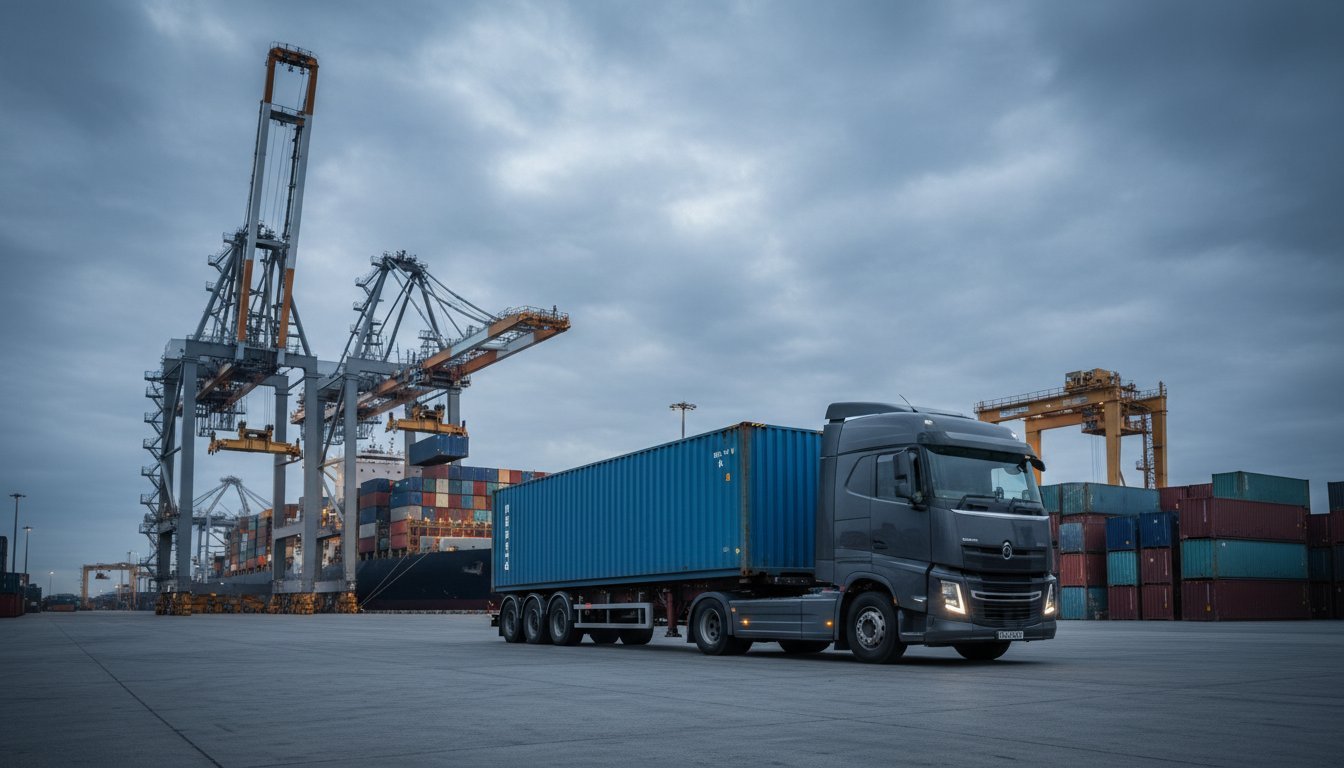
Safe container transport is impossible without the correct skeletal trailers. These specialised frames are engineered to secure 20ft and 40ft containers using heavy-duty twist locks. Jagelo Haulage maintains a modern fleet of over 40 trucks to ensure we have the capacity and operational redundancy our clients expect. We don't rely on sub-standard equipment; every trailer is regularly inspected to meet professional safety standards. This investment in a reliable fleet allows us to provide secure solutions for even the most demanding schedules. If you're planning a shipment, you can request a quote to see how our equipment can support your logistics.
Handling Diverse Cargo Requirements
Different cargo types present unique challenges for Uk drayage services. Standard containers are straightforward, but refrigerated units (reefers) require constant power monitoring to maintain temperature integrity. Open-top containers or flat racks often involve out-of-gauge dimensions that demand extra care during transit. Professional drivers must also account for weight distribution. A container that's heavy at one end can significantly alter a vehicle's braking and handling characteristics. We apply a disciplined approach to every load, ensuring that merchant haulage requirements are met with the highest level of competence and safety.
Merchant Haulage vs Shipping Line Haulage: Choosing Your Model
Choosing between merchant and shipping line haulage is a strategic decision that directly impacts supply chain transparency. Merchant haulage occurs when the importer or freight forwarder organises their own transport independently of the shipping line. This contrasts with shipping line haulage, where the carrier includes inland transport as part of a "door-to-door" bill of lading. The scale of these operations is significant; latest UK port freight statistics show that unitised traffic remains a cornerstone of national trade. Professional operators often prefer the merchant model because it provides greater control over the inland leg of the journey.
Cost implications vary between these two models. Shipping lines offer "carrier rates" which are often simple but may include fixed administrative fees that don't account for specific delivery efficiencies. Market rates for Uk drayage services, however, are typically more responsive to current demand and specific route requirements. By choosing an independent haulier, businesses can often secure more competitive, bespoke pricing that reflects the actual operational complexity of the move. This approach transforms container transport from a generic service into a tailored transportation solution.
The Benefits of Independent Merchant Haulage
Independent merchant haulage offers superior flexibility for scheduling collections and deliveries. When you manage your own transport, you're not restricted by the carrier's preferred subcontractors or rigid internal protocols. This model allows for direct communication with the haulage provider, ensuring real-time updates are always available. This responsiveness is vital when managing deliveries from nationwide ports. It ensures that warehouse labour is utilised efficiently and that containers are returned promptly to avoid detention charges. Choosing a professional partner like Jagelo Haulage ensures your Uk drayage services are handled with the discipline required to maintain a lean supply chain.
When to Use Shipping Line Haulage
Shipping line haulage is often chosen for its simplicity. It provides a single point of contact for the entire international journey, which can reduce the administrative burden on importers with lower volumes. However, this convenience often comes at the cost of reduced visibility and less control over the specific delivery window. You're effectively at the mercy of the carrier's scheduling priorities, which can lead to delays during peak port congestion. Whilst shipping line haulage offers simplicity, merchant haulage provides the professional agility required for complex UK logistics.
Optimising Your Supply Chain with Professional Drayage Solutions
Proactive port logistics management is the foundation of a lean supply chain. Efficient Uk drayage services require more than just the physical movement of containers; they demand precise coordination between the maritime hub and your inland facility. Demurrage costs often accumulate when cargo remains at the terminal beyond its allocated free time. A disciplined haulier prevents these financial penalties by monitoring vessel arrival times and securing Vehicle Booking System (VBS) slots well in advance. This foresight ensures that containers move as soon as they're cleared, maintaining the momentum of your operations.
Synchronising container collection times with warehouse labour availability is equally important. When transport schedules align with your internal shift patterns, you eliminate wasted labour hours and reduce vehicle waiting times. This level of operational harmony is essential for high-volume importers who manage multiple deliveries daily. For emergency or high-priority shipments, same-day delivery services provide the necessary agility to meet sudden production demands. Reliability in these scenarios depends on a haulier's ability to provide responsive customer support and navigate disruptions like port congestion or weather-related delays without compromising the schedule.
Selecting a Reliable Container Haulage Partner
A professional transportation solution is only as dependable as the fleet behind it. You should prioritise hauliers that invest in a modern, well-maintained fleet to minimise the risk of mechanical failure. Jagelo Haulage leverages over 15 years of industry experience to navigate the specific protocols of major UK ports. This tenure provides a deep understanding of terminal-specific behaviours and administrative requirements. Furthermore, verifying that your partner holds comprehensive insurance and safety certifications is vital for secure container transport. A "Steady Hand" approach ensures that every load is managed with strict adherence to safety standards and professional protocols.
Reducing Logistics Costs Through Efficiency
Strategic scheduling is the most effective way to manage container transport costs and inland container haulage budgets. By planning deliveries in batches or utilising off-peak collection times, businesses can often find significant efficiencies. Another critical factor is "empty container" management. Returning empty units to the port or a designated inland depot promptly avoids detention fees that can otherwise escalate quickly. A professional haulier integrates this return leg into the broader logistics plan, ensuring that your equipment cycle remains cost-effective. To see how our disciplined approach can improve your bottom line, you can request a professional logistics consultation.
Why Jagelo Haulage is Your Strategic Partner for UK Drayage
Jagelo Haulage provides a professional transportation solution rooted in functional reliability. We've spent over 15 years serving major maritime hubs across the United Kingdom. This tenure has allowed us to master the complexities of port logistics and develop a disciplined, methodical approach to container transport. We understand that every container movement represents a critical link in your supply chain. By choosing our Uk drayage services, you're partnering with a haulier that understands the high stakes of modern logistics and the necessity of operational precision.
Our modern fleet of over 40 trucks provides the secure solutions required by operators nationwide. We don't just move cargo; we manage a strategic bridge between the sea and the warehouse. Every vehicle in our fleet is maintained to professional standards to ensure operational redundancy. This commitment to equipment quality reduces the risk of mechanical delays and ensures we meet every delivery window. We prioritise functional reliability and provide responsive customer support for every move. You won't find hyperbolic marketing here. We focus on performance, safety, and results.
Professionally Managed Transport Operations
Safety and security are the foundations of our operation. Our "Steady Hand" philosophy ensures your cargo is in capable hands from the moment it leaves the terminal. We follow strict protocols to ensure punctual delivery and maintain the integrity of your goods. Whether you require merchant haulage or shipping line haulage, we handle both with equal competence. Our drivers are trained to manage the unique demands of containerised cargo, ensuring that every transportation solution is executed with the highest level of professionalism.
Secure Solutions for Nationwide Port Logistics
Partnering with an independent haulier offers bespoke transportation solutions that larger carriers often struggle to provide. We offer the flexibility needed to adapt to changing port conditions and specific warehouse requirements. Identifying the right partner for Uk drayage services is essential for maintaining a lean, cost-effective supply chain. For more details on our specific operations, read our guide on reliable container haulage from Felixstowe. This insight demonstrates our deep involvement in major UK hubs and our ability to manage complex logistics. We remain committed to providing a secure, efficient service that protects your bottom line. Contact Jagelo Haulage today to discuss your UK drayage requirements and experience a partnership built on steadfast professionalism.
Securing Your Supply Chain through Professional Port Logistics
Mastering the nuances of Uk drayage services is essential for any business relying on international trade. You've seen how choosing between merchant and shipping line haulage impacts your control over costs and delivery windows. Proactive coordination and the use of specialised equipment ensure that your cargo moves efficiently from the quayside to its final destination. Avoiding demurrage and detention fees requires a disciplined approach to every container movement.
Jagelo Haulage provides the functional reliability your supply chain deserves. With 15+ years of industry experience and a modern fleet of 40+ specialised trucks, we provide secure solutions across major UK maritime hubs. We focus on the fundamentals of container transport to ensure your operations remain punctual and predictable. Our team is ready to manage your port-to-door logistics with the "Steady Hand" professionalism you expect.
Request a professional drayage quote from Jagelo Haulage to optimise your container transport today. We look forward to becoming your trusted partner in nationwide port logistics.
Frequently Asked Questions
What is the difference between drayage and haulage in the UK?
Drayage is a specialised subset of haulage that focuses on short-distance container transport between maritime ports and inland locations. Whilst haulage is a broad term for the road transport of any goods, drayage specifically refers to the first or last leg of an intermodal journey. It's the critical link that clears terminal space and initiates the inland supply chain by moving containers to local warehouses or rail heads.
How much do UK drayage services typically cost?
Costs for Uk drayage services are dynamic and depend on distance, current fuel prices, and terminal-specific fees. There are no standardised rates because every move is a bespoke transportation solution. You must account for specific port charges, such as the £44.56 fuel charge at Felixstowe or the £35.89 connection fee at London Gateway as of February 2026, which are added to the base transport rate.
Can drayage services handle refrigerated or specialised containers?
Professional drayage operations are equipped to handle diverse cargo including refrigerated (reefer), open-top, and flat-rack containers. Reefer units require constant power monitoring and specialised equipment to maintain temperature integrity throughout the journey. We use skeletal trailers designed to secure these various container types, ensuring every load meets safety and weight distribution protocols during transit from the quay.
Why is merchant haulage often preferred over shipping line haulage?
Merchant haulage is often preferred because it offers superior control and transparency over the inland leg of the journey. It allows you to select a specific professional haulier rather than accepting the subcontractor assigned by a shipping line. This model facilitates direct communication and flexible scheduling, which is vital for aligning deliveries with warehouse labour availability and avoiding unnecessary terminal delays.
How far can a container be transported under a drayage service?
Drayage typically covers distances within a 100-mile radius of the maritime hub, but containers can be moved further inland to any national distribution centre. The primary objective is to complete the delivery and return the empty container to the port or depot within a single driver shift. This focus on round-trip efficiency helps maintain a predictable schedule and controls overall logistics costs.
What information do I need to provide for a drayage quote?
You need to provide the container number, the port of arrival, the delivery postcode, and the container size. It's also necessary to specify the cargo type and any special requirements, such as reefer power needs or out-of-gauge dimensions. Providing accurate weight information ensures the haulier can allocate the correct vehicle and plan a safe, compliant route that adheres to UK road regulations.
How can I avoid port storage charges using drayage?
Avoiding storage charges requires proactive scheduling and securing Vehicle Booking System (VBS) slots before the container is released. Efficient Uk drayage services monitor vessel arrival times to ensure immediate collection once the cargo is cleared. This disciplined approach minimises the time a container spends on the quay, effectively reducing the risk of demurrage and detention penalties that can erode profit margins.
What happens if there is a delay at the port during container collection?
Delays at the terminal are managed through responsive customer support and operational flexibility. If a driver encounters a bottleneck at the gate or a delay in terminal handling, the haulier communicates this in real-time to adjust the delivery schedule. Professional haulage operations maintain enough capacity to handle these disruptions whilst ensuring that subsequent deliveries remain as close to the original plan as possible.