Part of our guide to container haulage from Purfleet
Selecting a port location is a calculated decision that determines the stability of an entire UK distribution network. You likely recognise that unpredictable congestion at Thames terminals and escalating demurrage costs are more than minor inconveniences. These factors represent operational bottlenecks that directly erode margins and disrupt precise scheduling. Relying on inconsistent transport providers often leads to a lack of transparency during the critical port-to-door transition. This article demonstrates how to transform these logistical challenges into a distinct competitive advantage by utilising Purfleet container haulage as a disciplined hub for secure, nationwide transport.
We'll explore how to optimise your supply chain through the seamless integration of port collections into broader national logistics frameworks. You'll discover the specific benefits of partnering with a provider that maintains a modern, DVS-compliant fleet, ensuring your operations remain resilient against shifting regulatory requirements like the Smart Tachograph Version 2 mandate. By focusing on methodical execution and functional reliability, you can reduce bottlenecks and establish a dependable flow of goods from the quay to the final destination. This structured approach ensures that your cargo moves with the quiet confidence and security required in a demanding industrial sector.
Key Takeaways
- Understand why Purfleet container haulage serves as a critical entry point for reducing inland transit times and enhancing national distribution efficiency.
- Learn to synchronise vehicle arrivals with port availability to mitigate the risk of high demurrage costs and operational bottlenecks.
- Discover the strategic advantages of merchant haulage over shipping line models for gaining greater control over your national delivery windows.
- Identify the essential compliance standards, including DVS requirements, necessary for secure and efficient transport within the Thames corridor.
The Strategic Importance of Purfleet Container Haulage
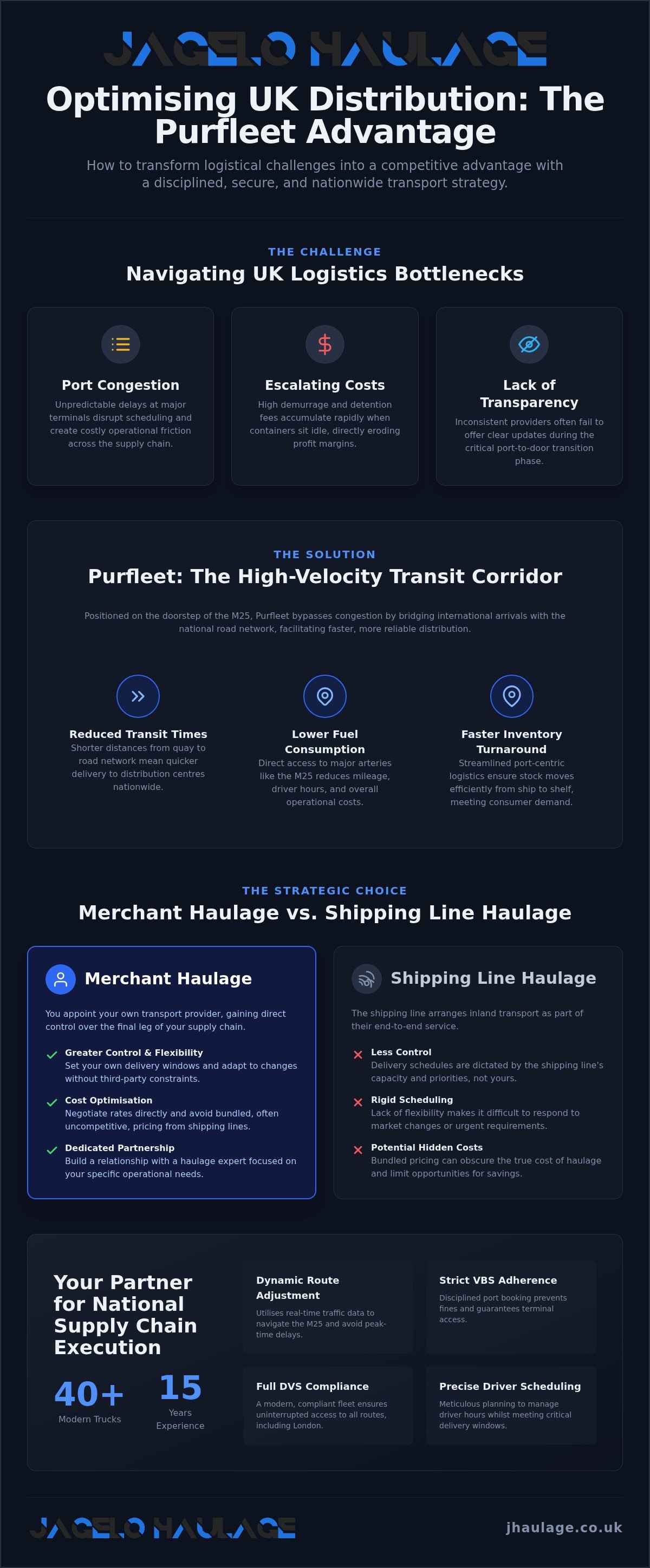
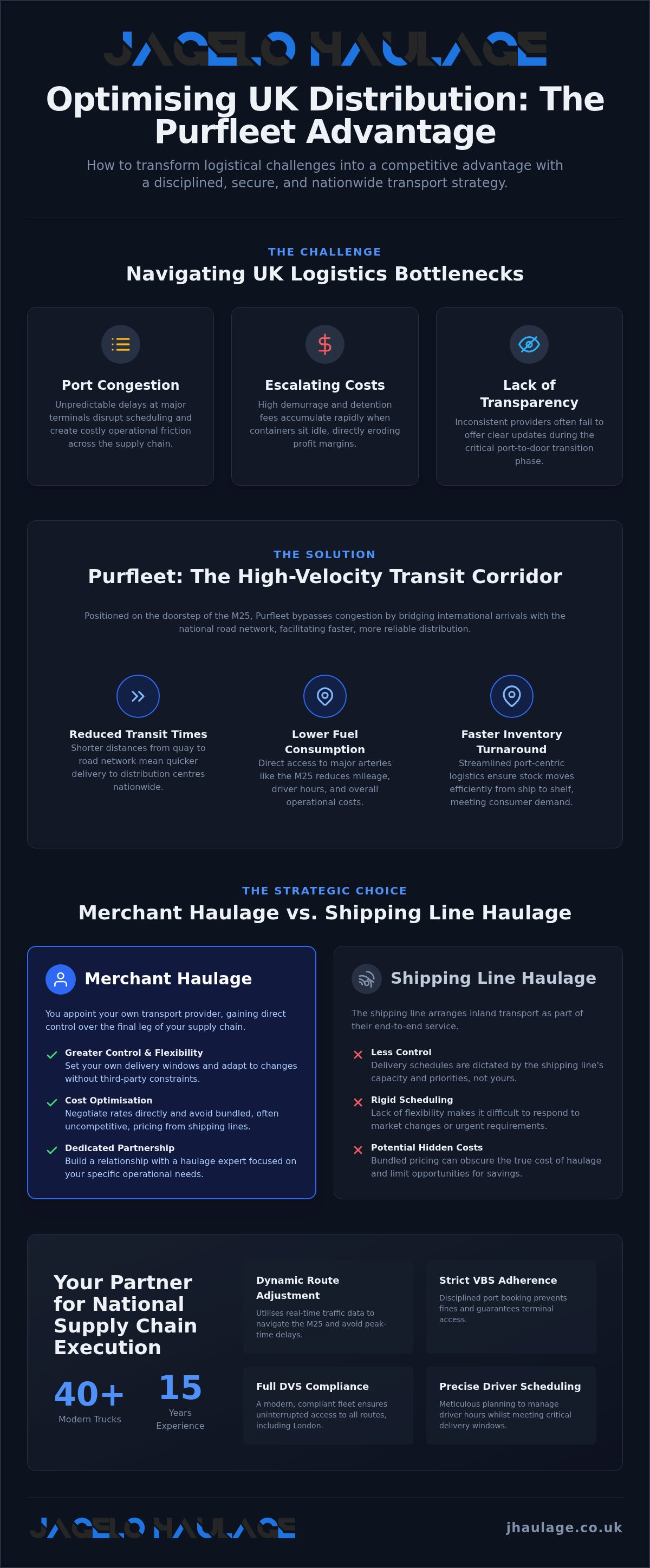
Purfleet serves as a primary node for the UK's industrial supply chain. It's positioned to bridge the gap between international maritime arrivals and domestic distribution centres. Effective Purfleet container haulage allows logistics managers to bypass the congestion often found at more distant ports, placing goods directly on the doorstep of the M25. This geographical advantage translates into immediate operational gains. By reducing the physical distance between the vessel and the national road network, businesses can lower fuel consumption and driver hours. These savings directly impact the bottom line by lowering the total cost of ownership for every container moved.
The strategic value of this region is anchored by its proximity to the Port of Tilbury, which handles a significant portion of the UK's containerised trade. This cluster of terminals creates a high-density logistics environment where efficiency is mandatory. For companies relying on Purfleet container haulage, this means shorter lead times and more reliable delivery windows. Logistics managers prioritising national reach select these hubs because they facilitate faster inventory turnaround times. When goods move through Purfleet, they're not just arriving at a destination; they're entering a high-velocity transit corridor that serves the entire country.
Thames Terminals as National Gateways
Proximity to major transport arteries is the defining characteristic of Thames-side logistics. From this vantage point, hauliers can reach major distribution hubs in the Midlands and the North with greater predictability. Port-centric logistics models reduce the need for multiple handling stages, moving containers directly from the quay-side to national warehouse facilities. This streamlined approach minimises the risk of damage and ensures that stock remains available for consumer demand without unnecessary delays. It's a strategic choice that transforms the port from a simple arrival point into a functional engine for national growth.
Overcoming Thames-Side Logistics Challenges
Managing high-volume port movements requires a disciplined approach to scheduling. The Thames corridor faces specific complexities, including peak-time traffic and terminal gate queues. To mitigate these delays, a haulier must possess deep operational experience and a modernised fleet. Jagelo Haulage utilises a fleet of over 40 modern trucks and trailers to navigate these variables, providing a structured alternative to less disciplined providers. Their 15 years of industry experience allow for the anticipation of port-side bottlenecks before they impact the client's schedule. Success in this environment depends on several factors:
- Utilising real-time traffic data to adjust routes dynamically around the M25.
- Maintaining strict adherence to port booking slots to avoid unnecessary fines.
- Deploying DVS-compliant vehicles to ensure uninterrupted access to London-adjacent routes.
- Implementing precise driver scheduling to manage hours whilst meeting delivery windows.
Navigating Operational Logistics and Port Collections
Operational efficiency at the port gate requires a disciplined approach to vehicle synchronisation. For Purfleet container haulage to function as a strategic hub, hauliers must align their assets with terminal availability through the Vehicle Booking System (VBS). This system acts as a digital gatekeeper, regulating the flow of traffic to prevent terminal saturation. According to UK road freight industry statistics, the sector is fundamental to the economy, and any friction at the port level can cause ripple effects throughout the national supply chain. Precise coordination ensures that haulage remains a solution rather than a bottleneck.
Disciplined scheduling serves as the primary defence against demurrage and detention fees. These costs accumulate rapidly when a container sits idle past its free-time allowance. A professional haulier monitors release statuses in real-time, ensuring that a driver is dispatched only when the cargo is physically available and customs-cleared. This level of coordination requires constant communication between the transport office, the driver, and the port operator. When these links are maintained, the transition from quay to road is seamless, protecting the client's margin from avoidable administrative penalties.
The Step-by-Step Collection Process
A structured collection process ensures that every movement is accounted for and protected. This methodical approach minimises the risk of errors that lead to delays at the terminal gate.
- Step 1: Secure a specific time slot within the terminal's VBS framework to avoid wait-time penalties and ensure priority access.
- Step 2: Verify container release and customs clearance to confirm the cargo is legally and operationally ready for collection.
- Step 3: Execute the collection using specialised equipment and transition immediately onto the national road network for final delivery.
Managing Time-Sensitive Logistics
Urgent cargo demands a protocol-driven response. When a shipment is time-critical, same-day delivery protocols are activated to bypass standard transit delays. Maintaining a modernised fleet of over 40 trucks is essential here; newer vehicles are less prone to mechanical failure, which minimises downtime during transit. If schedule shifts occur due to terminal congestion, responsive customer support provides the transparency needed to adjust downstream operations. You can request a bespoke logistical assessment to see how these disciplined processes can secure your delivery windows. Reliable Purfleet container haulage isn't just about movement; it's about the technical execution of a well-planned route.
Merchant Haulage vs Shipping Line Haulage: A Strategic Choice
Logistics managers must decide between two distinct transport models when moving goods from the quay. Shipping line haulage is controlled by the ocean carrier, whilst merchant haulage allows the cargo owner to appoint an independent transport partner. This decision isn't merely administrative; it's a strategic choice that determines the level of control over the entire supply chain. For those utilising Purfleet container haulage, the merchant model provides the transparency needed to manage complex delivery schedules across the UK. It ensures that the transport provider is accountable directly to you, rather than the shipping line.
Choosing an independent specialist shifts the focus from the carrier's convenience to the client's operational requirements. Shipping lines often operate on a high-volume, low-flexibility basis, which can lead to delays during peak periods or port congestion. In contrast, merchant haulage prioritises the specific delivery windows of the warehouse or end-user. This model fosters long-term supply chain stability by establishing a direct relationship between the merchant and the haulier, ensuring that every movement is executed with precision and functional reliability.
The Advantages of the Merchant Haulage Model
The primary benefit of merchant haulage is the significant increase in operational flexibility. You gain the ability to select specific routes and delivery times that align with your warehouse capacity. Direct accountability is a hallmark of this model; you communicate directly with the transport provider's office rather than navigating a carrier's automated customer service desk. This streamlined communication allows for immediate adjustments if site conditions change or if an urgent delivery is required. Additionally, specialised requirements, such as DVS-compliant vehicles for London-adjacent routes, are easily integrated into a bespoke haulage plan.
When to Utilise Shipping Line Haulage
Shipping line haulage is often viewed as a convenient, all-in-one solution for simple transit. However, this 'one-size-fits-all' approach frequently falls short when faced with port-side bottlenecks or strict delivery windows. Carriers may prioritise their own equipment repositioning over your urgent delivery schedule. Large-scale operators are increasingly moving towards merchant solutions to avoid these risks and gain better control over their costs. By appointing a dedicated partner like Jagelo Haulage, businesses can bypass the rigidity of line-controlled transport. This shift ensures that Purfleet container haulage remains a reliable component of national distribution, protecting the merchant from the unpredictability of carrier-managed logistics.
Ensuring Security and Compliance in National Transport
Security in the supply chain requires a disciplined framework that extends beyond the physical locking of a container. For providers of Purfleet container haulage, compliance with regional and national regulations is the foundation of functional reliability. Corporate risk management depends on a haulier's ability to provide fully insured transport, protecting high-value cargo against unforeseen transit incidents. This commitment to security ensures that every movement within the national network is conducted with quiet confidence and professional accountability. A partner who understands the high stakes of the supply chain prioritises these details to deliver protected outcomes for every client.
Fleet Standards and Safety Protocols
Maintaining a modernised fleet of over 40 trucks is essential for ensuring operational reliability. A haulier with over 15 years of industry experience understands that safety-oriented driver behaviour is as critical as the equipment itself. Strict protocols are followed during the port-to-door transition to ensure cargo remains protected whilst in transit. This includes rigorous vehicle checks and adherence to secure parking requirements during mandatory rest periods. By prioritising these fundamentals, a transport partner eliminates the vulnerabilities often found in less disciplined operations. The result is a stable logistics process that mirrors the reliability of the physical operations themselves.
Meeting Environmental and Regulatory Requirements
London's Direct Vision Standard (DVS) represents a significant regulatory requirement for hauliers operating near Thames-side hubs. As of 2026, stricter DVS requirements are in effect for all HGV designs to improve driver visibility and reduce blind spots. Purfleet container haulage must be executed using vehicles that meet these evolving standards to ensure uninterrupted access to key delivery routes within the capital and surrounding areas. Failing to meet these standards doesn't just result in fines; it disrupts the entire delivery schedule.
Environmental compliance is also a core component of modern logistics. Utilising Euro VI E engines allows hauliers to meet national emission targets and avoid escalating charges at various UK ports. Additionally, the mandate for Smart Tachograph Version 2, which became effective on July 1, 2026, for goods vehicles over 2.5 tonnes in international transport, underscores the industry's shift toward digital transparency and safety. Professional logistics providers integrate these requirements into their daily operations to provide a stable and compliant service. You can request a compliance-aligned haulage quote to ensure your cargo meets all current safety and environmental standards whilst maintaining national reach.
Jagelo Haulage: Your Partner for National Supply Chain Execution
Jagelo Haulage operates as a disciplined extension of your own supply chain. With over 15 years of specialised experience, we understand that reliability is the only metric that matters in port-to-door transport. Whilst our operations are Suffolk-based, our reach is truly national. This strategic positioning allows us to serve the Thames corridor and beyond with a high degree of punctuality. We provide a structured alternative to the often inflexible models offered by shipping lines. Our commitment to functional reliability ensures that every movement of Purfleet container haulage is executed with precision. Every statement we make is backed by a history of successful national deliveries for corporate clients who demand corporate-level discipline.
Nationwide Reach from Strategic Hubs
We leverage a fleet of over 40 modern trucks and trailers to provide consistent coverage across the UK. This capacity allows us to manage high-volume requirements without compromising on the quality of service. Success in this sector requires a deep understanding of the fundamentals, from terminal booking systems to driver hours regulations. You can learn more about our port logistics services UK to see how we manage these complexities. By maintaining a significant presence near key hubs, we bridge the gap between international maritime arrivals and domestic end-points. Our national reach is supported by several core factors:
- A modern fleet that adheres to Euro VI E emission standards for port access.
- Experienced drivers who follow strict safety and security protocols whilst in transit.
- Methodical route planning to avoid known congestion points around the M25 and major arteries.
- Disciplined adherence to VBS slots to prevent terminal gate delays and demurrage.
Securing Your Operational Outcomes
Operational outcomes are secured through a combination of technical capability and responsive communication. We don't rely on automated customer service desks; instead, our team provides the direct accountability needed to manage schedule shifts in real-time. This grounded, no-nonsense approach ensures that your cargo remains protected and punctual. You can view our container transport fleet capabilities to understand the equipment we deploy for every national assignment. We take stoic pride in our ability to provide dependable results for corporate clients who understand the high stakes of modern logistics. Our focus remains fixed on the performance and results that keep your supply chain moving without unnecessary friction or administrative burden.
Optimising Your National Supply Chain Through Purfleet
Strategic logistics management requires more than simple movement; it demands a disciplined approach to every stage of the port-to-door transition. By selecting merchant-controlled Purfleet container haulage, you gain the operational flexibility needed to navigate terminal congestion and avoid unnecessary demurrage costs. This model ensures your delivery windows are prioritised over carrier convenience, fostering long-term stability for your national distribution network. Adhering to strict safety protocols and maintaining compliance with standards like the Direct Vision Standard protects both your cargo and your reputation.
Jagelo Haulage provides the functional reliability required to execute these complex operations. It's about technical execution as much as physical transport. With over 15 years of specialised expertise and a modern fleet of over 40 trucks, we ensure your goods move with quiet confidence and professional accountability. Our DVS-compliant vehicles provide uninterrupted access to critical London-adjacent routes, making us a dependable partner for your national logistics requirements. Secure your national container haulage with Jagelo Haulage to establish a more resilient and predictable supply chain today. We look forward to supporting your operational success.
Frequently Asked Questions
What are the primary benefits of using Purfleet for national container haulage?
Purfleet serves as a high-performance logistics node due to its immediate proximity to the M25 and major Thames terminals. This strategic location reduces inland transit times by placing goods closer to the UK's primary road network. Businesses utilising Purfleet container haulage benefit from lower fuel costs and reduced driver hours compared to more distant ports. It's an efficient entry point for national distribution that facilitates faster inventory turnaround and lower overall supply chain overheads.
How does merchant haulage differ from shipping line haulage in terms of control?
Merchant haulage offers superior control by allowing you to appoint an independent transport specialist directly accountable to your business. Unlike shipping line haulage, which follows the carrier's internal priorities, merchant solutions prioritise your specific delivery windows and warehouse requirements. This model provides the transparency needed to manage complex schedules. You gain the flexibility to select routes and adjust plans in real-time, ensuring that your logistical outcomes remain protected from carrier-side bottlenecks.
What is the Direct Vision Standard (DVS), and why does it matter for Purfleet haulage?
The Direct Vision Standard (DVS) is a safety requirement for heavy goods vehicles operating within Greater London. It measures how much a driver can see directly through their cab windows to reduce blind spots. For Purfleet haulage, DVS compliance is essential because many transit routes pass through or near London-controlled zones. Operating a DVS-compliant fleet ensures uninterrupted access to these areas and avoids the significant fines associated with non-compliance whilst improving road safety.
How can I avoid demurrage and detention charges when collecting from Thames terminals?
Avoiding demurrage requires precise synchronisation between container release and vehicle arrival. A disciplined haulier monitors customs clearance and release statuses in real-time to ensure drivers only attend the terminal when the cargo is ready. Efficient management of Vehicle Booking System (VBS) slots is also critical for avoiding wait-time penalties. By maintaining a structured collection process and clear communication with port operators, you can eliminate the administrative delays that lead to costly idle-time charges.
What equipment is typically used for Purfleet container transport?
Purfleet container transport typically utilises modern tractor units fitted with specialised skeletal trailers designed to carry 20ft, 40ft, or 45ft containers. Professional fleets often feature Euro VI E engines to meet strict emission standards and avoid port-side environmental charges. These vehicles are equipped with safety technology required for DVS compliance and telematics for real-time tracking. Using modernised equipment ensures mechanical reliability and minimises the risk of downtime during long-distance national transit.
Can Jagelo Haulage provide same-day container delivery for urgent cargo?
Jagelo Haulage provides same-day container delivery protocols to handle time-critical shipments. Our fleet of over 40 modern trucks allows for a responsive approach to urgent logistics requests from major Thames hubs. When a container is cleared and released, we can execute an immediate transition to the national network for final delivery. This service depends on our disciplined scheduling and the functional reliability of our equipment, ensuring that high-priority cargo reaches its destination without delay.
How does the Vehicle Booking System (VBS) affect container collection times?
The Vehicle Booking System (VBS) acts as a digital gatekeeper that regulates the flow of traffic into the terminal. Each vehicle must have a confirmed time slot to enter the port, which directly dictates when a collection can occur. If a slot is missed due to poor scheduling or traffic, the haulier may face fines or significant delays. Successful Purfleet container haulage relies on a haulier's ability to secure and adhere to these precise windows.
Does Jagelo Haulage offer nationwide delivery from Purfleet port hubs?
Jagelo Haulage offers comprehensive nationwide delivery services from all major Purfleet and Thames-side port hubs. Whilst we maintain a strong presence in the South East, our fleet is equipped for long-haul transit to distribution centres across the Midlands, the North, and beyond. We combine our 15 years of specialised port experience with a national distribution framework to provide a dependable logistics solution. This ensures your cargo moves efficiently from the quay to any UK destination.