More on merchant haulage from Jagelo Haulage
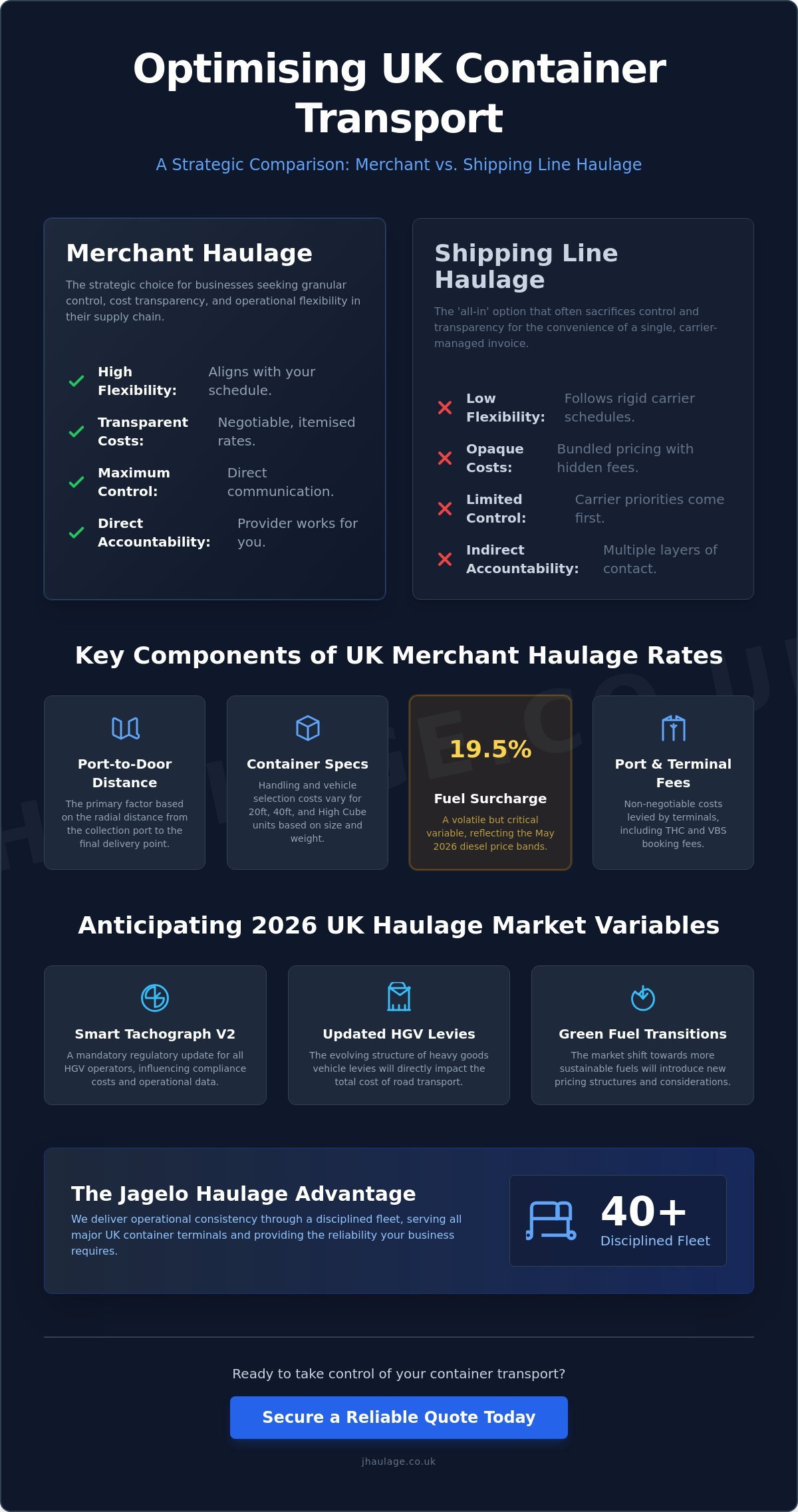
Relying on shipping line haulage might appear convenient, but it often subjects your supply chain to rigid schedules and opaque pricing structures. Understanding the variables that determine merchant haulage rates UK is no longer just an administrative task; it's a strategic necessity for maintaining operational stability in a volatile market. Many logistics managers feel frustrated by unpredictable fuel surcharges, which stand at 19.5% for May 2026, and a persistent lack of transparency in port-to-door pricing.
You're right to demand more control and predictability from your transport partners. This guide provides a professional framework to help you master these complexities and optimise your container transport costs through disciplined logistics strategies. We'll examine how to evaluate quotes effectively whilst considering 2026 regulatory shifts, such as the Smart Tachograph Version 2 mandate and updated HGV levies. By the end of this article, you'll have the technical knowledge required to secure reliable, professionally managed container deliveries that support your broader operational goals.
Key Takeaways
- Understand why shifting to merchant haulage offers the strategic flexibility and cost transparency required for complex supply chain management.
- Master the fundamental variables of merchant haulage rates UK, from port-to-door distance calculations to container weight and size specifications.
- Analyse the total cost of ownership between transport models to eliminate the hidden fees often associated with shipping line haulage.
- Anticipate the financial impact of 2026 market variables, including green fuel transitions and the evolving HGV levy structure.
- Explore how Jagelo Haulage delivers operational consistency through a disciplined fleet of over 40 trucks serving all major UK container terminals.
Understanding Merchant Haulage and UK Rate Structures
Merchant haulage is a strategic transport arrangement where the cargo owner assumes responsibility for the inland movement of goods. This model relies on independent contractors to collect containers from major ports and deliver them to final destinations. As the complexity of the UK transport infrastructure increases, businesses are prioritising this approach to gain granular visibility over their supply chain costs. Unlike carrier-controlled logistics, where transport is bundled into a global shipping contract, merchant haulage allows for a more tailored and transparent pricing structure. UK businesses are increasingly moving away from carrier-led models to avoid hidden surcharges and rigid booking windows that don't suit modern lean operations.
The role of the independent contractor is vital in this ecosystem. These specialists operate between the port terminal and the inland warehouse, providing the physical link that completes the import or export cycle. By separating the sea freight from the land transport, merchants can shop for the best merchant haulage rates UK based on performance and price rather than being locked into a single carrier's network. This separation of services creates a competitive environment that generally benefits the shipper's bottom line.
The Strategic Advantage of Independent Haulage
Independent haulage provides a level of operational flexibility that shipping lines often struggle to match. Shipping lines operate on high-volume, rigid schedules. They prioritise their own vessel turnaround times over individual delivery windows. By choosing an independent specialist, companies can negotiate specific collection times that align with their warehouse capacities. Direct communication with the haulage fleet ensures that operational updates are shared in real-time. It's about reliability. This eliminates the bureaucratic delays often encountered when dealing with large carrier customer service departments. You can consolidate your transport requirements across various shipping lines into one single, professionally managed fleet. This creates a more cohesive logistics strategy.
Merchant Haulage vs Carrier Haulage: An Overview
The primary distinction between these models lies in the chain of command and liability. In carrier haulage, the shipping line organises the transport and remains responsible for the container until it reaches the door. Whilst this sounds simpler, it often results in higher "all-in" costs and limited choice of providers. Merchant haulage shifts the administrative control to the cargo owner. This allows for the consolidation of transport requirements into a single, reliable provider like Jagelo Haulage. Consider these core differences:
- Carrier Haulage: Transport is managed by the shipping line; limited flexibility; bundled pricing.
- Merchant Haulage: Transport is managed by an independent contractor; high flexibility; transparent, negotiable rates.
This model fosters more responsive customer support because the haulage provider is directly accountable to the merchant. It's a disciplined approach that prioritises performance over convenience. It ensures your goods move according to your business needs, not the carrier's convenience.
Calculating the Cost to Transport a Shipping Container
Calculating the financial requirements for container transport involves more than a simple mileage check. Professional logistics providers build quotes based on a series of fixed and variable components that ensure operational viability. The base rate for merchant haulage rates UK primarily depends on the radial distance between the port of entry and the final delivery point. However, container specifications significantly influence the final figure. A standard 20ft unit requires different handling compared to a 40ft or a High Cube container, particularly regarding weight distribution and vehicle selection.
External market factors play a substantial role in these calculations. According to the UK road freight market analysis, fuel and labour remain the most volatile cost drivers. For instance, as of May 2026, the industry-standard fuel surcharge is 19.5%, reflecting current diesel price bands. Beyond the road journey, port-related fees such as Terminal Handling Charges (THC) and Vehicle Booking System (VBS) fees must be accounted for. These are non-negotiable costs levied by the terminals to manage the flow of traffic and container movements within the port environment.
Distance and Vehicle Type Factors
Base rates are typically categorised by the distance from major maritime hubs like Felixstowe, Tilbury, or Liverpool. The further the inland destination, the higher the resource allocation required. Specialist equipment also impacts the quote. If your cargo requires skelly trailers for standard containers or low loaders for over-height units, the rate will adjust to reflect the specialised nature of the fleet. Same-day delivery requirements often necessitate tighter scheduling, which can influence the final pricing structure. It's about matching the right asset to the specific cargo requirement to ensure a protected and efficient transit.
Ancillary Charges and Hidden Costs
Operational efficiency is the best way to avoid unnecessary expenses. Demurrage and detention fees occur when containers remain at the terminal or at your premises beyond the agreed "free time" period. These costs escalate quickly and can undermine your transport budget. Additionally, VBS charges for peak-time port access are standard across major UK terminals. To maintain a disciplined budget, it's essential to monitor waiting time at the delivery point. Hauliers generally allow a set window for loading or unloading, after which hourly charges apply. You can request a detailed breakdown to see how these variables apply to your specific route and avoid unexpected overheads.
Merchant vs Shipping Line Haulage: Which Offers Better Value?
Evaluating the total cost of ownership (TCO) reveals that the cheapest quote isn't always the most economical choice. Shipping line haulage often presents a lower headline figure, yet these rates frequently attract hidden surcharges for fuel, congestion, or administrative changes. In contrast, merchant haulage rates UK are built on transparency and stability. By working with a specialist, you avoid the 'black box' pricing models of global carriers. The Road Haulage Association frequently highlights how fluctuating operating costs require shippers to be more vigilant about their logistics spend. Choosing a dedicated partner allows you to lock in rates that reflect actual market conditions rather than arbitrary carrier fees.
Reliability is a financial safeguard. When a delivery is delayed, the ripple effect through your warehouse is immediate. Staff stand idle whilst waiting for containers, and production schedules slip. Merchant haulage gives you the ability to dictate delivery windows that suit your operations, not the shipping line's vessel schedule. This control directly protects your bottom line by ensuring warehouse labour is utilised efficiently. It's about operational discipline. Reliable transport ensures your goods move from the port to the shelf without the friction of carrier bureaucracy.
Cost Predictability and Transparency
Merchant haulage providers deliver all-in quotes that simplify the accounting process. You won't find unexpected 'port congestion' fees added after the fact. This responsiveness is a key differentiator when comparing merchant haulage rates UK against standard carrier offerings. Independent fleets can pivot quickly to changing requirements, whereas global carriers are often slowed by rigid corporate protocols. There are significant strategic benefits to securing a port haulage quote early in your planning cycle. It allows for better forecasting and reduces the risk of last-minute price spikes during peak periods.
Operational Control and Risk Management
Managing the risk of port congestion is easier when you have direct control over your transport. Independent scheduling allows for 'drop and swap' operations. This means a driver can drop an empty container and immediately collect a full one, maximising vehicle utility and reducing waiting times. This level of efficiency is rarely achievable with carrier-controlled logistics. A reliable container haulage partner acts as a strategic asset. They provide the security and consistency required to maintain a resilient supply chain in a volatile market. By removing the shipping line as a middleman, you gain direct access to the professionals responsible for your cargo's safety.
Market Variables Affecting UK Haulage Rates in 2026
Market volatility in 2026 is driven by more than just simple mileage calculations. Whilst fuel surcharges are a significant component, broader regulatory shifts and infrastructure changes are creating new cost baselines for merchant haulage rates UK. Shippers must look beyond the headline figure to understand how national policy and port-side developments influence their total spend. A disciplined approach to logistics requires an awareness of these external pressures to maintain a predictable transport budget.
Regulatory and Environmental Influences
Fleet compliance is a primary overhead driver this year. As of July 1, 2026, the Smart Tachograph Version 2 mandate requires all international goods vehicles over 2.5 tonnes to be retrofitted with advanced tracking hardware. Additionally, new trucks manufactured from July 7, 2026, must include Advanced Emergency Braking (AEB) systems to meet stricter safety standards. The HGV Levy, which stands at £597 for vehicles over 38,000kg, remains a fixed operational cost that hauliers must account for in their pricing structures. These safety and monitoring requirements ensure a more disciplined industry but necessitate significant capital expenditure from fleet operators. Environmental levies and decarbonisation charges are now integrated into 2026 rates as a transparent, fixed percentage of the total transport cost.
Infrastructure and Port Dynamics
Port automation is slowly improving container turnaround times at major hubs, yet Vehicle Booking System (VBS) pricing remains highly sensitive to peak-time demand. High congestion on the national road network continues to impact driver hours, which often leads to increased waiting time charges at the delivery point. To manage these risks, businesses should adopt strategies for cost-effective container haulage during high-volume periods. Efficient scheduling is the only way to mitigate the impact of road-side delays on your bottom line.
Seasonal demand, particularly during the "Golden Quarter," traditionally causes rate fluctuations as capacity tightens across the network. This volatility is compounded by ongoing driver wage inflation and the scarcity of specialist HGV operators capable of handling heavy container loads. The UK government's focus on the HGV CO2 emissions regulatory framework also signals a transition toward zero-emission heavy vehicles, with Euro 7 standards expected late in 2026. A disciplined logistics partner anticipates these shifts to maintain service consistency and operational safety. You can ensure your budget remains protected by requesting a professional haulage quote that accounts for these 2026 market variables.
Securing Reliable Container Haulage with Jagelo Haulage
Success in the 2026 logistics market requires more than just an awareness of merchant haulage rates UK; it demands a partnership with a disciplined operator. Jagelo Haulage applies a methodical approach to nationwide container logistics, ensuring that every movement is executed according to strict professional protocols. With over 15 years of industry experience, we understand the specific operational nuances of major terminals including Felixstowe, DP World Gateway, and Liverpool. This technical expertise allows us to navigate port complexities whilst maintaining the punctuality your supply chain requires.
Consistency is the foundation of our service model. We operate a modern, well-maintained fleet of over 40 trucks and trailers. This internal capacity allows us to provide reliable container deliveries without the unpredictability often found in sub-contracted networks. Our drivers follow established safety and efficiency standards, ensuring that your cargo remains protected from the port gate to the final inland destination. By maintaining direct control over our assets, we deliver the functional reliability that corporate clients expect from a strategic transport partner. It's about performance, not self-promotion.
A Strategic Partnership for Your Supply Chain
Moving away from transactional transport helps businesses build a more resilient logistical framework. We don't treat haulage as a simple physical task. Instead, we frame it as a strategic outcome that supports your broader business goals. Our operations are centred in Woolpit, providing a strategic hub that facilitates efficient access to the UK's primary road networks. This central location allows for responsive customer support and consistent performance across the country. Our team understands the high stakes of the modern supply chain and prioritises the safety and efficiency of your operations above all else. This disciplined structure ensures that your container haulage remains a stable component of your business model.
Next Steps: Optimising Your Transport Strategy
Integrating Jagelo Haulage into your existing workflow is a straightforward process designed for operational efficiency. We provide comprehensive, transparent quotes that account for the 2026 market variables discussed in this guide. This ensures your transport budget remains stable and protected from hidden carrier surcharges. You can begin this process by requesting a professional haulage quote tailored to your specific volume and route requirements. For further technical insights, we recommend reading our comprehensive UK buying guide. This resource provides the additional depth required to master your container transport costs in the current regulatory environment.
Refining Your Container Logistics Strategy for 2026
Transitioning to a merchant-controlled model is the most effective way to gain transparency over your logistics spend. By mastering the variables that dictate merchant haulage rates UK, you can move away from the rigid constraints of shipping line schedules and reclaim operational control. This strategic shift allows you to manage port-to-door pricing with precision whilst avoiding the hidden surcharges often found in bundled carrier contracts.
Jagelo Haulage provides the steadfast professionalism required to secure your supply chain in a volatile market. With 15 years of industry expertise and a modern fleet of over 40 specialised trucks, we serve all major UK maritime hubs with functional reliability. Our disciplined approach ensures that your container deliveries are professionally managed and protected from operational friction. Contact Jagelo Haulage for a professionally managed transport quote to start refining your container transport strategy today. We look forward to supporting your operational goals with consistent, high-value logistics outcomes.
Frequently Asked Questions
What is the average merchant haulage rate in the UK for 2026?
Average UK haulage rates for 2026 generally range between £1.80 and £3.00 per mile depending on the vehicle type and cargo requirements. For heavy container transport using 44-tonne articulated trucks, base rates typically start from £3.00 per mile. These figures represent the standard industry benchmark for transport costs before the application of fuel surcharges, port-specific fees, or specialized equipment requirements.
How does merchant haulage differ from shipping line haulage in terms of cost?
Merchant haulage provides transparent, unbundled pricing that allows for direct negotiation with independent contractors. Shipping line haulage often includes bundled 'all-in' rates that may seem lower initially but frequently attract hidden administrative surcharges and rigid scheduling fees. By choosing merchant haulage, you gain control over the transport process and avoid the opaque pricing models often used by global carriers.
Can merchant haulage help avoid port storage and demurrage fees?
Merchant haulage offers greater scheduling flexibility, which is essential for avoiding costly demurrage and port storage fees. Independent hauliers can coordinate collection times more precisely with your warehouse capacity to ensure containers are removed before terminal 'free time' periods expire. This disciplined coordination helps mitigate the risk of financial penalties by ensuring containers move strictly according to your operational schedule.
Is fuel duty included in the initial merchant haulage quote?
Fuel duty is a fixed component of the base diesel price, but most quotes list the fuel surcharge as a separate variable percentage. As of May 2026, the industry-standard fuel surcharge is 19.5% based on current diesel price bands. This separation ensures that merchant haulage rates UK remain transparent and reflect real-time market volatility rather than being hidden within a flat rate.
What factors cause nationwide container haulage prices to fluctuate?
Nationwide container haulage prices fluctuate due to volatile fuel costs, seasonal demand peaks, and shifting regulatory requirements. For instance, the 2026 mandate for Smart Tachograph Version 2 and stricter Direct Vision Standards (DVS) impact fleet operating overheads. These variables, combined with seasonal pressures during the 'Golden Quarter', directly influence the final merchant haulage rates UK businesses can expect to pay.
How much does it cost to transport a 40ft shipping container inland?
The cost to transport a 40ft container inland depends primarily on the radial distance from the port and the specific vehicle required for the load. Whilst 44-tonne articulated vehicles are the industry standard for these units, the final quote will incorporate the base mileage rate, current fuel surcharges, and any applicable port booking fees. Shippers should check specific route requirements to determine the total operational spend.
Does the weight of the cargo affect the merchant haulage rate?
Cargo weight significantly influences the rate because it dictates vehicle selection and fuel consumption. Heavier loads require 44-tonne articulated trucks and may incur higher HGV levies, which stand at £597 for vehicles over 38,000kg. Ensuring your cargo weight is accurately declared allows the haulier to allocate the correct asset and provide a precise, professionally managed quote that reflects the technical requirements of the journey.
Can I get a fixed rate for regular container deliveries from UK ports?
Fixed rates are often available for regular container deliveries from UK ports to specific inland destinations. This arrangement provides budget stability and allows for better long-term logistics planning for high-volume shippers. Shippers with consistent requirements can negotiate contract rates that mitigate the impact of daily market fluctuations whilst ensuring guaranteed fleet capacity and operational consistency for their nationwide supply chain.