More on merchant haulage from Jagelo Haulage
Letting the shipping line handle your container transport feels like the path of least resistance. You've got enough to manage without adding haulage logistics to your plate. But that convenience comes at a cost: missed delivery windows, opaque communication, and demurrage charges that quietly erode your margins before you've even had a chance to react.
If you've ever chased a shipping line for an update on a container that's sitting idle at Felixstowe whilst your production line waits, you already understand the frustration. The truth is, merchant haulage puts that control back where it belongs: with you. It's a choice that's less about taking on more responsibility and more about deciding who is accountable when things need to move.
This guide is written for UK importers and exporters who want to make that decision with clarity. You'll learn precisely how merchant haulage works, how it compares to shipping line haulage, and how organising your own transport from port to final destination can reduce costs, improve schedule reliability, and give you the direct communication your supply chain demands. We'll cover the practical mechanics, the commercial considerations, and what to look for in a specialist haulage partner.
Key Takeaways
- Merchant haulage transfers control of the inland transport leg directly to you, the shipper or receiver, giving you accountability over scheduling and delivery windows that shipping line haulage simply cannot match.
- Choosing merchant haulage over shipping line haulage involves a clear trade-off between convenience and operational control — understanding the cost differences between all-in rates and itemised pricing is essential before making that decision.
- Working with a specialist haulage partner offers direct, responsive communication and dedicated transport management — a significant operational advantage over dealing with a global shipping line's support infrastructure.
- Preparing the correct documentation and building realistic lead times into your booking process are two of the most effective ways to avoid costly delays during port collection.
- Over 15 years of port logistics expertise and a modern fleet of 40+ trucks position Jagelo Haulage as a dependable partner for professional container movements from the UK's major maritime hubs.
Defining Merchant Haulage in the UK Supply Chain
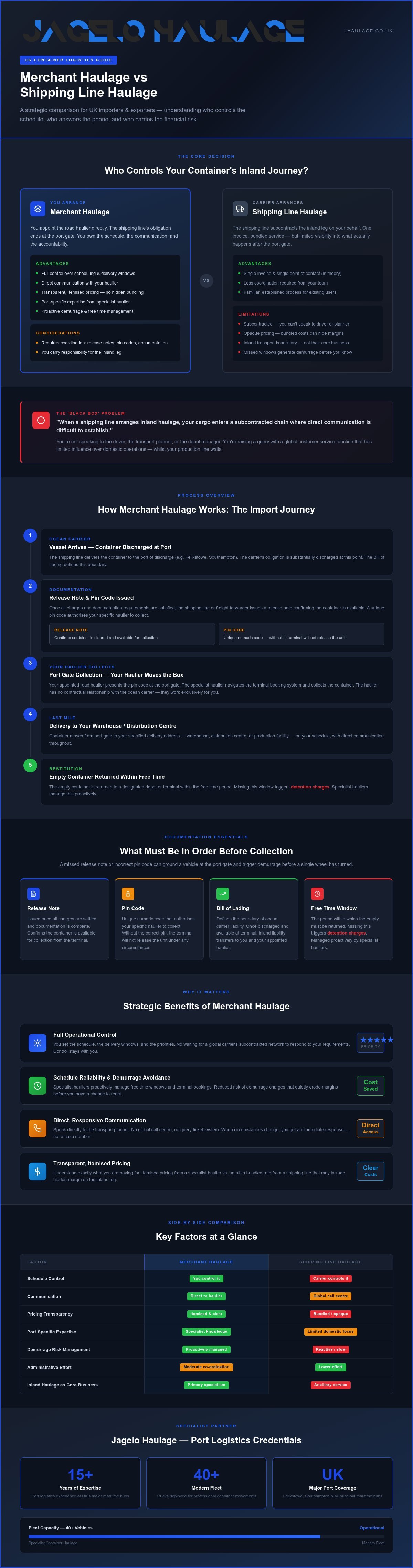
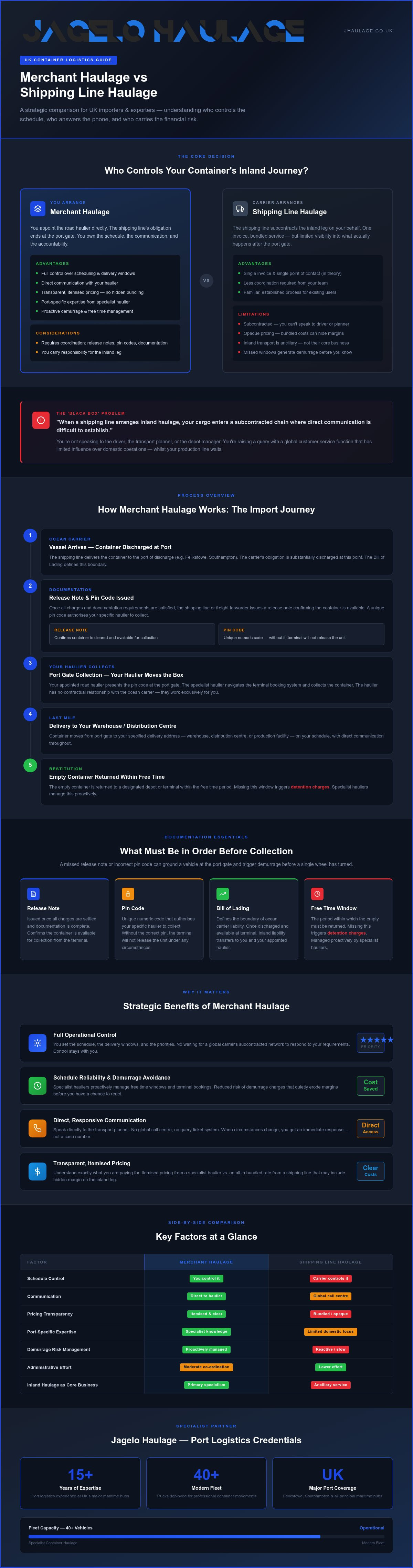
Merchant haulage is a transport arrangement in which the shipper or receiver, referred to as the 'merchant', takes direct responsibility for organising the inland movement of a container. The shipping line delivers the box to the port of discharge and its obligation ends there. What happens next, moving that container from the port gate to a warehouse, distribution centre, or production facility, is entirely the merchant's domain to coordinate and manage.
This is why the term 'carrier-neutral' applies. The road haulier you appoint has no contractual relationship with the ocean carrier. They work for you. That distinction sounds straightforward, but its operational implications run deep throughout the UK supply chain.
The Core Mechanics of Merchant Haulage
Container logistics professionals often refer to the 'first mile' and 'last mile' as the critical junctures where delays and costs accumulate. In an import scenario, the last mile is the movement from port to final destination. In an export scenario, the first mile is the collection from your premises to the port. Merchant haulage places the merchant in direct control of both. The handover process at the port gate is governed by a specific set of documents and codes:
- Release notes: Issued by the shipping line or freight forwarder once all outstanding charges and documentation requirements are satisfied, confirming the container is available for collection.
- Pin codes: Unique numeric codes that authorise a specific haulier to collect a container from the terminal. Without the correct pin, the terminal will not release the unit.
- Restitution: The process of returning an empty container to a designated depot or terminal within the free time period. Missing this window triggers detention charges.
Understanding these mechanics is not optional. A missed release note or an incorrect pin code can ground a vehicle at the port gate and trigger demurrage before a single wheel has turned toward the delivery address.
Merchant vs Carrier: Who is Responsible?
The Bill of Lading defines where the ocean carrier's liability ends. Once a container is discharged and available at the terminal, the carrier's obligation is substantially discharged. From that point, liability for the inland movement rests with the merchant and the road haulier they appoint. This boundary matters enormously when something goes wrong.
Coordinating with a third-party haulage company requires clear communication of delivery requirements, accurate documentation, and realistic scheduling. A specialist partner, rather than a general logistics provider, brings the port-specific knowledge to navigate terminal booking systems, manage free time windows, and respond when circumstances change. That professional management isn't an administrative overhead; it's what separates a controlled delivery from a costly one.
Merchant Haulage vs Shipping Line Haulage: A Strategic Comparison
The choice between merchant haulage and shipping line haulage isn't simply a procurement decision. It's a question of where operational accountability sits within your supply chain. Both arrangements move containers from port to destination. What differs significantly is who controls the schedule, who answers the phone when something goes wrong, and who carries the financial exposure when delays accumulate.
Shipping lines present their haulage offering as a convenience. One invoice, one point of contact, everything bundled together. That simplicity is genuine. But it comes packaged with a structural limitation: the shipping line's primary business is ocean freight. Inland transport is an ancillary service, and it's often managed through subcontracted networks with limited visibility back to you, the importer or exporter.
Operational Control and Visibility
The 'black box' problem is real and consistently underestimated. When a shipping line arranges inland haulage, your cargo enters a subcontracted chain where direct communication is difficult to establish. You're not speaking to the driver, the transport planner, or the depot manager. You're raising a query with a global customer service function that has limited influence over a domestic subcontractor's schedule. If your delivery window is tight, that communication gap carries direct commercial risk.
Appointing a specialist haulier changes that dynamic entirely. You're dealing directly with the people responsible for moving your container. When a terminal booking needs to change or a delivery needs to be rescheduled, the decision sits with someone who has both the authority and the operational context to act on it quickly. A modern fleet equipped with tracking technology adds a further layer of confidence: you can monitor progress without chasing updates.
Cost Structures and Hidden Savings
Shipping line haulage rates are typically presented as 'all-in', which sounds straightforward until you examine what's bundled inside. Administrative fees, fuel surcharges, and handling levies are frequently embedded within that single figure, making genuine cost comparison difficult. Negotiating directly with a haulier produces an itemised structure where each cost element is visible and contestable.
There's a more significant financial consideration, too. Shipping line haulage schedules aren't built around your operational requirements; they're built around consolidated routing efficiency. A container that misses a collection slot on a shared run may sit at the terminal for an additional day or more. Those extra days convert directly into demurrage charges. Controlling your own transport booking means controlling that timeline.
- Direct rate negotiation: Establish container haulage rates based on your specific volumes and routes, without bundled line items obscuring the true cost.
- Reduced demurrage exposure: Dedicated collections aligned to your schedule reduce the risk of containers sitting idle beyond free time allowances.
- Transparent invoicing: Itemised billing makes cost management and budget forecasting considerably more reliable.
- Responsive rescheduling: Direct access to your haulier means changes can be made quickly, without navigating a global service desk.
UK operators across manufacturing, retail, and distribution are increasingly recognising these advantages. The shift towards merchant haulage isn't driven by a desire for complexity; it's driven by the recognition that convenience without control is an expensive trade-off. If you're ready to take ownership of that inland leg, speak to Jagelo Haulage about a tailored container transport solution.
The Strategic Benefits of Choosing Merchant Haulage
Control over your inland transport leg isn't simply an operational preference; it's a commercial advantage that compounds over time. The benefits of merchant haulage extend well beyond cost transparency. They shape how your supply chain responds under pressure, how quickly you can adapt when circumstances shift, and how confidently you can commit to delivery windows that your customers depend on.
Agility in a Volatile Market
Port congestion, warehouse capacity changes, and sudden shifts in production schedules are not exceptional events in UK logistics. They're routine. The question isn't whether disruption will occur; it's how quickly your transport arrangement can respond when it does.
When warehouse space becomes available ahead of schedule, a dedicated haulier can re-prioritise your collection without working through a global service desk. When a just-in-time delivery window tightens, you're speaking directly to the transport planner with the authority to act. That responsiveness is structural, not incidental. A modern fleet of 40 or more trucks provides the operational depth to accommodate urgent requirements where a smaller operation simply cannot. Capacity exists. The question is whether your haulier has both the vehicles and the operational discipline to deploy them effectively when your schedule demands it.
This kind of agility cannot be replicated through a shipping line's subcontracted network. Decisions that take hours through a multi-tier service chain take minutes when you have a direct line to the people moving your containers.
Accountability and Direct Partnership
There's a meaningful difference between a service provider and a strategic partner. A service provider completes transactions. A partner understands your operation, anticipates your requirements, and takes genuine accountability for outcomes.
Building a long-term relationship with a specialist container haulage company produces that second dynamic. Over time, your haulier learns your preferred delivery windows, your terminal preferences, your documentation requirements, and the specific sensitivities of your supply chain. That institutional knowledge reduces friction on every subsequent movement.
- Single point of contact: One dedicated transport manager across all UK port movements removes the coordination overhead that fragmented logistics arrangements create.
- Consistent fleet deployment: Regular use of the same professionally managed vehicles reduces the security variables that come with unknown subcontractors handling your cargo.
- Fully insured operations: Professionally managed haulage provides the documented liability framework that corporate procurement and compliance functions require.
- Proactive communication: A specialist partner flags potential issues before they become delays, rather than reporting problems after they've generated costs.
Jagelo Haulage brings over 15 years of port logistics expertise to every container movement. That depth of experience translates directly into the kind of calm, structured delivery management that importers and exporters operating at volume genuinely need. If your supply chain demands reliability rather than reactive firefighting, speak to the Jagelo Haulage team about your container transport requirements.
Optimising Your Merchant Haulage Booking Process
A well-planned collection is invisible. Everything moves on schedule, documentation clears without friction, and the container arrives at its destination within the free time window. A poorly planned one generates demurrage charges, frustrated warehouse teams, and avoidable rescheduling costs. The difference between the two almost always comes down to preparation made days before the vehicle reaches the port gate.
Documentation is where most preventable delays originate. Before any collection can proceed, four elements must be confirmed and accurate: the release note from the shipping line or freight forwarder, the correct pin code authorising your appointed haulier to collect, the Bill of Lading or its electronic equivalent, and customs clearance confirmation. A discrepancy in any one of these will ground the collection. Cross-referencing these documents against the shipping line's system at least 24 hours before the planned collection slot is standard practice, not optional diligence.
Vessel ETA monitoring deserves particular attention. Vessels regularly arrive ahead of or behind their scheduled berth times, and terminal availability shifts accordingly. Tracking ETA updates through the terminal's own notification system, rather than relying solely on the shipping line's schedule, gives you the earliest possible warning of a change. That window matters: it's the difference between proactively rescheduling your haulier and scrambling to recover a missed slot.
Restitution planning is equally critical and frequently underestimated. Once your container has been devanned, the empty unit must be returned to a shipping line-designated depot within the stipulated free time period. Detention charges accumulate quickly if that return is delayed. Confirm the correct restitution depot before collection, not after delivery, and build the return leg into your haulier's instruction from the outset.
UK Port Collection Protocols
The UK's busiest container terminals, including Felixstowe and Southampton, operate structured booking systems that govern when vehicles can enter the terminal to collect or deliver units. A Vehicle Booking System (VBS) is a digital platform used by port terminals to pre-allocate arrival time slots to hauliers, ensuring controlled vehicle flow and reducing congestion at the gate. Your appointed haulier must hold the relevant port credentials and active VBS registration to secure a slot. A haulier without those credentials cannot enter the terminal, regardless of how well the rest of your documentation is prepared.
Managing Lead Times and Expectations
Early booking is not a courtesy in the current UK haulage market; it's a commercial necessity. Capacity on high-demand routes from major ports tightens quickly, particularly during peak import periods. Booking your haulier as soon as vessel ETA is confirmed, rather than waiting for the container to discharge, protects your position in the schedule.
Special cargo requirements demand even earlier communication. Heavy out-of-gauge loads require specific trailer configurations, and hazardous goods movements are subject to regulatory requirements that affect vehicle type, driver certification, and routing. These aren't details to raise on the morning of collection. Learn more about container transport costs to understand how cargo type influences the overall cost structure of your inland movement.
- Confirm documentation at least 24 hours before collection: Release note, pin code, customs clearance, and Bill of Lading must all be verified and consistent.
- Monitor vessel ETA actively: Use terminal notification systems rather than relying solely on the shipping line's published schedule.
- Pre-confirm the restitution depot: Know exactly where the empty must be returned before the full container leaves the terminal.
- Book early on high-volume routes: Capacity from Felixstowe and Southampton is finite; early engagement with your haulier secures your slot.
- Declare special requirements upfront: Heavy, hazardous, or temperature-sensitive cargo requires specific vehicle and compliance planning that cannot be accommodated at short notice.
Executing merchant haulage effectively is a process discipline, not simply a transport arrangement. When that discipline is applied consistently, the cost and schedule advantages compound over time. Request a tailored container collection quote from Jagelo Haulage and put that process in the hands of a team with over 15 years of port logistics experience.
Jagelo Haulage: Your Partner for Professional Merchant Haulage
Fifteen years of port logistics experience isn't a marketing figure. It's the accumulated knowledge of thousands of container movements, each one requiring precise documentation management, terminal coordination, and delivery execution. That operational depth is what Jagelo Haulage brings to every client relationship, and it's what separates a specialist partner from a general transport provider.
Jagelo's Woolpit-based team operates with a directness that global shipping lines structurally cannot replicate. When you call, you reach the people responsible for your containers. Decisions get made. Schedules get confirmed. Problems get resolved before they generate costs. That's not a service promise; it's simply how a well-run, focused operation functions.
Specialised Container Haulage Solutions
Jagelo handles container movements from all major UK ports, including Felixstowe and Southampton, covering the full range of standard container types. Every operation is managed with the same professional rigour: verified documentation, confirmed VBS slots, and clear restitution planning built into each instruction from the outset. Explore our UK port logistics services to understand the full scope of what that specialist capability covers.
Security and consistency sit at the core of every delivery. Jagelo's operations are fully insured and professionally managed, providing the documented liability framework that procurement and compliance teams require. There are no unknown subcontractors handling your cargo. The fleet is Jagelo's own, and accountability is clear.
Why Professional Operators Trust Jagelo
A fleet of 40 or more modern trucks provides something that smaller hauliers genuinely cannot: consistent nationwide coverage with the capacity to absorb urgent requirements without disrupting existing schedules. When your timeline shifts, Jagelo has the operational depth to respond.
Operators who integrate Jagelo into their supply chain gain more than a transport booking. They gain a partner that understands their delivery windows, their terminal preferences, and the specific requirements of their cargo. That institutional knowledge builds over time and reduces friction on every subsequent movement.
- Direct communication: No service desk queues or multi-tier escalation chains; your contact is the team managing your containers.
- Modern, maintained fleet: Vehicles equipped with tracking technology provide real-time visibility without requiring you to chase updates.
- Nationwide reach: Coverage from the UK's principal maritime hubs to distribution centres and production facilities across the country.
- Consistent accountability: One professional team, one clear point of responsibility, across every merchant haulage movement.
If your supply chain demands reliability rather than reactive problem-solving, the next step is straightforward. Contact Jagelo Haulage for a merchant haulage quote today and put your inland container transport in the hands of a team built to deliver.
Take Control of Your Container Transport in 2026
Merchant haulage isn't a complicated concept. It's a straightforward decision to place accountability for your inland container transport where it belongs: with you and a specialist partner who answers directly to your operational requirements. The sections above have covered the mechanics, the cost dynamics, and the process discipline that separates a well-managed collection from an expensive one.
Three points carry the most weight. First, control over your transport schedule directly reduces demurrage exposure. Second, direct communication with your haulier produces faster decisions when circumstances change. Third, the right partner brings the port credentials, documentation expertise, and fleet depth to execute consistently, not just occasionally.
Jagelo Haulage brings 15 years of port logistics experience, a modern fleet of 40+ trucks, and nationwide coverage from the UK's principal maritime hubs to every container movement. That's a solid operational foundation for importers and exporters who need reliability built into their supply chain from the outset.
The next step is straightforward. Request a merchant haulage quote from Jagelo Haulage and put your container transport in capable hands.
Frequently Asked Questions About Merchant Haulage
What is the difference between merchant haulage and carrier haulage?
In merchant haulage, you appoint and manage your own road haulier for the inland transport leg, taking direct responsibility for moving the container from port to destination. In carrier haulage, the shipping line arranges and controls that inland movement, typically through a subcontracted network. The core distinction is accountability: merchant haulage places it with you, carrier haulage places it with the ocean carrier.
That accountability gap has practical consequences. With carrier haulage, you're communicating through a global service desk with limited influence over a domestic subcontractor's schedule. With merchant haulage, you're speaking directly to the people responsible for your container's movement.
Is merchant haulage cheaper than carrier haulage for UK deliveries?
It can be, but the comparison isn't straightforward. Shipping line haulage rates are typically presented as all-in figures with administrative fees, fuel surcharges, and handling levies bundled inside, making genuine cost comparison difficult. Negotiating directly with a specialist haulier produces an itemised structure where each cost element is visible.
The more significant saving often comes from reduced demurrage exposure. Carrier haulage schedules are built around consolidated routing efficiency, not your operational requirements. A container that misses a shared collection slot may sit at the terminal for additional days, converting directly into port storage charges. Controlling your own booking timeline removes that risk.
Who is responsible for port storage fees in merchant haulage?
In a merchant haulage arrangement, responsibility for demurrage and detention charges rests with you, the merchant. Once the shipping line has discharged the container and made it available at the terminal, the free time clock starts running. If your appointed haulier doesn't collect within that window, the resulting storage fees fall to you rather than the carrier.
This is precisely why documentation preparation and early booking matter so much. Confirming your release note, pin code, and customs clearance at least 24 hours before the planned collection slot is the most reliable way to protect your free time allowance and avoid unnecessary port storage costs.
Can I use merchant haulage for all major UK ports?
Yes. Merchant haulage is available across the UK's principal maritime hubs, including Felixstowe and Southampton, which handle the majority of the country's container volumes. The practical requirement is that your appointed haulier holds the relevant port credentials and an active Vehicle Booking System registration for each terminal they'll be operating from.
Not every haulier is credentialled at every port, so it's worth confirming coverage before you commit. Jagelo Haulage operates from all major UK ports, with the VBS registrations and terminal relationships in place to execute collections without administrative delays at the gate.
What documents do I need to provide for merchant haulage collection?
Four documents must be confirmed and accurate before any collection can proceed: the release note issued by the shipping line or freight forwarder, the pin code authorising your haulier to collect the specific container, the Bill of Lading or its electronic equivalent, and customs clearance confirmation. A discrepancy in any one of these will prevent the terminal from releasing the unit.
Your haulier will typically request these details when confirming the collection booking. Providing them promptly and cross-referencing them against the shipping line's system gives your transport team the information they need to secure a VBS slot and proceed without delays at the port gate.
How much notice is required to book a container delivery?
As a general rule, booking your haulier as soon as vessel ETA is confirmed gives you the strongest position. Capacity on high-demand routes from major ports tightens quickly, particularly during peak import periods. Waiting until the container has actually discharged before making a booking introduces unnecessary scheduling risk.
For standard container movements, a minimum of 24 to 48 hours' notice is a reasonable working expectation, though earlier is always preferable. Cargo with special requirements, such as heavy or out-of-gauge loads, needs more lead time to arrange the correct trailer configuration and any necessary compliance documentation. Don't raise those requirements on the morning of collection.
Does merchant haulage include the return of empty containers?
The restitution of empty containers, returning the unit to a shipping line-designated depot after devanning, is a separate leg that sits within the merchant haulage arrangement. Your appointed haulier can manage this return, but it must be explicitly included in their instruction from the outset, not added as an afterthought after delivery.
Confirming the correct restitution depot before collection is essential. Shipping lines designate specific return locations, and returning an empty to the wrong depot doesn't satisfy the obligation. Detention charges accumulate from the moment free time expires, so building the return leg into your planning from day one is straightforward risk management.
Is merchant haulage suitable for small businesses?
Merchant haulage isn't restricted to high-volume importers. Any business that moves containers regularly, regardless of scale, can benefit from the cost transparency and schedule control it provides. The key consideration is whether you have the operational capacity to manage documentation preparation and coordinate with a haulier directly, which is a modest administrative commitment rather than a significant overhead.
For smaller businesses that don't have a dedicated logistics function, working with a specialist haulier like Jagelo Haulage simplifies that process considerably. A single point of contact who understands port collection protocols handles the complexity, so you're not navigating terminal booking systems or chasing release notes without support.