How container tracking technology works in 2026

Container tracking technology is defined as the integration of satellite positioning, embedded IoT sensors, and standardised data exchange platforms to deliver real-time location and cargo security intelligence throughout a shipment’s journey. For logistics professionals managing container movements through ports such as Felixstowe, Tilbury, and Southampton, understanding how this technology functions at a technical and operational level is the difference between proactive supply chain control and reactive fire-fighting. The core mechanism combines GPS/GNSS satellite constellations for location data, sensor suites from providers such as ORBCOMM for cargo integrity monitoring, and API platforms such as Vizion API for standardised event delivery across all stakeholders.
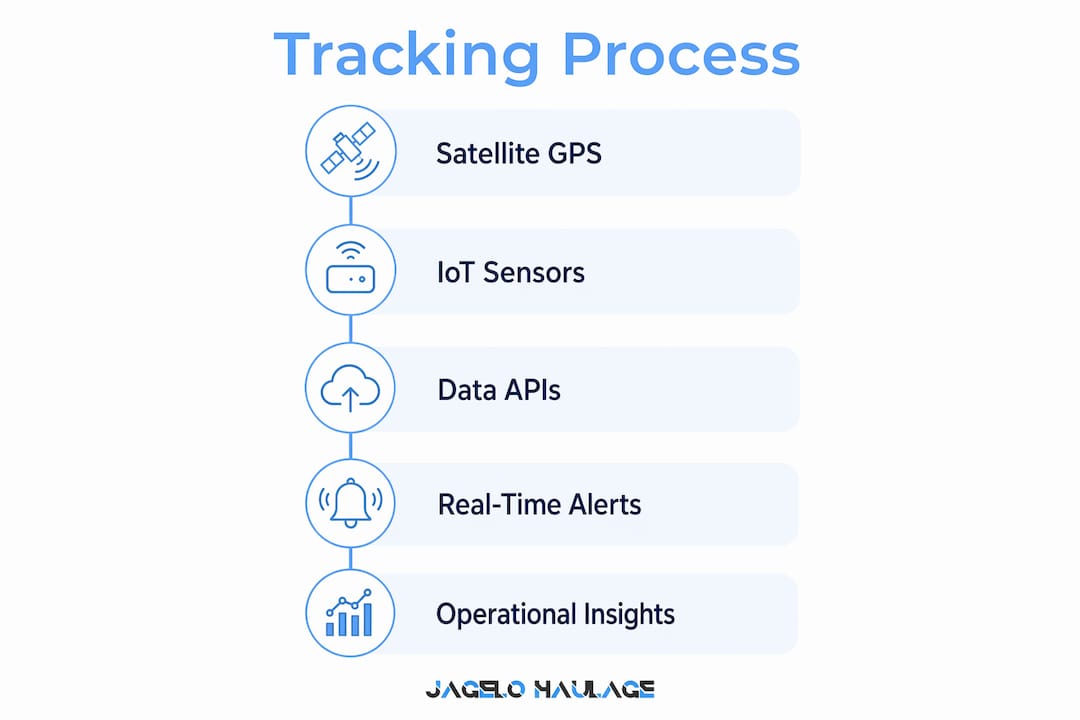
How container tracking technology works: the core architecture
Container tracking technology, formally referred to as container telematics or container IoT monitoring, operates across three interdependent layers: satellite positioning, onboard sensor hardware, and cloud-based data platforms. Each layer performs a distinct function, and the value of the overall system depends on how reliably these layers communicate with one another. A failure at any single layer, whether a GPS signal gap or an inconsistent API event schema, degrades the quality of visibility across the entire supply chain.
The satellite positioning layer provides geographic coordinates. The sensor layer detects physical events such as door openings, temperature anomalies, and impacts. The data platform layer translates raw signals into structured, actionable event records that logistics operators and transport management systems (TMS) can consume. Understanding this architecture helps you identify where tracking failures originate and how to address them operationally.
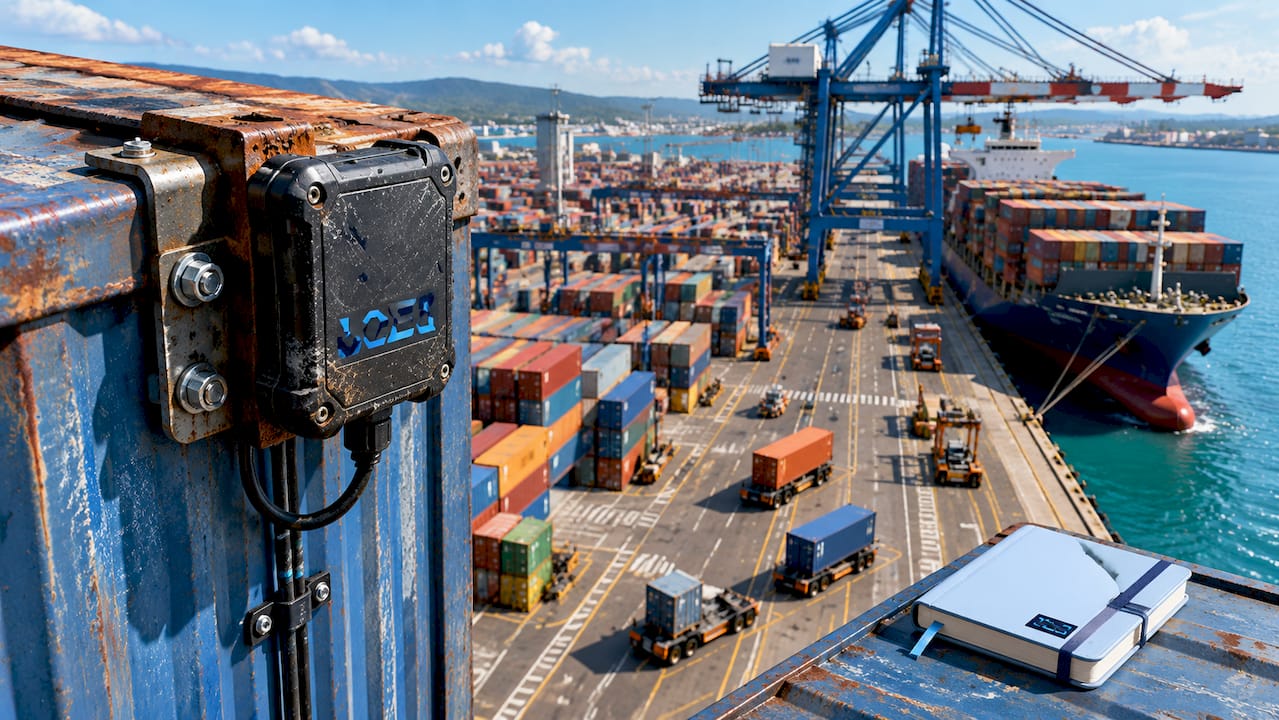
How does GPS satellite positioning locate a container?
GPS/GNSS technology uses a constellation of 24 satellites along with ground control stations and onboard receivers to provide accurate three-dimensional positioning and timing data for container tracking devices. Each satellite continuously broadcasts a time-stamped signal, and the container-mounted GPS receiver calculates its latitude, longitude, and altitude by measuring the time delay between signals received from at least four satellites simultaneously. Ground control stations maintain satellite health and update navigational data to correct orbital drift, which directly affects positional accuracy.
In practice, container tracking accuracy depends on more than raw GNSS precision. Metal container walls and stacking configurations in port yards can block or reflect satellite signals, creating data gaps known as multipath errors. Assisted GNSS (A-GNSS) addresses this by supplementing satellite signals with data from cellular networks or Wi-Fi positioning, reducing the time to fix a position and improving reliability in obstructed environments.
Pro Tip: When specifying container tracking hardware for dense port environments, confirm the device supports A-GNSS or hybrid positioning. Devices relying solely on raw GNSS frequently lose signal in stacked container configurations, producing gaps in shipment timelines that are difficult to reconcile after the fact.
Key considerations for GPS-based container positioning include:
- Signal blockage from metal container walls requires A-GNSS or cellular supplementation
- Ground control stations correct satellite orbital data, directly affecting positional accuracy
- Receivers must be positioned on the container exterior or near apertures for reliable signal acquisition
- Update frequency (typically every 15 minutes to several hours) determines the granularity of location history
What do IoT sensors detect beyond container location?
Location data alone does not tell you whether your cargo has been tampered with, exposed to heat, or subjected to impact damage. ORBCOMM’s dry-container IoT solution embeds time-of-flight sensors, light sensors, thermal and infrared detectors, and motion, shock, and tamper alarms into a single monitoring unit to address precisely these risks. Each sensor type targets a specific threat category, and their combined output provides a cargo integrity picture that GPS coordinates cannot.
The sensor event sequence for a typical security breach works as follows:
- A light sensor detects a change in ambient illumination consistent with a door opening during transit
- A time-of-flight sensor confirms the door has physically moved beyond a defined threshold
- A motion sensor registers movement inside the container
- The device correlates all three signals and generates a single unauthorised access alert, transmitted via the cloud platform to the operator’s TMS or mobile application
This multi-signal correlation is critical. Security alert accuracy improves significantly when multiple sensor inputs are combined, reducing false alarms caused by vibration, condensation, or minor temperature fluctuations. A thermal sensor alone may trigger on a warm day; combined with a motion sensor showing no movement and a light sensor showing no door event, the system correctly suppresses the alert.
Pro Tip: Request sensor threshold configuration documentation from your IoT provider before deployment. Default sensitivity settings are calibrated for average conditions and frequently generate excessive false positives in high-vibration road transport environments. Adjusting motion and shock thresholds to reflect your specific haulage routes reduces operational noise considerably.
The operational value of container IoT tracking lies not only in location data but in security and integrity event detection delivered reliably into integrated cloud platforms. For cargo owners moving high-value or temperature-sensitive goods, this sensor layer is the primary justification for the technology investment.
How do APIs and data standards enable real-time tracking visibility?
Raw GPS coordinates and sensor signals have limited operational value until they are structured, labelled, and delivered to the systems that logistics teams actually use. Vizion API enables seamless integration by subscribing to container IDs and carrier codes, then delivering standardised shipment event updates via webhooks in near real-time. This event-driven model replaces the traditional workflow of manually checking carrier portals or waiting for EDI messages, which can introduce delays of several hours.
A standardised container tracking event contains four core data elements: a status code (e.g., “Gate Out Full”), a reason code explaining the status, a precise timestamp, and a geographic location reference. Oracle Transportation Management uses this event model, associating a Responsible Party, Status, and Reason code with each container milestone to create a coherent shipment timeline. Without this structure, the same physical event can be labelled differently by different carriers, creating the data inconsistencies that undermine visibility.
| Feature | Traditional EDI/email workflow | API-driven event model |
|---|---|---|
| Update speed | Hours to days | Near real-time via webhook |
| Error rate | High (manual re-keying) | Low (automated ingestion) |
| Scalability | Limited by manual processing | Scales with container volume |
| Integration effort | Custom per carrier | Standardised schema |
| Stakeholder reach | Bilateral only | Multi-party via single API |
DCSA standards aim to reduce fragmented EDI and email data exchange by implementing standardised APIs and data models across container shipping stakeholders. Pilot projects involving carriers such as HMM and platforms such as HelloContainer demonstrate measurable reductions in manual work, faster integrations, and scalable interoperability. For logistics operators managing multiple carrier relationships, adopting DCSA-aligned platforms significantly reduces the cost of maintaining separate data feeds.
For a practical view of how container fleet visibility translates into operational responsiveness across depots, the integration of API-driven event data with depot management systems is the critical connection point.
What are the main challenges in implementing container tracking?
Deploying container tracking technology across a live logistics operation involves more complexity than selecting hardware and subscribing to an API. The most common obstacles are fragmented data sources, inconsistent event semantics, and environmental interference with sensor accuracy.
Consistent event schema implementation across all stakeholders is the single most important factor in achieving coherent shipment visibility. When a terminal uses a different status code definition to a carrier, and the carrier uses a different definition to the freight forwarder, the resulting shipment timeline contains gaps and contradictions that require manual reconciliation. This is not a technology problem; it is a data governance problem that technology alone cannot solve.
Practical steps for a successful deployment include:
- Conduct conformance testing with each carrier and terminal before going live to verify event schema alignment
- Define a canonical event model internally and map all incoming carrier data to it before ingestion into your TMS
- Integrate container tracking data with your transport management system to automate demurrage and detention cost alerts
- Account for RF signal interference in port environments when specifying hardware
- Establish threshold tuning protocols for IoT sensors to reduce false positives in road transport conditions
Real progress in container tracking digitalisation is achieved through common standards, collaboration, and comprehensive conformance testing that enable scalable interoperable data exchange. The cost-benefit case is compelling: reduced demurrage fees, improved cargo security, and fewer manual tracking interventions translate directly into lower operational costs and higher customer confidence.
Pro Tip: Before selecting a container tracking platform, map your existing data flows from carriers, terminals, and freight forwarders. Identifying where event data currently arrives late or inconsistently tells you exactly where a standardised API integration will deliver the greatest return.
Comparing leading container tracking platforms in 2026
The market for container tracking solutions has consolidated around a small number of platforms that differ primarily in their sensor integration depth, data update frequency, and API capability.
| Platform | Primary focus | Key differentiator |
|---|---|---|
| ORBCOMM dry-container IoT | Sensor-based cargo security | Multi-sensor suite with cloud alert delivery |
| Vizion API | Carrier data aggregation | Standardised event webhooks across 180+ carriers |
| Oracle Transportation Management | TMS event workflow | Structured status/reason code event model |
| DCSA-aligned platforms | Industry interoperability | Standardised API schemas across stakeholders |
ORBCOMM’s solution is the strongest choice where cargo security and physical integrity monitoring are the primary requirements. Vizion API suits operators who need broad carrier coverage and automated event ingestion without building custom carrier integrations. Oracle Transportation Management is most relevant for large operators already running Oracle’s logistics suite who need container events embedded directly into their existing workflow. DCSA-aligned platforms are the long-term direction for the industry, and selecting vendors that support these standards now reduces future integration costs.
Emerging developments include solar power harvesting for sensor devices, which extends battery life on long-haul voyages, and improved cloud data platforms that correlate GPS tracking data with port system feeds to reduce event latency.
Key takeaways
Container tracking technology delivers reliable shipment visibility only when satellite positioning, sensor monitoring, and standardised API data exchange operate as an integrated system rather than independent components.
| Point | Details |
|---|---|
| Three-layer architecture | GPS positioning, IoT sensors, and API data platforms must all function together for reliable visibility. |
| Multi-sensor correlation | Combining door, heat, and motion sensors reduces false alarms and improves cargo security alerts. |
| API standardisation matters | DCSA-aligned event schemas eliminate the data inconsistencies that undermine shipment timelines. |
| Event semantics over raw data | Aligning status and reason code definitions across stakeholders is more operationally critical than GPS precision. |
| Implementation requires governance | Conformance testing and canonical event mapping are prerequisites for accurate, automated tracking workflows. |
The case for standardisation over sophistication
Having worked closely with container logistics operations across UK ports, my honest assessment is that most tracking failures are not hardware failures. They are data governance failures. Operators invest in sophisticated sensor suites and API subscriptions, then discover that their carrier sends a “Gate Out” event with a different timestamp convention to their terminal, and the entire shipment timeline becomes unreliable.
The technology itself, GPS receivers, ORBCOMM sensor units, Vizion API webhooks, is mature and dependable. What remains immature is the industry’s collective discipline around event schema alignment. DCSA is making genuine progress, but adoption is uneven, and many mid-sized operators are still reconciling carrier data manually in spreadsheets.
My advice is to treat data standardisation as a prerequisite, not an afterthought. Before you specify hardware or select a platform, define your canonical event model. Map every incoming data source to it. Test conformance with each carrier before going live. The operators who do this work upfront spend far less time managing exceptions and far more time acting on the visibility their investment was meant to provide. The technology is ready. The question is whether your data infrastructure is ready to use it.
— Vytautas
How Jhaulage supports container tracking in UK haulage
Jhaulage operates a fleet of over 40 GPS-equipped trucks and trailers serving major UK ports including Felixstowe, Tilbury, Southampton, and Liverpool. Every container movement is monitored in real-time, giving cargo owners and freight forwarders the shipment visibility they need to manage port collections, same-day deliveries, and full container load movements with confidence. If you are looking for a UK container haulage partner whose tracking capability integrates directly with your supply chain workflows, Jhaulage provides the operational reliability and 24/7 support that complex container logistics demands. Explore our port logistics framework to understand how tracking data connects with haulage planning across UK ports.
FAQ
How does container tracking technology work?
Container tracking technology works by combining GPS/GNSS satellite positioning, embedded IoT sensors, and API-driven data platforms to deliver real-time location and cargo security events. Each layer contributes distinct data that is aggregated into a structured shipment timeline accessible via a TMS or web platform.
What sensors are used in container monitoring?
Modern container monitoring units embed time-of-flight sensors, light sensors, thermal and infrared detectors, and motion, shock, and tamper alarms. ORBCOMM’s dry-container solution uses this multi-sensor approach to detect unauthorised access, fire risks, and physical damage.
Why do container tracking data gaps occur?
Data gaps occur primarily due to GPS signal blockage from metal container walls and stacking configurations, and from inconsistent event schema definitions across carriers and terminals. A-GNSS supplementation and canonical event mapping address both causes respectively.
What is a container tracking API?
A container tracking API is a software interface that subscribes to container IDs and carrier codes, then delivers standardised shipment event updates via webhooks in near real-time. Vizion API is a widely used example, aggregating data across more than 180 carriers into a single standardised feed.
How does container tracking reduce demurrage costs?
By delivering real-time gate-out and availability events directly into a TMS, container tracking technology enables logistics teams to schedule collections before free-time windows expire. Automated alerts triggered by event data remove the manual monitoring that typically causes demurrage and detention cost exposure.