A shipping container stamped safe for 32 tonnes at sea can become an illegal, road-grounding hazard the moment it joins a UK dual carriageway. When intermodal boxes clear port terminals, the friction between international maritime rules and domestic haulage law often catches operators off guard. It isn't just about avoiding fixed fines; adhering to statutory container transport safety standards is the only dependable way to protect your drivers, your cargo, and your operator licence from immediate roadside enforcement.
You already know how quickly a shifted internal load, an overloaded drive axle, or a defective skeletal twistlock can disrupt delivery schedules and invite severe DVSA penalties. This comprehensive guide helps you master mandatory UK container transport safety standards across every stage of transit, from structural CSC plate inspections and load-securing thresholds to proactive fleet compliance systems. Below, we set out the exact statutory duties and preventative inspection routines required to maintain safe, fully compliant container movements nationwide.
Key Takeaways
- Understand the statutory framework uniting DVSA enforcement, HSE workplace rules, and international maritime conventions across UK road networks.
- Identify structural defect thresholds on shipping containers, including CSC plate validity criteria and mandatory examination schemes.
- Align intermodal transit with UK container transport safety standards by applying correct twistlock engagement and axle load calculations.
- Implement robust driver walkaround inspection routines, digital defect tracking, and statutory tachograph compliance protocols.
- Evaluate national container haulage partners against formal safety accreditations to eliminate supply chain liabilities and cargo claims.
The Regulatory Architecture of UK Container Transport Safety Standards
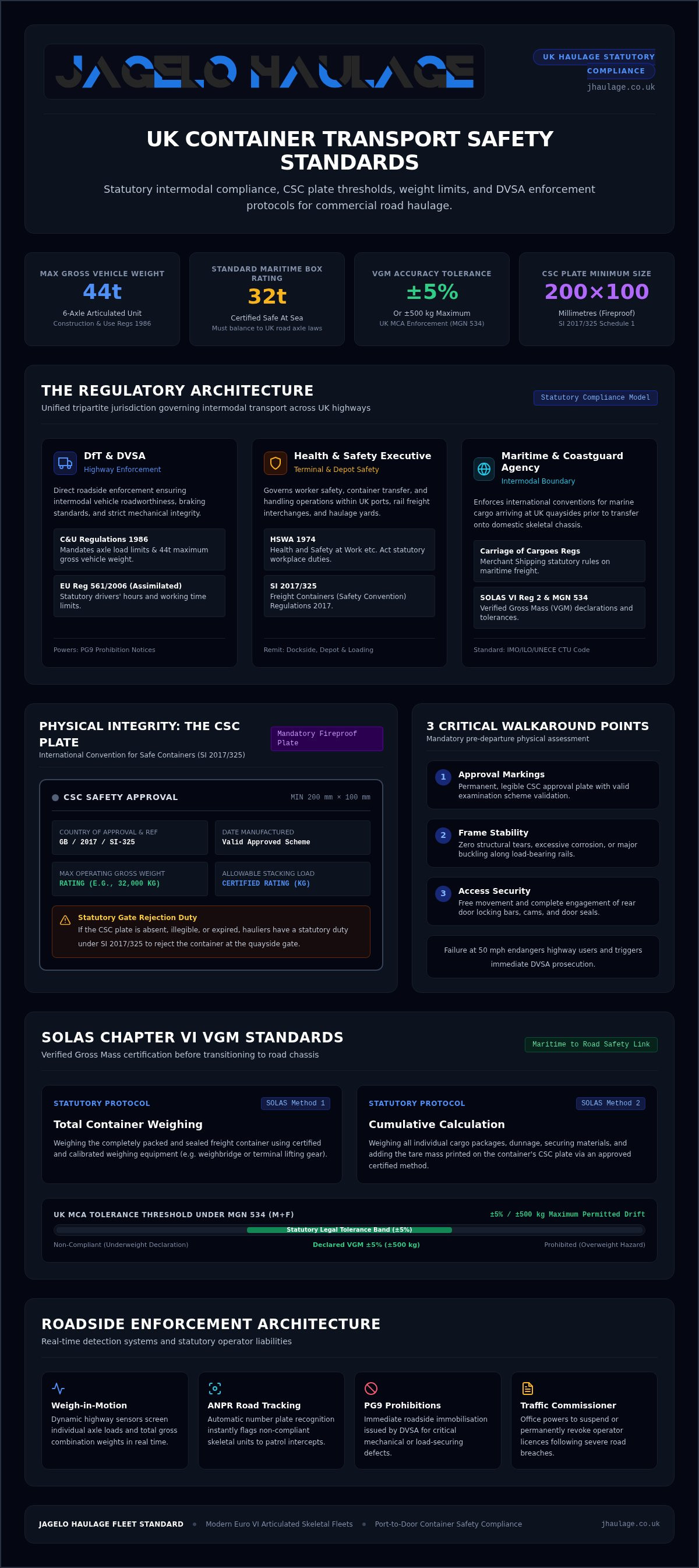
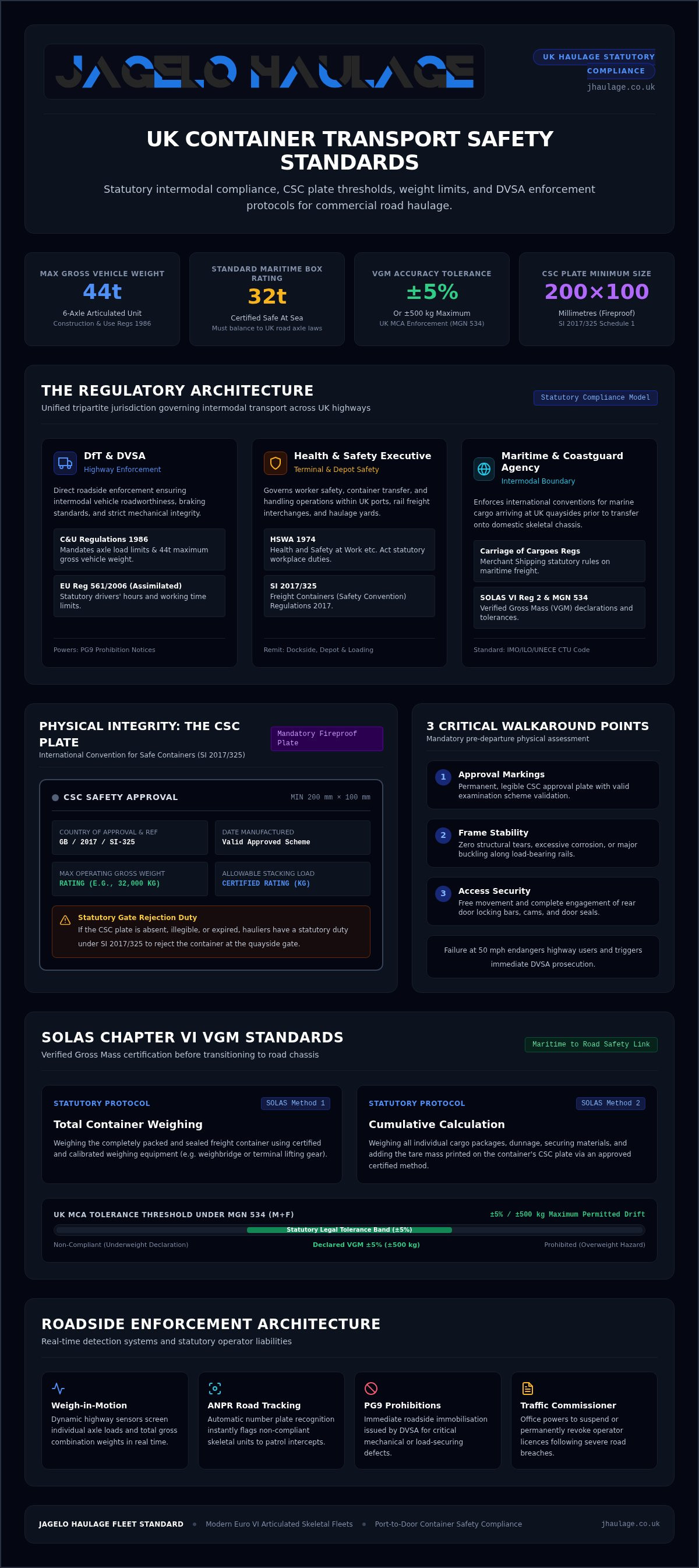
Safe intermodal transit on British roads depends on a joined-up regulatory framework. Operators must balance domestic highway law with international shipping protocols. Container transport safety standards bridge the gap between heavy goods vehicle maintenance and maritime handling, creating a single line of defence against transit incidents. Haulage providers like Jagelo Haulage integrate these overlapping jurisdictions directly into fleet procedures to ensure protected port-to-door deliveries.
Three primary bodies enforce this unified compliance model:
- Department for Transport (DfT) and DVSA: Enforces the Road Vehicles (Construction and Use) Regulations 1986, establishing strict thresholds for vehicle braking, axle load thresholds, and a maximum gross vehicle weight of 44 tonnes for six-axle articulated combinations.
- Health and Safety Executive (HSE): Governs terminal, depot, and dockside activity under the Health and Safety at Work etc. Act 1974 alongside the Freight Containers (Safety Convention) Regulations 2017 (SI 2017/325).
- Maritime and Coastguard Agency (MCA): Enforces the Merchant Shipping (Carriage of Cargoes) Regulations, ensuring intermodal cargo entering road networks meets global maritime standards.
Failing to respect these unified bodies brings immediate consequences. Roadside enforcement teams issue immediate PG9 prohibition notices, while the Office of the Traffic Commissioner can suspend or revoke an operator's licence. Explore the broader operational landscape in our essential guide to port logistics services UK.
Statutory UK Road Haulage Regulations and DVSA Oversight
The DVSA prioritises mechanical roadworthiness, statutory drivers' hours under assimilated EU Regulation 561/2006, and axle load compliance. Roadside dynamic Weigh-in-Motion sensors and automatic number plate recognition flag non-compliant skeletal units in real time. Road Traffic Acts hold operators strictly accountable, meaning any mechanical failure or unsecure load leads to roadside immobilisation.
International Maritime Frameworks: SOLAS and the IMO CTU Code
Before standard intermodal freight containers transition from a quay crane to a skeletal road trailer, international conventions govern their mass and packing. SOLAS Chapter VI Regulation 2 requires a verified gross mass (VGM) declared under Method 1 or Method 2. The UK MCA enforces an accuracy tolerance of ±5% or ±500 kg under MGN 534 (M+F). Additionally, the joint IMO/ILO/UNECE CTU Code establishes vital cargo distribution principles, ensuring boxes remain balanced and structurally sound during inland road transit.
Physical Safety Protocols: Container Integrity and CSC Plate Compliance
Physical integrity serves as your primary safeguard against catastrophic road incidents. A structural failure at 50 mph endangers the public, destroys valuable cargo, and invites severe regulatory scrutiny. Transport operators must maintain an active inspection routine to confirm that every intermodal unit meets domestic container transport safety standards before leaving a port or railhead. In the UK, these baseline engineering rules are enforced under the Freight Containers (Safety Convention) Regulations 2017.
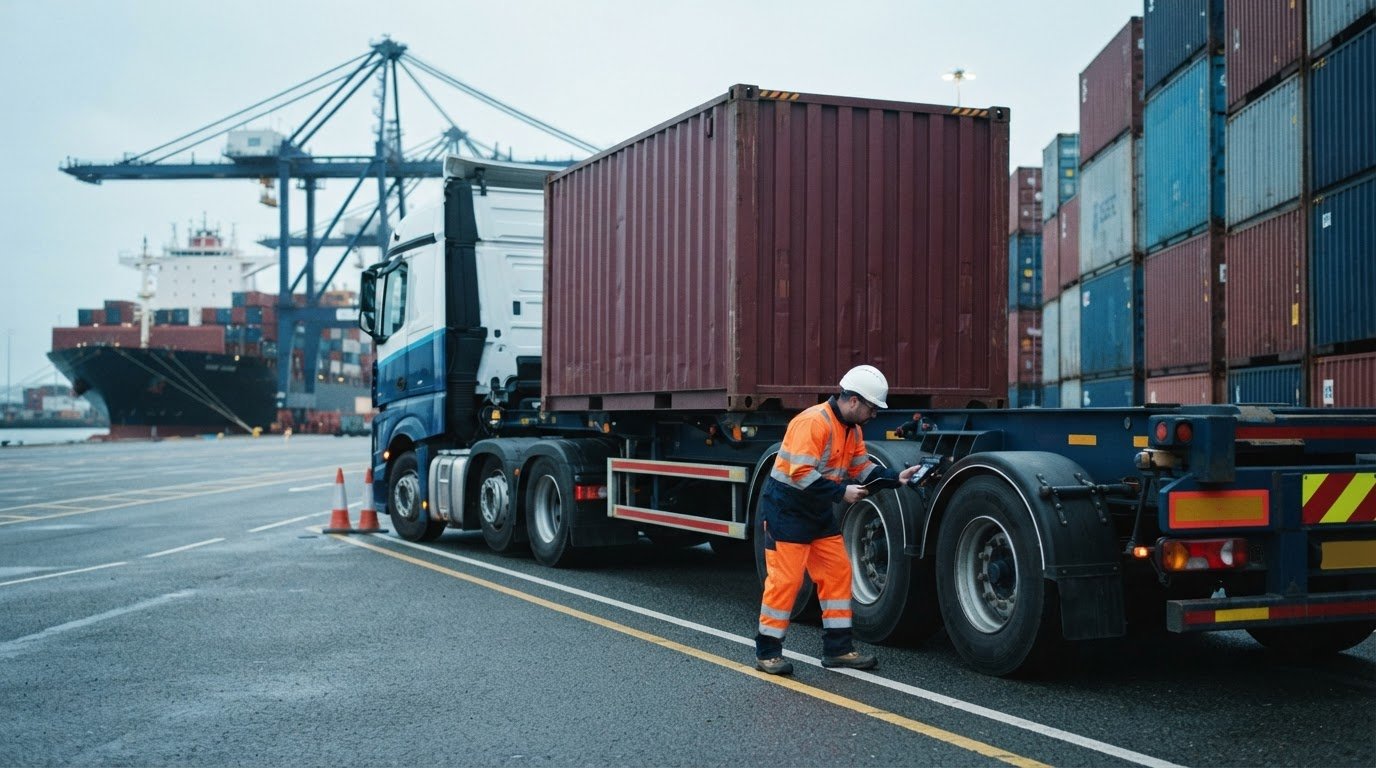
Transport drivers and fleet managers must verify container roadworthiness against three critical compliance points:
- Approval markings: Confirmation of a permanent, legible CSC plate bearing valid inspection credentials.
- Frame stability: Complete absence of structural tears, excessive corrosion, or major buckling along load-bearing rails.
- Access security: Free movement and complete engagement of rear locking bars, cams, and door seals.
If an intermodal unit fails visual or structural checks, the driver has a statutory duty to reject the load at the terminal gate. Operating hauliers like Jagelo Haulage apply strict inspection protocols across their modern Euro VI fleet, ensuring defective boxes never compromise road safety. If you need reliable distribution backed by documented checks, request a secure container transport quote from our operational team.
Understanding the International CSC Safety Approval Plate
Under Schedule 1 of SI 2017/325, every freight container must carry a permanent, fireproof CSC plate measuring at least 200 mm by 100 mm. The plate details critical structural ratings, including maximum operating gross weight, allowable stacking capacity, and transverse racking test loads. Operators must verify that the unit operates under an Approved Continuous Examination Programme (ACEP) or displays a valid date under the Periodic Examination Scheme (PES), which requires structural reviews every 30 months.
Pre-Transit Structural Checks and Critical Defect Identification
Visual inspections must target key structural vulnerabilities. Drivers must check the ISO 1161 corner castings for cracks, severe deformation, or corrosion that might prevent twistlocks from seating correctly. Corner posts, side walls, and bottom rails cannot show buckling deeper than standard repair tolerances. Rear cargo doors require equal scrutiny; worn hinges, bent locking rods, or damaged door gaskets can fail under transit vibrations.
Specialist Units: Refrigerated and Dangerous Goods Compliance
Specialised containers present unique operational challenges. Temperature-controlled reefer boxes require systematic checks of electrical cabling, ventilation ducts, and underslung diesel generator mountings to prevent mechanical separation. When handling hazardous cargo, compliance extends directly to domestic and international ADR road regulations. Drivers must confirm that hazard placards, UN numbers, and orange orientation plates remain clean, intact, and clearly visible from all sides of the trailer chassis.
Load Securing, Weight Distribution, and Chassis Coupling Standards
Connecting an intermodal box to a skeletal trailer requires exact mechanical precision. Under updated DVSA load securing guidance, restraint systems must withstand dynamic physical forces during transit: 1.0g forwards (100% of the total load weight), 0.5g laterally and rearwards (50% of the load weight), and 0.2g vertically. Meeting mandatory container transport safety standards protects against rollover incidents, structural trailer damage, and immediate roadside prohibitions. Read our strategic analysis on modern container transport fleets for detailed skeletal chassis specifications.
Maintaining vehicle stability demands attention to three core mechanical areas:
- Twistlock mechanical lock-out: Complete engagement of ISO corner castings with secondary safety pins firmly secured.
- Axle loading thresholds: Calculating payload placement so neither the tractor drive axle nor trailer bogie exceeds statutory limits.
- Internal cargo bracing: Eliminating internal void spaces to prevent weight shifting on roundabouts and slip roads.
Jagelo Haulage operates a modern fleet of over 40 Euro VI vehicles coupled with regularly serviced skeletal chassis, ensuring all twistlock mechanisms deliver absolute load retention on every route.
Skeletal Trailer Twistlock Operation and Maintenance Protocols
Twistlocks form the sole mechanical link between the container and the road chassis. Drivers must confirm that all four corner twistlocks fully enter the ISO 1161 castings and rotate into the locked position. Secondary locking catches or safety pins must be engaged before moving. Skeletal trailers require routine workshop checks to spot worn collars, sheared shafts, and fatigue cracks; DVSA examiners issue an immediate PG9 prohibition if any single twistlock fails to lock correctly.
Axle Weight Distribution and Verified Gross Mass (VGM) Limits
While the UK legal ceiling for a six-axle artic combination is 44 tonnes, axle load limits require separate monitoring. A vehicle running under gross weight can still breach the statutory 10.5-tonne drive-axle ceiling or the 24-tonne trailer bogie limit if cargo sits unevenly inside a 20ft or 40ft box. Drivers must compare the documented VGM certificate against trailer layout, especially when mounting heavy 20ft units over the drive axle.
Internal Cargo Restraint: Mitigating Destabilising Transit Shifts
Internal cargo movement presents a serious hazard on UK roads. If loose goods slide forward during sudden braking, the shock load can buckle front bulkheads or instantly overload the tractor drive axle. Shippers must secure goods using heavy-duty timber shoring, void-filling dunnage bags, and certified lashing straps rated to the cargo's gross weight. Evenly distributed weight keeps the centre of gravity low, reducing rollover risks on high-speed roundabouts.
Driver Operational Safety: Hours, Daily Checks, and Vehicle Roadworthiness
Professional drivers remain the frontline defence in upholding container transport safety standards. While physical twistlocks and certified container frames provide structural containment, driver attentiveness and vehicle roadworthiness determine highway safety. Operator safety policies must focus on fatigue mitigation, disciplined inspection routines, and immediate mechanical repairs. Jagelo Haulage draws on over 15 years of industry experience to enforce strict driver safety routines across major UK port routes, ensuring every haulage run meets national compliance mandates.
Every transport shift must follow three non-negotiable operational disciplines:
- Statutory driving control: Managing rest intervals under assimilated EU rules to eliminate driver fatigue during trunking operations.
- Pre-use walkaround inspections: Conducting documented 360-degree mechanical reviews before a vehicle leaves an operating centre or dock.
- Telematics performance management: Continuous monitoring of real-world driving behaviours to prevent dynamic instability on transit corridors.
Proactive fleet management eliminates avoidable roadside defects. If you need a disciplined partner running fully maintained equipment for merchant or shipping line haulage, book compliant container transport with Jagelo Haulage today.
Driver Hours Regulations and Rest Period Governance
Assimilated EU Regulation 561/2006 caps daily driving at 9 hours, extendable to 10 hours twice weekly, with mandatory 45-minute breaks after 4.5 hours of driving. Port congestion and terminal turnaround delays often threaten compliance windows. Transport planners must construct realistic transit schedules that absorb gate waiting times without forcing drivers into driving hour infringements. In-scope drivers must be prepared to produce 56 days of digital tachograph card records at any DVSA roadside interrogation.
Daily Driver Walkaround Inspections and Defect Reporting
Before moving any combination, the driver must complete a systematic walkaround check covering steering, tyre tread depth, wheel nut torque indicators, and braking circuits. Connecting suzie airlines and electrical cables between the tractor unit and skeletal chassis demand specific attention. Air leaks cause premature brake drag or failure, while severed electrical cables disable trailer ABS and lighting. Operators must enforce digital defect reporting systems to rectify identified faults before dispatch.
In-Cab Safety Technologies and Telematics Monitoring
Modern Euro VI commercial vehicles rely on factory-fitted safety aids, such as Advanced Emergency Braking Systems (AEBS) and Lane Departure Warning Systems (LDWS), to assist drivers on high-density freight corridors. Integrated telematics units stream real-time operational data back to transport offices, recording speed profiles, harsh braking, and severe cornering forces. Transport managers evaluate this diagnostic data to detect irregular driving patterns early, scheduling targeted coaching sessions before bad habits lead to on-road collisions.
Implementing Safety Excellence: Selecting a Compliant Haulage Contractor
Procuring compliant container haulage is a strategic risk-mitigation decision. Under Section 40A of the Road Traffic Act 1988 and Regulation 100 of the Construction and Use Regulations, consignors and logistics managers share legal liability if they cause or permit unsafe transit. Selecting a carrier that enforces rigorous container transport safety standards protects your organisation from joint prosecution, expensive cargo claims, and brand damage caused by roadside detentions. Learn more about haulage structures in our merchant haulage vs shipping line haulage guide.
Before allocating valuable intermodal freight to any transport provider, review these essential operational credentials:
- Licensing and compliance metrics: An active, unrestricted Standard National Operator Licence backed by a clean DVSA Operator Compliance Risk Score (OCRS).
- Insurance coverage: Comprehensive Goods in Transit, Public Liability, and CMR insurance covering high-value intermodal movements.
- Documented workshop management: Systematic vehicle inspections and preventative maintenance intervals that satisfy Traffic Commissioner standards.
Jagelo Haulage champions nationwide safety compliance across the British intermodal sector, providing freight forwarders, shipping lines, and merchants with dependable port-to-door transport solutions.
Essential Safety Vetting Checklist for Freight Shippers
Commercial vetting requires looking beyond headline haulage rates. Shippers must request documented evidence of an operator's O-licence status, ensuring their operating centres and authorisation limits align with current fleet volumes. Reviewing their OCRS tier provides an objective benchmark of their mechanical maintenance track record and roadside inspection history. Transport partners must also show active policy certificates for Goods in Transit and CMR liability to protect against financial exposure during road transit.
Standard Operating Procedures: The Mark of Professional Hauliers
Professional container carriers maintain documented Standard Operating Procedures (SOPs) governing every stage of transit. These formal policies detail continuous driver training programmes, verified walkaround inspection regimes, and clear breakdown protocols that protect road users. Leading operators schedule preventative workshop servicing at rigorous six-week intervals. This disciplined maintenance approach ensures skeletal locking pins, braking systems, and running gear consistently exceed statutory roadworthiness thresholds.
Partnering with Jagelo Haulage for Protected Nationwide Logistics
Jagelo Haulage provides dedicated inland container haulage and port transport across the United Kingdom. Backed by over 15 years of industry experience, we operate a modern fleet of over 40 Euro VI vehicles coupled with high-specification skeletal trailers. Our drivers execute rigorous walkaround inspections before dispatch, ensuring complete mechanical integrity from quayside collection to inland receiver. Protect your supply chain compliance today; request a professional haulage quote today.
Securing Compliance Across Your Nationwide Container Supply Chain
Protecting intermodal freight requires constant vigilance across statutory inspection points. Aligning terminal operations with domestic container transport safety standards safeguards your cargo, shields your business from joint legal liability, and eliminates costly DVSA roadside delays. Consistent twistlock checks, valid CSC plate verification, and disciplined driver hours governance turn everyday compliance into a dependable operational asset.
Jagelo Haulage brings over 15 years of industry experience to every shipment. We deploy a modern fleet of over 40 Euro VI vehicles and skeletal trailers maintained to strict DVSA and HSE standards, ensuring reliable transit from major UK ports to your destination. Partnering with a disciplined national operator protects your road transport operations every mile of the journey. Request an instant container transport quote to secure safe, fully compliant haulage for your upcoming freight movements.
Frequently Asked Questions
What are the legal container transport safety standards on UK roads?
Legal container transport safety standards combine highway roadworthiness rules with maritime container directives. Operators must comply with the Road Vehicles (Construction and Use) Regulations 1986, the Freight Containers (Safety Convention) Regulations 2017, and DVSA load restraint thresholds. These standards govern gross vehicle weight limits, mandatory twistlock engagement into ISO corner castings, valid CSC structural safety plates, and strict adherence to commercial drivers' hours across the national road network.
Who is legally responsible if a shipping container is overloaded?
Legal liability extends across the entire transport chain under Section 40A of the Road Traffic Act 1988. While drivers face roadside fines and points for piloting an overloaded vehicle, consignors, freight forwarders, and transport operators share legal exposure if they cause or permit the breach. The Office of the Traffic Commissioner can sanction an operator's licence, while consignors may face formal prosecution if inaccurate declared weights cause dangerous axle overloads.
How often must an intermodal container undergo safety inspections?
Inspection frequency depends on the operating scheme specified on the CSC safety plate. Under the Periodic Examination Scheme (PES), a newly built container requires its initial inspection within five years, followed by re-inspections every 30 months. Alternatively, most commercial shipping containers operate under an Approved Continuous Examination Programme (ACEP). Under ACEP, accredited inspectors examine the container's structural integrity during every major depot interchange, refurbishment, or structural repair.
What happens if a twistlock fails during road container transport?
A twistlock failure creates an immediate road hazard and triggers swift enforcement action. The DVSA categorises missing, disengaged, or defective twistlocks as an immediate danger, issuing a PG9 Prohibition Notice that immobilises the vehicle on the spot. If mechanical failure results from maintenance neglect, the DVSA applies an "S" endorsement to the notice. This referral prompts a regulatory audit from the Traffic Commissioner, putting the carrier's operator licence at risk.
Is a CSC plate mandatory for road container haulage in the UK?
Yes, a legible CSC safety approval plate is a statutory legal requirement under the Freight Containers (Safety Convention) Regulations 2017. Intermodal boxes used for freight transport must display a permanent, fireproof plate detailing structural ratings, tare weight, and gross mass capabilities. Drivers must visually verify that the plate is present and indicates valid PES or ACEP examination status before coupling and hauling the unit on public roads.
How do drivers ensure cargo is properly secured inside sealed containers?
Drivers can't break customs seals to inspect internal freight, so they must rely on documented compliance and physical external cues. Professional hauliers verify that consignors adhere to the IMO/ILO/UNECE CTU Code, confirming proper weight distribution and internal bracing on the shipping documentation. Drivers also conduct careful walkaround inspections to check for bulging side panels, uneven chassis resting, or abnormal vehicle handling that signals dangerous internal cargo shifts.
What are the maximum weight limits for UK container transport?
The maximum permissible gross vehicle weight on UK highways is 44 tonnes (44,000 kg). This threshold legally requires a six-axle articulated combination, comprising a three-axle tractor unit and a three-axle skeletal trailer with road-friendly air suspension. Operators must also respect individual axle limits: drive axles are capped at 10.5 tonnes and trailer bogies at 24 tonnes, regardless of whether the overall combination remains below the 44-tonne gross ceiling.