Same-day container delivery advantages for UK logistics

Same-day container delivery is defined as a dedicated, direct transport service that collects a shipping container and delivers it to its destination within the same working day, typically within 4–6 hours for routes under 200 miles. The core same-day container delivery advantages over standard freight networks are fewer handling stages, faster transit, and real-time visibility throughout the journey. For supply chain managers operating at ports such as Felixstowe, Tilbury, Southampton, and Liverpool, these benefits translate directly into reduced demurrage exposure, lower damage risk, and the ability to respond to urgent operational demands without waiting for scheduled consolidation runs.
1. What are the primary same-day container delivery advantages?
Same-day dedicated services guarantee collection within 30–60 minutes and delivery within 4–6 hours for routes within 200 miles. That speed is not simply a convenience. It is the operational difference between a production line running and a line-down event costing thousands of pounds per hour.
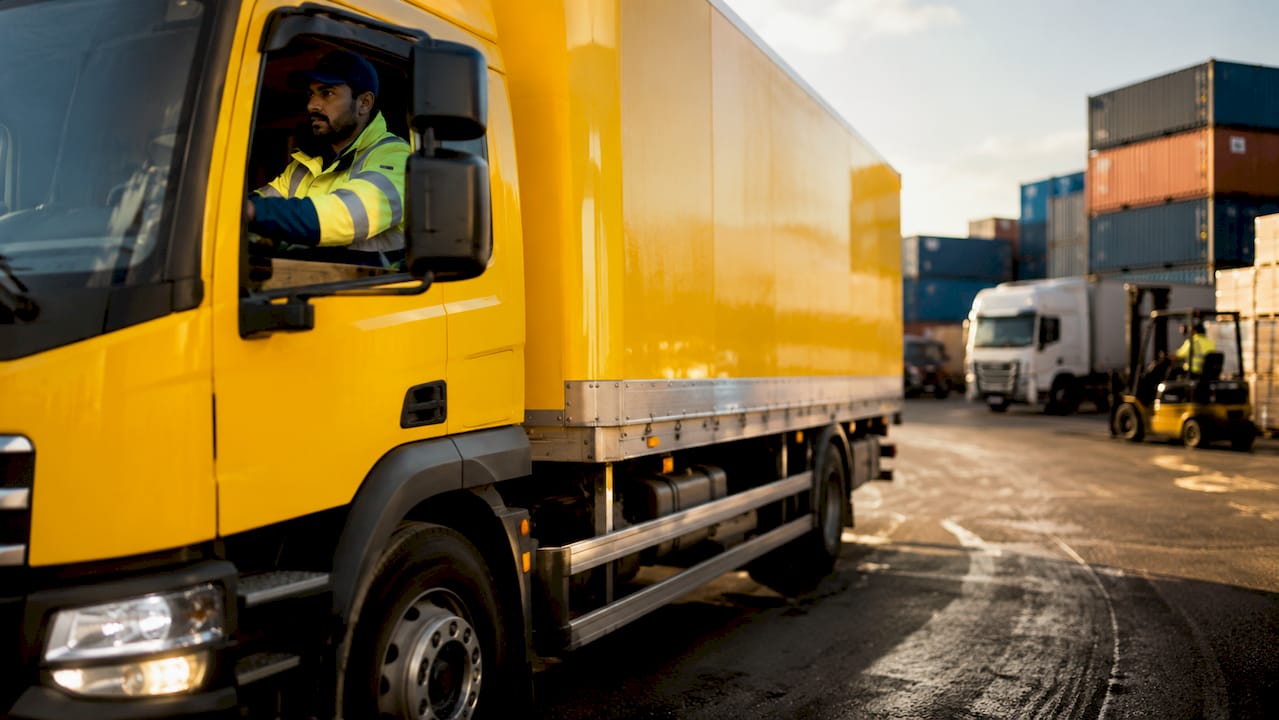
The structural reason same-day delivery outperforms standard freight networks lies in handling stages. Traditional networks involve 3–5 handling stages, each one a point where containers can be damaged, delayed, or misdirected. Same-day dedicated vehicles reduce that to just two stages: collection and delivery. Fewer touchpoints mean fewer failure points.
Key operational advantages include:
- No hub dependency. The vehicle travels directly from origin to destination, bypassing consolidation centres entirely.
- 24/7 availability. Services operate across weekends, bank holidays, and late hours, covering urgent requirements outside standard business hours.
- Real-time GPS tracking. Logistics managers receive live position data and can communicate directly with the driver, removing uncertainty from the delivery window.
- Predictable delivery windows. Direct routing eliminates the variability introduced by multi-drop schedules and hub sorting delays.
Pro Tip: Set up a pre-approved account with your container haulage provider before an urgent need arises. Account holders typically receive priority dispatch and pre-agreed rates, which removes the friction of negotiating terms under pressure.
2. How does same-day delivery affect commercial outcomes?
Speed of delivery is a direct commercial lever, not merely a service feature. Same-day delivery availability influences 67% of e-commerce purchases and reduces cart abandonment by nearly half. That statistic reflects a fundamental shift in buyer behaviour: customers now treat delivery speed as a purchasing criterion on par with price.
The commercial impact extends beyond the initial transaction. The same research indicates that same-day delivery increases customer lifetime value by approximately 30% for local customers. Repeat purchasing behaviour is directly linked to fulfilment reliability, which means a single successful urgent delivery can anchor a long-term commercial relationship.
“Retailers and logistics managers must prominently display same-day options to build consumer trust, as shoppers tend to default to providers with established reputations for speed.”
For B2B logistics operators, the principle applies equally. A manufacturer that consistently receives urgent parts on the same day will consolidate its freight spend with the provider that demonstrated reliability under pressure. Speed builds trust, and trust builds contract value.
3. Which industries and scenarios benefit most from quick container transport?
Approximately 80% of customers ordering before 10 AM on weekdays can access same-day container delivery for specialist freight including containers and pallet freight. That availability window defines the planning discipline required to use the service effectively.
The industries where same-day freight delivery delivers the greatest value are those where the cost of delay is quantifiable and significant:
- Manufacturing. Line-down events caused by missing components carry direct production costs. Same-day delivery of AOG (Aircraft on Ground) parts or critical sub-assemblies prevents costly stoppages.
- Construction. Project timelines with fixed completion penalties require materials to arrive on schedule. A missed delivery can cascade into contract penalties.
- Pharmaceuticals. Temperature-sensitive or time-critical medical supplies require controlled, direct transport with no intermediate storage.
- IT and technology. Hardware replacements for data centres or retail point-of-sale systems must arrive within hours to avoid service outages.
- Event logistics and broadcasting. Equipment for live events, film productions, or broadcast installations operates on immovable deadlines.
- E-commerce fulfilment. High-value or time-sensitive orders where next-day delivery is insufficient to retain the customer.
Same-day delivery also functions as a recovery mechanism. When a standard shipment fails, a missed dock appointment occurs, or a vessel arrives ahead of schedule, same-day haulage provides the contingency that prevents a single logistics failure from disrupting an entire supply chain.
Pro Tip: Identify your top five highest-risk shipment categories in advance. Pre-qualify a same-day container haulage provider for each category so that when a failure occurs, the recovery process is already defined and the provider is already briefed.
4. What are the practical pitfalls when choosing same-day container delivery?
The cost premium for same-day dedicated transport is real, and it must be weighed against the cost of delay. Same-day delivery should be reserved for shipments where the cost of delay exceeds the premium paid for dedicated service. Applying it indiscriminately to routine shipments erodes margin without delivering proportionate value.
Volume thresholds matter significantly. Approximately 80–100 orders per day justify dedicated vehicles and routes, making same-day delivery commercially viable at scale. Below that threshold, the per-unit cost rises sharply, and a hybrid approach using scheduled services for routine freight and same-day for exceptions is more appropriate.
Site-specific requirements introduce additional complexity. Comparing only headline prices is misleading. Logistics managers must assess delivered-and-placed quotes that account for site access restrictions, vehicle type requirements, and wait-time policies. A low headline rate that results in a failed delivery attempt costs more than a higher rate that accounts for site conditions from the outset.
Key pitfalls to avoid:
- Ignoring access constraints. Narrow site entrances, weight restrictions, or permit requirements can prevent delivery entirely if not communicated in advance.
- Late document release. Customs documentation, port release confirmations, and Vehicle Booking System (VBS) slots must be in place before the vehicle departs.
- Overusing same-day as a default. Without clear internal guidelines on when to trigger same-day versus next-day, costs escalate without strategic justification.
- Selecting on price alone. A provider without GPS tracking, 24/7 support, or port-specific experience introduces operational risk that headline pricing does not reflect.
5. How does same-day container delivery fit within a broader logistics strategy?
Same-day delivery functions most effectively as a specialist tier within a diversified service model, not as a replacement for scheduled freight. Effective same-day delivery drives investment in routing systems, fulfilment infrastructure, and real-time inventory integration. That investment only generates returns when the service is deployed against the right shipment types.
The strategic deployment model works as follows. Routine, predictable shipments travel on scheduled or next-day services where consolidation reduces cost. High-priority, time-sensitive loads, or those where a delay carries a quantifiable penalty, are routed to same-day dedicated transport. The trigger criteria should be defined in your standard operating procedures before an urgent situation arises, not during one.
Integration with real-time inventory systems strengthens the model further. When stock levels, vessel arrival data, and production schedules feed into a single visibility platform, the decision to trigger a same-day collection can be automated or at least pre-authorised. That removes the delay caused by manual escalation and approval chains, which frequently consume the time advantage that same-day delivery is meant to provide.
Efficient container delivery scheduling is the operational discipline that makes this tiered model work. Without it, same-day becomes a reactive cost rather than a planned capability.
6. Why communication is the critical variable in same-day freight delivery
Precise communication between shipper and provider is the single most important factor in same-day delivery success. Missed dock appointments, late document releases, and unresolved site access issues are the most common causes of failed same-day deliveries. None of these failures are caused by the vehicle or the route. They are caused by information gaps.
The practical standard is to confirm four items before the vehicle is dispatched: the collection address and access requirements, the delivery address and any site restrictions, the document release status (including port or customs clearance), and the contact details of a responsible person at both ends. This takes less than ten minutes and eliminates the majority of same-day delivery failures.
Constant communication between shipper and provider prevents small operational hurdles from escalating into disruptions. A driver who cannot reach a site contact and has no escalation path will wait, and waiting on a same-day service destroys the time advantage you paid for. Build the communication protocol into your standard operating procedure, not as an afterthought.
Key takeaways
Same-day container delivery delivers its greatest value when deployed as a deliberate, criteria-driven tier within a broader logistics strategy, not as a reactive default.
| Point | Details |
|---|---|
| Fewer handling stages reduce risk | Dedicated vehicles cut handling from 3–5 stages to 2, lowering damage and loss rates. |
| Speed drives commercial value | Same-day availability influences 67% of e-commerce purchases and lifts customer lifetime value by 30%. |
| Volume thresholds determine viability | Approximately 80–100 orders per day justify dedicated same-day infrastructure on cost grounds. |
| Communication prevents failure | Confirming access, documents, and contacts before dispatch eliminates the majority of same-day failures. |
| Strategic deployment protects margin | Reserve same-day for shipments where the cost of delay exceeds the service premium. |
Why I think most logistics teams underuse same-day container delivery
Having worked across UK port logistics for a considerable period, I have observed a consistent pattern: supply chain managers either overuse same-day delivery reactively, treating it as a panic response, or they avoid it entirely because of the cost perception. Both approaches leave value on the table.
The teams that extract the most from expedited container transport are those that define their trigger criteria in advance. They know, before any urgent situation arises, exactly which shipment types qualify for same-day, who has authority to approve it, and which provider is pre-qualified to execute it. That preparation converts a premium service into a controlled, predictable cost.
The communication point is where I see the most preventable failures. A logistics manager who releases a vehicle without confirming port documentation or site access is not saving time. They are creating a more expensive problem. The ten-minute pre-dispatch checklist is the highest-return activity in same-day freight management.
Looking ahead, I expect customer expectations around delivery speed to continue tightening. The operational differences for UK shippers using same-day container haulage will become more pronounced as standard networks face increasing pressure. The logistics teams that build same-day capability now, with proper protocols and pre-qualified providers, will be better positioned to absorb that pressure without disruption.
— Vytautas
Jhaulage: dedicated same-day container haulage across UK ports
Jhaulage operates a fleet of over 40 GPS-tracked trucks and trailers, providing dedicated container haulage across Felixstowe, Tilbury, Southampton, Liverpool, and beyond. For supply chain managers who need a reliable same-day response to urgent or time-sensitive container movements, Jhaulage offers 24/7 availability, direct port-to-door routing, and a team with deep knowledge of UK port procedures including VBS slot management and customs documentation requirements.
Whether you need a pre-approved account for contingency planning or a same-day collection arranged within the hour, Jhaulage provides the operational capacity and port expertise to execute without delay. Contact Jhaulage directly to discuss your requirements and establish a service agreement before your next urgent shipment arises.
FAQ
What is same-day container delivery?
Same-day container delivery is a dedicated transport service that collects a shipping container and delivers it to its destination within the same working day, typically within 4–6 hours for routes under 200 miles, using a direct vehicle with no intermediate hubs.
How many handling stages does same-day delivery involve?
Same-day dedicated services involve just two handling stages: collection and delivery. Standard freight networks typically involve 3–5 stages, each of which introduces additional risk of damage or delay.
When does same-day container delivery become cost-effective?
Approximately 80–100 orders per day represent the volume threshold at which dedicated same-day infrastructure becomes commercially viable. Below that level, a hybrid model using scheduled services for routine freight is more appropriate.
What are the most common causes of same-day delivery failure?
Missed dock appointments, late document releases, and unresolved site access issues are the leading causes of same-day delivery failures. All three are preventable through a pre-dispatch communication checklist confirmed before the vehicle departs.
Which industries use same-day container delivery most frequently?
Manufacturing, construction, pharmaceuticals, IT, aviation, and event logistics are the primary sectors. These industries share a common characteristic: the cost of a delayed delivery is quantifiable and typically exceeds the premium paid for same-day service.
Recommended
- Same Day Container Delivery UK: The Professional Logistics Resource for 2026 | Jagelo Haulage
- Jagelo Haulage Blog | Container Haulage News & Insights
- When Same Day Container Haulage Makes Sense | Jagelo Haulage
- Scheduled Container Deliveries: A Strategic Guide to UK Port Logistics in 2026 | Jagelo Haulage