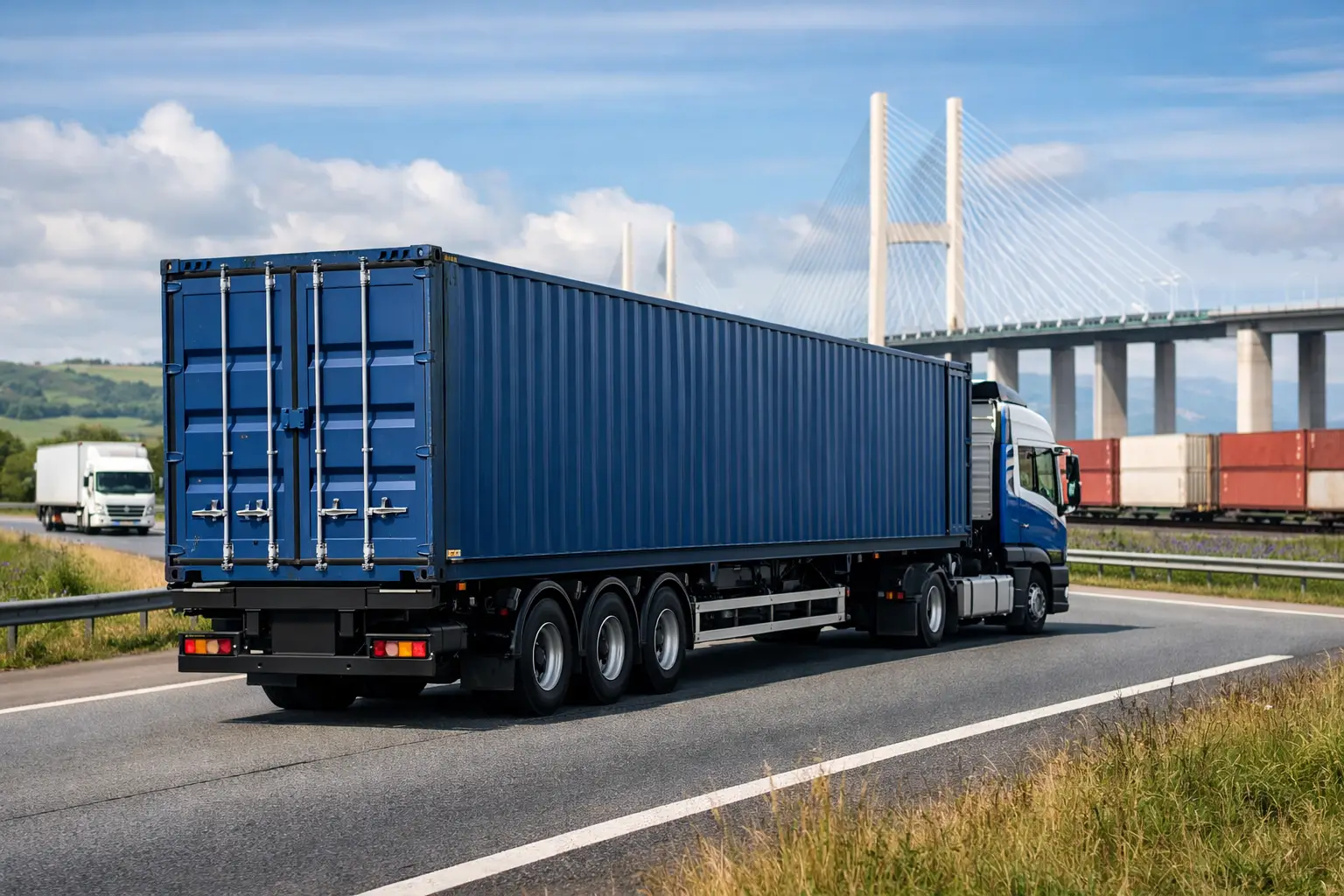
A 45ft ISO container can be profitable freight or an expensive delay, depending on how the move is planned. In UK road logistics, 45ft ISO container transport is less forgiving than a standard box move because trailer suitability, route restrictions, port timing and delivery access all matter more from the outset.
For operators moving consumer goods, retail stock, light manufacturing inputs or time-sensitive imports, the issue is rarely whether the container can be moved at all. The real question is whether it can be collected, routed and delivered without losing time to avoidable checks, rebooking, waiting time or access problems at the final site. That is where specialist haulage makes a measurable difference.
What makes 45ft ISO container transport different
A 45ft container is not simply a longer version of a 40ft move. In practice, that extra length can affect trailer allocation, laden weight planning, turning space and delivery-site readiness. If any one of those points is missed, the job becomes harder than it needs to be.
For many UK importers and freight teams, the operational pressure starts at collection. Port slots are tight, storage and detention exposure builds quickly, and customers further down the chain are expecting booked delivery windows to hold. When the container is 45ft, there is less room for assumptions. The equipment has to be right, the driver brief has to be clear, and the destination has to be checked properly.
This is also why 45ft work should not be treated as a routine add-on. It often carries the same commercial urgency as other container movements, but the margin for error is smaller.
The main planning points before collection
Trailer compatibility and equipment availability
The first practical issue is whether the assigned trailer is suitable for the container and the intended route. That sounds obvious, but it is one of the most common causes of delay when jobs are passed through general haulage channels without enough container-specific checking.
A 45ft unit needs the right trailer configuration and secure positioning for safe legal movement. Operators also need confidence that the haulage provider has access to the appropriate fleet at the time the booking is live, not just in theory. During busy periods, equipment allocation becomes just as important as driver availability.
Weight, payload and axle considerations
Not every 45ft container presents the same transport profile. One may be relatively light and straightforward. Another may create weight distribution issues that affect how and whether the load can be moved compliantly on UK roads.
This is where paperwork quality matters. If the declared weight is wrong, incomplete or late, the haulage plan may need to change after collection has already been scheduled. That can mean lost time, added cost and a delivery slot that no longer works. For freight forwarders and import teams, early confirmation of container weight and cargo profile helps avoid unnecessary friction.
Delivery site access
A 45ft container demands more from the destination than many warehouse teams first assume. Entrance width, turning area, surface condition, vehicle waiting space and unloading sequence all need to be considered before the lorry is on the road.
If the site has restricted access, urban constraints or fixed unloading times, that should be known in advance. A failed delivery on a 45ft move is not a minor inconvenience. It can trigger re-delivery charges, wasted driver time and knock-on delays across the day’s schedule.
Why port timing matters more than most people think
At major UK gateways such as Felixstowe, Southampton, London Gateway and Liverpool, collection timing is rarely just an administrative detail. It affects the whole movement. If customs clearance, release references, slot booking or document flow are late, the impact can be immediate.
For 45ft ISO container transport, timing pressure tends to be higher because a missed collection window is harder to recover from when specialist equipment and tightly planned delivery slots are involved. A standard box may sometimes be easier to reshuffle within a general schedule. A 45ft move often needs firmer control from the start.
That is why responsive communication matters as much as fleet capacity. If collection status changes, if the container is not available, or if a port process causes delay, the customer needs that update quickly enough to make a commercial decision. Waiting until a problem becomes a failed delivery helps nobody.
Where problems usually arise
Most disrupted 45ft moves do not fail because of one major issue. They fail because of several small issues that were not picked up early enough.
A delivery point may technically accept containers but not have the turning room for a 45ft trailer. A booking may be raised before the release is fully in place. A warehouse may expect the driver to wait on site longer than planned. A load may be compliant on paper but awkward in practice because the cargo distribution is poor.
These are all manageable problems when they are identified early. They become expensive problems when they are discovered on the day.
For commercial operators, this is the practical value of using a haulage provider that deals with container movements every day. The service is not just the physical journey. It is the control around the journey.
Choosing the right provider for 45ft ISO container transport
If you regularly move 45ft units, the right haulage partner should be judged on operational detail, not broad promises. Availability matters, but so do tracking, communication discipline and familiarity with port procedures.
A provider should be able to explain how it handles time-sensitive collections, what visibility you will have once the container is on the road, and how quickly it can respond if the delivery plan changes. That is particularly relevant where retail, distribution or manufacturing schedules depend on firm inbound timings.
It also helps to ask direct questions about specialist requirements. If the move involves refrigerated cargo, hazardous goods procedures or an awkward inland destination, those are not side notes. They are planning points that shape the whole job.
Jagelo Haulage Limited works in this part of the market because many businesses do not need general reassurance. They need a container operator that can collect promptly, communicate clearly and deliver without unnecessary drama.
Secure movement is not just about insurance
Security in container haulage is often discussed too narrowly. Insurance is part of the picture, but for customers moving valuable or time-sensitive freight, secure movement also means chain of information, status visibility and controlled handover.
With a 45ft container, there is often a higher expectation around delivery discipline because the cargo may be volume-led, commercially urgent or linked to a planned stock intake. Real-time tracking and clear milestone updates reduce uncertainty. They also help warehouse teams prepare labour and space more effectively.
A secure move is one where the container is accounted for, the ETA is actively managed and exceptions are communicated before they become losses. That is what gives logistics managers confidence when deadlines tighten.
The cost of getting it wrong
The direct transport charge is only one part of the equation. When 45ft container movements go wrong, the real cost usually comes from delays around them.
That can mean storage, detention, wasted booking slots, missed customer deliveries, idle warehouse labour or production disruption. For importers and distributors, the knock-on effect often exceeds the original haulage cost very quickly. This is why the cheapest quoted rate is not always the lowest-cost option in practice.
There is a clear difference between a provider that simply accepts the booking and one that pressure-tests the move before collection. The second approach may involve more questions at the start, but it tends to prevent the sort of avoidable issues that cost far more later.
A practical approach to smoother 45ft moves
The best 45ft ISO container transport jobs are usually the least dramatic. Release and customs details are confirmed early, container weight is accurate, the trailer is allocated correctly, and the delivery point is checked with proper attention to access.
From there, the move depends on disciplined execution. Collection needs to happen on time. Status updates need to be clear. If conditions change, someone needs to act on that information quickly rather than letting the issue drift until the driver reaches the gate.
For freight teams, that usually means working with a haulage partner that understands the cost of uncertainty. In container logistics, reliability is not a slogan. It is what protects your schedule when the pressure is already on.
A 45ft container does not need special treatment for the sake of it, but it does need competent planning and firm control. Get those right, and it moves as it should - securely, compliantly and on time. That is what keeps the wider supply chain working when the margins are tight.