Part of our guide to container haulage from Felixstowe
Felixstowe port booking system: a freight operator’s guide

The Felixstowe port booking system is an integrated digital platform that manages vehicle and container appointments to control the flow of cargo through the UK’s busiest container port. Freight operators, shipping agents, and logistics businesses must understand this system to avoid costly delays, demurrage fees, and compliance failures. Felixstowe handles nearly 48% of Britain’s containerised trade, making proficiency with its booking tools a commercial necessity rather than an optional skill. The Vehicle Booking System (VBS) and Container Booking System (CBS) sit at the heart of this infrastructure, and both require preparation, correct documentation, and timely action to use effectively.
What are the components of the Felixstowe booking system?
The VBS and CBS are real-time online appointment systems that allow hauliers to schedule container deliveries and collections at the port. The VBS controls truck access by allocating time slots to vehicles, while the CBS manages the container-level booking, linking specific container references to those appointments. Both systems operate through the port’s online portal and require registered accounts before any booking can be made.
To register, freight operators must provide company credentials, a valid haulier licence, and vehicle registration details. Agents acting on behalf of shipping lines or importers need authorisation letters and, in some cases, power of attorney documentation. The UK Emissions Trading Scheme (ETS) maritime launch at Felixstowe in july 2026 adds a further compliance layer, requiring operators to confirm vessel and cargo ETS status before completing certain bookings.

The table below summarises the core requirements for accessing the Felixstowe booking systems.
| Requirement | Details |
|---|---|
| Registered account | VBS/CBS portal account with verified company credentials |
| Haulier licence | Valid UK operator licence for the registered vehicle fleet |
| Container reference | Accurate container number and shipping line confirmation |
| Customs Declaration Service (CDS) | Pre-arrival customs data submitted before slot booking |
| UK ETS compliance | Vessel and cargo ETS status confirmed from mid-2026 |
Key prerequisites at a glance:
- Active VBS and CBS portal accounts with up-to-date vehicle and driver records
- Container release confirmation from the shipping line before booking a collection slot
- Completed customs entries via the Customs Declaration Service (CDS)
- ETS compliance documentation where applicable from july 2026 onwards
- Accurate estimated time of arrival (ETA) data from the shipping line
Pro Tip: Register your company on the VBS portal well before your first shipment arrives. Account verification can take several working days, and a delayed registration will cost you a slot.
How do you book a container or vehicle slot at Felixstowe?
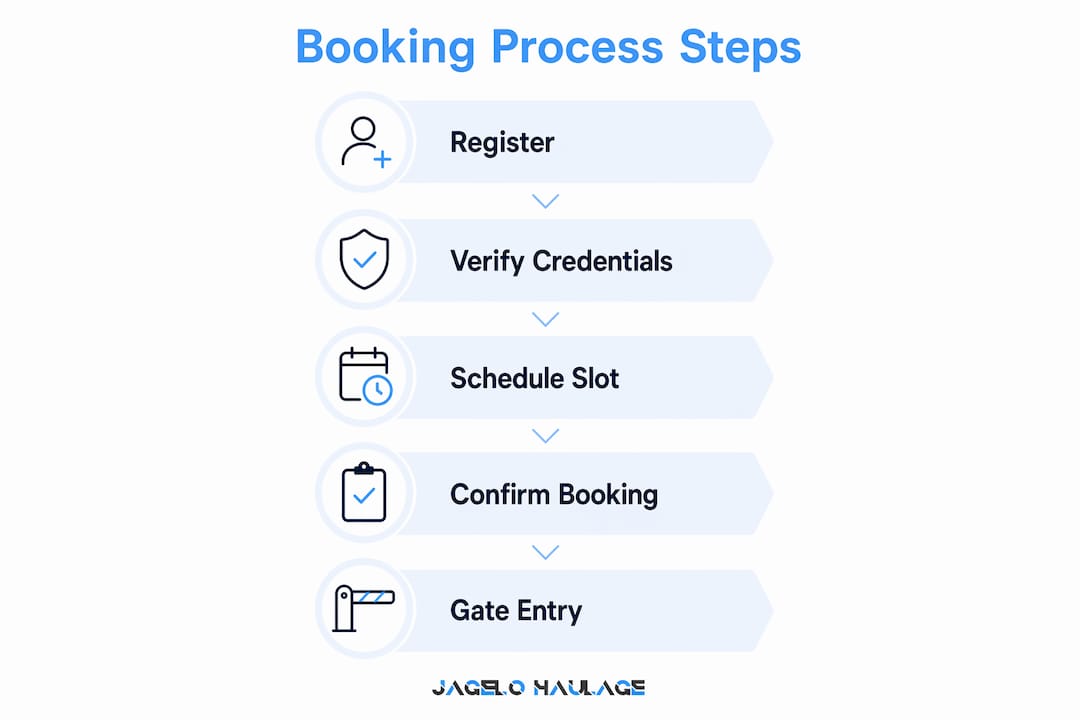
The booking process follows a defined sequence. Skipping or rushing any step creates errors that the system will reject, forcing you to restart and potentially losing your preferred time window. Freight operators should book at least 2 weeks before vessel arrival during peak congestion periods to secure viable slots.
Follow these steps to complete a booking correctly:
- Confirm container availability. Obtain the container number, shipping line release, and port discharge confirmation before logging in.
- Submit pre-arrival customs data. File your customs entry through the Customs Declaration Service (CDS) and obtain your clearance reference. Without this, the port cannot release the container.
- Log in to the VBS portal. Access your registered account and select the relevant terminal at Felixstowe.
- Enter container details in the CBS. Input the container reference, shipping line, and cargo type. The system cross-references this against port records in real time.
- Select a time slot. Choose from the available appointment windows. The system displays slots by date and time. Select one that aligns with your driver’s schedule and customs clearance status.
- Confirm and record the booking reference. Save the confirmation number. Your driver will need this at the gate. Any discrepancy between the booking reference and the vehicle registration will result in gate refusal.
- Monitor for changes. Slot availability shifts due to vessel schedule changes and port congestion. Check the portal regularly in the 48 hours before the appointment.
For import containers not yet discharged, the VBS offers a ‘load and go’ option that allows operators to secure a tentative appointment before the container has physically landed. This is particularly useful when managing tight delivery windows for time-sensitive cargo.
Pro Tip: Coordinate import and export container movements simultaneously where possible. Pairing a collection with a delivery on the same run reduces vehicle costs and minimises the risk of demurrage fees accumulating on either container.
What are the common challenges in Felixstowe port bookings?
Booking failures at Felixstowe fall into a predictable set of categories. Understanding them in advance is the most direct way to avoid them.
- Peak demand delays. During peak periods, hauliers face delays of up to 5 days waiting for available truck slots in the VBS. This is not a system fault. It reflects genuine terminal capacity limits during high-volume windows such as pre-Christmas trade surges or post-Chinese New Year import peaks.
- Documentation errors. Incorrect or missing documentation is the most common cause of port-related delays at Felixstowe. A single transposed digit in a container number, or a missing CDS reference, will cause the booking to fail at the gate.
- Container release failures. Operators sometimes book a slot before the shipping line has formally released the container. The port system will not honour the appointment if the release is not confirmed.
- Vehicle registration mismatches. The vehicle attending the port must match the registration recorded in the VBS booking. Last-minute vehicle changes require the booking to be amended before arrival, not at the gate.
- ETS compliance gaps. From mid-2026, vessels and their cargo are subject to UK ETS reporting requirements. Operators who have not updated their compliance workflows will encounter booking rejections for affected shipments.
When a booking fails, the correct escalation path is to contact the Felixstowe port operations helpdesk directly, quoting the booking reference and the specific error code displayed in the VBS portal. Do not rebook without resolving the underlying cause first, as duplicate bookings create further congestion in the system.
For guidance on the broader mechanics of VBS appointments, the UK vehicle booking system guide from Jhaulage provides a clear operational reference.
How does Felixstowe’s digital infrastructure support cargo flow?
The Felixstowe Cargo Processing System (FCPS) is the backbone of the port’s digital operations. The FCPS has reduced average cargo clearance times from 4–5 days to just one hour for integrated users. That reduction represents a fundamental shift in how quickly freight can move from ship to road.
The FCPS processes over 80% of UK maritime container throughput, enabling real-time data sharing between shipping lines, customs authorities, and haulage firms. This level of integration means that a correctly submitted customs entry and a confirmed VBS slot can result in a container being released, collected, and on the road within hours of vessel discharge. For freight operators, this is the difference between a profitable run and a costly wait.
The system achieves this by linking pre-arrival cargo data, customs clearance status, and terminal handling records into a single information flow. When all parties submit accurate data on time, the FCPS removes the need for manual checks and physical document exchanges at the gate. Shipping lines, customs brokers, and haulage firms that share real-time data through the FCPS consistently report faster turnaround times than those relying on manual processes.
Recent digital upgrades at Felixstowe have extended FCPS integration to include automated gate entry, where the system reads vehicle registrations and container barcodes without manual intervention. This reduces gate queues and shortens the time a driver spends on port.
Pro Tip: Use the FCPS data feed to monitor your container’s discharge status in real time. Booking your VBS slot the moment discharge is confirmed, rather than waiting for a phone call from your shipping line, can save you 24 hours or more on a tight delivery schedule.
What are the best practices for freight operators at Felixstowe?
Consistent booking success at Felixstowe comes from discipline in preparation and coordination, not from luck or last-minute fixes. The operators who perform best treat the booking system as an extension of their wider supply chain planning.
- Book early and track continuously. Initiate your VBS slot request as soon as the vessel ETA is confirmed, and monitor slot availability daily. Waiting until the vessel berths leaves you competing for limited windows.
- Coordinate with your customs broker before booking. Tight coordination with customs brokers and hauliers prevents the documentation errors that cause the majority of booking failures. Confirm your CDS reference is live before you enter the CBS.
- Maintain a documentation checklist. Every booking requires the same core set of documents. A standardised checklist reduces the risk of a missing reference derailing a time-sensitive collection.
- Plan for seasonal surges. Proactive booking and contingency plans are necessary during peak holiday and seasonal periods when the system’s default capacity is under pressure. Identify alternative routing options through other UK ports such as Tilbury or Southampton before congestion forces the decision.
- Amend bookings proactively. If your driver or vehicle changes, update the VBS record immediately. Gate refusals due to registration mismatches are entirely avoidable.
- Stay current on regulatory changes. The UK ETS launch in mid-2026 requires updated compliance workflows. Operators who have not reviewed their booking processes in light of this regulation face rejection at the booking stage.
For a detailed operational reference on managing container collections, the Felixstowe container collection guide from Jhaulage covers the full process with 2026-specific updates.
Pro Tip: Build a direct contact relationship with your shipping line’s port liaison team. When vessel schedules shift, early notification gives you time to amend your VBS slot before the window closes.
Key takeaways
The Felixstowe port booking system requires early preparation, accurate documentation, and active use of the FCPS and VBS/CBS portals to avoid delays and demurrage costs.
| Point | Details |
|---|---|
| VBS and CBS are distinct systems | The VBS manages vehicle access; the CBS links container references to appointments. |
| Book at least 2 weeks ahead | Early booking is critical during peak periods when slot delays reach up to 5 days. |
| Documentation accuracy is non-negotiable | Incorrect or missing CDS references cause the majority of booking failures at Felixstowe. |
| FCPS cuts clearance to one hour | Integrated users benefit from cargo clearance times reduced from 4–5 days to under one hour. |
| UK ETS adds compliance requirements | From mid-2026, operators must confirm ETS status before completing bookings for affected vessels. |
What I have learned from working with Felixstowe bookings
The operators who struggle most with Felixstowe bookings are not the ones who lack technical knowledge. They are the ones who treat the booking system as a last step rather than the first. By the time a vessel is 48 hours from berth, the best slots are already taken. The freight teams that consistently perform well start their VBS process the moment a vessel ETA is published, sometimes 10–14 days out.
The UK ETS launch in mid-2026 is the most significant compliance shift I have seen at Felixstowe in several years. Many operators are still treating it as a shipping line problem rather than a haulage and booking problem. It is both. If your customs broker has not updated their declaration templates to include ETS data fields, your booking will fail at a stage that feels inexplicable until you trace it back to a missing compliance field.
The FCPS is genuinely transformative when used correctly. The reduction from 4–5 days to one hour for cargo clearance is not a marketing claim. It is a measurable operational outcome that I have seen play out repeatedly for operators who invest in proper system integration. The port’s digital infrastructure rewards preparation and punishes reactive working.
My consistent advice: treat every Felixstowe booking as a project with a defined start date, not a task you begin when the vessel arrives.
— Vytautas
Jhaulage: container haulage expertise at Felixstowe
Jhaulage operates a fleet of over 40 GPS-tracked trucks and trailers, providing specialist container haulage directly from Felixstowe and other major UK ports including Tilbury, Southampton, and Liverpool.
For freight operators who need a haulage partner with direct experience of the Felixstowe booking process, scheduling, and port-to-door delivery, Jhaulage offers 24/7 support and full container load services built around port timings. The team works with shipping agents and importers to align VBS appointments with customs clearance and onward delivery schedules. Explore Jhaulage’s container haulage services to see how specialist port knowledge translates into fewer delays and more reliable supply chain performance.
FAQ
What is the VBS at Felixstowe port?
The Vehicle Booking System (VBS) is a real-time online appointment platform that allocates time slots to trucks collecting or delivering containers at Felixstowe. Hauliers must hold a confirmed VBS booking before entering the port.
How far in advance should I book a Felixstowe port slot?
Freight operators should book at least 2 weeks before vessel arrival, particularly during peak congestion periods when slot delays can reach up to 5 days.
What documents do I need to book at Felixstowe?
You need a confirmed container release from the shipping line, a Customs Declaration Service (CDS) reference, your registered VBS account credentials, and the vehicle registration of the attending truck.
How does the FCPS reduce cargo clearance times?
The Felixstowe Cargo Processing System (FCPS) links pre-arrival data, customs status, and terminal records into one information flow, reducing average clearance times from 4–5 days to approximately one hour for integrated users.
Does the UK ETS affect Felixstowe port bookings?
From mid-2026, the UK Emissions Trading Scheme requires operators to confirm ETS compliance status for affected vessels before completing certain bookings. Operators who have not updated their workflows will encounter booking rejections.
Recommended
- Felixstowe container collection best practices: 2026 guide | Jagelo Haulage
- Container Haulage from Felixstowe: A Professional Guide to Port Logistics | Jagelo Haulage
- How to navigate felixstowe port truck entry: 2026 guide | Jagelo Haulage
- Container Transport from Felixstowe: A Professional Guide to Port Haulage | Jagelo Haulage