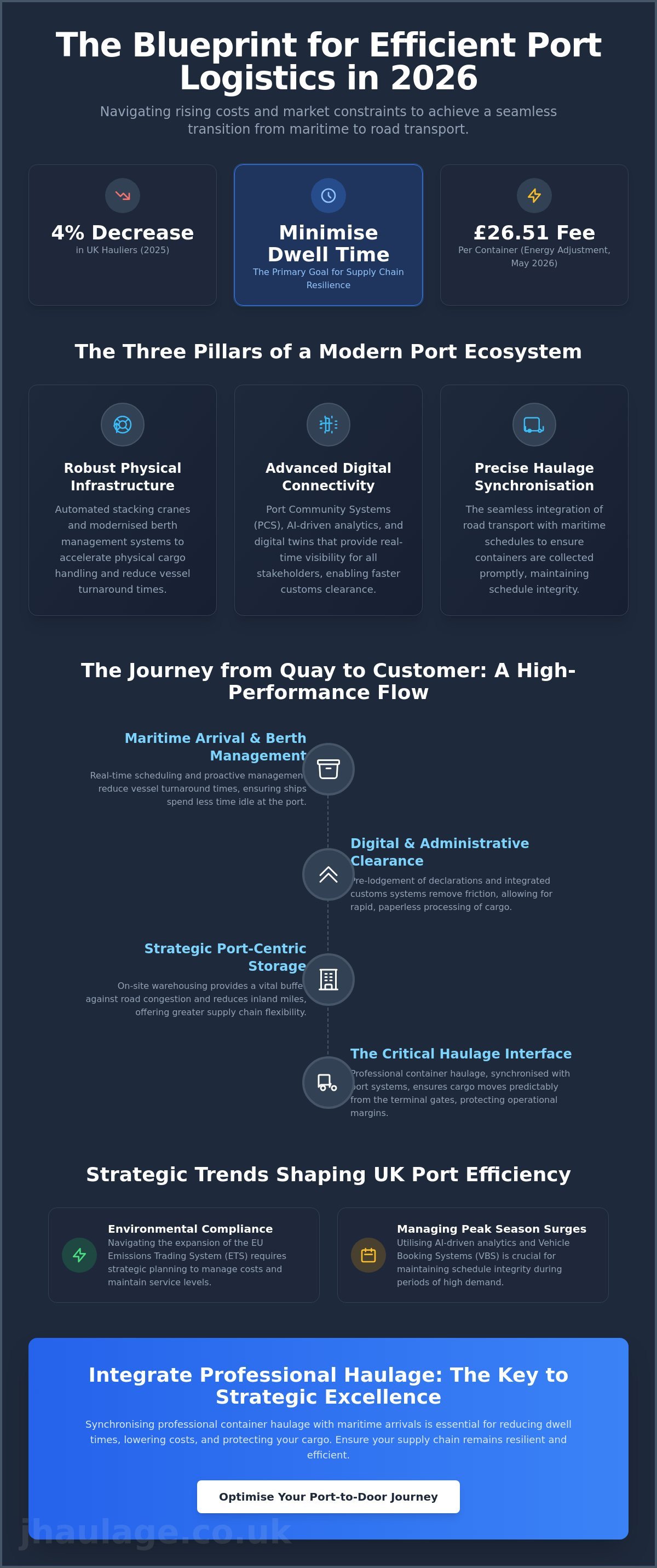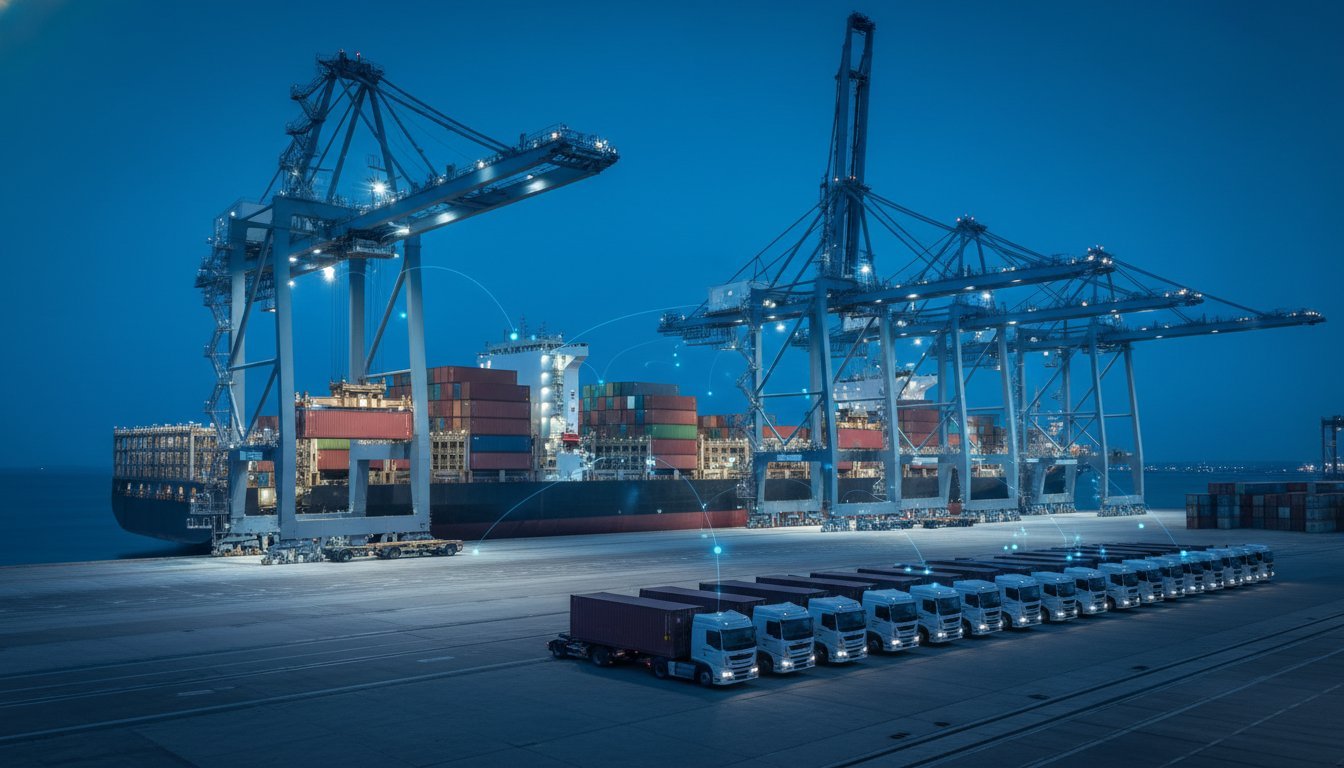
The number of hauliers in the UK decreased by 4% in 2025, creating a constrained environment for any business reliant on the timely movement of goods. You've likely recognised that even the most structured supply chain remains vulnerable to unpredictable port congestion and rising fees, such as the DP World London Gateway energy adjustment mechanism which reached £26.51 per import container in May 2026. Maintaining efficient port logistics requires a disciplined approach that extends beyond the quayside to ensure cargo doesn't sit idle.
This article explores how modern port logistics are evolving to drive supply chain efficiency and how professional haulage integration prevents the costly delays that erode operational margins. We'll examine the strategic trends for 2026, including the expansion of the EU Emissions Trading System and the critical role of reliable container haulage in reducing dwell times. You'll gain a clear understanding of how to achieve a seamless transition from maritime to road transport through better planning and technical expertise.
Key Takeaways
- Understand the shift from simple transit points to strategic hubs and how this transition underpins the delivery of efficient port logistics.
- Learn how the integration of customs clearance and specialised cargo handling protocols eliminates administrative bottlenecks and operational friction.
- Identify the role of digital infrastructure, such as AI-driven analytics and Vehicle Booking Systems, in maintaining schedule integrity.
- Discover effective methods for managing peak season surges and environmental compliance to ensure consistent service delivery.
- Recognise why synchronising professional container haulage with maritime arrivals is essential for reducing dwell times and protecting cargo.
What Defines Efficient Port Logistics in 2026?
The modern port functions as a sophisticated strategic hub rather than a simple transit point for cargo. In 2026, efficient port logistics are defined by the seamless integration of three core pillars: robust physical infrastructure, advanced digital connectivity, and precise haulage synchronisation. For cargo owners, the most critical metric has become "dwell time." This measurement tracks the duration a container remains within the port terminal after being unloaded from a vessel. Minimising this duration is essential to avoid escalating storage costs and ensuring the reliability of the broader supply chain.
Effective Port management principles now prioritise a proactive approach over the reactive methods of the past. This shift is particularly evident across the UK, where ports are increasingly managed as high-performance ecosystems that anticipate arrivals rather than simply responding to them. By synchronising maritime schedules with inland transport, operators can maintain a steady flow of goods even during periods of high demand. This level of coordination is vital because efficiency at the quay is lost if the container cannot be moved swiftly to its next destination.
The rising operational costs in 2026, such as the increased energy adjustment mechanisms at DP World London Gateway and Southampton, have made operational speed a financial necessity. When port charges increase, every hour of delay represents a direct hit to the bottom line. Achieving efficient port logistics requires a disciplined focus on the fundamentals of cargo movement and a commitment to reducing administrative friction at every stage of the journey. This discipline ensures that the supply chain remains resilient against external market pressures.
The Evolution of Ship-to-Shore Operations
Modernised berth management systems now utilise real-time scheduling to reduce vessel turnaround times, ensuring that ships spend less time idle. Automated stacking cranes further accelerate this process by retrieving containers with high precision and speed. Port efficiency is the minimisation of friction between maritime and inland transport modes. These technological advancements ensure that physical handling does not become a bottleneck for subsequent road transport operations. The result is a more predictable environment for container haulage providers and their clients.
Information Flow and Digital Twins
Digital visibility has become as vital as the physical handling of cargo. Port Community Systems (PCS) provide a centralised platform for data sharing, which improves customs transparency and allows for faster clearance. When hauliers receive real-time updates regarding container status, they can adjust their scheduling to prevent congestion at the terminal gates. This digital twin approach creates a transparent environment where every stakeholder understands the exact location and status of their assets. Reliable data flow ensures that the transition from the vessel to the road is handled with technical competence and minimal delay.
Core Components of a High-Performance Port Ecosystem
A high-performance port ecosystem relies on the seamless integration of several core components. These elements must work in unison to prevent the administrative and physical bottlenecks that often disrupt global trade. According to a recent World Bank report on port performance, the ability to handle cargo without friction is a primary differentiator for competitive maritime hubs. Achieving efficient port logistics requires more than just deep water; it necessitates a disciplined coordination between customs, terminal operators, and haulage providers.
Strategic storage solutions, such as port-centric warehousing, allow businesses to store goods closer to the point of entry. This proximity reduces inland miles and provides a necessary buffer against road congestion. The haulage interface serves as the vital link between the quay and the final destination. A professional approach to inland container haulage ensures that cargo moves predictably from the terminal gates. By synchronising these components, operators can provide protected outcomes for their clients' cargo whilst maintaining operational speed.
Streamlining Customs and Regulatory Compliance
Administrative efficiency is just as critical as physical speed. Integrated customs clearance moves beyond traditional hurdles by utilising pre-lodgement of declarations. This process facilitates the immediate collection of containers upon discharge from the vessel. Maintaining Authorised Economic Operator (AEO) status is a key factor in port logistics services UK, as it establishes a trusted trader framework. This status helps in managing modern trade regulations whilst maintaining the speed required for just-in-time supply chains. If you require a dependable partner to manage these complex interfaces, request a professional haulage consultation to secure your supply chain.
Infrastructure and Equipment Reliability
Physical capacity remains the foundation of any high-performance port. Deep-water berths are now a necessity to accommodate the latest generation of ultra-large container vessels. However, the berth is only one part of the equation. Reliable equipment maintenance ensures that automated cranes and reach stackers operate without standstills. Multi-modal connections, particularly robust road access, are essential for heavy container haulage. Without these connections, the port becomes a silo rather than a hub. Consistent investment in infrastructure ensures that the port can handle peak volumes without service degradation.
Strategic Trends Shaping UK Port Efficiency in 2026
The landscape of efficient port logistics is undergoing a fundamental transformation in 2026. This shift is driven by the dual pressures of environmental compliance and the necessity for absolute operational resilience. UK ports are no longer just handling physical cargo; they're managing complex data streams and energy transitions. Cybersecurity has emerged as a fundamental pillar of this resilience. A single digital breach can halt the movement of thousands of containers, making protected data systems as vital as the physical cranes on the quay.
It's clear that the industry is moving towards a more disciplined, tech-heavy model to counter rising costs. For example, the 2026 expansion of the EU Emissions Trading System now covers all greenhouse gases for journeys between EU and EEA ports. This regulatory shift forces a more proactive approach to carbon management across the entire supply chain. Strategic partners who understand these regulatory nuances provide a level of security that legacy providers cannot match.
The Drive Towards Net-Zero Logistics
Major shipping lines now view sustainable logistics as a mandatory requirement rather than an optional extra. Green Corridors are being established to provide low-emission routes between global hubs, ensuring that carbon footprints are minimised across the entire journey. Many UK ports are incentivising the use of low-emission transport fleets through differentiated charging structures. Electrification of port handling equipment and the provision of shore-side power are becoming standard infrastructure investments. These changes ensure that the maritime sector meets its environmental obligations without compromising on speed.
Automation and Artificial Intelligence
AI-driven predictive analytics now allow terminal operators to forecast port congestion before it occurs. These systems analyse vessel arrivals and terminal density to provide actionable insights for haulage providers. Automated scheduling tools specifically optimise merchant haulage workflows. This ensures that vehicles are dispatched with surgical precision, reducing unnecessary idling time. Manual gate checks have largely been replaced by biometric and Optical Character Recognition (OCR) systems. This transition significantly improves haulier turnaround times by removing physical paperwork and manual verification from the entry process.
The rise of these automated gate systems has a direct impact on terminal throughput. By processing vehicles in seconds rather than minutes, ports can maintain a higher volume of container deliveries without increasing the physical footprint of the terminal. It's a disciplined approach to growth that prioritises technological efficiency over simple expansion. This level of technical competence is what separates high-performance ports from those struggling with legacy bottlenecks. When technology and physical operations are synchronised, the result is a more predictable and cost-effective outcome for the cargo owner.
Overcoming Common Bottlenecks in the Port-to-Door Journey
The journey from the quay to the warehouse is often where supply chain resilience is tested most severely. Whilst many operators view terminal congestion as an unavoidable reality, disciplined planning proves otherwise. Overcoming these bottlenecks requires a technical understanding of terminal operations and a proactive stance on inland transport. Every hour a container remains at the port increases the risk of storage charges and missed delivery windows. With new costs such as the Teesport infrastructure charge of £2.25 per unit implemented in June 2026, the financial stakes of delay are higher than ever.
Mastering the Vehicle Booking System (VBS)
Securing optimal VBS slots is the secret to efficient port logistics. Terminal operators use these systems to regulate traffic flow, and failing to secure a slot during peak hours can result in significant delays. Professional hauliers manage these bookings with precision to avoid port penalties and ensure that cargo moves as soon as it's cleared. Utilising night-time or off-peak collections is a proven strategy for avoiding road congestion and improving turnaround times. This methodical approach ensures that the vehicle is on the road whilst the network is at its most efficient.
Mitigating the Impact of Port Congestion
Maintaining supply chain continuity requires developing a strategic framework for port logistics management. This involves more than just reacting to delays; it requires a plan for diverse port entries to bypass regional disruptions. For instance, if Felixstowe faces a surge, having the flexibility to reroute through secondary hubs can prevent a total standstill. Port-centric storage also plays a vital role by providing a local buffer for stock. This reduces the pressure on immediate inland transport and allows for more structured delivery scheduling.
Merchant haulage provides the operational control needed to manage costs effectively. This model enables smarter container repositioning, which directly addresses the issue of empty miles. Key benefits of this flexible approach include:
- Prioritised scheduling based on your specific warehouse requirements rather than the shipping line's convenience.
- Reduced exposure to standard shipping line delays and administrative friction.
- Improved cost control through transparent, direct-to-haulier pricing structures.
This level of coordination ensures that your cargo doesn't just leave the port, but arrives at its destination through the most efficient route possible. By synchronising collections with container repositioning, haulage providers can lower overall logistics expenditure. To secure a reliable link between the port and your door, request a bespoke haulage quotation today.
Integrating Professional Haulage: The Key to Strategic Excellence
Professional haulage is not merely the final stage of transportation; it's the strategic completion of the entire port operation. Even the most advanced terminal efficiencies are compromised if the road transport interface lacks discipline. In 2026, the transition from a simple service provider to a strategic logistics partner is essential for maintaining supply chain integrity. Professional hauliers serve as the eyes and ears for cargo owners, providing a level of ground-level visibility that automated systems cannot always capture. Integrating these services ensures that the promise of efficient port logistics is fulfilled through to the final destination.
A partner with over 15 years of industry experience understands that UK port complexities require more than just a vehicle. It requires a technical grasp of terminal protocols and the ability to adapt to shifting operational conditions. This expertise allows for the anticipation of potential delays, ensuring that cargo remains moving whilst others are stalled by administrative or physical bottlenecks. By treating haulage as a core strategic component, businesses can secure their supply chains against the unpredictability of global trade.
The Advantage of a Modern Haulage Fleet
A modern, reliable fleet is the foundation of secure container transport. Euro 6 compliant vehicles are now a requirement for many green corridors, supporting environmental mandates whilst providing the mechanical reliability needed for heavy container haulage. Real-time tracking for every movement provides the transparency required for modern inventory management. This digital visibility ensures that every stakeholder knows the exact status of their cargo. Safety is further enhanced through the use of specialised trailers and drivers who are trained in the specific requirements of port-to-door deliveries.
Why Reliability is the Ultimate Efficiency Metric
Reliability remains the most accurate measure of efficient port logistics. The cost of a missed VBS booking or a failed collection far outweighs the price of the transport itself. Jagelo Haulage provides the steadfast, responsive support needed to maintain schedule integrity across the UK. This functional reliability ensures that containers are collected promptly, reducing the risk of the dwell-time penalties discussed in previous sections. You can take the next step in organising a container collection from port with a partner that prioritises performance over promises. This methodical approach to road transport is what allows a business to achieve true operational excellence in its logistics framework.
Securing Your Supply Chain for 2026 and Beyond
Achieving efficient port logistics requires a disciplined approach to every link in the supply chain. We've established that modern ports are no longer mere transit points but strategic hubs where digital visibility and physical handling must be perfectly synchronised. By mastering the complexities of Vehicle Booking Systems and integrating professional haulage, businesses can significantly reduce dwell times and protect their operational margins.
Jagelo Haulage brings over 15 years of industry expertise and a modern fleet of over 40 trucks to every operation. We specialise in nationwide container transport, acting as a strategic partner that prioritises your cargo's security and timely delivery. Our team understands the high stakes of the UK supply chain and delivers the functional reliability your business demands. This technical competence ensures that your goods move from the quay to their destination with minimal friction and maximum predictability.
Take the next step in optimising your inland transport by contacting Jagelo Haulage for professional port logistics solutions. We look forward to securing your cargo's journey and supporting your long-term operational excellence.
Frequently Asked Questions
What is the difference between port logistics and general logistics?
Port logistics focuses specifically on the interface between maritime and land-based transport modes. It involves the management of berth schedules, terminal handling, and the immediate transition of cargo to road or rail networks. General logistics encompasses the broader movement and storage of goods across the entire supply chain. Port operations are unique because they must manage vessel arrival windows and terminal dwell times to maintain a steady flow of goods.
How does efficient port logistics reduce overall shipping costs?
Efficient port logistics reduce costs by minimising dwell-time penalties and storage fees at the terminal. When containers are moved promptly, businesses avoid the escalating daily charges applied by port operators for overstaying. Better coordination also allows for smarter container repositioning, which reduces the expense of empty miles. These savings directly impact the total landed cost of goods, making the entire supply chain more competitive and predictable.
What are the main causes of delays in port operations today?
Delays are primarily caused by terminal congestion, administrative friction, and haulage capacity constraints. In 2026, infrastructure strain on key routes remains a significant factor that disrupts the flow of goods. Unsynchronised vessel arrivals often lead to surges that overwhelm terminal handling equipment and storage capacity. Additionally, a lack of real-time visibility once cargo leaves the vessel can prevent hauliers from securing the necessary Vehicle Booking System slots for timely collection.
Can I use my own haulier for container collection from major UK ports?
You can appoint your own haulier by opting for merchant haulage rather than using the shipping line's transport services. This choice gives you greater control over the scheduling and prioritisation of your deliveries. It allows you to work with a dedicated partner who understands your specific warehouse requirements and time constraints. Most major UK ports facilitate this by providing access to their Vehicle Booking Systems for authorised independent haulage providers.
What role does technology play in modern port-centric logistics?
Technology serves as the backbone of operational transparency through real-time data sharing and predictive analytics. Port Community Systems allow for the digital pre-lodgement of customs declarations, which accelerates the clearance process significantly. Automated gate systems and biometric entry points have replaced manual checks to speed up vehicle turnaround times. These tools provide the digital visibility necessary to manage containers as strategic outcomes rather than just physical units of cargo.
How can I ensure my cargo clears customs quickly at the port?
Ensuring quick clearance requires the accurate pre-lodgement of all declarations before the vessel actually arrives at the berth. Working with a partner who understands the trusted trader framework provides a level of security that often results in fewer physical inspections. You should also ensure that all documentation is digitised and shared via the relevant Port Community System. This proactive approach prevents administrative bottlenecks from delaying the physical collection and onward transport of your cargo.
What is the benefit of merchant haulage over shipping line haulage?
Merchant haulage offers superior flexibility and dedicated support compared to the rigid schedules typically offered by shipping lines. You gain the ability to prioritise specific containers based on urgent stock requirements rather than waiting for a shipping line's carrier availability. This model also provides more transparent pricing and a direct line of communication with the transport provider. It's an essential strategy for businesses that require a more responsive and tailored inland transport solution.
How do ports handle heavy or oversized container haulage?
Ports manage heavy or oversized loads through specialised handling equipment and designated out-of-gauge storage areas. These movements require advanced planning to ensure that the necessary reach stackers or cranes are available for discharge. Haulage providers must use specialised trailers, such as low-loaders or extendable chassis, to transport these units safely to their final destination. Coordination with local authorities is often required to plan routes that safely accommodate the dimensions and weight of the load.