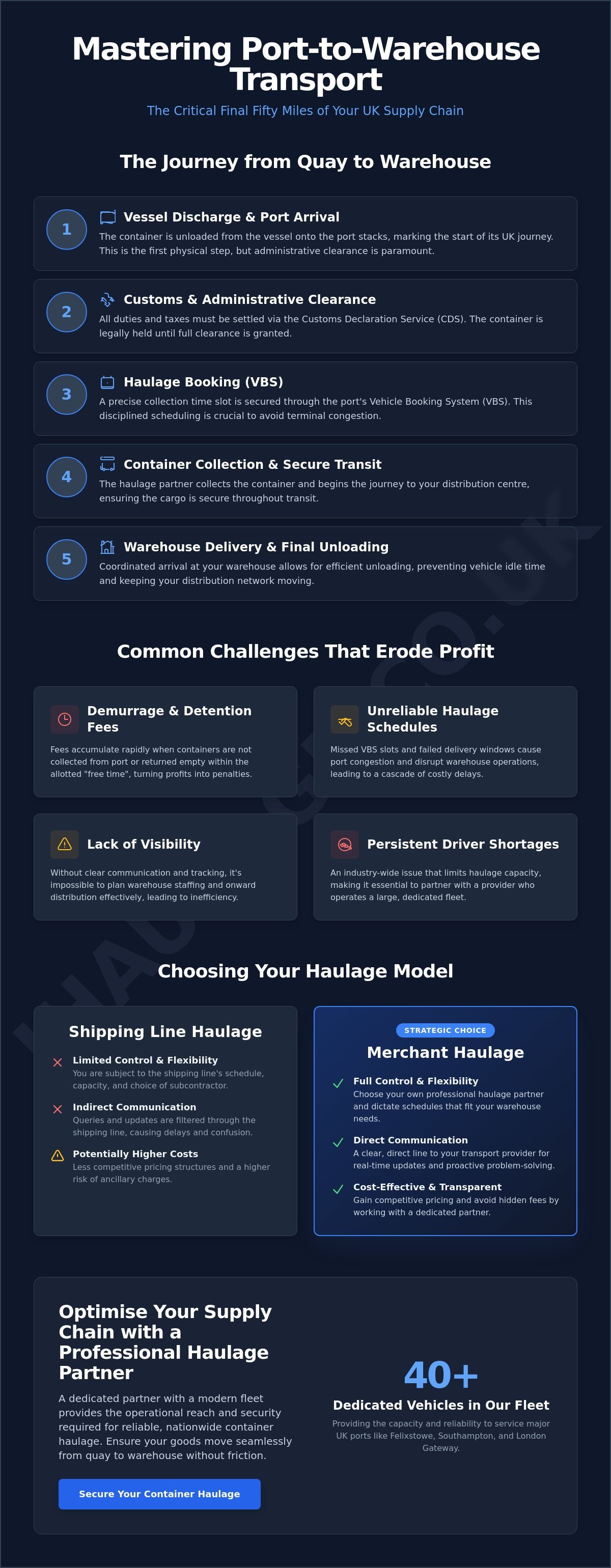
The success of your supply chain is often decided in the final fifty miles between the quay and your warehouse door. For many UK importers, port to warehouse transport remains a point of significant operational friction where hidden costs quickly erode profit margins. You likely understand the frustration of watching demurrage fees accumulate whilst containers sit idle at Felixstowe or London Gateway. These delays usually stem from a lack of visibility or the failure of unreliable haulage schedules. When transport partners fail to meet their windows, the resulting warehouse scheduling issues can disrupt your entire distribution network.
It's a common reality that your distribution centre stands ready, yet your stock remains trapped behind port bureaucracy and persistent driver shortages. This guide provides a professional framework to master these logistical complexities in 2026. You'll learn how to secure a predictable flow of goods and reduce storage costs through strategic merchant haulage. We'll examine the impact of the fully implemented Customs Declaration Service (CDS) and the latest port infrastructure fees, such as the £30.30 charge at London Gateway. This structured approach ensures your operations remain disciplined, reliable, and protected from unnecessary financial penalties.
Key Takeaways
- Understand the critical transition from maritime arrival to inland distribution to maintain the integrity of your UK supply chain.
- Navigate the step-by-step process of port to warehouse transport, from initial vessel discharge to final administrative clearance.
- Evaluate the strategic benefits of merchant haulage versus shipping line haulage to determine the most efficient model for your distribution centre.
- Implement proven methods to avoid high demurrage and detention fees by managing port congestion and haulage schedules effectively.
- Discover how a dedicated fleet of over 40 trucks provides the operational reach and security required for reliable national container haulage.
What is Port to Warehouse Transport in the UK Logistics Sector?
Port to warehouse transport represents the specific logistical phase where a shipping container moves from a UK port terminal to a designated inland distribution centre. This operation serves as the vital link between maritime arrival and the domestic supply chain. It's a fundamental component of intermodal freight transport, ensuring that goods remain within a secure, sealed environment from the moment they leave the vessel until they reach the point of unloading. Maintaining supply chain integrity requires a disciplined approach to this transition, as any failure in coordination can lead to significant financial penalties and stock shortages.
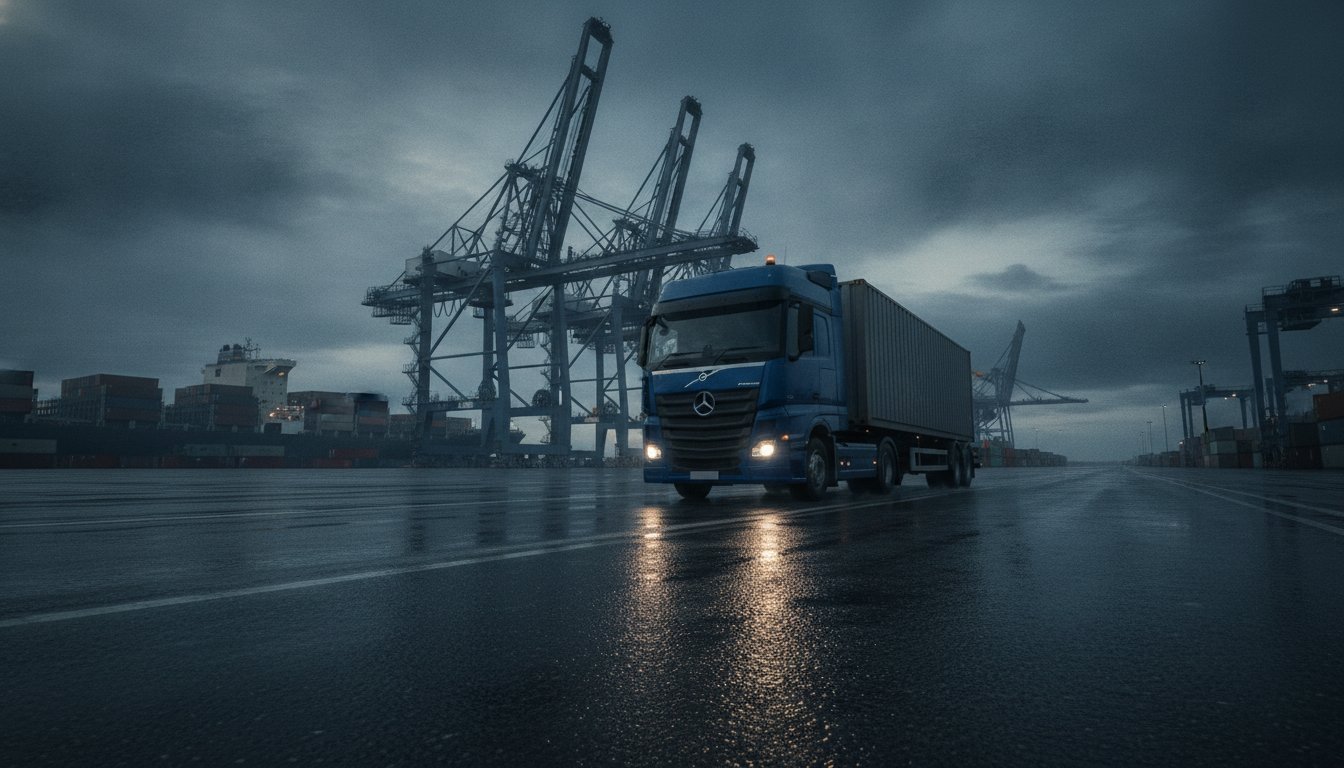
The "final mile" from the quay to the warehouse is often the most complex stage of the entire journey. Whilst a ship may spend weeks at sea, the success of the delivery often depends on a four-hour window at the port gate. This stage involves navigating terminal congestion, managing strict vehicle booking systems, and ensuring all administrative clearances are in place. A modern fleet is essential for this task. Using well-maintained, high-specification vehicles reduces the risk of mechanical failure and ensures that transit remains both secure and timely. Jagelo Haulage operates a fleet of over 40 trucks, providing the necessary operational reach to handle these high-stakes movements with consistent reliability.
The Importance of Port Logistics Management
Professional management prevents bottlenecks at port gates. Efficient inland haulage depends on a haulage partner's ability to navigate the Vehicle Booking Systems (VBS) used at major terminals. Disciplined scheduling ensures that drivers arrive exactly when the container is ready for collection, which directly impacts inland haulage efficiency. For businesses using multiple entry points like Felixstowe, Southampton, or London Gateway, a partner with nationwide reach is essential to maintain a uniform standard of service across all routes.
Key Components of a Port-to-Warehouse Move
- Container collection: This is the first physical step in the UK journey. It requires the haulage provider to present the correct release codes and documentation at the terminal gate.
- Secure transit: Road haulage must be performed by experienced drivers who understand the specific requirements of heavy container loads. This ensures the cargo remains protected throughout the journey.
- Warehouse delivery: Successful delivery requires coordination with warehouse site managers. Precise arrival times allow for efficient unloading, which prevents vehicle idle time and reduces the risk of additional waiting charges.
Mastering port to warehouse transport requires more than just physical assets; it demands a strategic understanding of the UK's unique customs and port environment. By prioritising professional merchant haulage, businesses can ensure their goods move from the quay to the warehouse without the friction often associated with unmanaged logistics.
The Step-by-Step Process of Moving Containers from Port to Warehouse
The movement of a container from the quay to your distribution centre is a sequence of highly regulated, interdependent steps. It begins when the vessel arrives and the terminal discharges the unit onto the stacks. However, physical movement cannot occur until all administrative duties are finalised. Without confirmed customs clearance via the Customs Declaration Service (CDS), which became the mandatory standard in February 2026, a haulage partner cannot legally initiate the collection. This administrative gatekeeping ensures that all duties are settled before the cargo enters the UK's domestic road network.
The technical gatekeeper of this process is the Vehicle Booking System (VBS). Most major UK terminals, including Felixstowe and Southampton, require haulage providers to secure a specific time slot before a truck can enter the gates. This system is designed to manage terminal traffic and minimise vehicle idling. Once the container is lifted onto the trailer, the physical haulage leg commences. The cycle only concludes when the empty container is returned to a designated port or inland depot. Completing this return within the agreed timeframe is essential for avoiding detention charges that shipping lines impose on late equipment.
Pre-Collection Requirements and Paperwork
Successful container collection depends on the precision of your documentation. The Bill of Lading serves as the primary contract of carriage, whilst the release note confirms that the shipping line has authorised the handover. Haulage companies coordinate closely with freight forwarders to ensure these documents are processed without error. The UK Freight Council works to address strategic challenges in these administrative handovers, ensuring the industry maintains high standards of efficiency. It's vital that customs clearance is confirmed before a driver is dispatched to avoid wasted journeys and port waiting fees.
Operational Execution at the Port
Drivers must adhere strictly to their VBS slots to maintain terminal flow. At major hubs, missing a window can result in the loss of the day's slot, leading to immediate delays and potential storage costs. Once inside the terminal, the process of "lifting" the container is handled by terminal straddle carriers or cranes. Real-time monitoring throughout this phase allows warehouse managers to prepare for arrival and organise labour accordingly. If you require a partner who understands these technical gate systems, you can request a haulage quotation to secure your delivery window for port to warehouse transport.
This methodical approach ensures that every movement is tracked and every administrative requirement is met. By following a disciplined protocol, you protect your supply chain from the unpredictable delays that often occur at the port gates.
Merchant Haulage vs Shipping Line Haulage: Which is Better for Your Warehouse?
The method you choose to manage your port to warehouse transport significantly impacts your operational control and financial transparency. In the UK logistics sector, two primary models exist: merchant haulage and shipping line haulage. Merchant haulage occurs when the cargo owner appoints their own independent transport partner to collect the container from the terminal. Conversely, shipping line haulage is an integrated service where the ocean carrier organises the inland transit as part of a "door-to-door" contract. Whilst both models achieve the same physical outcome, the strategic advantages differ greatly depending on your warehouse requirements.
Choosing between these models requires an evaluation of your need for flexibility. Shipping line haulage often operates on a "carrier's convenience" basis, which can lead to limited visibility once the ship docks. Merchant haulage provides a direct relationship with the haulage operator, allowing for more precise coordination. Independent haulage rates are typically more transparent, as they're negotiated directly based on current market conditions and specific route requirements. This transparency helps businesses avoid the opaque surcharges sometimes bundled into carrier-led logistics.
The Strategic Benefits of Merchant Haulage
Merchant haulage offers greater control over delivery schedules. When you manage your own transport, you can dictate specific warehouse time slots that align with your labour availability. Direct communication with the transport operator is a significant advantage for same-day requirements or urgent diverted loads. This model eliminates the administrative layers found in carrier systems, ensuring that instructions reach the driver immediately. For a deeper analysis of these operational differences, you can read our guide on Merchant Haulage vs Shipping Line Haulage.
When to Choose Shipping Line Haulage
Shipping line haulage is often selected for its convenience. It provides a single point of contact for the entire international journey, which can reduce the administrative burden on smaller import teams. However, there are potential downsides to this approach. During periods of peak port congestion, carrier-led haulage may suffer from reduced priority compared to dedicated merchant partners. Many UK operators are shifting towards independent merchant haulage through Jagelo Haulage to secure better reliability and more consistent delivery windows. This shift reflects a growing demand for disciplined, professional transport that prioritises the client's warehouse schedule over terminal convenience.
Ultimately, the decision rests on whether you prioritise the simplicity of a single contract or the operational security of a dedicated haulage partner. For most high-volume distribution centres, the control offered by merchant haulage is the preferred strategic choice.
Common Challenges in Port-to-Warehouse Logistics and How to Overcome Them
Managing port to warehouse transport in the current UK environment requires navigating a landscape of shifting costs and structural constraints. Port congestion remains a primary disruptor, often caused by vessel bunching or labour shortages at the terminal stacks. These bottlenecks directly affect haulage schedules, making it difficult to maintain precise warehouse windows. When a driver cannot secure a scarce Vehicle Booking System (VBS) slot, the container remains on the quay, immediately triggering the risk of financial penalties. This scarcity of slots is often compounded by the ongoing HGV driver shortage, which continues to impact the availability of reliable transport across the country.
Demurrage and detention fees represent the most significant hidden costs in modern container logistics. Shipping lines typically offer a limited "free time" period for container usage, after which daily charges apply. Terminals also apply their own storage costs once the initial grace period expires. For instance, waiting time at ports or warehouses beyond the standard one to two hours is typically charged at £30 to £50 per hour. Avoiding these expenses requires a partner with a modern fleet and the operational discipline to move units the moment they're cleared. Without a large, well-maintained fleet, businesses often find themselves at the mercy of equipment shortages during peak periods.
Mitigating Demurrage and Storage Costs
Proactive planning is the most effective defence against rising port costs. Booking your haulage before the vessel even docks ensures that your cargo is prioritised in the transport queue. This forward-thinking approach is a core element of Efficient Port Logistics, which focuses on reducing dwell time through strategic coordination. By synchronising customs clearance with vehicle availability, you minimise the time a container spends occupying expensive port space. This disciplined scheduling is essential for maintaining the financial health of your supply chain and preventing the accumulation of unnecessary storage fees.
Ensuring National Reliability
True flexibility in UK logistics requires a partner that serves all major hubs, including Felixstowe, Southampton, and London Gateway. A haulage partner must provide nationwide coverage to ensure you aren't restricted by local terminal disruptions. A disciplined, protocol-following fleet ensures every movement is performed with consistency and safety. This is especially critical given the persistent structural HGV driver shortage in the UK, where reliable capacity has become a premium asset. When emergency gaps occur, same-day delivery services can provide the necessary buffer to keep your warehouse operational. If you're facing delays at the port, you can request a haulage quote to secure reliable capacity from a professional partner.
By addressing these challenges through strategic planning and professional partnerships, you can transform your port-to-warehouse operations into a predictable, cost-effective component of your business. Success depends on the ability to anticipate port constraints before they impact your bottom line.
Optimising Your Supply Chain with a Professional Haulage Partner
The final stage of establishing a resilient supply chain involves selecting a partner capable of executing port to warehouse transport with absolute precision. High-stakes logistics don't allow for operational ambiguity or unverified capacity. Jagelo Haulage provides secure, professionally managed transport operations that prioritise the safety and integrity of your cargo. With 15 years of industry experience, the organisation understands the specific pressures of UK port environments, from terminal congestion to the technicalities of customs clearance. This tenure allows for a disciplined approach where every movement is planned to minimise dwell time and avoid the financial penalties discussed in previous sections.
Operating a fleet of over 40 trucks provides a distinct advantage for nationwide inland container deliveries. This scale ensures that your distribution centre isn't left vulnerable to the equipment shortages that often plague smaller operators. A larger fleet allows for consistent reliability across all major UK terminals, ensuring that your stock moves according to your schedule rather than terminal availability. Responsive customer support serves as the vital link in this process. When you're managing complex arrivals, having direct access to a transport team that understands your specific warehouse requirements is essential for maintaining a seamless flow of goods.
Selecting a Partner for Long-Term Stability
Long-term logistical stability requires a partner that prioritises safety and operational efficiency above all else. Disciplined operators follow strict protocols to ensure that every delivery meets the highest professional standards. A modern fleet is a critical component of this reliability. Newer vehicles are less prone to mechanical failure and are better equipped to meet evolving environmental standards. For a comprehensive overview of the current landscape, you can consult our Port Logistics Services UK guide. Choosing a partner with a commitment to fleet investment ensures your supply chain remains protected against future regulatory changes and operational disruptions.
Next Steps for Your Logistics Strategy
Refining your strategy begins with a thorough review of your current port-to-warehouse transit times and associated costs. You should identify where bottlenecks occur and whether your current haulage model provides the visibility you require. Consulting with a specialist in merchant haulage solutions can reveal opportunities to reduce storage fees and improve warehouse scheduling. Transitioning to a more responsive, independently managed haulage model allows you to reclaim control over your delivery windows. By moving away from integrated carrier services, you can build a more agile and transparent logistics framework that supports the long-term growth of your business.
Success in UK container logistics is built on the foundation of professional competence and physical capacity. By aligning your operations with a seasoned haulage partner, you ensure that your goods move from the quay to the warehouse with the quiet confidence that only experience can provide.
Securing Your 2026 Logistics Strategy
Mastering port to warehouse transport requires a disciplined transition from the terminal gate to your distribution centre. You've seen how merchant haulage offers the flexibility needed to avoid escalating demurrage fees and terminal bottlenecks. Prioritising administrative precision and proactive scheduling ensures that your stock moves without the friction often found in unmanaged logistics. This strategic approach protects your profit margins and maintains the integrity of your nationwide supply chain.
Jagelo Haulage provides the specialised operational security required for these high-stakes movements. With over 15 years of industry experience, the organisation understands the complexities of all major maritime hubs, including Felixstowe and Southampton. A modern fleet of over 40 trucks and trailers ensures consistent capacity and protected outcomes for your supply chain. You can request a professional container haulage quote from Jagelo Haulage to secure your 2026 delivery windows. A well-organised transport strategy provides the long-term stability your distribution network requires.
Frequently Asked Questions
What is the difference between port-to-door and port-to-warehouse transport?
Port-to-door is a general term often used by shipping lines to describe end-to-end delivery under a single contract. Port to warehouse transport specifically refers to the strategic movement of a shipping container to a distribution centre for unloading and inventory processing. This specialised transit often requires merchant haulage partners who can manage precise warehouse scheduling and labour windows more effectively than integrated carrier services.
How long does a container typically stay at a UK port before collection?
Containers typically stay at a UK port for three to seven days before collection, depending on the "free time" allocated by the terminal and shipping line. Professional haulage partners aim to collect units as soon as they're discharged and cleared by customs to avoid demurrage fees. Exceeding the free period triggers daily storage charges that increase the total cost of your logistics operations.
Can I use merchant haulage for all major UK ports like Felixstowe and Southampton?
You can use merchant haulage for all major UK maritime hubs, including Felixstowe, Southampton, and London Gateway. This model allows you to appoint an independent transport partner to manage your port to warehouse transport rather than relying on the shipping line's fleet. It provides greater operational control and ensures that your chosen partner prioritises your specific warehouse requirements over terminal convenience.
What happens if my warehouse is not ready to receive the container on time?
If a warehouse is not ready for delivery, the container may be held at the port or shunted to a secure off-dock storage yard. These delays often result in additional costs, such as quay rent, demurrage, and potential second-leg haulage fees once the site becomes available. Disciplined coordination between the haulage provider and the warehouse manager is essential to prevent these costly logistical bottlenecks.
Are there weight limits for road haulage of shipping containers in the UK?
The standard maximum gross weight for a six-axle articulated vehicle in the UK is 44 tonnes. This limit includes the combined weight of the truck, the trailer, the empty container, and the cargo itself. It's critical to calculate the payload accurately to ensure compliance with road safety regulations, as overweight containers cannot legally leave the port terminal without specialised permits.
How can I track my container once it has left the port?
Containers are tracked using GPS-enabled telematics systems integrated into the haulage provider's fleet. These systems provide real-time location data and estimated arrival times (ETA) directly to your logistics team. Professional partners use this technology to maintain visibility, allowing warehouse managers to organise staff and equipment for efficient unloading the moment the vehicle arrives on site.
What is a Vehicle Booking System (VBS) and why does it matter?
A Vehicle Booking System (VBS) is a mandatory technical platform used by UK ports to manage truck arrivals and terminal traffic flow. It matters because a driver cannot enter the terminal to collect or return a container without a confirmed time slot. Securing these slots requires a haulage partner with the operational discipline to book windows in advance, especially during periods of high port congestion.
Is same-day container delivery available for urgent shipments?
Same-day container delivery is available for urgent shipments, provided that customs clearance is finalised and a VBS slot is secured at the port. This service is often used to address emergency logistics gaps or to meet strict retail deadlines. Success depends on the haulage partner having a responsive fleet and the operational reach to mobilise a vehicle at short notice from major UK maritime hubs.