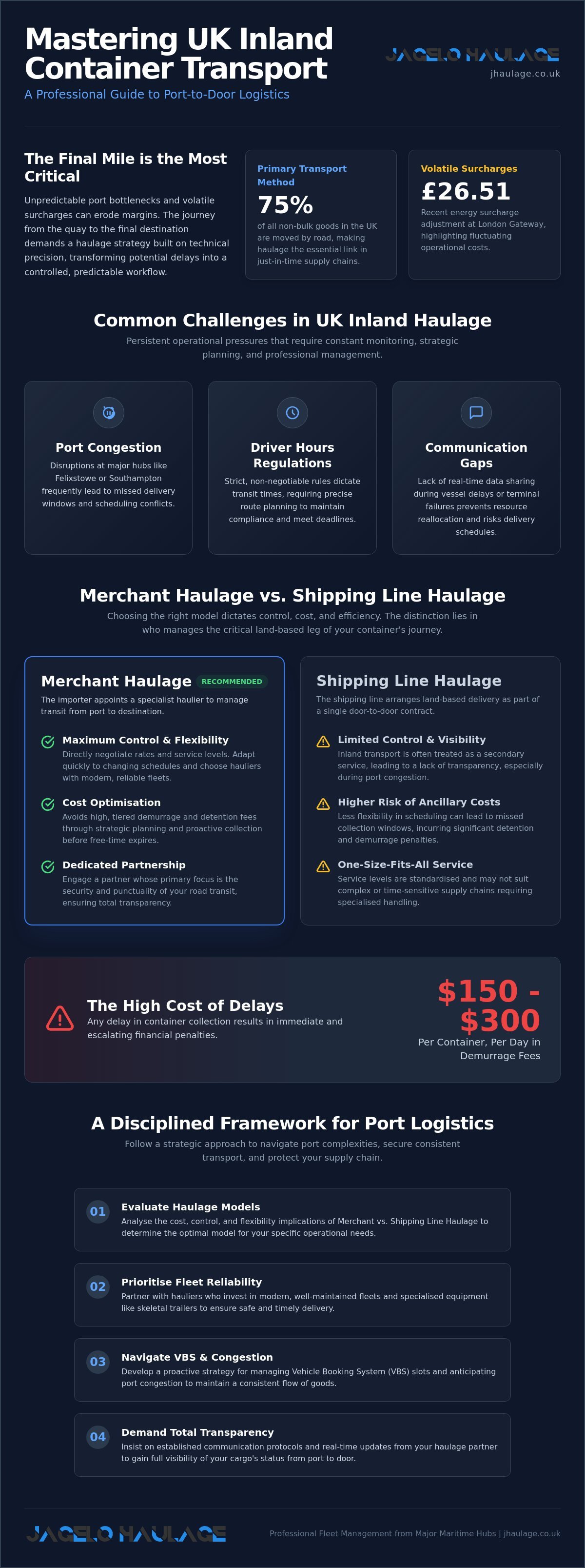
What if the most volatile segment of your supply chain isn't the ocean crossing, but the final miles from the quay? Unpredictable port bottlenecks and rising energy surcharges, such as the £26.51 adjustment at London Gateway, can quickly erode your operational margins. Securing reliable inland container transport UK is the only way to transform these potential delays into a controlled, predictable workflow. You require a haulage strategy that prioritises technical precision and fleet reliability over empty promises.
It's frustrating when a lack of communication from hauliers leaves you guessing about the status of your cargo. We agree that you need total transparency and a seamless transition from maritime to road transport to protect your supply chain integrity. This professional guide provides a comprehensive operational framework for managing port-to-door logistics with absolute discipline. We examine the critical differences between merchant and shipping line haulage, the impact of the 2026 Customs Declaration Service (CDS) transition, and how to mitigate escalating detention fees through strategic planning.
Key Takeaways
- Understand the critical role of road-based links in maintaining just-in-time manufacturing and retail cycles across the United Kingdom.
- Evaluate the cost and control implications of Merchant Haulage versus Shipping Line Haulage to determine the most efficient model for your operations.
- Identify how specialised skeletal trailers and modern fleets ensure the reliable and safe delivery of various container sizes from port to door.
- Learn a strategic five-step approach to navigating Vehicle Booking System (VBS) issues and port congestion to secure consistent inland container transport UK.
- Recognise the operational benefits of a disciplined haulage partnership that provides total transparency and professional fleet management from major maritime hubs.
What is Inland Container Transport and Why is it Critical?
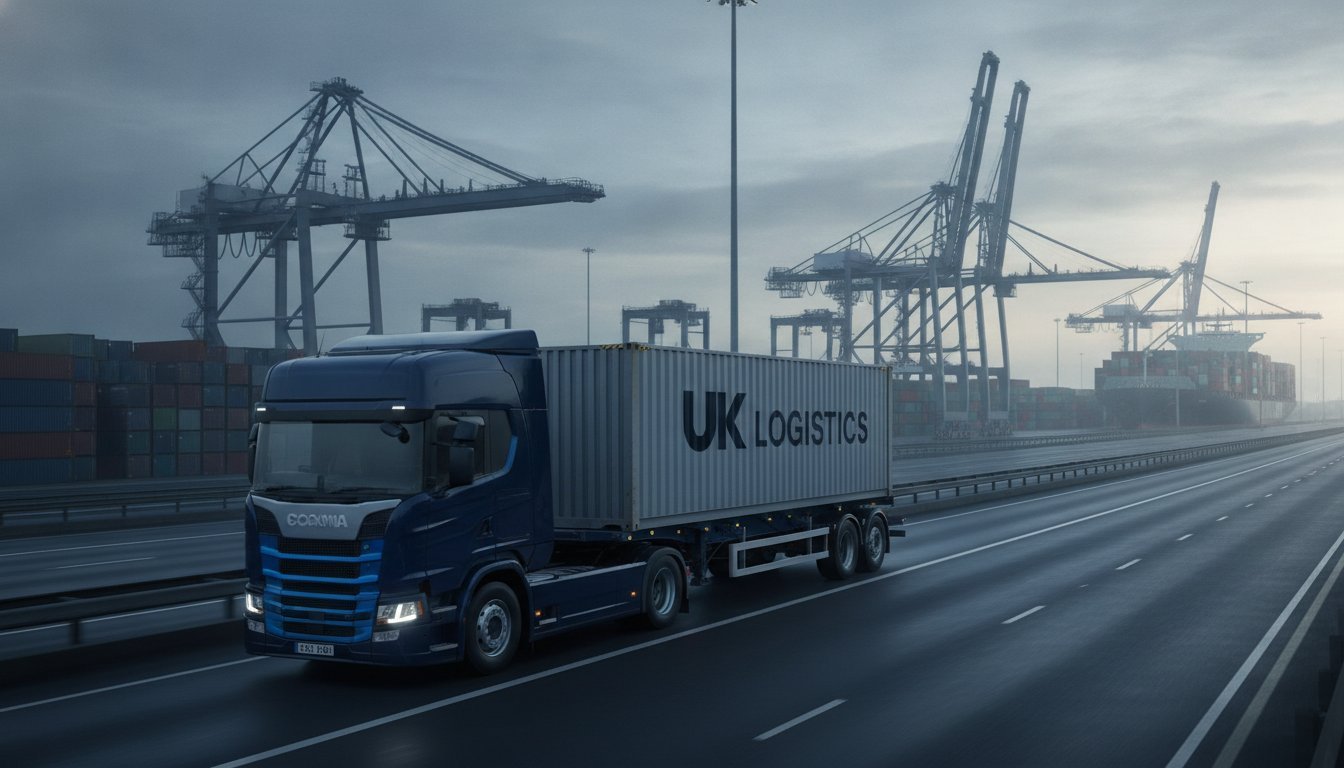
Inland container transport UK serves as the essential road-based link between major maritime hubs and the final inland destination. It represents the final, most critical stage of the supply chain. This sector functions as a strategic buffer, ensuring that goods arriving from international waters reach warehouses, factories, and retail centres with minimal friction. Without a disciplined haulage network, the efficiency of the maritime crossing is effectively negated by land-side delays. This process is a fundamental component of Intermodal freight transport, where the seamless handover between sea and road determines the success of the entire logistical operation.
Modern manufacturing and retail cycles operate on a "just-in-time" basis. This model requires a high degree of punctuality and fleet reliability to prevent production stoppages or empty shelves. Road haulage is the primary method for moving non-bulk cargo in the UK, accounting for approximately 75% of all goods moved by weight. In 2026, the sector has faced increased complexity due to rising port energy surcharges and the full implementation of the Customs Declaration Service (CDS). These factors have driven a shift towards professionally managed transport networks that prioritise technical competence over low-cost, high-risk alternatives.
The Anatomy of a Container Move
A standard container movement involves several distinct operational stages: port discharge, gate-out, road transit, and final delivery. Efficiency at the "gate-out" stage is particularly vital for protecting your operational margins. With demurrage rates at major UK terminals in 2026 ranging from $150 to $300 per container daily, any delay in collection results in immediate financial penalties. Port-to-door logistics is a coordinated effort between shipping lines and road hauliers to ensure cargo moves through the terminal gates before free-time periods expire.
Common Challenges in UK Inland Haulage
The industry faces persistent operational pressures that require constant monitoring and adjustment. Port congestion at major hubs like Felixstowe or Southampton often disrupts road transport scheduling, leading to missed delivery windows. Hauliers must also manage strict driver hours regulations, which dictate the length of time a vehicle can be in transit. These rules are non-negotiable and require precise route planning to maintain compliance whilst meeting client deadlines. Real-time communication amongst all stakeholders is the only way to mitigate these variables. When a vessel is delayed or a terminal experiences a system failure, immediate data sharing allows the haulier to reallocate resources and protect the delivery schedule.
Merchant Haulage vs Shipping Line Haulage: Comparison Guide
Selecting the appropriate booking model is a fundamental decision that dictates the efficiency of your inland container transport UK. Shipping Line Haulage, also known as carrier haulage, involves the shipping line arranging the land-based delivery as part of a door-to-door contract. Conversely, Merchant Haulage allows the importer to appoint an independent specialist to manage the transit from the port to the final destination. In the 2026 economic environment, where port energy surcharges and infrastructure fees continue to fluctuate, the choice between these models has significant financial consequences.
The primary distinction lies in the level of operational control. Shipping lines often treat inland transport as a secondary service, which can lead to a lack of visibility during peak congestion periods. Merchant haulage prioritises the land leg as a strategic outcome. By engaging directly with a dedicated contractor, you gain a partner whose primary focus is the security and punctuality of your road transit. If you're managing complex supply chains, you can request a professional haulage assessment to determine which model aligns with your current volume and delivery requirements.
The Case for Merchant Haulage
Merchant haulage offers a level of flexibility that carrier-arranged services rarely match. It allows for the direct negotiation of rates and service levels with specialised contractors who understand the local port dynamics. This model is particularly effective for avoiding the tiered demurrage costs that currently reach up to $300 per day at major terminals. Importers gain the ability to choose hauliers with modern, well-maintained fleets and established communication protocols. For a more detailed analysis of these benefits, review our Merchant Haulage vs Shipping Line Haulage comparison to see how this strategy protects your bottom line.
When Shipping Line Haulage Makes Sense
Carrier-controlled transport remains a viable option for businesses seeking to minimise administrative burdens. It provides an "all-in" rate that simplifies the initial budgeting process by combining ocean and land costs into a single invoice. This approach is often suitable for low-volume shippers or those with flexible delivery windows. However, during periods of high port activity, shipping lines frequently struggle with driver shortages. This lack of dedicated resource can result in containers sitting at the quay far longer than anticipated, eventually incurring detention fees that offset any initial administrative savings. Choosing line haulage requires a careful balance between convenience and the risk of operational bottlenecks.
Essential Criteria for Reliable Inland Container Deliveries
Reliability in inland container transport UK depends on the physical condition and technical specification of the haulage fleet. A modern, well-maintained vehicle is the primary safeguard against mechanical failure and transit delays. When you require same-day delivery from a port terminal, you can't afford the operational risk of an ageing fleet. Professional hauliers prioritise a rigorous maintenance schedule to ensure every vehicle meets the highest safety standards. This disciplined approach to fleet management ensures that containers move from the quay to the delivery point without interruption. To learn about the importance of rapid response during vehicle failures, you can read more about professional recovery services.
Industry experience is a critical indicator of a haulier's ability to handle complex logistical challenges within the inland container transport UK sector. Fifteen years of operational history provides a deep understanding of port-specific gate-out procedures and the nuances of the national road infrastructure. This seasoned expertise allows a provider to anticipate potential issues before they impact your schedule. Additionally, the transit of high-value cargo requires comprehensive insurance coverage. It's essential to verify that your partner operates under established industry standards, such as those set by the Road Haulage Association (RHA), to provide the necessary protection for your assets.
Fleet Standards and Operational Safety
Redundancy is a vital component of nationwide logistics. Operating a fleet of over 40 trucks provides the necessary capacity to absorb sudden volume spikes or unexpected vehicle downtime. In 2026, environmental compliance is equally important. Euro 6 compliant vehicles are necessary for entering Low Emission Zones (LEZ) across the UK without incurring penalties or restricted access. Operational safety extends to the specialised equipment used, such as skeletal trailers designed to secure various container sizes. These trailers must utilise certified twist-lock systems to maintain load-securing standards during transit, ensuring the protection of both the cargo and other road users.
The Value of Professional Management
Technical capability must be matched by administrative discipline. A professional traffic office acts as the central hub for coordinating complex port collections, managing driver hours, and providing real-time updates to clients. This level of responsive support is what transforms a tactical haulier into a strategic partner. Clear communication ensures that you're never left guessing about the status of your delivery. To understand how specific vehicle configurations and modern technology impact transit times, you can consult our Modern Container Transport Fleet guide. This resource details the equipment standards required for high-performance port logistics.
Navigating Port Logistics and Avoiding Inland Bottlenecks
Operational delays at the port terminal represent the most significant threat to a scheduled delivery. Primary causes for these disruptions include Vehicle Booking System (VBS) shortages and physical congestion within the terminal stacks. Effective inland container transport UK requires a proactive approach to bypass these bottlenecks before they result in financial penalties. When vessels run behind schedule, "same-day" delivery capabilities allow a haulier to recover lost time and maintain the integrity of the supply chain. The strategic management of inland container transport UK involves more than just driving; it requires the integration of inland hubs to create essential buffer zones during periods of peak volatility.
To ensure on-time collection from major UK ports, we recommend a disciplined five-step strategy:
- Continuous Vessel Monitoring: Track arrival times to anticipate discharge windows precisely.
- Proactive VBS Management: Secure booking slots immediately upon container release to avoid terminal gridlock.
- Merchant Haulage Utilisation: Maintain the flexibility to choose a dedicated contractor over restricted shipping line arrangements.
- Real-time Communication: Utilise GPS tracking and direct driver contact to manage transit times effectively.
- Hub Coordination: Use inland container hubs as buffer zones when terminal congestion prevents immediate door-to-door delivery.
By following this framework, you can secure professional port-to-door logistics that protects your operational schedule from external volatility.
Mastering the Vehicle Booking System (VBS)
The VBS dictates the flow of every vehicle entering a UK port terminal. These slots are highly competitive and often disappear within minutes of release during peak periods. Failure to secure a slot leads to missed collections and potential port storage charges. Experienced hauliers manage VBS bookings with technical precision to ensure a consistent flow of cargo. This administrative discipline is the only way to avoid the gridlock that often occurs at major maritime hubs.
Port-to-Warehouse Efficiency
Scheduled container deliveries are a vital component of warehouse labour planning. When a haulier provides a precise arrival window, warehouse managers can allocate staff and equipment with confidence. Merchant haulage provides the necessary flexibility to bypass port-side gridlock by allowing the haulier to select the most efficient route and timing. For a complete overview of these operational requirements, consult the Port Logistics Services UK reference guide. This resource explains how to navigate the technical complexities of 2026 port operations.
Strategic Partnership: The Jagelo Haulage Approach
Jagelo Haulage positions itself as a specialist in the provision of secure and professionally managed inland container transport UK. Our operational framework is designed to provide a sense of steadfast reliability for clients who cannot afford supply chain disruptions. We operate a fleet of over 40 modern trucks from the UK's primary maritime hubs, ensuring we have the reach and redundancy to handle nationwide requirements. This scale allows us to maintain a consistent commitment to same-day delivery, even when port congestion creates external pressure. Jagelo Haulage expertise translates directly into a reduced risk profile for our customers, as we've developed the protocols necessary to navigate every stage of the inland leg with technical precision.
A strategic partnership with Jagelo Haulage means more than just booking a vehicle. It involves integrating our seasoned expertise into your broader logistical framework. We understand that the movement of goods is a high-stakes operation where punctuality is synonymous with profitability. Our drivers and traffic planners follow strict protocols to ensure that every gate-out and delivery is executed with corporate discipline. This no-nonsense approach to haulage provides the quiet confidence that your cargo is in the hands of a master of the fundamentals.
Why National Operators Trust Jagelo Haulage
National operators require a haulage partner that mirrors their own disciplined, corporate culture. We ensure that every delivery is handled with the highest level of care and professional oversight. Being a privately owned and independent contractor allows us to offer bespoke logistics solutions that are often unavailable through shipping line arrangements. We don't rely on personality-driven charm; instead, we reassure our clients through a consistent display of competence. This independence is a verbal anchor to our expertise, allowing us to pivot quickly when terminal conditions change. We encourage you to Contact Jagelo Haulage for a professional transport consultation to see how our fleet can support your 2026 objectives.
Securing Your Supply Chain for 2026
The logistical landscape of 2026 demands a higher standard of fleet quality and strategic planning. This guide has detailed the essential criteria for reliable inland container transport UK, from mastering the VBS to choosing between merchant and shipping line models. The common thread throughout these strategies is the necessity of a dependable partner who understands the industrial nature of the sector. Choosing a haulier is not merely a physical action; it's a strategic outcome that protects your warehouse labour planning and manufacturing cycles. Ensure your containers move seamlessly through the UK's port network with a partner dedicated to operational excellence and functional reliability.
Securing Operational Excellence in UK Haulage
Securing operational excellence in your supply chain requires a disciplined approach to every stage of the land-based transit. This guide has detailed the necessity of choosing between merchant and shipping line models based on your specific requirements for strategic control. Maintaining a modern fleet and mastering the Vehicle Booking System (VBS) aren't just technical requirements; they're essential safeguards for your operational margins. Reliable inland container transport UK depends on a partner who understands the high stakes of port logistics and prioritises functional stability over simple task completion.
Jagelo Haulage delivers the technical competence and fleet redundancy needed to protect your goods. With over 15 years of specialised industry experience and a modern fleet of over 40 trucks and trailers, we provide responsive support for nationwide operators. Our disciplined framework ensures that every container move is treated as a strategic outcome rather than a mere transaction. You can request a professional haulage quote from Jagelo Haulage to secure your port-to-door deliveries. We look forward to establishing a dependable partnership that supports your long-term logistics requirements.
Frequently Asked Questions
What is the difference between inland haulage and port logistics?
Port logistics involves terminal operations, container handling, and customs clearance within the port boundaries. Inland haulage is the road-based transport of the container from the quay to its final destination. Whilst port logistics manage the arrival and discharge of cargo, inland haulage ensures the physical delivery to your warehouse or site. Both must be coordinated to prevent terminal bottlenecks and ensure a fluid supply chain.
Can I arrange my own container haulage from UK ports?
You can arrange your own transport through a model known as merchant haulage. This allows you to appoint an independent haulier rather than relying on the shipping line's carrier haulage. Merchant haulage offers greater control over delivery windows and carrier selection. It's often used by operators seeking more transparent communication and fleet reliability for their inland container transport UK.
How much does inland container transport cost in 2026?
Transport costs are influenced by fuel prices, port surcharges, and distance. For example, DP World Southampton increased its Energy Adjustment Mechanism to £23.07 per import laden container in May 2026. Other factors include the HGV levy, which is £619 annually for Euro VI vehicles. You should also consider potential driver waiting fees, which typically start at £35 per 30 minutes after an initial three-hour period at the site.
What are the standard sizes for containers transported inland in the UK?
The most common containers are 20-foot and 40-foot units, including High Cube variants. Professional hauliers utilise specialised skeletal trailers capable of securing these standard ISO sizes. Some trailers are also configured to carry 45-foot containers or two 20-foot units simultaneously. Ensuring your haulier has the correct equipment for your specific container type is vital for operational safety and road compliance.
How do I avoid demurrage and detention charges at the port?
You avoid these charges by ensuring timely collection and return of equipment. Demurrage is charged for loaded containers remaining at the terminal beyond the free period, which usually lasts three to seven days. Detention applies to containers kept outside the port for too long. Strategic planning and securing Vehicle Booking System (VBS) slots in advance are the most effective ways to maintain a fluid supply chain.
Is my cargo insured during inland container transport?
Most professional haulage companies operate under Road Haulage Association (RHA) conditions. As of January 2026, standard RHA liability is limited to £1,300 per tonne. It's essential to verify your haulier's insurance levels before booking, especially for high-value cargo. If your goods exceed the standard liability limit, you should arrange additional insurance to ensure full financial protection during road transit.
What ports do UK container haulage companies typically serve?
Haulage companies typically serve the UK's major maritime gateways, including Felixstowe, Southampton, London Gateway, and Tilbury. Other significant hubs include Liverpool, Teesport, and Hull. A haulier with a nationwide reach can coordinate collections from any of these locations to provide seamless inland container transport UK. This broad operational reach is necessary for businesses importing goods through multiple regional terminals.
Can I get same-day container delivery for urgent shipments?
Same-day delivery is possible if the container is discharged and cleared through customs early in the morning. Success depends on the haulier securing a VBS slot and having a driver available within their legal hours. Experienced providers prioritise these urgent movements by monitoring vessel arrivals in real-time. Whilst same-day service requires precise coordination, a disciplined haulage partner can often accommodate these time-critical requirements.