A single operational oversight at a UK port can disrupt an entire supply chain and trigger substantial demurrage costs. You likely recognise that moving goods from the quay to the final destination is the most critical link in your logistics framework. Understanding exactly what is container haulage is the first step toward securing your cargo and maintaining strict delivery schedules. This professional service involves the disciplined road transport of shipping containers from major UK ports and logistics hubs to inland warehouses.
It's common to feel frustrated by industry jargon or the uncertainty of port logistics. We promise to clarify the functional differences between merchant and shipping line options while providing a clear roadmap for booking reliable transport. This guide delivers a comprehensive overview of the necessary equipment types and the 2026 regulatory standards, such as Smart Tachograph Version 2 requirements, to ensure your port operations remain stable and compliant.
Key Takeaways
- Define the strategic role of road transport in the supply chain and understand precisely what is container haulage in a professional context.
- Evaluate the operational differences between Merchant Haulage and Shipping Line Haulage to determine which model offers the appropriate level of control for your cargo.
- Gain clarity on the collection process, including the essential requirements for release notes and Vehicle Booking System (VBS) slots at UK maritime hubs.
- Identify the technical specifications required for secure transport, such as skeletal trailers and Euro 6 compliant fleets, to ensure safety and regulatory compliance.
- Establish clear criteria for selecting a dependable haulage partner based on fleet reliability and proven expertise in port logistics.
Defining Container Haulage: The Vital Link in Global Trade
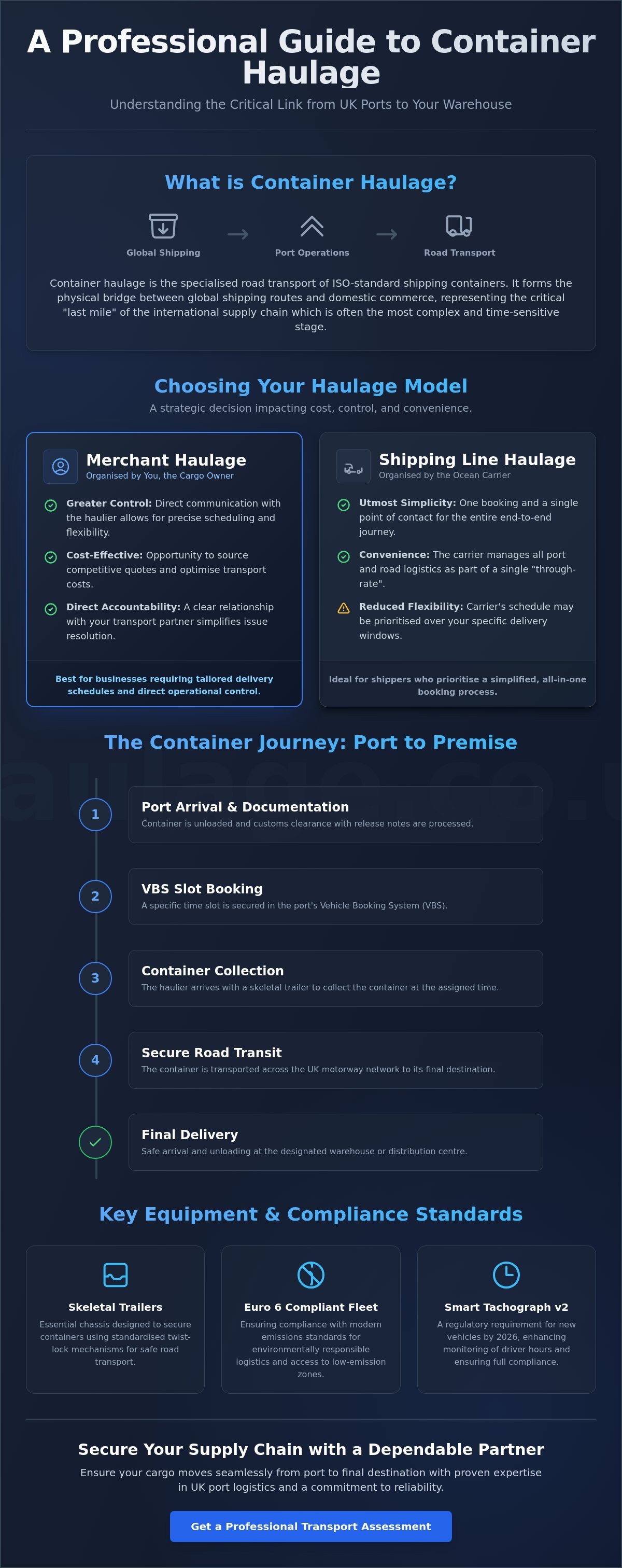
Container haulage serves as the physical bridge between global shipping routes and domestic commerce. To understand what is container haulage, one must view it as the specialised road transport of ISO-standard shipping containers from maritime ports to inland warehouses or distribution centres. It represents the "last mile" of the international supply chain. This stage is often the most complex and time-sensitive part of the logistics journey. For businesses requiring dependable container haulage, selecting a partner with port-specific expertise is essential for maintaining supply chain integrity.
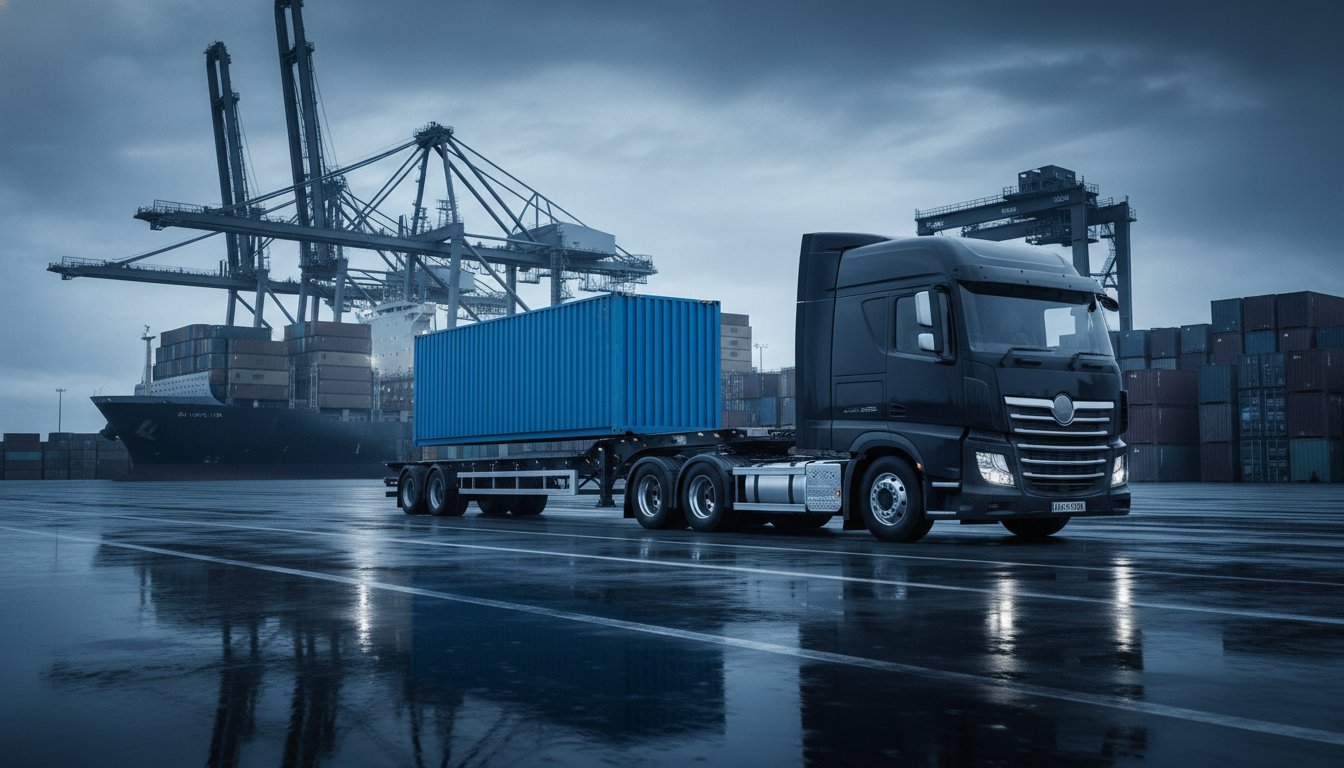
Unlike standard road haulage, which might involve curtain-side trailers for loose cargo, container logistics requires specific equipment. It relies on heavy-duty tractor units and skeletal trailers designed to secure containers using standardised twist-lock mechanisms. When asking what is container haulage in a commercial context, the answer lies in the disciplined coordination between port authorities and transport providers. This specialisation ensures cargo remains protected and sealed from the point of origin to the final destination.
Efficiency in this sector is a financial necessity. Ports operate on strict schedules. If a container isn't collected within the agreed "free time" period, businesses face expensive port storage fees and demurrage charges. Reliable haulage from UK ports prevents these bottlenecks. It ensures that operational margins, which averaged around 2% for hauliers in 2024, aren't further eroded by preventable delays. Following the 10% year-on-year increase in haulage costs seen in 2024, precision in scheduling has become a critical performance indicator.
Why Container Haulage is Essential for UK Businesses
UK businesses depend on these services to connect with international markets. Major hubs like Felixstowe and London Gateway handle millions of units annually, providing a gateway for global trade. Efficient inland container haulage allows companies to maintain lean inventory levels. It ensures that raw materials or retail stock arrive exactly when needed. This logistical support is vital for the national infrastructure and the ongoing stability of the UK economy.
Standard Container Sizes: TEU and FEU Explained
The industry measures capacity using standard units. A Twenty-foot Equivalent Unit (TEU) describes a standard 20ft container. A Forty-foot Equivalent Unit (FEU) refers to the larger 40ft version. These standardised sizes are the foundation of Intermodal freight transport. They allow goods to move between ships, trains, and trucks without the need to unpack the cargo. Haulage requirements often change based on these sizes. Weight limits and vehicle configurations must comply with UK road safety regulations to ensure safe transit across the motorway network.
Merchant Haulage vs Shipping Line Haulage: Which is Right for You?
Selecting the correct transport model is a strategic decision that directly impacts supply chain visibility and cost control. To understand what is container haulage from a management perspective, one must distinguish between Shipping Line Haulage and Merchant Haulage. Shipping Line Haulage occurs when the ocean carrier organises the inland transport as part of a through-rate. In this scenario, the carrier assumes responsibility for the container until it reaches the final delivery point. Conversely, Merchant Haulage is when the cargo owner or merchant appoints an independent haulage specialist to manage the transit from the port. Jagelo Haulage operates as a trusted partner in both frameworks, providing the technical expertise required to navigate UK port protocols.
The choice between these models depends on your requirements for flexibility and direct accountability. Shipping lines often manage vast volumes and may prioritise their own operational convenience over specific delivery windows. Independent specialists focus on the precision of the road leg. When evaluating what is container haulage in the context of your specific business needs, consider whether you require a high-touch service or a simplified, all-in-one booking. To explore how these models apply to your specific route, you can request a professional transport assessment from our team.
The Advantages of Choosing Merchant Haulage
Merchant haulage offers a level of control that is often missing from carrier-led transport. The primary benefit is direct communication. You speak directly with the transport office managing the vehicle, which reduces the risk of information delays during port congestion. By decoupling transport from the shipping line, businesses can often achieve cost savings by avoiding the administrative margins added by carriers. This model also allows for bespoke scheduling. It provides the flexibility to arrange same-day deliveries or specific time slots that align with warehouse labour availability.
When to Use Shipping Line Haulage
Shipping Line Haulage is a suitable choice for businesses that prefer a single point of contact for the entire international journey. This "carrier-haulage" model simplifies the administrative process by consolidating sea freight and inland transport into one invoice. It's often used for simple logistics chains where the merchant does not have the internal resources to manage multiple transport providers. Regardless of which model you choose, Jagelo Haulage supports operators nationwide, ensuring that your containers are delivered with functional reliability and steadfast professionalism.
The Container Haulage Process: From Port Arrival to Final Delivery
The transition from maritime transit to road transport follows a disciplined sequence of operational steps. To grasp what is container haulage in practice, one must look at the coordination required once a vessel berths at a UK port. The process begins with container discharge. Port cranes move the unit from the ship to the quay, where it remains until customs clearance is granted. Once cleared, the logistics focus shifts to administrative release and physical collection.
- Step 1: Container discharge from the vessel and successful port clearance.
- Step 2: Procurement of the release note and a confirmed Vehicle Booking System (VBS) slot for collection.
- Step 3: Professional collection by a modern fleet using specialised skeletal trailers.
- Step 4: Secure inland container haulage to the designated warehouse or distribution centre.
- Step 5: Cargo de-vanning or a drop-and-collect operation at the delivery site.
Each stage requires precise timing to avoid additional costs. If the release note isn't secured promptly, the container may exceed its free-time period at the quay. This leads to demurrage charges that can quickly erode profit margins. A professional haulier manages these timelines with quiet confidence, ensuring the cargo moves through the port without unnecessary friction.
Understanding Port Logistics and Collection
Managing collections from major hubs like Felixstowe or Southampton requires a deep understanding of port protocols. Transport offices must secure a VBS slot to enter the terminal. These slots are finite resources that manage port congestion by staggering vehicle arrivals. Successfully navigating these systems is a core component of what is container haulage at a professional level. It requires more than just a vehicle. It demands the foresight provided by over 15 years of operational experience to prevent costly delays and missed windows.
Inland Delivery Models: Drop and Collect vs Wait and Load
Choosing the right delivery model depends on your site's capacity and labour availability. The Drop and Collect model is the standard for high-volume warehouses. A driver leaves the loaded container on a trailer and collects an empty one. This allows the warehouse team to unload at their own pace without the driver waiting on-site. It's an efficient way to manage large-scale logistics requirements.
Alternatively, the Wait and Load model suits rapid turnarounds. The driver remains with the vehicle while the cargo is de-vanned, typically within a two-hour window. This model is ideal for smaller sites or urgent deliveries where trailer space is limited. Selecting the appropriate method ensures that your site operations remain steady and your transport costs stay within budget.
Equipment and Safety: Ensuring a Secure Logistics Operation
Maintaining a secure supply chain requires more than just operational planning; it demands a significant investment in high-specification equipment. Understanding what is container haulage requires a technical appreciation of the machinery involved. A modern fleet must utilise Euro 6 compliant engines to meet UK emissions standards and avoid daily charges in Clean Air Zones. Every vehicle should be equipped with GPS tracking systems to provide real-time visibility. This technology allows transport managers to monitor progress and provide accurate arrival estimates to the delivery site. To ensure your cargo is handled with this level of technical precision, you can request a quote for secure container transport from our operational team.
Security and legal protection are equally vital components of a professional logistics service. All reputable providers operate under the Road Haulage Association (RHA) Conditions of Carriage. These established industry standards define the responsibilities of the haulier and the merchant, ensuring a transparent framework for every movement. When asking what is container haulage in terms of risk management, it's essential to confirm that the transport is fully insured. Comprehensive Goods in Transit insurance protects high-value cargo against unforeseen incidents, providing the security that corporate clients and operational managers require.
The Role of Specialised Trailers
Standard road trailers aren't suitable for the concentrated weight of a shipping container. Instead, hauliers use skeletal trailers specifically designed for this purpose. Sliding skeletal trailers are particularly versatile because they can be adjusted to accommodate different container lengths, such as 20ft or 40ft units. This adjustment ensures correct weight distribution across the vehicle's axles, which is a critical requirement for road safety and compliance with UK weight limits. Our rigorous maintenance schedule ensures that every vehicle in the modern fleet reduces the risk of mechanical failure during transit.
Maintaining High Safety and Compliance Standards
Professional conduct on the road is the result of disciplined driver training and strict adherence to safety protocols. Drivers must understand the specific requirements of port environments and the handling characteristics of heavy container loads. Jagelo Haulage prioritises the safety and efficiency of every operation by enforcing these high standards across our entire team. Managing a fleet of over 40 trucks nationwide requires a structured approach to compliance. This includes regular vehicle inspections and the use of Event Data Recorders to maintain a corporate and highly disciplined brand atmosphere.
How to Choose a Reliable Container Haulage Partner in the UK
Selecting a logistics partner requires a focus on functional reliability and proven performance. When businesses evaluate what is container haulage at an enterprise level, they must look beyond basic transport to identify a strategic partner. A dependable provider ensures that goods move efficiently from the quay to the warehouse without the risk of costly delays. Jagelo Haulage meets these rigorous requirements through 15 years of specialised expertise in the sector.
A reliable partner must demonstrate four specific criteria:
- Proven Experience: A deep understanding of port logistics and container management is essential for navigating complex terminal protocols.
- Modern Fleet: Access to well-maintained, Euro 6 compliant vehicles ensures operational consistency and regulatory compliance.
- Responsive Support: Clear communication channels allow for real-time updates and proactive problem-solving.
- National Coverage: The ability to operate across all major UK maritime hubs provides the necessary reach for diverse supply chains.
These standards represent the foundation of a disciplined logistics operation. By prioritising these factors, you ensure that your cargo remains protected and your delivery schedules stay on track. This methodical approach to selection reduces the administrative burden on your transport office.
Evaluating Operational Reach and Responsiveness
National coverage is a vital requirement for businesses managing multiple delivery points across the UK. A partner with a wide operational reach can consolidate your logistics requirements, providing a single point of accountability. This consistency is particularly important when managing what is container haulage across different terminals. A responsive partner can mitigate the impact of port delays by re-routing vehicles or adjusting schedules in real-time. For more detailed insights into specific hub operations, you can consult our Felixstowe port logistics guide.
Securing a Professional Haulage Quote
Obtaining an accurate quote is the final step in organising efficient transport. You should provide specific details, including the container size (TEU or FEU), the total weight, and the exact destination postcode. This information allows the transport office to allocate the correct equipment and calculate a fair rate. You can learn more about how container transport costs are calculated based on distance, fuel surcharges, and urgency. Once you have your requirements finalised, you can request a professional container haulage quote from Jagelo Haulage to secure your next movement.
Securing Your Supply Chain Through Disciplined Logistics
Establishing a resilient logistics framework requires a clear understanding of the technical and administrative requirements at UK terminals. You've identified the critical distinctions between merchant and shipping line models, alongside the procedural steps necessary for efficient port collection. Recognising what is container haulage in a professional context allows you to mitigate the risks of port delays and unnecessary storage fees. Precision in these early stages ensures the long-term stability of your entire supply chain.
Jagelo Haulage provides the steadfast professionalism required to manage these strategic outcomes. With over 15 years of industry-leading experience in UK port logistics, we maintain a modern fleet of 40+ trucks and trailers operating nationwide. Our operations are fully insured and adhere strictly to RHA Conditions of Carriage; this ensures your cargo remains protected throughout the inland journey. We look forward to supporting your operational goals with functional reliability and quiet confidence.
Request a secure and reliable haulage quote from our expert team
Frequently Asked Questions
What is the difference between merchant haulage and shipping line haulage?
Merchant haulage is organised by the cargo owner using an independent specialist, while shipping line haulage is managed by the carrier as part of a through-rate. Merchant haulage offers greater flexibility and direct communication with the transport office. This model allows businesses to control their own delivery schedules and often achieve better cost efficiency by decoupling the road leg from the ocean freight contract.
How much does container haulage cost in the UK?
Costs are determined by the distance from the port, current fuel surcharges, and the urgency of the delivery. Industry data from 2026 indicates that typical rates for a 40ft container from Felixstowe to the Midlands range between £400 and £550. You should request a specific quote to account for current diesel prices and any additional port fees that may apply to your specific route.
What ports do container haulage companies usually serve?
Professional operators typically serve all major UK maritime hubs to ensure comprehensive national coverage. This includes the primary container terminals at Felixstowe, Southampton, London Gateway, Tilbury, and Liverpool. These ports handle the vast majority of the UK's international trade and require hauliers to have a deep understanding of specific terminal protocols and booking systems.
Can I track my shipping container during the haulage journey?
Yes, you can monitor your cargo through the GPS tracking systems fitted to modern haulage fleets. This technology provides real-time visibility of the vehicle's location and allows transport managers to provide accurate arrival estimates. Understanding what is container haulage in a modern context includes the expectation of digital transparency and consistent operational updates throughout the inland journey.
What happens if there are delays at the port during collection?
Delays at the port can lead to additional costs such as waiting time charges or demurrage if the container isn't collected within the port's free-time window. Most hauliers allow a standard 1 to 2 hours of free waiting time before charging between £30 and £50 per hour. Experienced providers use Vehicle Booking Systems (VBS) to mitigate these risks and maintain a disciplined collection schedule.
What is a skeletal trailer and why is it used for containers?
A skeletal trailer is a specialised chassis designed with twist-lock mechanisms to secure shipping containers safely. It's used because it provides the necessary structural integrity and weight distribution required for road transport under UK safety regulations. These trailers are lightweight yet robust, allowing for the maximum possible cargo weight whilst ensuring the vehicle remains within legal axle limits.
Is my cargo insured during the road transport leg of the journey?
Cargo is protected under Goods in Transit insurance when moved by a reputable haulier. Most professional services operate under Road Haulage Association (RHA) Conditions of Carriage, which define the legal responsibilities and liability limits for the movement. It's essential to confirm that your provider maintains comprehensive insurance to protect high-value goods against unforeseen incidents during transit.
What information do I need to provide to book a haulage service?
To book an efficient service, you must provide the container number, size (TEU or FEU), gross weight, and the collection port. You also need to specify the final delivery postcode and any site-specific requirements, such as a "drop and collect" or "wait and load" model. Providing accurate data ensures the transport office can allocate the correct vehicle and secure a VBS slot promptly.