Part of our guide to container haulage from Southampton
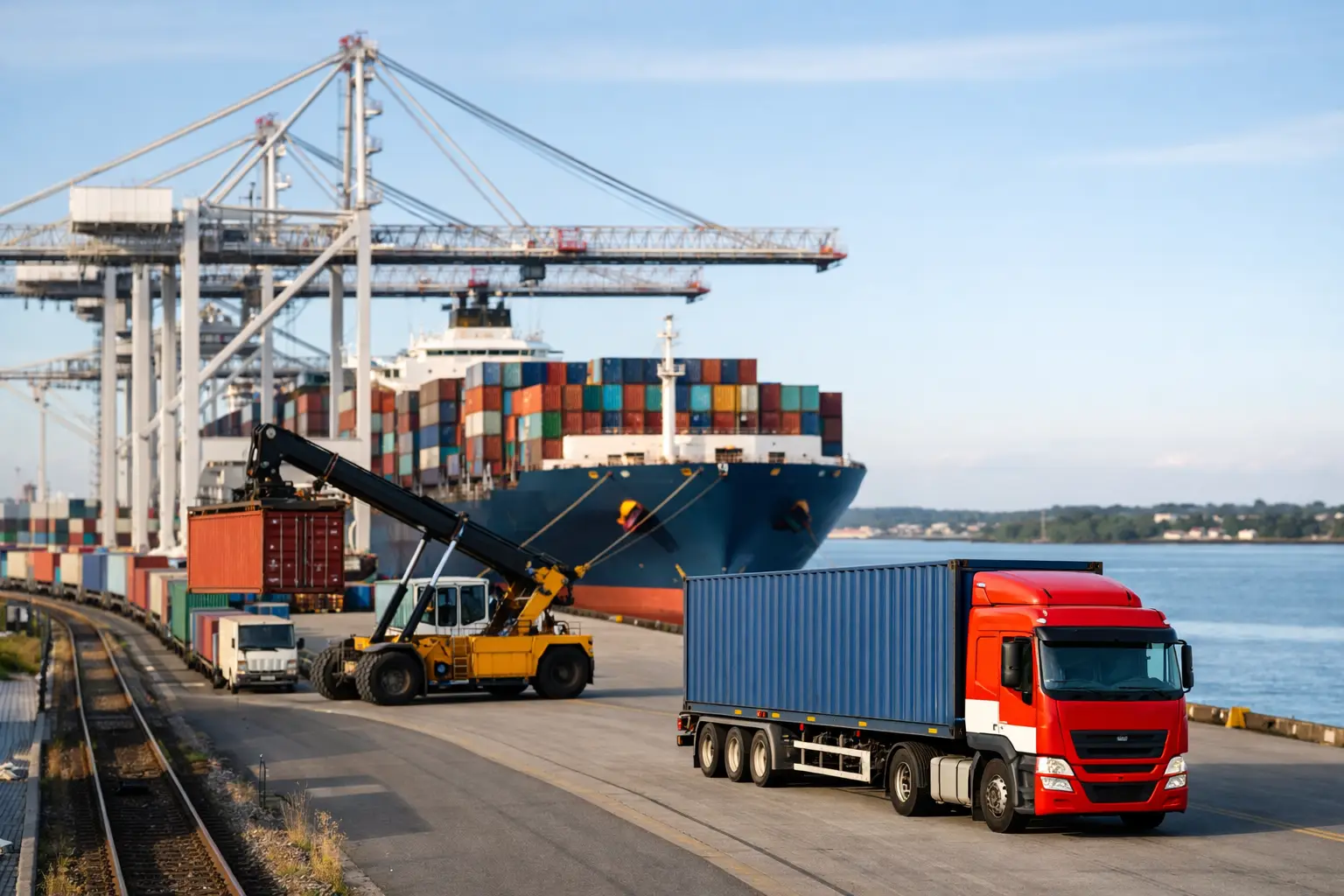
A container that sits too long at Southampton rarely causes just one problem. It usually triggers storage pressure, delivery knock-ons, warehouse disruption and awkward calls with customers who expected stock on site already. That is why Southampton port container transport is not simply a collection job. It is a time-critical part of the wider supply chain, and it needs planning that reflects the realities of port operations, road access, compliance and final delivery requirements.
For importers, freight forwarders and logistics teams, Southampton is a major gateway for containerised freight moving into the UK. It offers strong access to central distribution points, manufacturing sites and retail networks, but that advantage only holds if haulage is managed properly from the moment the box is released. A delay of a few hours at the wrong stage can quickly become a full-day issue, especially where booking slots, driver hours or site restrictions are involved.
What Southampton port container transport really involves
From the outside, container haulage can look straightforward. A lorry arrives, the container is collected, and the load is delivered. In practice, the job starts much earlier. Release status, port system checks, container size, weight, customs position, delivery slot timing and vehicle allocation all affect whether the movement runs cleanly.
Southampton port container transport often involves close coordination between the shipping line, the clearing agent, the haulier and the receiving site. If one part of that chain is not ready, the whole job slows down. The most common issues are not dramatic failures. They are smaller operational gaps - missing references, late release confirmation, incorrect weight details or delivery sites that are not ready to unload.
That is why experienced container operators focus on control. Real-time tracking matters, but so does accurate pre-planning. A container that leaves port on time is only part of the job. It also needs to arrive at the destination when staff, unloading equipment and site access are available.
Why timing matters more at Southampton than many expect
Southampton is a high-volume working port, and like any busy UK gateway, timing can decide whether a collection is efficient or expensive. Road congestion, terminal demand, booking windows and traffic conditions all affect vehicle turnaround. If a collection misses the right window, costs can increase quickly through waiting time, failed deliveries or avoidable detention pressure.
This matters most for businesses running tight stock cycles. Retailers, manufacturers and distributors often work around narrow inbound delivery plans. If a container misses its booked delivery slot inland, the next available slot may be the following day. That can create extra storage, vehicle rescheduling and lost labour time at the receiving site.
There is also the issue of driver and fleet planning. A professional haulier will not promise unrealistic turnaround times just to win the booking. Reliable service comes from matching collection timing to actual operating conditions. Sometimes same-day movement is the right answer. Sometimes a next-day plan is safer and cheaper overall. It depends on release timing, delivery distance and site readiness.
The cost of getting the timing wrong
When businesses assess haulage, they often compare the quoted transport rate first. That is understandable, but it can hide the larger risk. The real cost usually sits in delay. Demurrage, detention, missed bookings, warehouse disruption and customer service fallout can easily outweigh any saving on the base move.
A slightly cheaper collection that lacks visibility or proper communication can become more expensive than a well-managed movement with clear updates and a realistic schedule. In container logistics, reliability is a cost-control measure, not just a service feature.
The practical pressures behind a smooth container move
Every import operation has its own pressures, but a few factors tend to shape container transport from Southampton more than anything else.
Container type is the first. Standard 20ft, 40ft and 45ft ISO containers all have different planning implications, especially when weight and delivery access are factored in. A heavy 20ft container may be simple at the port but harder to deliver into a restricted site. A 45ft unit may fit the route plan but create challenges at a tight unloading point.
The second is cargo profile. Refrigerated containers, hazardous goods and oversized cargo require a different level of preparation. Compliance, handling requirements and timing tolerance can all shift depending on the load. These are not movements to leave to general haulage assumptions. Specialist container knowledge matters because the margin for error is smaller.
The third is delivery environment. Industrial estates, urban locations, retail distribution centres and manufacturing plants all behave differently. Some sites work with rigid booking systems. Others can unload quickly if communication is good. Some have enough yard space for flexibility, while others need precise arrival timing because there is no room for waiting vehicles.
Why communication is part of the service
Buyers of haulage services do not need vague reassurance. They need to know whether the container is released, whether the vehicle is allocated, whether the collection is complete and whether the delivery remains on schedule. That is the standard for commercial transport support.
Clear communication reduces more than uncertainty. It helps warehouse teams prepare, allows freight forwarders to manage client expectations and gives logistics managers time to respond if conditions change. A reliable operator does not disappear between collection and delivery. It keeps the movement visible.
Choosing the right haulage partner for Southampton collections
Not every haulier is built for port container work. General transport capacity is useful, but port collections demand specific operational discipline. The right partner should understand booking systems, release procedures, container handling requirements and the practical effect of delays at both ends of the journey.
Fleet strength matters because resilience matters. If one vehicle issue affects a collection, there needs to be enough operational depth to recover. The same applies to driver experience. Port container work is not just road driving. It involves paperwork accuracy, compliance awareness, secure handling and an understanding of what can derail a timed movement.
Coverage matters as well. Many Southampton containers are not staying local. They are moving inland to distribution centres, manufacturers, wholesalers and regional depots across the country. A haulier with nationwide reach is better placed to support that movement without unnecessary handovers or fragmented communication.
This is also where tracking and responsiveness become commercially useful rather than cosmetic. For time-sensitive loads, especially where customers are managing stock flow or production schedules, visibility is part of operational control. Businesses need confidence that if an issue arises, they will hear about it early and get a practical response.
How to reduce delays before the container leaves port
The cleanest container moves are usually won before the vehicle reaches Southampton. Good planning upstream makes collection easier downstream. That starts with having the release, references and customs position confirmed early enough to support realistic scheduling.
It also helps to share full delivery details at booking stage, not later in the day. Site restrictions, opening hours, unloading arrangements, contact names and any special handling requirements should be confirmed before a vehicle is dispatched. Too many delivery problems start with incomplete information rather than transport failure.
Weight accuracy is another area that deserves attention. An incorrect or unclear declared weight can affect vehicle allocation and route planning. That becomes more serious where access restrictions, bridge limits or site-specific constraints apply.
If the container is urgent, say so early. Urgent jobs can often be managed effectively, but they need immediate planning and honest discussion about what is possible. The best operators will give a direct answer, not a hopeful one.
When specialist support makes the difference
Some container moves are routine. Others are not. Reefer units, hazardous cargo and oversized containers require tighter control, and that includes the people moving them. There is little value in treating specialist cargo like a standard job and hoping the details sort themselves out on the day.
For those loads, the right haulage provider should be able to match the equipment, the compliance requirements and the delivery timing to the job without overcomplicating it. That is where an experienced operator such as Jagelo Haulage Limited adds value - not by overpromising, but by running disciplined container movements backed by tracking, responsive support and practical port knowledge.
Southampton remains a strong gateway for UK container traffic, but the advantage only holds if the inland movement is controlled properly. For commercial operators, the real question is not simply who can collect the box. It is who can collect it, move it securely and deliver it without creating new problems further down the chain.
If your containers are time-sensitive, high-value or operationally awkward, choose a haulage partner that treats the job as part of your delivery schedule, not just another booking on the board.